

A summer shower doesn't have to send you rushing outside to rescue your patio furniture — but leaving everything exposed without understanding the materials can quietly shorten its lifespan.
The truth is that most modern patio furniture is designed to handle occasional rain, but very little of it is truly waterproof. Moisture trapped inside cushions, chipped powder coating on metal frames, or prolonged exposure to humid conditions can gradually lead to rust, mould, fading, or structural deterioration.
Understanding why different materials react differently to water is far more valuable than simply knowing whether they can get wet. Once you know what happens beneath the surface—from aluminium oxidation to teak weathering and foam drainage—you can choose furniture that suits your climate and avoid years of unnecessary maintenance.
In this guide, we'll explain:
- Which patio furniture materials handle rain best
- Why cushions often fail before frames
- How to protect furniture during rainy seasons
- The best maintenance routine after storms
- When covers actually help—and when they make things worse
Table of Content
Key Takeaways
✔ Most outdoor furniture can safely get wet occasionally, but prolonged moisture is the real enemy.
✔ Powder-coated aluminium, teak, and PE resin wicker offer some of the best long-term weather resistance.
✔ Quick-drying cushions depend more on the foam inside than on the fabric outside.
✔ Breathable furniture covers usually outperform completely sealed waterproof covers during long-term storage.
✔ Drying furniture within 24 hours after heavy rain dramatically reduces the risk of mildew and corrosion.
Quick Answer: Can Patio Furniture Get Wet?
Yes—but "weather-resistant" doesn't mean "waterproof."
Most high-quality outdoor furniture is designed to withstand occasional rain. However, different materials respond to moisture in very different ways. Some naturally resist corrosion or decay, while others require regular maintenance to prevent long-term damage.
Weather Resistance Comparison
Material | Rain Resistance | Biggest Risk | Maintenance |
Powder-coated aluminium | ★★★★★ | White oxidation over time | Low |
Stainless steel | ★★★★☆ | Salt corrosion near the coast | Low |
Powder-coated steel | ★★★☆☆ | Rust after coating damage | Medium |
Teak | ★★★★★ | Surface weathering | Medium |
PE resin wicker | ★★★★★ | UV ageing | Low |
Natural wicker | ★☆☆☆☆ | Mould & swelling | High |
Outdoor acrylic fabrics | ★★★★☆ | Moisture wicking after years of use | Low |
The important thing to remember is that water alone rarely ruins outdoor furniture. Problems usually occur when moisture remains trapped inside materials for days or weeks, especially when combined with dirt, heat, and ultraviolet (UV) exposure.
How Different Patio Furniture Materials React to Water Exposure
When people ask whether patio furniture can get wet, they often think only about soaked cushions. In reality, the frame material determines how well your furniture survives years of changing weather.
Each material interacts with water differently at the microscopic level. Some naturally create protective barriers against corrosion, while others absorb moisture, expand, or gradually lose structural strength. Understanding these differences makes it much easier to choose furniture that matches your local climate.
Aluminium: One of the Best Materials for Rainy Climates
Powder-coated aluminium has become the gold standard for modern outdoor furniture—and for good reason.
Unlike iron or ordinary steel, aluminium doesn't rust in the traditional sense. When exposed to oxygen, it immediately forms a thin oxide layer that protects the metal underneath. This natural barrier slows further corrosion, allowing aluminium furniture to perform exceptionally well in wet environments.
That doesn't mean it's completely maintenance-free.
Over time, standing water, mineral deposits, and pollutants may cause:
- White oxidation ("white rust")
- Water spots
- Surface staining
- Localised corrosion where the powder coating has been scratched
Fortunately, these issues are usually cosmetic rather than structural and can be prevented with occasional cleaning.
Editor's Pick: Best for Rainy Climates
If you want furniture that combines excellent weather resistance with a warm, woven appearance, consider an aluminium-frame resin wicker sectional.
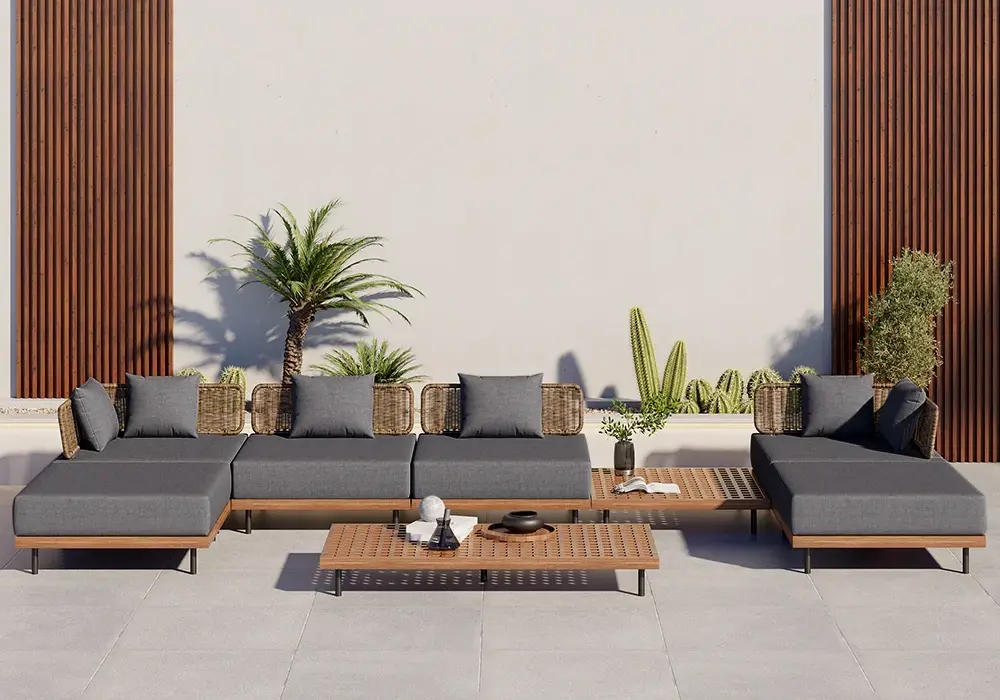
The Homary 8-Piece Aluminium Rattan Outdoor Sectional Sofa Set pairs a powder-coated aluminium frame with weather-resistant PE rattan, creating a combination that's particularly well suited for humid or rainy regions. The removable cushions also make seasonal cleaning and drying much easier, while the wood coffee table adds a natural accent without sacrificing durability. The use of aluminium and synthetic wicker reflects two of the most weather-resistant materials discussed above.
Steel: Strong, Stable—But More Vulnerable to Moisture
Steel furniture is prized for its strength and weight, making it less likely to shift in windy conditions.
However, steel has one major weakness: once its protective finish is damaged, corrosion can begin surprisingly quickly.
The process typically follows four stages:
- Powder coating becomes scratched or chipped.
- Rainwater reaches the exposed steel.
- Oxygen reacts with the metal.
- Rust spreads beneath the surrounding finish.
By the time bubbling paint becomes visible, corrosion has often already expanded underneath.
Regularly inspecting welded joints and repairing damaged coatings early can dramatically extend the lifespan of steel furniture.
Stainless Steel: Better Protection, Not Complete Immunity
Stainless steel owes its reputation to chromium.
When chromium reacts with oxygen, it forms an invisible passive layer that continuously repairs itself after minor scratches.
Even so, stainless steel isn't invincible.
In coastal environments, airborne salt can gradually lead to:
- Tea staining
- Surface discolouration
- Localised pitting if contaminants aren't removed
Fortunately, periodic rinsing with fresh water is usually enough to preserve its appearance.
Teak: Nature's Outdoor Hardwood
Few woods perform outdoors as well as teak.
Its naturally high oil and silica content make it exceptionally resistant to moisture, insects, and fungal decay. That's why teak has been used in shipbuilding for centuries.
Rain itself rarely harms teak structurally.
Instead, repeated wet-and-dry cycles gradually wash away surface oils, allowing UV rays to transform its golden-brown colour into the familiar silver-grey patina.
This weathered appearance is completely normal and doesn't indicate that the wood is failing.
Homeowners who prefer teak's original colour can maintain it with periodic cleaning and a quality teak sealer.
Synthetic Resin Wicker vs. Natural Wicker
These two materials often look similar—but perform very differently.
PE resin wicker is made from high-density polyethylene, a synthetic material that absorbs virtually no water. Instead of moisture, its biggest long-term challenge is UV exposure, which slowly weakens plastic polymers over many years.
Natural wicker tells a different story.
Because it's woven from plant fibres such as rattan, bamboo, or reed, it naturally absorbs water. Repeated cycles of swelling and drying can eventually cause:
- Cracking
- Fibre separation
- Mould growth
- Loss of structural integrity
For uncovered patios in rainy climates, synthetic resin wicker is almost always the more practical choice.
Water and UV: A More Dangerous Combination Than Either Alone
One of the biggest misconceptions is that rain alone causes outdoor furniture to age.
In reality, moisture and sunlight work together.
Water softens finishes and protective coatings, while ultraviolet radiation breaks down wood fibres, plastics, paints, and outdoor fabrics. Together, they accelerate fading, oxidation, and surface deterioration far more quickly than either factor would alone.
Even premium solution-dyed acrylic fabrics can eventually experience wicking, a phenomenon in which water gradually travels through contaminated or weathered fibres instead of beading on the surface. This doesn't mean the fabric has failed—it usually indicates that cleaning or re-treatment is needed to restore water repellency.
Myth vs. Fact
Myth | Reality |
Outdoor furniture is waterproof. | Most is weather-resistant, not waterproof. |
Aluminium never corrodes. | It doesn't rust like steel, but it can develop white oxidation if neglected. |
Teak shouldn't get wet. | Teak naturally tolerates rain exceptionally well. |
Resin wicker and natural wicker perform the same outdoors. | Synthetic resin wicker is far more resistant to moisture and mould. |
Rain is the biggest cause of furniture damage. | Long-term moisture combined with UV exposure is usually the real culprit. |
Beyond the Surface: Fabrics, Foam, and the Truth About Water Resistance
When homeowners talk about "waterproof patio cushions," they're usually thinking about the fabric they can see. In reality, the outer fabric is only the first layer of protection. What determines whether a cushion dries in hours or stays damp for days is what's inside.
A high-performance outdoor cushion is built as a system. The fabric, stitching, zips, and foam core all influence how water enters, moves through, and eventually leaves the cushion. Understanding that system makes it much easier to choose furniture that stays fresh after repeated rain.
Outdoor Fabrics Are Water-Resistant—Not Waterproof
Most premium outdoor furniture uses fabrics such as:
- Solution-dyed acrylic
- Olefin
- Performance polyester
These materials are designed to shed water while remaining breathable.
That balance is important. A completely waterproof fabric would trap heat and moisture inside the cushion, creating an ideal environment for mildew. Instead, outdoor fabrics use water-repellent finishes that encourage rain to bead up and roll off while still allowing internal moisture to escape.
However, these finishes don't last forever. Dirt, sunscreen, pollen, and airborne pollutants gradually coat the fibres, reducing their ability to repel water. That's why even premium fabrics eventually need cleaning and retreatment.
The Foam Inside Matters Even More Than the Fabric Outside
Imagine two cushions sitting side by side after a thunderstorm. They may look identical, but one is dry the next morning while the other still feels heavy and damp.
The difference is almost always the foam.
Reticulated Foam (Open-Cell)
Often referred to as "flow-through foam," reticulated foam is engineered with thousands of interconnected cells. Instead of trapping water, it allows rain to drain quickly through the cushion.
Benefits:
- Excellent drainage
- Faster drying
- Better airflow
- Lower mildew risk
- Lighter after heavy rain
This is the preferred choice for premium outdoor seating because it keeps cushions usable even in humid climates.
Closed-Cell Foam
Closed-cell foam works differently. Each cell is sealed, making it highly resistant to water absorption.
It's commonly found in:
- Marine seating
- Boat cushions
- Floating equipment
While it offers exceptional water resistance, it's firmer than reticulated foam and less commonly used in residential patio furniture where comfort is a priority.
Standard Polyurethane Foam
Standard polyurethane foam is designed primarily for indoor furniture.
Because it acts much like a sponge, it can:
- Absorb large amounts of water
- Stay damp for extended periods
- Become heavy after rain
- Create ideal conditions for mould growth
If you've ever sat on an outdoor cushion and watched water squirt out from the seams, there's a good chance the cushion contains conventional foam rather than outdoor-grade foam.
Foam Comparison
Foam Type | Water Absorption | Drying Speed | Mould Resistance | Typical Application |
Reticulated (Open-Cell) | Very Low | ★★★★★ | ★★★★★ | Premium outdoor furniture |
Closed-Cell | Minimal | ★★★★☆ | ★★★★★ | Marine & commercial seating |
Standard Polyurethane | High | ★★☆☆☆ | ★★☆☆☆ | Indoor furniture |
How Water Travels Through a Cushion
One common misconception is that rain simply "soaks" into a cushion.
In reality, moisture follows several pathways:
- Surface penetration – Water enters through the fabric when the water-repellent finish begins to wear.
- Seam infiltration – Stitching and zips are naturally more vulnerable than the fabric itself.
- Foam migration – Once inside, water moves through the foam structure.
- Evaporation – Moisture gradually escapes through airflow, warmth, and ventilation.
The longer water remains trapped during Step 3, the greater the risk of mildew, unpleasant odours, and foam deterioration.
That's why standing cushions upright after rain often makes such a noticeable difference—it allows gravity and airflow to work together, dramatically speeding up the drying process.
Why Mould Develops Faster Than Most People Expect
Rain alone doesn't cause mould.
Mould needs three ingredients:
- Moisture
- Organic material (dust, pollen, body oils, leaves)
- Limited airflow
Unfortunately, outdoor cushions often provide all three.
Even the highest-quality outdoor fabric can develop mildew if wet cushions are stacked together, covered before they're dry, or left in a humid environment for several days.
To reduce the risk:
- Shake off standing water as soon as possible.
- Separate stacked cushions.
- Allow air to circulate freely.
- Store cushions indoors during extended periods of heavy rain.
Preventing moisture buildup is always easier than removing established mildew.
Editor's Pick: Best Natural Material for Rainy Climates
If you love the warmth and character of real wood but still want furniture that performs well outdoors, teak remains one of the most dependable choices.
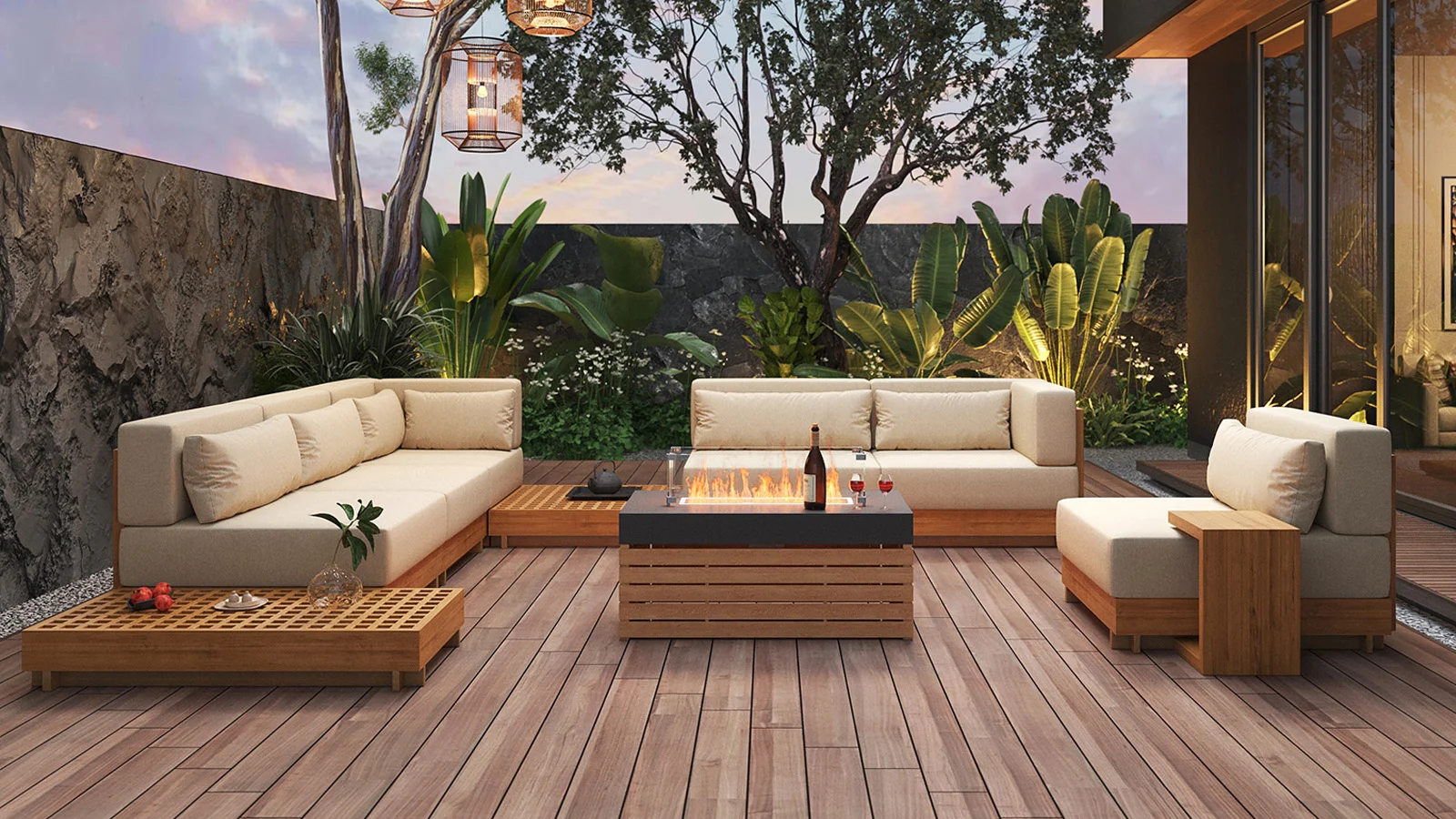
The Homary 4-Piece Modern L-Shape Teak Outdoor Sectional Sofa Set combines a solid teak frame with weather-resistant cushions, making it ideal for homeowners who want natural beauty without sacrificing durability. Teak's naturally occurring oils help resist moisture, while the removable cushions make post-rain drying and routine maintenance much easier.
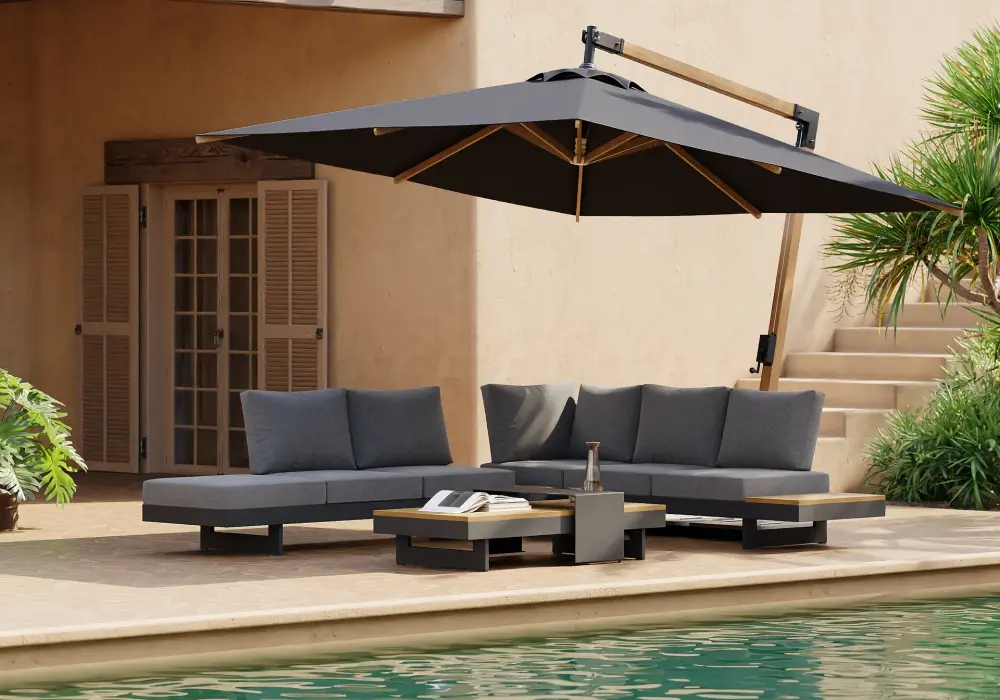
Unlike many hardwoods, teak develops a graceful silver-grey patina over time rather than deteriorating when exposed to the elements. If maintained with periodic cleaning—or sealed if you prefer its original honey-brown tone—it can provide decades of outdoor performance while complementing modern patio designs.
How to Tell When Your Waterproofing Spray Has Stopped Working
Water-repellent treatments gradually wear away through everyday use.
Exposure to sunlight, abrasion from regular seating, cleaning products, and airborne contaminants slowly reduces their effectiveness.
Fortunately, checking your furniture takes only a few seconds.
The Water Bead Test
Lightly sprinkle clean water onto the fabric.
If the water forms round droplets and rolls away, the protective finish is still performing well.
If the fabric immediately darkens and absorbs the water, it's time to clean the surface and reapply a fabric protector.
For most patios, re-treating outdoor fabrics every 6–12 months provides reliable protection. Homes in coastal, tropical, or high-UV regions may benefit from more frequent applications.
Small Maintenance Habits Make the Biggest Difference
Many homeowners assume maintaining patio cushions requires expensive specialty products.
In reality, the biggest improvements come from simple habits:
- Brush away pollen and leaves before they become trapped in seams.
- Rotate cushions regularly to ensure even drying and sun exposure.
- Store cushions indoors during prolonged storms or the off-season.
- Clean fabrics before applying a new waterproofing treatment.
- Never cover cushions until they're completely dry.
These small routines help preserve both the fabric and the foam inside, reducing the likelihood of mould, odours, and premature replacement.
Protective Covers and Long-Term Storage Strategies That Actually Work
Buying weather-resistant furniture is only half the equation. How you protect it between seasons has just as much impact on its lifespan.
Ironically, one of the most common mistakes homeowners make is assuming that any cover is better than no cover. In reality, the wrong type of cover can trap moisture, accelerate mildew, and even void portions of a manufacturer's warranty.
Waterproof vs. Breathable Covers
Outdoor furniture covers generally fall into two categories.
Cover Type | Advantages | Potential Drawbacks | Best Use |
Fully waterproof (PVC-backed) | Blocks heavy rain and snow | Can trap condensation underneath | Short-term storm protection |
Breathable fabric covers | Allows moisture to escape while reducing rain exposure | May allow slight moisture during prolonged downpours | Long-term everyday protection |
If your furniture remains outdoors year-round, breathable covers are usually the better choice. Air circulation helps prevent condensation from building up beneath the cover—a common cause of mould that many homeowners mistakenly blame on rain.
Another useful tip is to avoid letting the cover sit directly on the furniture. Small support poles or built-in vents create an air gap that improves ventilation and speeds up drying after storms.
A Seasonal Storage Routine That Prevents Most Problems
Whether you're preparing for winter or an extended rainy season, a little preparation can save significant time and expense later.
End-of-Season Checklist
Before storing patio furniture:
✔ Wash away dirt, pollen, bird droppings, and tree sap.
✔ Allow every surface—including the underside of cushions—to dry completely.
✔ Check metal frames for chipped powder coating or early rust.
✔ Inspect wicker for broken strands and tighten any loose hardware.
✔ Remove mildew before storing rather than waiting until spring.
✔ Store cushions separately whenever possible.
✔ Cover furniture with breathable protective covers.
✔ Keep furniture slightly elevated off bare concrete to improve airflow underneath.
Skipping the drying step is one of the biggest reasons homeowners discover mould when they uncover furniture months later.
Don't Overlook Your Warranty
This is one of the most overlooked aspects of patio furniture ownership.
Many manufacturers distinguish between normal weather exposure and improper long-term neglect. While occasional rain is generally expected, damage caused by standing water, poor storage practices, mildew, or a lack of routine maintenance may not be covered under warranty. Warranty terms vary by brand, so it's worth reviewing the care instructions that came with your furniture before storing it for the season. Proper maintenance not only extends the furniture's lifespan but also helps preserve warranty eligibility.
Natural and Specialty Materials: Caring for Teak, Wicker, and Aluminium in Wet Conditions
Some materials are naturally better suited to rainy climates than others—but every material benefits from proper care.
The goal isn't to keep outdoor furniture perfectly dry. It's to help each material recover quickly after getting wet.
Teak
Teak remains one of the most durable woods available for outdoor furniture.
Its naturally occurring oils make it highly resistant to moisture, insects, and decay. Rain rarely causes structural damage, even when teak is left uncovered.
To keep teak performing at its best:
- Wash with mild soap every 3–6 months.
- Remove algae or mildew before it becomes established.
- Apply a teak sealer once or twice a year only if you want to preserve the original honey-brown colour.
- Accept the silver-grey patina if you prefer a low-maintenance approach.
Contrary to popular belief, teak doesn't require frequent oiling. In fact, many wood specialists recommend allowing high-quality teak to weather naturally rather than applying teak oil on a regular basis.
Synthetic Resin Wicker
PE resin wicker is designed specifically for outdoor environments.
Routine maintenance is simple:
- Rinse off accumulated dirt.
- Wash with mild soap when needed.
- Inspect woven strands once or twice a year.
- Avoid using high-pressure washers that may loosen the weave.
Unlike natural wicker, synthetic resin doesn't absorb water, making it one of the easiest outdoor materials to maintain.
Natural Wicker
Natural wicker requires considerably more attention.
Because plant fibres absorb moisture, prolonged rain can eventually cause:
- Fibre swelling
- Surface cracking
- Mould growth
- Structural weakening
If you own natural wicker furniture, it's best suited to covered porches rather than fully exposed patios.
Aluminium
Although aluminium won't rust like steel, seasonal maintenance still helps preserve its appearance.
Before the rainy season:
- Wash away pollen and salt residue.
- Inspect the powder coating for scratches.
- Tighten loose fasteners.
- Allow the frame to dry thoroughly after cleaning.
This simple routine helps reduce oxidation, mineral deposits, and water spotting.
After the Rain: Drying, Cleaning, and Reversing Minor Damage
Heavy rain doesn't automatically mean your furniture has been damaged.
In most cases, what you do during the first 24 hours matters far more than the storm itself.
Step 1: Remove Standing Water
Use a microfibre towel or soft cloth to remove water from:
- Tabletops
- Armrests
- Cushion seams
- Fire pit covers
- Decorative surfaces
Removing pooled water speeds up evaporation and reduces staining.
Step 2: Let Cushions Drain
Instead of leaving cushions flat on the seat:
- Stand them upright.
- Separate stacked cushions.
- Unzip removable covers if recommended by the manufacturer.
- Keep them in a shaded, well-ventilated area.
This allows gravity to help moisture escape instead of remaining trapped inside the foam.
Step 3: Increase Airflow
Air movement is often more effective than direct sunlight.
During humid weather:
- Position a household fan nearby.
- Open screened patios.
- Use a dehumidifier in enclosed outdoor rooms.
Faster airflow shortens drying time and significantly reduces the likelihood of mildew.
Step 4: Treat Minor Rust Before It Spreads
If you notice light surface rust on steel furniture:
- Wash the affected area.
- Apply white vinegar for several minutes.
- Lightly scrub with a non-abrasive pad.
- Touch up damaged paint using a rust-inhibiting outdoor coating.
Early intervention prevents corrosion from spreading beneath the finish.
Step 5: Remove Early Mould
For small mildew spots:
- Mix warm water with mild dish soap.
- Gently scrub using a soft brush.
- Rinse thoroughly.
- Allow furniture to dry completely before replacing covers.
Avoid harsh bleach solutions unless the manufacturer specifically approves them for your fabric.
Step 6: Know When It's Time to Replace
Some damage simply isn't worth repairing.
Consider replacement if you notice:
- Persistent mildew odours that remain after cleaning.
- Foam that crumbles or no longer rebounds.
- Deep structural rust.
- Broken wicker throughout the frame.
- Loose joints in wooden furniture.
Replacing one damaged cushion is far less expensive than replacing an entire conversation set.
Extra Tip for Coastal and Hurricane-Prone Areas
After hurricanes or severe storms, rinse furniture with fresh water as soon as it's safe to do so. Salt, mud, and airborne contaminants left on the surface can continue damaging finishes long after the rain has stopped. Cleaning first and drying thoroughly afterward helps protect both metal frames and outdoor fabrics.
Editor's Pick: Best for Year-Round Outdoor Living
Weather resistance isn't just about surviving rain—it's about creating an outdoor space you can enjoy throughout the seasons. If you frequently entertain outdoors, consider furniture that combines durable materials with features that extend patio use beyond warm summer evenings.
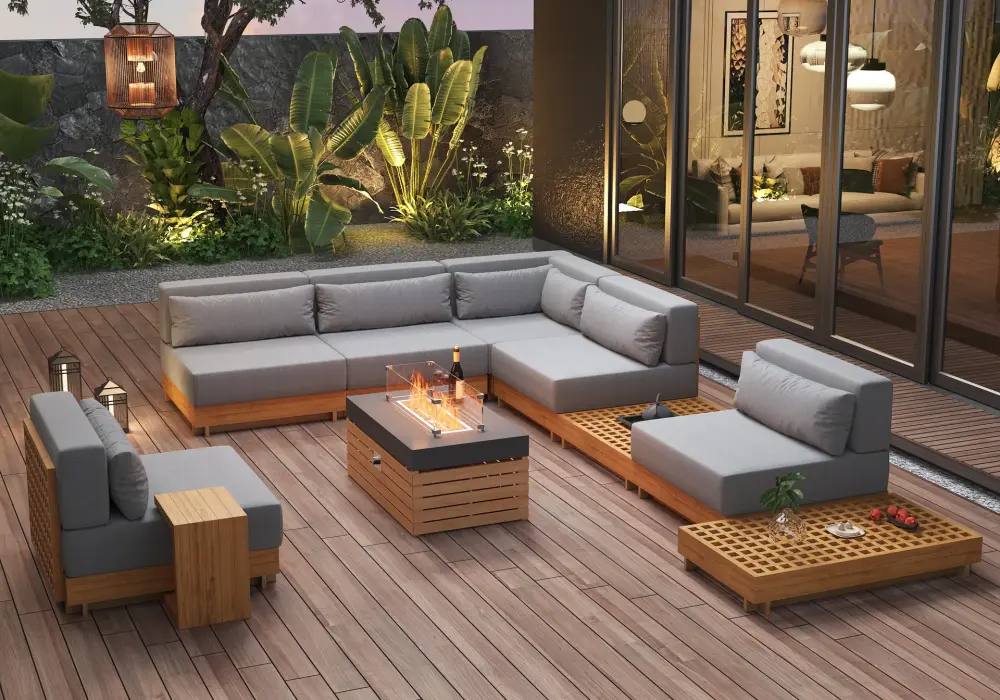
The Homary Sectional Outdoor Sofa Set with Propane Gas Fire Pit Table pairs a rust-resistant aluminium frame with waterproof polyester cushions and a CSA-certified smokeless propane fire pit. The modular layout can be rearranged to suit different gatherings, while the integrated fire pit makes the space comfortable well into spring and autumn. The combination of aluminium, teak accents, and weather-resistant cushions reflects many of the best practices discussed throughout this guide.
How to Choose Patio Furniture for Your Climate
Choosing the right patio furniture isn't just about style—it's about matching the material to the weather where you live.
A sectional sofa that performs beautifully in Arizona may struggle on a humid Florida patio, while furniture designed for the Pacific Northwest may be unnecessary for a dry desert climate.
Instead of asking "What's the best patio furniture?", ask "What's the best patio furniture for my climate?"
Here's a practical guide based on common U.S. climate zones.
Coastal Areas (California Coast, Florida, Gulf Coast)
Biggest Challenges
- Salt air
- High humidity
- UV exposure
- Ocean winds
Salt is particularly aggressive because it speeds up corrosion on exposed metal while humidity encourages mildew on cushions.
Best Materials
Material | Recommendation |
Powder-coated aluminium | ★★★★★ |
Marine-grade stainless steel | ★★★★★ |
Teak | ★★★★★ |
PE resin wicker | ★★★★☆ |
Powder-coated steel | ★★☆☆☆ |
Maintenance Tips
- Rinse metal frames with fresh water every few weeks to remove salt deposits.
- Clean cushions regularly to reduce mildew growth.
- Inspect hardware annually for early signs of corrosion.
Recommended Homary option
If you live near the coast, the 8-Piece Aluminium Rattan Outdoor Sectional Sofa Set is an excellent choice. Its powder-coated aluminium frame resists corrosion while the PE resin wicker won't absorb moisture like natural wicker, making it well suited for salty, humid environments. Teak also performs exceptionally well in coastal settings thanks to its natural oils and dense grain.
Humid & Rainy Regions (Florida, Southeast, Gulf States)
Biggest Challenges
- Frequent rainfall
- High humidity
- Mould
- Slow drying
Here, furniture rarely has time to dry completely before the next rain arrives.
Prioritise:
✔ Quick-draining cushions
✔ Mould-resistant fabrics
✔ Aluminium frames
✔ Resin wicker
Avoid natural wicker unless it's fully protected under a covered porch.
Desert Climates (Arizona, Nevada)
Many homeowners assume rain is the biggest threat to patio furniture.
In desert regions, sunlight is actually more destructive than water.
Extreme UV exposure gradually breaks down:
- Fabric coatings
- Plastic polymers
- Powder-coated finishes
- Wood sealers
Best Materials
- Powder-coated aluminium
- Teak
- High-performance acrylic fabrics
- UV-resistant PE wicker
Extra Tip
Apply a UV and water protectant to outdoor fabrics once or twice a year, especially in areas with intense sunlight, to slow fading and extend fabric life.
Snowy Northern States (Midwest & Northeast)
Winter introduces a completely different challenge.
It's not the snow itself—it's the repeated freeze-thaw cycle.
Water trapped inside tiny cracks expands when frozen, gradually damaging coatings, joints, and porous materials.
Best Materials
- Powder-coated aluminium
- HDPE resin furniture
- Teak
- Marine-grade stainless steel
Winter Storage Checklist
✔ Clean
✔ Dry
✔ Elevate
✔ Cover with breathable covers
✔ Store cushions indoors
Never store wet cushions for the winter.
Pacific Northwest (Seattle, Portland)
The Pacific Northwest presents one of the toughest environments for outdoor furniture.
Unlike Florida, where furniture dries quickly after rain, the PNW experiences months of damp air, morning dew, and intermittent drizzle. Furniture often stays slightly damp for long periods, making drainage and airflow just as important as rain resistance.
Best Choices
- Teak
- Powder-coated aluminium
- PE resin wicker
- Quick-drying cushions with reticulated foam
This is also where breathable furniture covers outperform completely waterproof covers, because trapped condensation can become a bigger problem than the rain itself.
Climate-by-Climate Buying Guide
Your Climate | Frame Material | Cushion Type | Cover Recommendation |
Coastal | Powder-coated aluminium / Marine-grade stainless steel | Quick-dry foam | Brea |