

A traditional TV stand is not your only option for creating a functional and attractive entertainment area. If you have a small living room, rent your home, prefer minimalist décor, or simply want to repurpose furniture you already own, there are plenty of creative alternatives to consider.
So, what can you use instead of a TV stand? Floating shelves, dressers, sideboards, low benches, floor TV stands, cinder blocks, industrial pipe shelving, and built-in storage can all work. The best choice depends on your TV's size and weight, available floor space, viewing height, budget, and whether you can drill into the wall.
This guide explores practical TV stand alternatives with installation, storage, cable-management, and safety tips, so you can choose an option that looks good and works safely in your space.
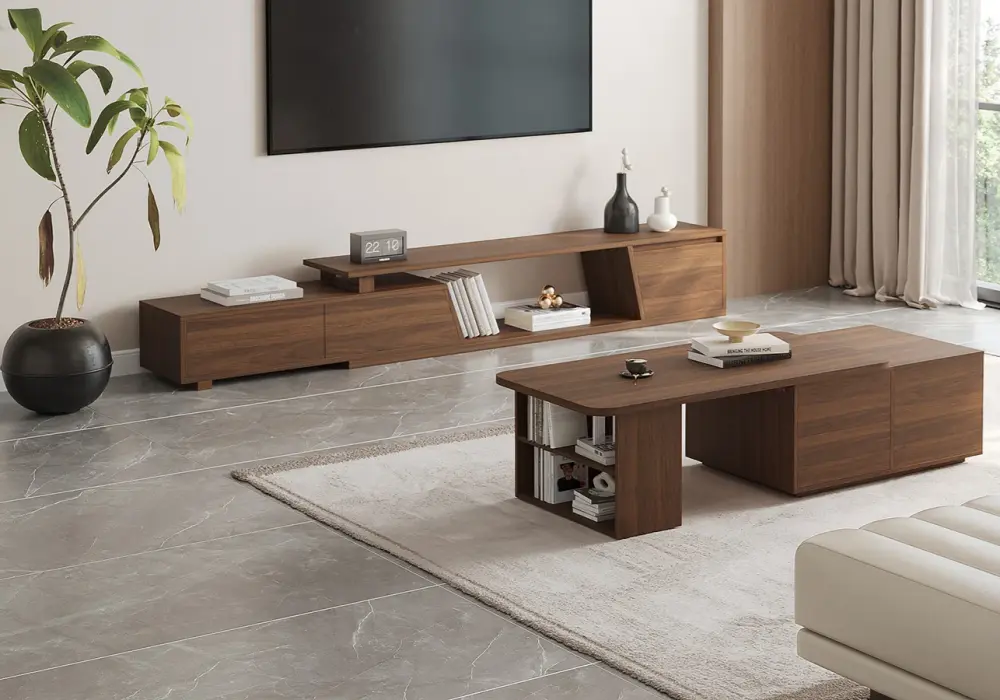
Table of Contents
Floating Shelves: A Space-Saving Alternative to a TV Stand
Floating shelves are one of the best alternatives to a traditional TV stand if you want to keep the floor clear. They work especially well in small apartments and minimalist living rooms because they use vertical wall space instead of adding another bulky piece of furniture.
A floating shelf can sit below a wall-mounted TV and hold a soundbar, streaming device, game console, remote controls, or decorative items. You can also combine several shelves to create a simple media wall.
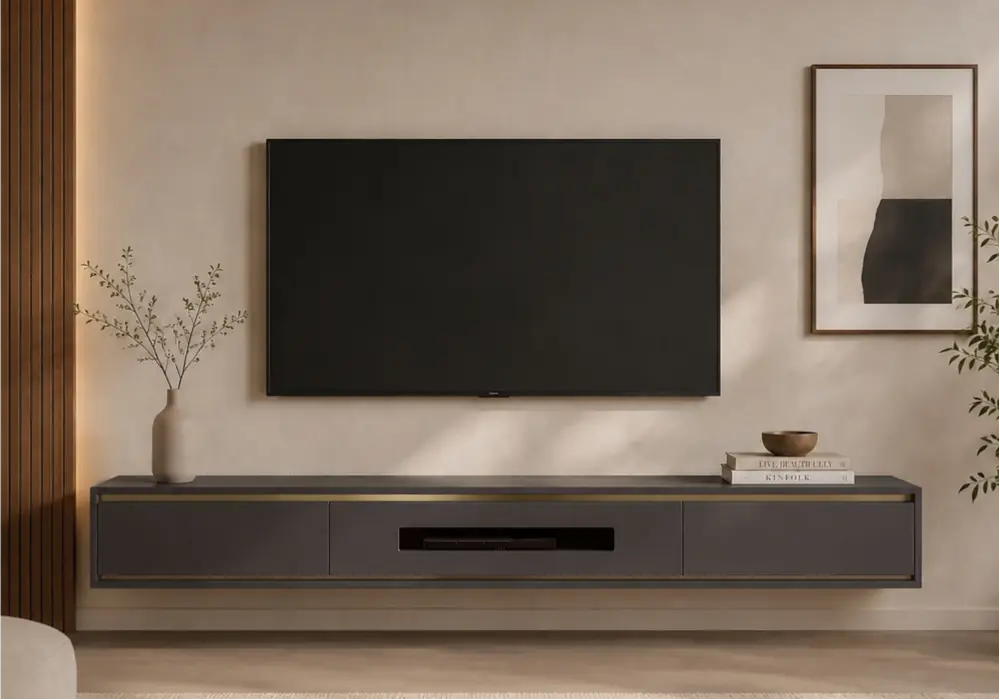
How to Install Floating Shelves for a TV
The most important consideration is not the appearance of the shelf but its load capacity and mounting method. Before buying anything, measure your television's width, depth, and weight. The shelf should be appropriately sized for the equipment you plan to place on it.
For drywall, locate wall studs whenever possible. A bracket secured directly to suitable studs generally provides a stronger installation than relying entirely on drywall anchors. Follow the shelf manufacturer's instructions and never exceed its stated weight capacity.
A basic installation process includes:
- Measure the TV, shelf, and available wall space.
- Locate suitable wall studs.
- Mark the desired shelf height.
- Check the shelf and bracket weight ratings.
- Install the mounting hardware according to the manufacturer's instructions.
- Use a level to make sure the shelf is straight.
- Test the installation before adding valuable electronics.
Also consider the room's depth. A shelf that projects too far into a walkway can make a small room feel cramped.
How Much Weight Can a Floating TV Shelf Hold?
There is no universal weight limit for floating shelves. Capacity depends on the shelf material, bracket design, fasteners, wall structure, and installation method.
For that reason, don't choose a shelf based solely on its advertised appearance or dimensions. Check the manufacturer's load rating and compare it with the combined weight of your equipment.
If you are placing a heavy soundbar, game console, speakers, or other equipment on the shelf, include their weight in your calculation rather than considering the television alone.
Dressers, Sideboards, and Console Tables as TV Stand Alternatives
If you need both a surface for your television and plenty of storage, a dresser or sideboard can be a surprisingly effective TV stand alternative. Repurposing furniture can also give your room more character than a mass-produced media cabinet.
A vintage dresser can store controllers, blankets, DVDs, and other items in its drawers, while a sideboard can hide routers, game consoles, and cables behind closed doors.
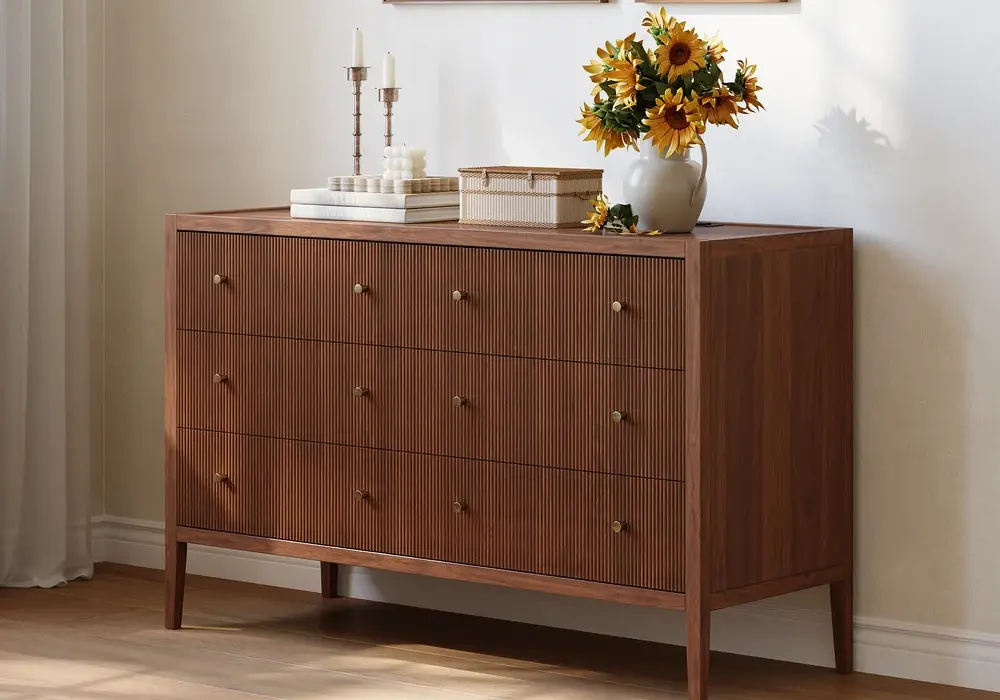
Fluted Natural 6-Drawer Dresser of Homary
How to Choose a Dresser, Sideboard or Console Table for Your TV
Start by comparing the furniture dimensions with your TV. The furniture should provide a stable and appropriately sized surface rather than being significantly narrower than the television.
Pay attention to height, too. A tall dresser may look attractive but place the screen too high for comfortable viewing.
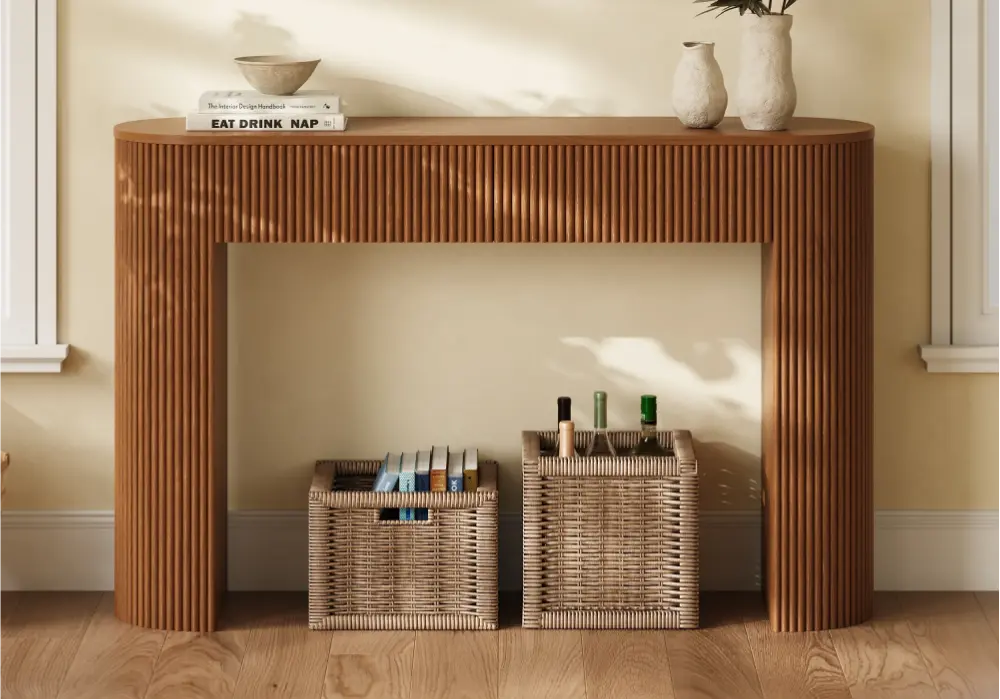
Solid Wood Walnut Fluted Console Table of Homary
How to Reinforce Repurposed Furniture for a TV
Old furniture may need minor repairs before it becomes a safe TV platform. Tighten loose screws and joints, replace damaged hardware, and reinforce weak areas where necessary.
You can also consider anti-tip hardware, especially for tall dressers or homes with children and pets. The goal is to stabilize the entire furniture unit, not simply make the top stronger.
Never assume that a piece of furniture is safe simply because it is made from solid wood. Construction, condition, dimensions, and weight distribution all matter.
How to Hide Cables Inside a Dresser or Sideboard
Closed furniture makes cable management easier because electronics can be hidden behind doors or inside drawers. If appropriate for the furniture's construction, you can create a cable opening at the rear to connect equipment to nearby outlets.
Keep power equipment ventilated and accessible. Avoid tightly enclosing devices that generate heat, and make sure cables are not pinched against sharp edges.
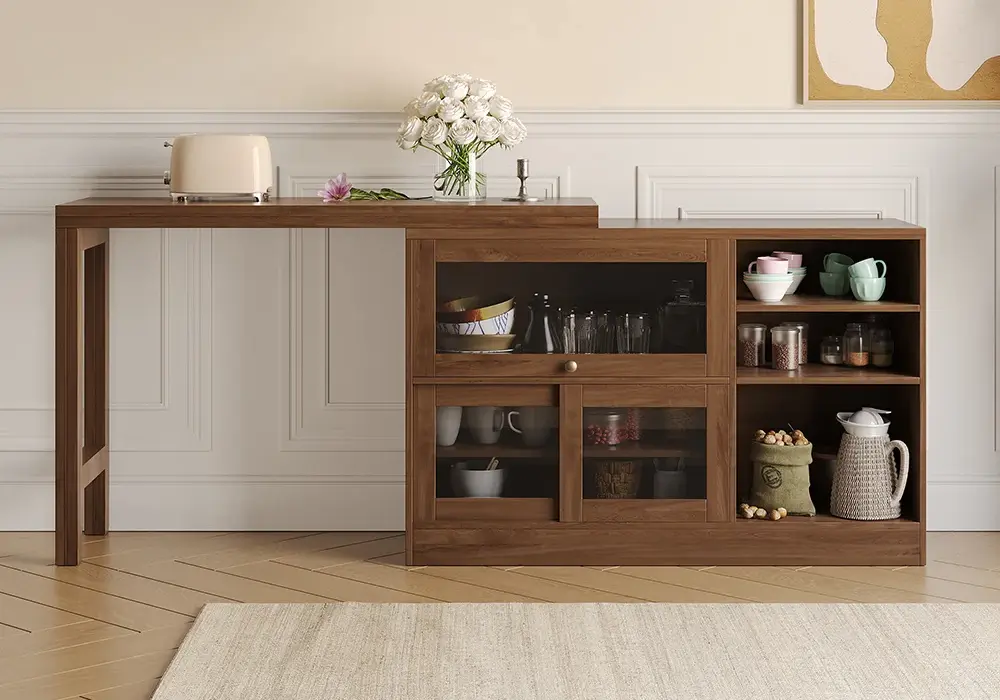
Walnut Wood Sideboard of Homary
Low-Profile Benches and Floor TV Stands for Small Spaces
A low bench is another simple alternative to a traditional TV stand. Because it has a lower visual profile, it can make a compact room feel more open while still providing a stable surface for a television.
This approach works particularly well with minimalist, Scandinavian, modern, and Japandi-inspired interiors.
Why a Low Bench Works as a TV Stand Alternative
A bench takes up less visual space than many enclosed media cabinets. You can use the area underneath for baskets, storage boxes, books, or blankets without making the room feel dominated by furniture.
Choose a bench that is sufficiently wide and deep for your TV. Avoid placing a large television on a narrow bench simply because the dimensions appear to fit.
If your TV is wall-mounted, the bench can become a secondary storage surface rather than the primary support for the television.
How High Should a TV Stand Alternative Be?
There is no single ideal TV stand height because viewing comfort depends on your sofa height, seating position, television size, and personal preference.
A useful starting point is to position the center of the screen close to seated eye level. Measure your seating height before deciding how tall the bench or furniture should be.
For a 55-inch TV, for example, don't choose a stand based only on the television's diagonal size. Measure the actual TV dimensions and calculate where the center of the screen will sit once it is placed on the furniture.
How to Choose a Stable Floor TV Stand
A floor TV stand can replace a conventional cabinet while taking up relatively little floor space. It can also be useful for renters because many models do not require wall drilling.
Check these specifications before purchasing:
- Maximum supported TV weight
- Compatible TV size range
- VESA mounting pattern
- Base dimensions
- Height adjustment
- Anti-tip or stability features
- Cable-management channels
The stand's maximum load should exceed the actual weight of your television. Install it exactly according to the manufacturer's instructions.
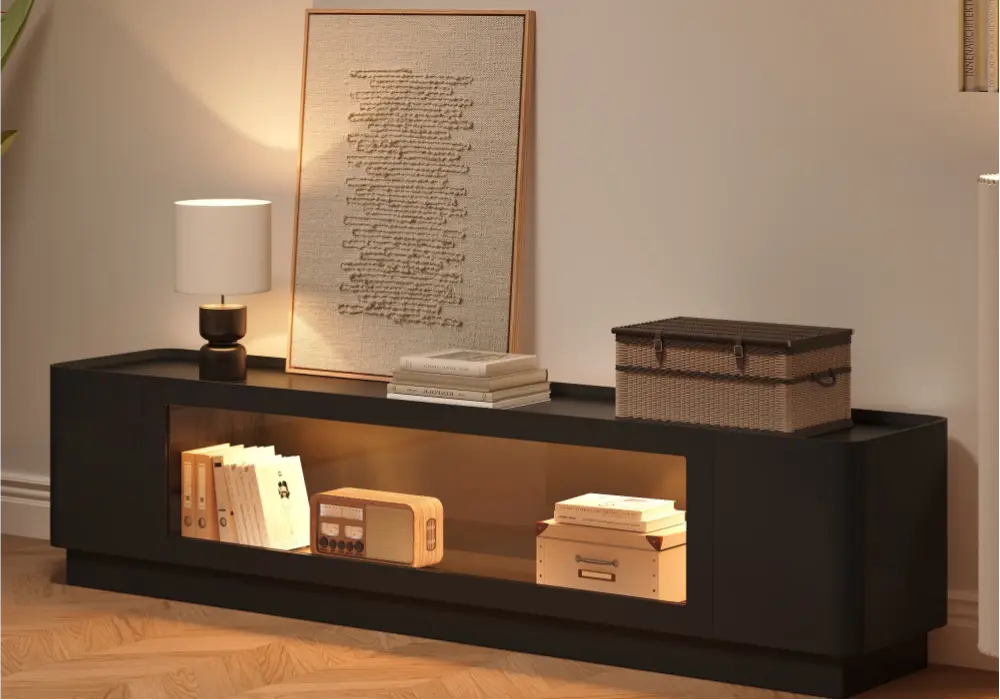
Glass Door Black TV Stand of Homary
How to Add Hidden Storage Under a TV Bench
Storage baskets are one of the easiest ways to turn an open bench into a practical media area. Use baskets to organize controllers, blankets, books, or accessories.
For electronics, avoid blocking ventilation openings. A neat appearance should not come at the expense of airflow around devices.
DIY Cinder Block TV Stands and Industrial Pipe Shelving
If your priority is affordability, a DIY TV stand made from cinder blocks and wood can be a practical option. Industrial pipe shelving offers a similar open-storage concept with a more structured, workshop-inspired appearance.
These solutions are particularly attractive if you enjoy DIY furniture and want to customize the width, height, or number of storage levels.
How to Build a Cinder Block TV Stand on a Budget
A basic cinder block TV stand can be assembled from sturdy boards and concrete blocks.
Start by measuring the television and deciding how much storage space you want underneath. Place the blocks evenly on a stable, level surface, then position the board across the supports.
The basic process is:
- Measure the TV and available floor space.
- Choose appropriately strong boards.
- Determine the number and spacing of the blocks.
- Place the blocks on a level floor.
- Position the boards evenly over the supports.
- Check the entire structure with a level.
- Add cable-management accessories.
- Secure the TV against tipping when appropriate.
The blocks should be evenly distributed so the board does not carry excessive load across a single unsupported span.
What Materials Do You Need for a DIY TV Stand?
A basic project may require:
- Concrete cinder blocks
- Structural wood boards
- Measuring tape
- Level
- Non-slip pads
- Cable clips or sleeves
- Optional anti-tip hardware
Choose materials according to the actual load rather than simply copying a design from a photograph.
How Much Weight Can a DIY TV Stand Hold?
The safe capacity of a DIY stand depends on every component in the structure. The blocks, boards, supports, floor, and connections all contribute to overall stability.
Instead of assuming that concrete blocks automatically make the project safe, check the specifications of the wood and hardware and consider how the load is distributed.
For heavier TVs, use appropriately sized structural boards and more evenly distributed supports. If the stand wobbles, shifts, or bends under load, do not use it for the television.
How to Add Cable Management to a DIY TV Stand
Open shelving can easily become messy if cables are left hanging. Run cables toward the rear of the structure and secure them with clips or cable sleeves.
Leave enough slack for maintenance, but avoid creating large loops that can be pulled accidentally. Labeling cables can also make it easier to identify HDMI, power, Ethernet, and other connections later.
Cinder Block vs. Industrial Pipe Shelving
DIY Option | Approx. Cost | Difficulty | Storage | Best For |
Cinder blocks + wood | $40–$100 | Easy | Open | Tight budgets |
Pipe + wood shelving | $80–$200 | Medium | Open | Industrial interiors |
Custom DIY shelving | $150+ | Medium–High | Flexible | Custom layouts |
Ready to Replace Your Traditional TV Stand?
Choosing an alternative to a TV stand can give you more flexibility, storage, and personality than a conventional media cabinet. Start by measuring your television and available space, then choose between floating shelves, repurposed furniture, a low bench, a floor stand, or a DIY solution based on your budget and installation restrictions.
Before installation, double-check weight limits, mounting hardware, stability, anti-tip protection, and cable routing. If you are unsure whether a structure can safely support your TV, choose a properly rated commercial solution or consult a qualified professional.
The goal isn't simply to find something that can hold a TV. It is to create a safe, comfortable, and organized entertainment area that fits the way you actually use your room.
FAQ
What Is the Cheapest Alternative to a Traditional TV Stand?
A cinder block and wood-board setup is often one of the cheapest options. A suitable secondhand dresser can also be inexpensive, especially if you already own one. Always prioritize structural stability and the TV's weight requirements over saving a few dollars.
Can I Use a Dresser or Sideboard as a TV Stand?
Yes. A dresser or sideboard can work well if it is stable, appropriately sized, and strong enough to support the television. Check for loose joints or damaged components, consider anti-tip hardware, and make sure the TV does not overhang excessively.
How Much Weight Can a Floating Shelf Safely Hold for a TV?
There is no universal weight limit. The safe capacity depends on the shelf, brackets, fasteners, wall construction, and installation method. Always follow the manufacturer's load rating and installation instructions, and account for the combined weight of the TV and any equipment placed on the shelf.
How Do I Hide TV Cables Without a TV Stand?
Cable raceways, cable clips, sleeves, rear furniture channels, and floating shelves can all help hide TV cables. Plan the cable route before installation so you can position the TV and storage close to power outlets and connected devices.
What Is the Best Renter-Friendly TV Stand Alternative?
A freestanding floor TV stand is one of the most practical renter-friendly options because it generally does not require permanent wall drilling. Freestanding media shelves can also work when you need additional storage.
How Do I Build a DIY Cinder Block TV Stand on a Budget?
Use sturdy boards and appropriately sized cinder blocks on a level, stable floor. Distribute the supports evenly, check the strength of the boards, and verify the stability of the finished structure before placing the TV on it. Add cable management and anti-tip protection where appropriate.
What Height Should an Alternative TV Stand Be for a 55-Inch TV?
There is no universal stand height for a 55-inch TV. A good starting point is to position the center of the screen near seated eye level. Measure your sofa height and the actual dimensions of the TV before choosing a bench, dresser, shelf, or floor stand.
What Can I Use Instead of a TV Stand in a Small Living Room?
For a small living room, consider a floating shelf, low bench, or slim floor TV stand. These options use less visual and floor space than a large media console while still providing a place for your television or entertainment equipment.
Can I Put a TV on a Bench Instead of a TV Stand?
Yes, provided the bench is stable, wide and deep enough, and rated to support the TV's weight. Check the television's dimensions and weight before using the bench, and consider securing the TV against tipping when appropriate.