

When deciding what to put on a dining table, start with one low centerpiece, a useful layer such as placemats or a runner, and enough open space for the meal. The best arrangement for dining tables is easy to move, comfortable to look across, and suited to the table’s shape. A bowl, a small vase, or a compact tray can be enough; you do not need to fill the surface.
Think about the moment the table changes from a display to a working dining space. Can you set down plates without relocating six objects? Can the person opposite see you? If decorating creates a daily clearing project, reduce the arrangement until the table supports the way you actually live.
Table of Contents
Choose the Table’s Main Job First
A dining table used for breakfast, homework, and dinner needs a different setup from one reserved for occasional entertaining. Choose the routine you want to make easier, then decorate around it.
For daily meals, keep a small central arrangement that can stay in place while you eat. For a shared work surface, use a tray or single vessel that moves to a sideboard in one trip. For a formal dining room, a more composed display can work between gatherings, provided there is somewhere to put it during service.
Do not buy the centerpiece before checking storage. A large vase may look lovely in the middle of the table but become inconvenient if its only alternative home is the floor. Decide where decor, extra placemats, and seasonal pieces will live when they are not in use.
Build a Simple Everyday Arrangement
Start with three decisions: the focal object, the supporting layer, and the empty space around them.
Choose one focal object with enough presence to look intentional. A wide ceramic bowl suits fruit, while a short vase can hold a few stems. A small sculptural object works when you prefer a display without water or fresh flowers.
Add a layer only if it improves the composition or serves a purpose. A runner can connect a long table visually, and placemats can define each setting. Neither is compulsory. If the tabletop itself has a finish or grain you want to show, leave more of it visible.
Finally, set out an ordinary meal. Put down your actual plates, glasses, and serving dishes. Adjust the centerpiece around those objects. This practical check is more useful than following a decorating rule that ignores how your family eats.
Table use | A workable starting arrangement | Remove or relocate when needed |
Everyday family meals | One low bowl or vase | Spare decorative objects |
Dining and homework | A compact tray with one focal piece | The whole tray before work begins |
Weekend brunch | A small arrangement plus serving space | Decor that competes with shared dishes |
Occasional entertaining | A runner and a few coordinated low vessels | Any element that blocks conversation or service |
Small dining nook | One modest object | Extra layers that crowd the settings |
Match the Centerpiece to the Table Shape
Round Tables: Keep the Center Easy to Reach
A single centered object is a useful starting point on a round table. It creates a focal point without creating a “front” that looks unfinished from other seats. Choose a bowl or vase that leaves a comfortable working area around the edge.
Homary’s Japandi 991–1397 mm Whitewash Round-to-Oval Dining Table changes from round to oval and has a whitewash finish. In its round configuration, try one low ceramic vessel with a soft, simple outline. Let the pale tabletop provide some of the visual interest rather than covering it with multiple competing layers.
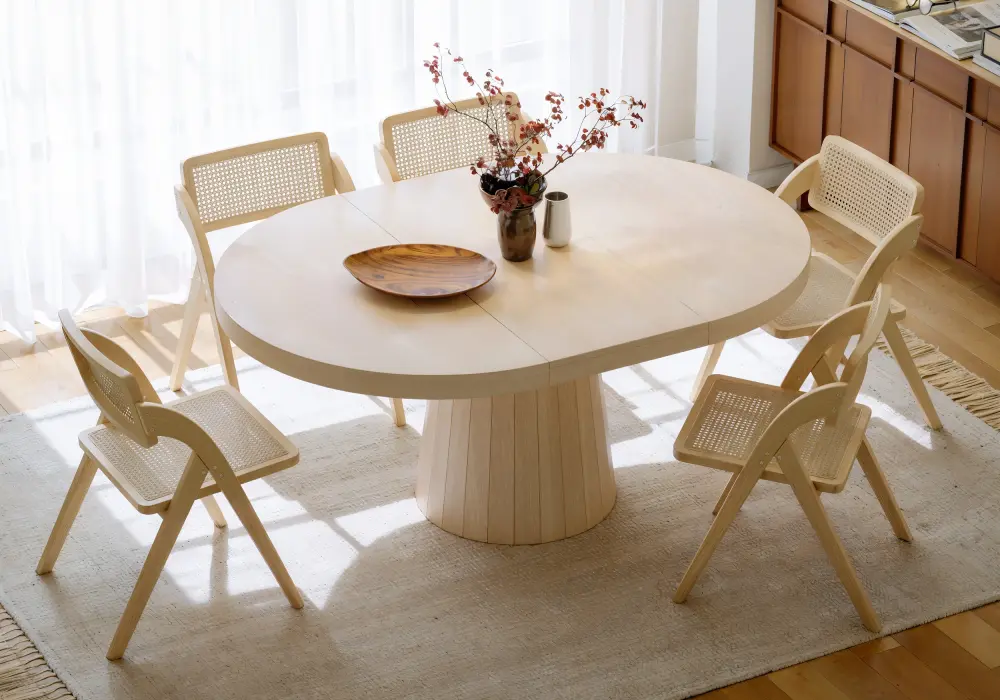
When the table is extended, reassess the arrangement. The original centerpiece may still work by itself; a second modest element is optional. Always clear the surface before operating the extension and follow the table’s instructions.
Oval and Rectangular Tables: Follow the Length Without Filling It
An elongated table can carry a runner, a shallow rectangular tray, or a loose line of low objects. Keep the elements related through color or material so the composition feels connected rather than scattered.
The Fluve 1600–2007 mm Extendable Oval Black Dining Table offers an oval black surface and an extendable format. A light-colored bowl or a restrained arrangement of pale flowers can create contrast against the dark finish. Repeat the light tone in napkins if you want a coordinated setting without adding more centerpiece objects.
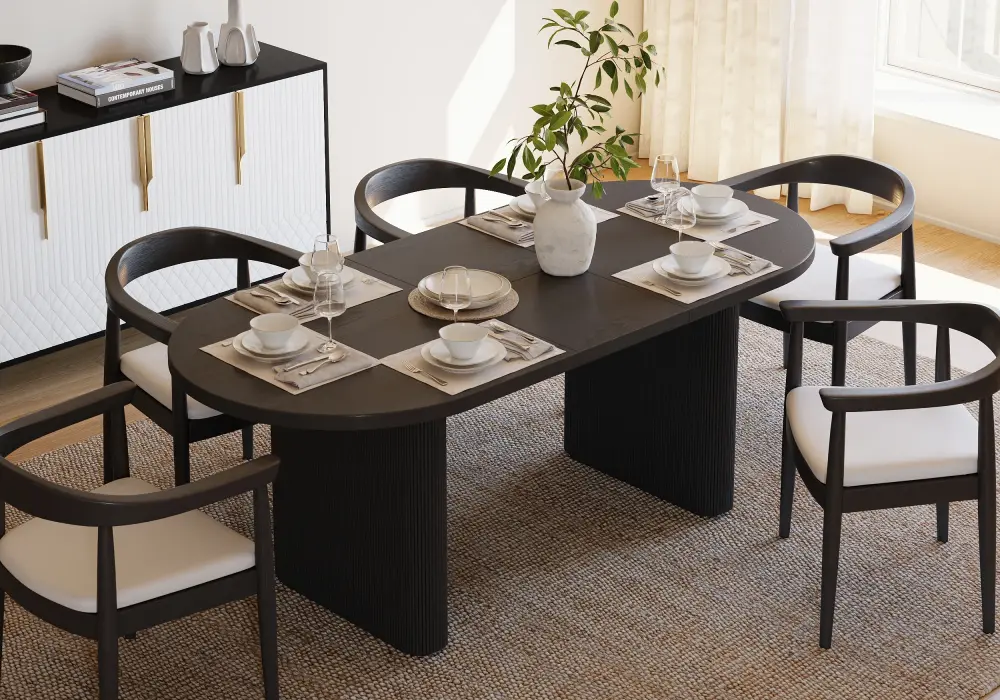
Avoid assuming that a long table needs a long display. One confident focal piece can work particularly well when food is served family-style and platters need the center lane.
Keep Scale and Sightlines Comfortable
Check the arrangement while seated. A vase that looks small when you stand over the table may block the person opposite once everyone sits down. Move around to each chair, especially the seats nearest the ends of an oval table.
There is no single centerpiece height that works in every room. Table dimensions, chair height, vessel shape, and the fullness of the arrangement all matter. Use the actual sightline test instead: can you see faces and pass dishes without leaning around the display?
Width matters too. Leave room for glasses and elbows rather than measuring only the distance between a centerpiece and the plate. If a broad arrangement pushes everything toward the table edge, choose a smaller base or move the decor elsewhere during meals.
A compact table benefits from restraint. The 914–1194 mm Extendable Natural Wood Dining Table with LED Light includes a built-in LED light and an extendable natural-wood design. A single low bowl can complement the wood finish while letting the table’s own lighting remain part of the room.
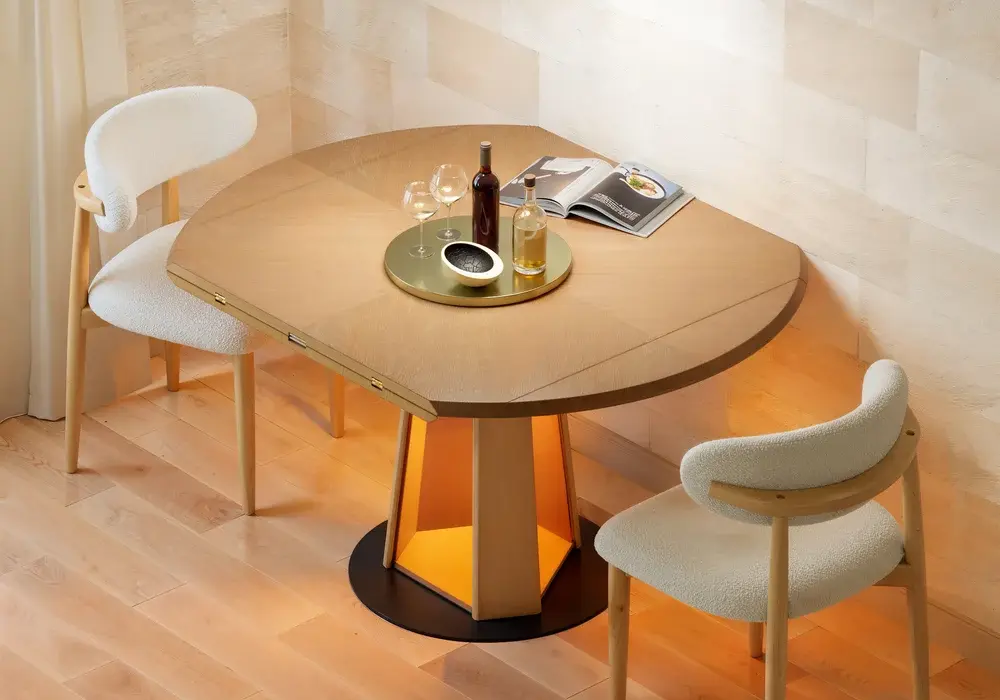
Choose Textiles for Use as Well as Appearance
A runner can soften a hard surface, repeat a room color, or make a central arrangement feel connected. It should sit neatly rather than bunch beneath a vase or catch when someone pulls a chair close.
Placemats offer individual boundaries, but confirm that their size works with your place settings. Oversized mats can overlap on a small round table. Try them with the plates and glassware you use most often before committing to a full set.
A tablecloth changes more of the room’s appearance and can be useful for special occasions. Check the care label and choose a practical drop for your household. Keep loose fabric away from table mechanisms and electrical components, and remove it before extending the table when the instructions require a clear surface.
Do not treat a decorative runner or placemat as guaranteed heat or stain protection. Use trivets and coasters appropriate to the tabletop and follow the table manufacturer’s care guidance.
Use Color and Texture Without Adding Clutter
Choose a small palette drawn from the room. A warm wood table might work with cream ceramics and muted greenery; a black table might suit a pale vessel and textured napkins. These are styling options, not rules about which colors belong together.
Contrast can come from shape and finish as well as color. A smooth bowl against visible wood grain gives the eye something to notice without multiplying objects. A woven textile can add softness to a simple arrangement, provided it sits flat and works with the surface care requirements.
Keep flowers and foliage contained so loose stems do not reach into place settings. If scent distracts from meals, choose an unscented arrangement. For households with young children or pets, select objects and plants appropriate to the household and keep breakable pieces out of easy reach.
Battery-operated candles can offer an evening accent without an open flame. If you use real candles, follow their safety instructions and keep them away from greenery, textiles, and anything that could be knocked into them. They do not need to be part of an everyday display.
Restyle an Extendable Table in the Right Order
Clear the surface first. Move vessels, tableware, and textiles to a secure place before opening leaves or moving the tabletop. Do not slide a heavy centerpiece across the finish while the sections are being adjusted.
Once the table is extended and secured as instructed, arrange the place settings before returning decor. The additional length may be needed for diners and serving dishes rather than a larger centerpiece. Check every seat, including those near the leaf seams.
For a bigger gathering, distribute useful items such as water carafes so guests can reach them without stretching across flowers. Keep heavy or unstable decor off moving joints and follow any restrictions on loading the extended surface.
After the meal, reduce the arrangement again if the table returns to a smaller footprint. A display designed for the extended shape can feel oversized once the leaves close.
Make the Arrangement Easy to Reset
A good daily setup takes little effort to restore. Keep a clear storage spot for the centerpiece, fold spare textiles nearby, and remove objects that repeatedly end up pushed aside. If paper and small belongings gather on the table, give them a separate destination rather than adding another decorative basket to hide them.
Before purchasing accessories, measure the usable surface and try an arrangement with objects you already own. Choose the table shape and everyday routine first; then add the few pieces that make dining feel welcoming.
Frequently Asked Questions
What should I put on a dining table when it is not in use?
One low bowl, a small vase, or a compact sculptural piece is enough. Add a runner only if you like the effect and it works with the table’s care requirements. Keep the arrangement easy to clear when the table is needed.
Does every dining table need a centerpiece?
No. An uncluttered tabletop can look finished, especially when the material, shape, or lighting already adds interest. You can use placemats and napkins during meals and leave the surface clear between them.
Can I use a tray as a dining table centerpiece?
Yes, if the tray leaves room for dining and sits securely. It is particularly useful when the table also serves as a work area because the arrangement moves as one unit. Use a protective base compatible with the finish.
Should a runner stay on the table during dinner?
It can stay if it lies flat and does not crowd the meal, interfere with serving, or conflict with the table’s instructions. Remove it when you need the full surface or before operating an extension mechanism where required.
How do I decorate a small dining table without overcrowding it?
Choose one modest focal object and test it with a complete place setting at every chair. If glasses or plates sit too close to the edge, reduce the display. You can also move the centerpiece to a nearby shelf during meals.