

Wondering what to put on a dining room table? Start with a simple centerpiece, such as a vase, bowl, tray, or small floral arrangement, and add a runner or seasonal accents only when they suit the space. The best dining table decor should fit your table shape, leave room for meals, and be easy to move when needed.
This guide covers simple dining table decor ideas, centerpiece tips for round, oval, rectangular, and extendable tables, and easy ways to style and refresh your table for everyday use.
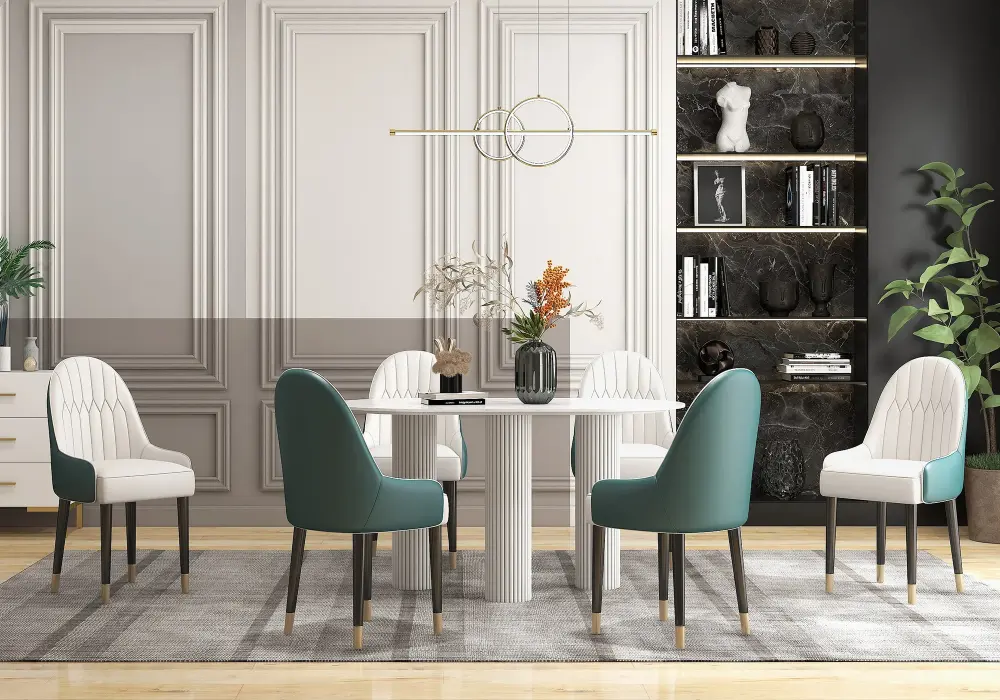
Modern Round Sintered Stone Dining Table
Table of Contents
8 Easy Dining Table Decor Ideas
You do not need several decorative pieces to make a dining table feel finished. Start with one useful or visually simple element, then add only what the table can comfortably hold. The best everyday choices are easy to move, easy to maintain, and suited to the way you use the room.
A Small Vase
A small vase is one of the easiest ways to give a dining table a finished look without taking up much space. Fresh flowers bring changing color, while a dry sculptural vessel gives a similar focal point without the routine of changing water.
Start with the vase alone. View it from the doorway and from a seated position before adding anything else. If the table already has a distinctive base or a strong finish, extra accessories may compete with the furniture.
A Decorative Bowl
A ceramic or rounded bowl works well as a simple centerpiece, especially on a round table. A fruit bowl is useful when the fruit actually gets eaten; replenish it selectively so it does not become an overfilled storage basket.
An open tabletop can also be the right choice, especially in a dining area that shares space with the living room. A bowl does not have to be filled simply because there is space for it.
A Tray with a Small Centerpiece
Put a small vase and one other object on a shallow tray, then lift the whole group away when the table is needed for another activity. Keep the tray comfortably inside the tabletop edge rather than letting its handles intrude into someone's place setting.
A tray works particularly well when the dining table also serves as a workspace. It gives the decor a defined home and makes clearing the surface a one-trip task.
Fresh or Dried Flowers
For everyday flowers, a few stems in a stable vessel often work better than a large bouquet. Strip foliage that would sit in water and use a watertight container with a protective base. Keep water and damp leaves away from the furniture finish.
Tall branches can look striking when the table is idle. Treat that as a display arrangement and plan a nearby place to put it during dinner. There is no need to make one centerpiece serve every occasion.
A Table Runner
A runner can soften a dark tabletop, repeat a color from the curtains, or define the center of an elongated table. It is optional. On a small round surface, a runner may create more visual interruption than useful structure, while a bowl on its own can feel settled.
Choose a washable textile if the table is used daily, and follow its care label. A decorative runner does not automatically protect a tabletop from hot serving dishes. Use suitable trivets for heat and coasters for drinks, following the table's care instructions.
Candles
Battery candles can add a warm glow without introducing an open flame into a crowded arrangement. If using real candles, follow their safety instructions and keep them away from flowers, textiles, and anything guests will reach across.
Strongly scented candles are usually distracting at a meal, where the food already supplies the aroma.
Seasonal Decor
Keep one dependable base piece and change a small part of the arrangement. A favorite bowl can hold citrus in winter or a few seasonal objects when the table is not in use. A simple vase can take leafy stems in spring and a smaller, warmer-colored arrangement later in the year.
Repeat a color that already belongs in the room, such as the chair upholstery or a piece of artwork. This gives seasonal decor a connection to the space without requiring matching accessories everywhere.
Nothing at All
A dining table does not always need a centerpiece. A table with an expressive finish or sculptural base can look complete with an open top, especially in a compact dining area where accessories would crowd everyday settings.
If the room feels sparse, add visual interest nearby with artwork or lighting before filling the tabletop.
Choose Dining Table Decor Based on Table Shape
The same centerpiece does not work equally well on every dining table. The tabletop's shape, size, seating capacity, and whether it extends should influence how much decor you use and where you place it. Think about the usable dining surface first, then choose an arrangement that works within it.
Round Dining Tables
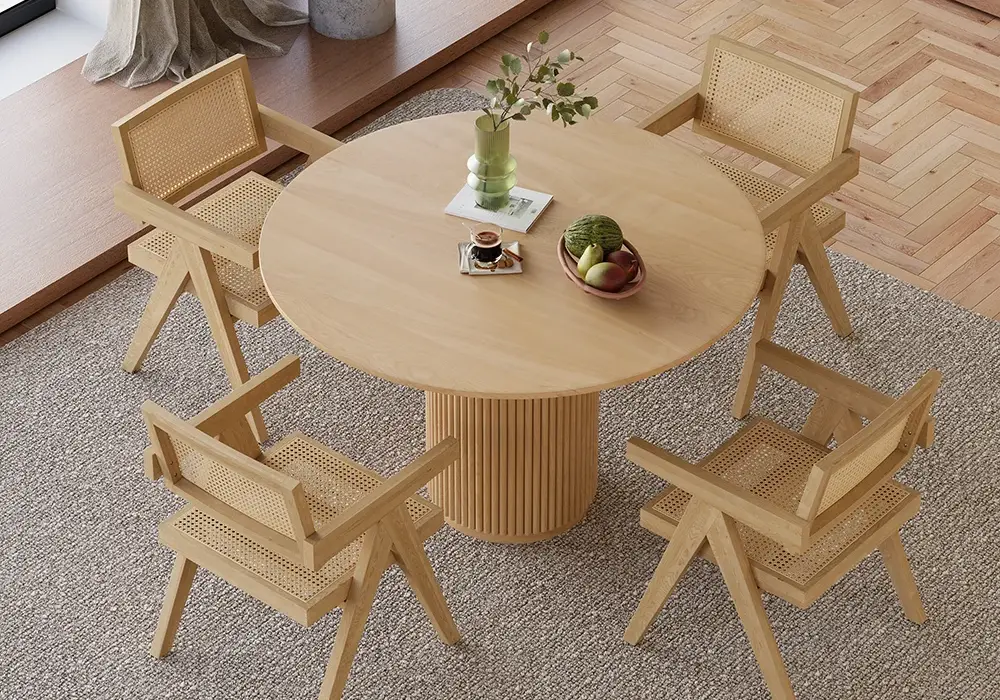
A round table usually benefits from one compact central group. Several separated objects can use up the serving space surprisingly quickly because everyone approaches the same center. Try a rounded bowl or a short vase, then place 4 everyday settings around it to see how much room remains.
For example, Homary's 991 mm round natural wood dining table has a pedestal base and seats 2 to 4. At 991 mm across (99 cm), its circular surface leaves limited room for a sprawling centerpiece, so one vessel can provide a focal point while keeping the rest of the tabletop available for meals.
Oval Dining Tables
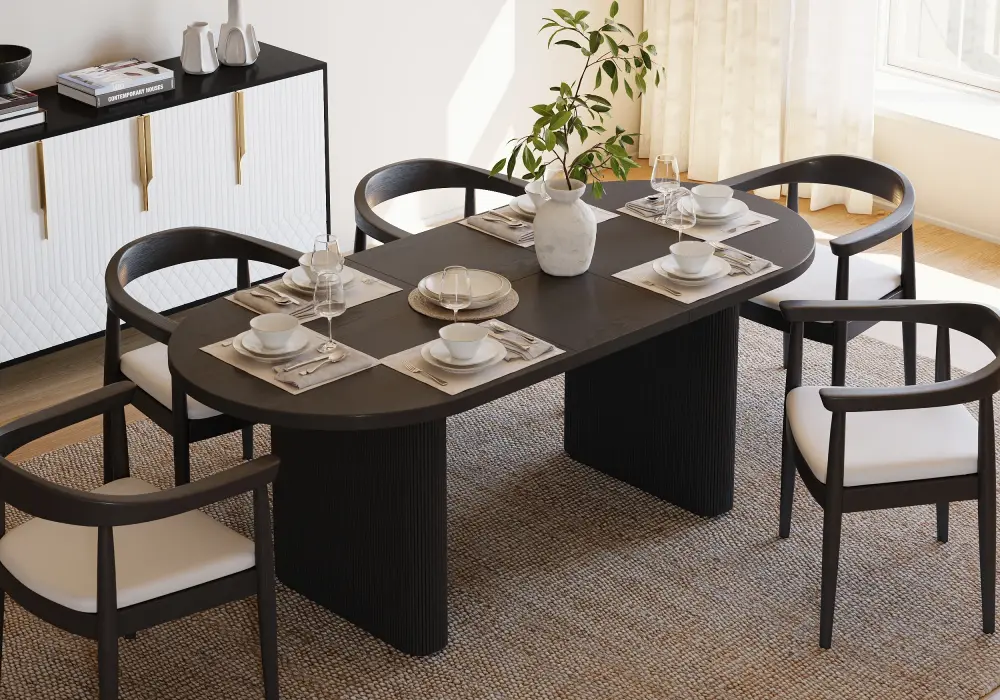
An oval table gives an arrangement more direction. A narrow runner or a small group arranged along the center can follow the table's length, but keep the ends available for diners.
On the Fluve extendable oval black dining table, the dark surface can provide contrast for pale ceramics or greenery. The table extends from 1600 mm to 2007 mm (160 to 201 cm) and seats 4 to 6, making a movable centerpiece particularly useful when the layout changes.
Rectangular Dining Tables
A longer rectangular table can support more direction across the center, but decoration should still leave room for place settings and serving dishes. A runner can help define the middle of the table, while a single low arrangement can keep the overall look simple.
Avoid stretching the decoration simply because the table is long. The added surface is often needed for plates, serving dishes, and other practical items.
Extendable Dining Tables
When a table changes size, the decor should be able to change with it. A movable vase or tray is often more practical than a fixed arrangement that only works at one length.
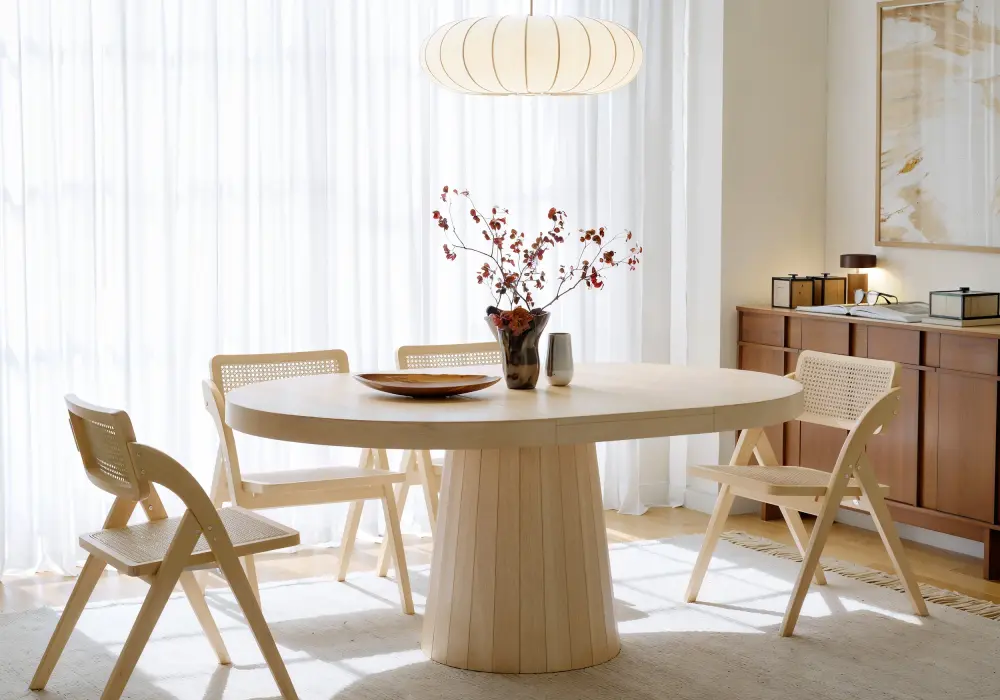
The 991–1397 mm whitewash round-to-oval extendable dining table, for example, changes shape as well as length, from 991 mm to 1397 mm (99 to 140 cm). A movable vase works in both configurations. For an extended dinner setting, a narrow runner can follow the oval surface, while the closed round configuration may suit a simpler central bowl.
How to Create an Everyday Dining Table Arrangement
Once you have chosen a decor piece that suits the table, the next step is to decide how much to use and where to place it. A good everyday arrangement should look intentional from around the room without making meals, conversation, or cleanup more difficult.
Start with the Centerpiece Alone
Begin with the centerpiece rather than filling the table with accessories. View it from the room entrance and from a seated position before deciding whether anything else is needed.
If the table already has a distinctive base or a strong finish, extra accessories may compete with the furniture. An open surface can be more effective than a crowded one.
Keep the Arrangement Low for Conversation
The right centerpiece height is the one that leaves faces visible across your particular table. Sit in the dining chairs and look toward the opposite seat. If leaves or stems obscure the person there, shorten the arrangement or move it before guests arrive.
This seated test is more useful than choosing a vase by height alone, because the flowers can extend well beyond the container.
Make the Arrangement Easy to Move
A centerpiece earns its place when it is easy to live around. A small vase and another object on a shallow tray can be lifted away when the table is needed for another activity.
Give the arrangement a nearby place to go, such as a sideboard or shelf. That makes it easier to clear the table without turning dinner into a decorating project.
Use a Runner Only When It Has a Clear Job
A runner should add structure rather than simply fill space. Check it with chairs pushed in and pulled out. A long overhang should not catch on a chair or brush a guest's lap.
If the table extends, test the runner at both lengths rather than assuming the same drop will work.
How to Style the Table for Everyday Meals
Decor should support the meal rather than dictate where plates and serving dishes go. For everyday use, set up the table as you normally would first, then fit the decorative elements into the remaining space. This also makes it easier to see when an arrangement needs to be reduced or moved.
Set the Table Before Adding Decor
For a casual meal, start with the settings and serving dishes. Add decor only after their positions are clear.
Try this setup sequence:
- Set out the actual plates, glasses, and cutlery for the expected number of people.
- Place the largest serving dishes and a water pitcher where they can be reached.
- Add a low centerpiece in the remaining space, or move it to the sideboard.
- Sit at the tightest place setting and check elbow room and sightlines.
Leave Room for Serving Dishes
A family-style dinner needs more open center space than a meal plated in the kitchen, so the same table may need different arrangements on different evenings.
Do not assume that an extended table needs more decoration simply because it has more surface area. The extra space may be needed for food and place settings.
Check Elbow Room and Sightlines
The final arrangement should work from a chair, not just from across the room. Check whether guests can see one another, reach shared dishes, and sit without brushing against decor.
If the centerpiece makes the tightest place setting feel crowded, make the arrangement smaller or move it aside.
Move Decor Aside When Needed
A dining table may also serve as a desk, homework station, or project surface. Use one portable arrangement and give work supplies a separate storage place. A tray can move to a shelf when a laptop comes out, then return afterward.
The goal is not to keep the table permanently decorated. It is to make the surface easy to reset.
How to Refresh Your Dining Table Decor Seasonally
Seasonal styling does not require a completely new table setting every few months. Keep a dependable base and change one or two smaller elements so the table still feels connected to the room and remains practical for everyday use.
Keep One Dependable Base Piece
Start with one bowl, vase, tray, or other piece that works year-round. Change a smaller part of the arrangement instead of replacing everything.
Change Flowers, Fruit, or Small Objects
A favorite bowl can hold citrus in winter or a few seasonal objects when the table is not in use. A simple vase can take leafy stems in spring and a smaller, warmer-colored arrangement later in the year.
Repeat Colors Already in the Room
Repeat a color that already belongs in the room, such as the chair upholstery or a piece of artwork. This gives seasonal decor a connection to the space without requiring matching accessories everywhere.
Remove Before You Add
If the display feels busy, remove an object before buying another. Seasonal styling works best when the table still has enough open space for everyday use.
For the final check, clear away anything that makes daily meals harder. The answer to what to put on a dining room table is often a smaller arrangement than the first idea. Keep the focal point easy to move so the table is ready for meals.
Frequently Asked Questions
Should I Leave Placemats on the Table All Day?
You can, if they stay clean and the table is used mainly for dining. On a table that also handles homework or projects, store them nearby and set them out at meals. Periodically lift placemats and clean underneath according to the furniture care instructions rather than letting crumbs or moisture remain trapped.
Can a Dining Table Look Finished Without a Centerpiece?
Yes. A table with an expressive finish or sculptural base can look complete with an open top. This is especially effective in a compact dining area where accessories would crowd everyday settings. If the room feels sparse, add visual interest nearby with artwork or lighting before filling the tabletop.
What Works Best When the Dining Table Also Serves as a Desk?
Use one portable arrangement and give work supplies a separate storage place. A tray can move to a shelf when a laptop comes out, then return afterward. Avoid making a permanent centerpiece the obstacle that forces papers and meals into the same small patch of tabletop.
How Do I Keep a Centerpiece from Feeling Too Small?
Judge it from the room entrance as well as from a chair. A small vessel may feel appropriate on a round table but isolated on a long oval surface. Add a modest runner or a second low object if needed, then check the arrangement with place settings before increasing its size further.