

A reclining sofa gives a living room something a traditional sofa cannot: built-in comfort that changes the shape of the seating area when you use it. But that extra movement also makes decorating the space in front of the sofa more challenging. A coffee table that looks perfect when the footrests are closed can suddenly become an obstacle when the seats recline.
So, what should you put in front of a reclining sofa? The answer depends on your room size, sofa style, and how far the footrests extend. Low-profile ottomans, poufs, benches, rugs, and lightweight trays can add function without getting in the way, while side tables and slim storage can keep everyday essentials within easy reach.
The key is to design around clearance first and decoration second. This guide explains practical spacing rules and shows how to create a comfortable, functional setup without sacrificing style.
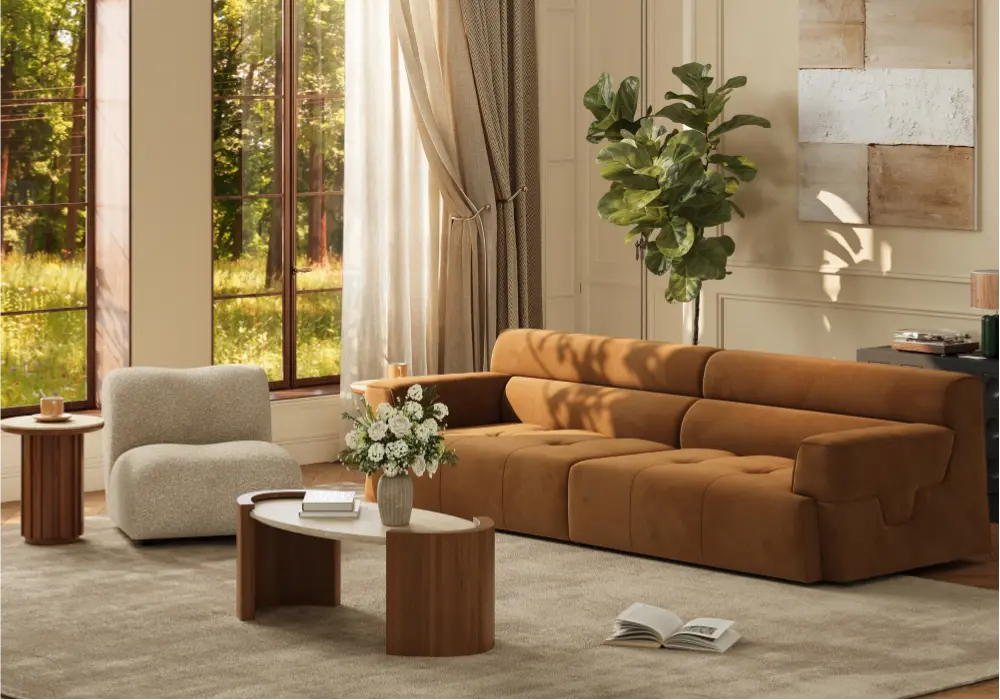
Velvet Power Convertible Sleeper Sofa of Homary
Table of Contents
How Much Space Should You Leave in Front of a Reclining Sofa?
Before choosing a coffee table, ottoman, or rug, measure the sofa with its reclining mechanisms fully extended. This is the most important rule for arranging furniture around a reclining sofa.
A reclining sofa generally needs more open space than a standard sofa because the footrests move forward and, depending on the design, the back may also move backward. As a practical starting point, leave approximately 457–610 mm of open space between the fully extended footrest and the nearest fixed furniture.
For a standard coffee table or other centerpiece, the distance between the sofa's front edge and the table should usually be around 457–762 mm when the sofa is in its normal upright position. However, don't rely on this measurement alone. Recline every seat and check the actual clearance.
Front-of-sofa element | Suggested clearance | Best for |
Small ottoman/pouf | 457–610 mm | Compact rooms |
Coffee table | 508–762 mm | Medium/large rooms |
Bench | 610–762 mm | Flexible seating |
Main walkway | 762–914 mm | Comfortable traffic flow |
Fully extended footrest to fixed furniture | 457–610 mm minimum | Reclining safety |
In a smaller living room, you may need to reduce the number of pieces rather than squeeze everything into the available floor area. A lightweight pouf that can be moved aside is often more practical than a large rectangular coffee table.
Also consider the width of the walking path. If people regularly walk between the reclining sofa and another piece of furniture, aim for roughly 762–914 mm of circulation space where possible.
The most useful test is simple: open every footrest, sit down, and walk around the sofa. If you have to turn sideways to pass or your feet touch the furniture, the layout is too tight.
Best Low-Profile Pieces for the Front of a Reclining Sofa
Once clearance is established, the area directly in front of the sofa can become a useful comfort zone. The best centerpiece is usually low, lightweight, and easy to move.
Choose an Ottoman That Works With the Recliner
An ottoman is one of the most versatile choices because it can function as a footrest, extra seat, or temporary table when paired with a tray.
Look for an ottoman that sits low enough not to interfere with the reclining footrest. In many layouts, an overall height of around 356–457 mm works well, although the correct height depends on your sofa and personal comfort.
A rectangular storage ottoman can work especially well in a family room. Choose one with a firm, flat top if you want to place a tray on it.
For homes with children or pets, consider:
- Durable performance or pet-friendly upholstery
- Rounded corners instead of sharp edges
- Stain-resistant fabrics
- Removable or washable covers
- Lightweight construction that is easy to reposition
Try a Pouf for a Small Living Room
Poufs are excellent when floor space is limited. They provide a place to rest your feet without creating the visual and physical weight of a traditional coffee table.
Choose a pair of small poufs if your sofa has multiple reclining seats. They can be pushed toward the side whenever someone wants to recline.
Use a Bench as a Flexible Centerpiece
A narrow bench can provide extra seating while keeping the center of the room visually open. Look for a low-profile design rather than a deep storage bench.
A bench around 406–457 mm high can work well in many living rooms, but measure the reclining path before purchasing. The goal is to keep the footrest from striking the bench.
Add a Tray for Everyday Items
If you want the functionality of a table without committing to a bulky table, place a rigid tray on an ottoman. It can hold remotes, books, drinks, or decorative objects and can be lifted away quickly when the sofa reclines.
The general rule is: the centerpiece should move as easily as the people using the sofa.
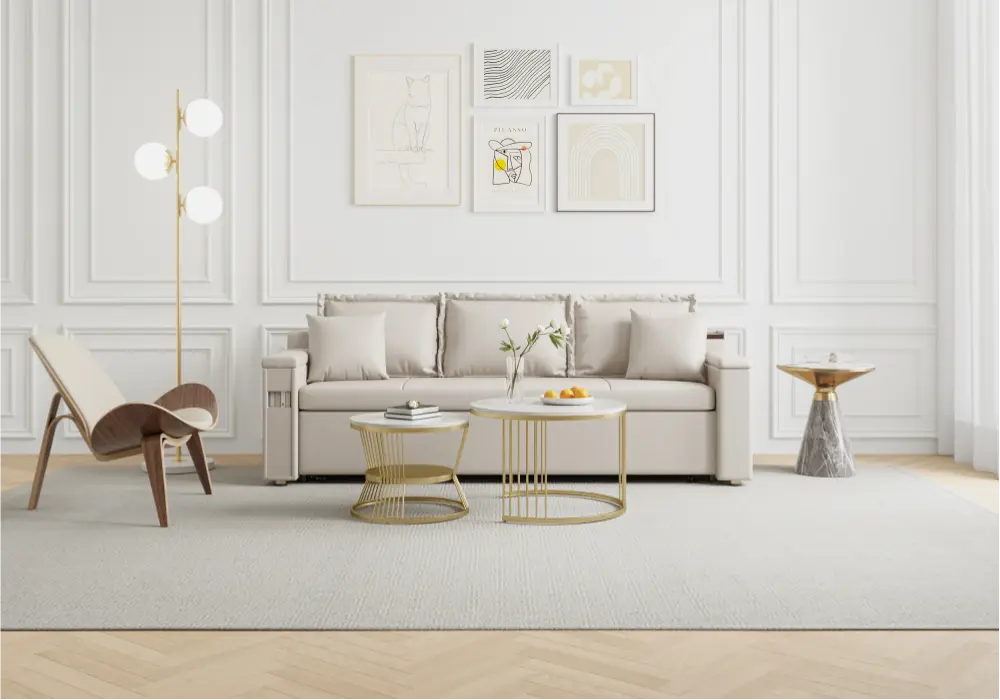
Leather Sleeper Sofa of Homary
Best Side Tables and Slim Storage for Reclining Sofas
Not everything needs to go directly in front of the sofa. In fact, keeping the center relatively open often makes a reclining sofa much easier to use.
Keep Essentials Within Arm's Reach
A small side table beside each reclining seat can hold a drink, phone, remote control, reading glasses, or a book.
For a reclining seat, the ideal side table height is generally close to the height of the sofa's armrest—often around 559–660 mm, depending on the sofa. The exact goal is comfort: you should be able to reach the table without leaning forward significantly while seated.
A narrow C-shaped table is particularly useful in tight spaces. Its base can slide underneath the sofa or chair, while the tabletop extends over the arm area.
Consider Slim Storage Instead of a Coffee Table
If you need storage but don't want furniture in the reclining path, consider placing a narrow cabinet, console, or storage bench beside the sofa rather than directly in front of it.
This creates a better division of space:
- Center: open for reclining and walking
- Side: storage and everyday essentials
- Front: rug, ottoman, or lightweight accent
- Wall: TV and media storage
Avoid putting a deep storage trunk or heavy cabinet directly on the centerline of the sofa. Even if it fits when the seats are upright, it can become difficult to move when the footrests are extended.
For an especially narrow room, you can also skip side tables entirely. Wall-mounted shelves, slim floating ledges, or a small basket beside the sofa can provide storage without adding another piece of furniture.
How to Choose and Place a Rug in Front of a Reclining Sofa
A rug can visually connect the sofa with the rest of the living room, but its placement matters more with reclining furniture.
Choose the Right Rug Size
For many living rooms, an 2438 × 3048 mm rug is a versatile starting point for a medium seating arrangement, while a 2743 × 3658 mm rug works better in a larger room.
For compact rooms, a 1524 × 2134 mm or 1829 × 2743 mm rug may be sufficient, depending on the sofa and surrounding furniture.
Rather than choosing a rug based only on the sofa's width, consider the entire seating zone.
Room size | Common rug starting point | Layout idea |
Small living room | 1524 × 2134 mm or 1829 × 2743 mm | Front legs on rug |
Medium living room | 2438 × 3048 mm | Sofa and centerpiece connected |
Large living room | 2743 × 3658 mm | Full seating zone on rug |
Keep the Rug Out of the Reclining Mechanism
The rug should not create a thick ridge directly beneath or in front of a moving footrest. Avoid excessively thick pile if your sofa's mechanism sits close to the floor.
Ideally, the rug's front edge should extend far enough into the room to anchor the seating area without creating a trip hazard. If the rug ends near a frequently used walkway, secure it with a non-slip rug pad.
Layering a smaller patterned rug over a larger neutral rug can also work, particularly in large rooms. Keep the layers flat and make sure their edges do not sit directly in the path of the reclining mechanism.
Finally, remember cords. If your reclining sofa has electric controls, run power cables along the back or side of the seating area whenever possible. Use a cord cover or cable management channel where a cable must cross the floor, and keep it away from moving footrests.
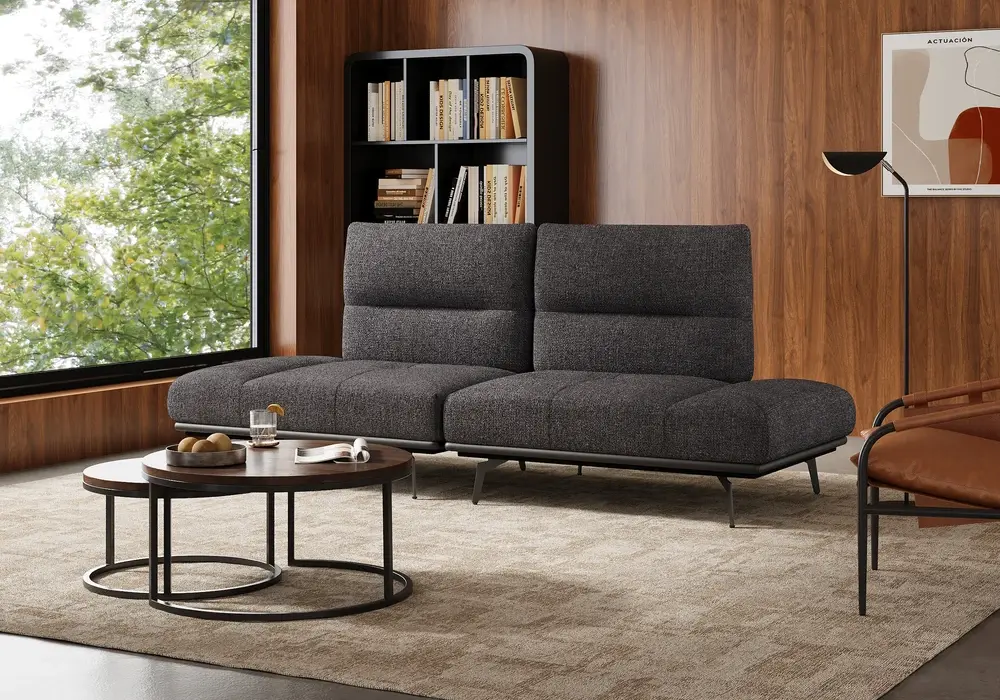
Yarn-Dyed Fabric and Faux Leather Reclining Sectional Sofa of Homary
How to Arrange a TV Console Across From a Reclining Sofa
The wall opposite your reclining sofa is part of the overall layout—not just a place to hang a television.
Leave Enough Space Between the Sofa and TV Wall
The appropriate viewing distance depends on TV size and personal preference, but the sofa should also have enough room for the footrests to open and for people to move through the room.
If the TV console is directly opposite the sofa, choose a relatively shallow model, often around 305–457 mm deep, rather than a large, deep cabinet.
This helps preserve floor space while providing storage for media equipment.
Get the TV Height Right
Because reclining changes your viewing angle, the TV does not necessarily need to be mounted as high as it would be in a conventional seating arrangement.
A useful approach is to position the screen so the center of the TV is comfortable to view while you are seated and reclined. Avoid placing it so high that you have to tilt your head upward.
Keep Lamps and Wall Decor Out of the Footrest Path
A floor lamp can work beside the sofa or toward the outer edge of the seating arrangement. Avoid placing its base directly in front of a reclining seat.
Wall-mounted lighting is another good solution when floor space is limited. Similarly, artwork or mirrors above the TV console can complete the wall without taking up floor area.
For media cables, route wires behind the console or through a wall-mounted cable management system. Keeping cords away from the sofa's moving components is both cleaner and safer.
Putting It All Together: A Simple Reclining Sofa Layout
The best answer to “what to put in front of a reclining sofa” isn't necessarily one large piece of furniture. A balanced setup often uses several smaller elements:
Reclining sofa → open footrest zone → low rug → movable ottoman or poufs → clear walkway → TV console
For a small room, simplify it further:
Reclining sofa → rug → one movable pouf → open walkway
For a larger family room:
Reclining sofa → rug → ottoman with tray → walkway → shallow TV console
Start with the sofa in its fully reclined position, then build the room around the largest amount of space it occupies. Once you know the required clearance, add furniture one piece at a time.
If your room feels crowded, don't try to fill every empty spot. Reclining sofas benefit from negative space. Removing one bulky coffee table can make the entire seating area feel more comfortable and functional.
Make One or Two Changes First
If you're redesigning your living room, you don't need to replace everything at once. Start with the change that solves your biggest problem.
- Footrest hitting furniture? Increase the front clearance or replace the coffee table with a pouf.
- No place for drinks or remotes? Add a slim side table.
- Room feels disconnected? Use a properly sized area rug.
- TV wall feels cluttered? Choose a shallow console and hide the cables.
- Small room feels cramped? Remove the center furniture and keep the front zone flexible.
A good reclining sofa layout should feel effortless: everything you need is close by, while the parts that move have enough room to do their job.
If you're planning a new setup, measure your sofa, room, and fully extended footrest before shopping. A few minutes with a tape measure can save you from buying furniture that looks great but doesn't work in the space.
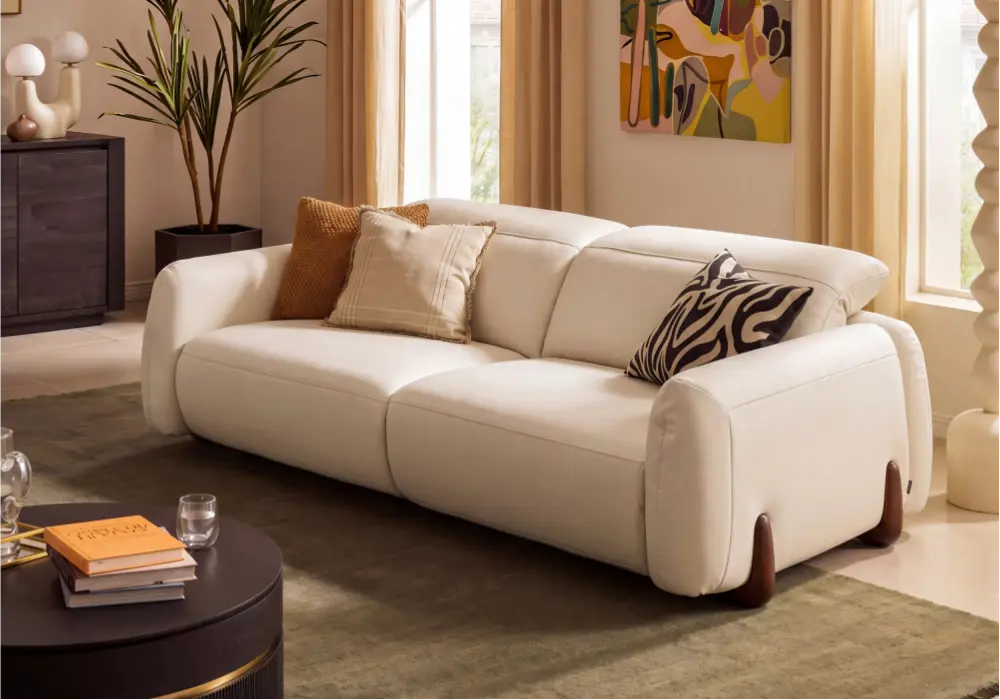
Genuine Leather Power Reclining Sofa of Homary
FAQ
What can I put in front of a reclining sofa without blocking the footrest?
Choose low-profile, lightweight pieces such as a pouf, small ottoman, or movable bench. Keep at least 457–610 mm of clearance between the fully extended footrest and fixed furniture whenever your room allows.
How much clearance do I need between a reclining sofa and a coffee table?
A practical starting point is approximately 508–762 mm between the sofa's front edge and the coffee table when the sofa is upright. Always test the distance with the recliner fully extended because the actual mechanism can require more room.
What is the best height for an ottoman or coffee table in front of a recliner?
An ottoman around 356–457 mm high is often comfortable for a reclining sofa, while the best coffee table height depends on the sofa and seating position. The table should remain low enough not to interfere with the footrest or obstruct the view.
Can I use a storage trunk or bench as a centerpiece in front of a reclining sofa?
Yes, but choose a relatively low and lightweight design. A storage trunk can be difficult to move if it is heavy or oversized, so a movable ottoman or narrow bench is usually more practical for a frequently used reclining sofa.
What size rug should I choose for the front area of a reclining sofa?
For many medium living rooms, an 2438 × 3048 mm rug is a good starting point. Smaller rooms may work with a 1524 × 2134 mm or 1829 × 2743 mm rug, while large seating areas can benefit from a 2743 × 3658 mm rug. Choose based on the entire seating arrangement rather than sofa width alone.
Where should side tables and lamps go next to reclining seats?
Place side tables beside the sofa, close enough to reach comfortably without leaning forward. A table roughly level with the sofa arm is usually practical. Keep floor lamps beside or outside the reclining path rather than directly in front of a footrest.
How do I arrange a TV console and hide cords across from a reclining sofa?
Use a shallow TV console, ideally around 305–457 mm deep, and route cables behind the console or through a cable management channel. Keep power cords away from the moving footrests and avoid placing lamps or other floor-standing objects in the reclining path.