

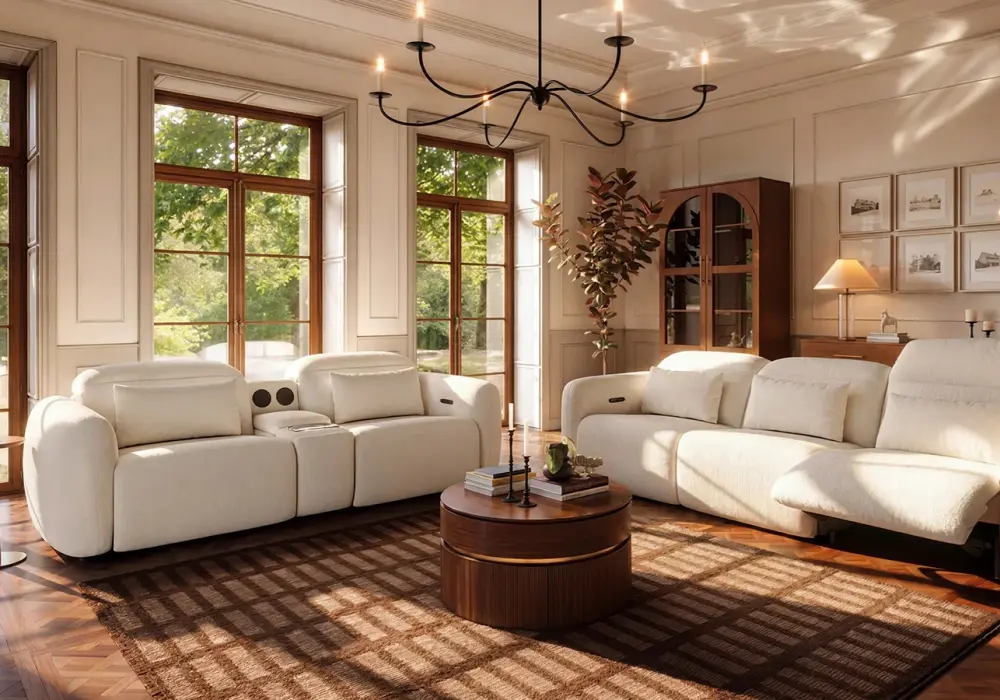
A reclining sofa needs more planning than a standard couch because its back and footrest move when you recline. That makes the space behind it both a design opportunity and a functional clearance zone.
So, what should you put behind a reclining sofa? The best choices depend on your recliner type, available space, and whether the sofa sits against a wall or floats in the room. Popular options include a narrow sofa table, slim console, C-table, wall décor, storage baskets, floor lamps, plants, and even a low bookshelf for floating layouts.
Before adding furniture, however, measure how far your reclining sofa moves backward. A beautiful sofa table is not useful if the recliner hits it every time someone opens the footrest.
Here are practical ways to make the space behind your reclining sofa functional, attractive, and safe.
Source Homary
Measuring Clearance and Matching Your Recliner Type
The first step is determining how much space your reclining sofa actually needs behind it. Recliners use different mechanisms, so there is no universal clearance measurement.
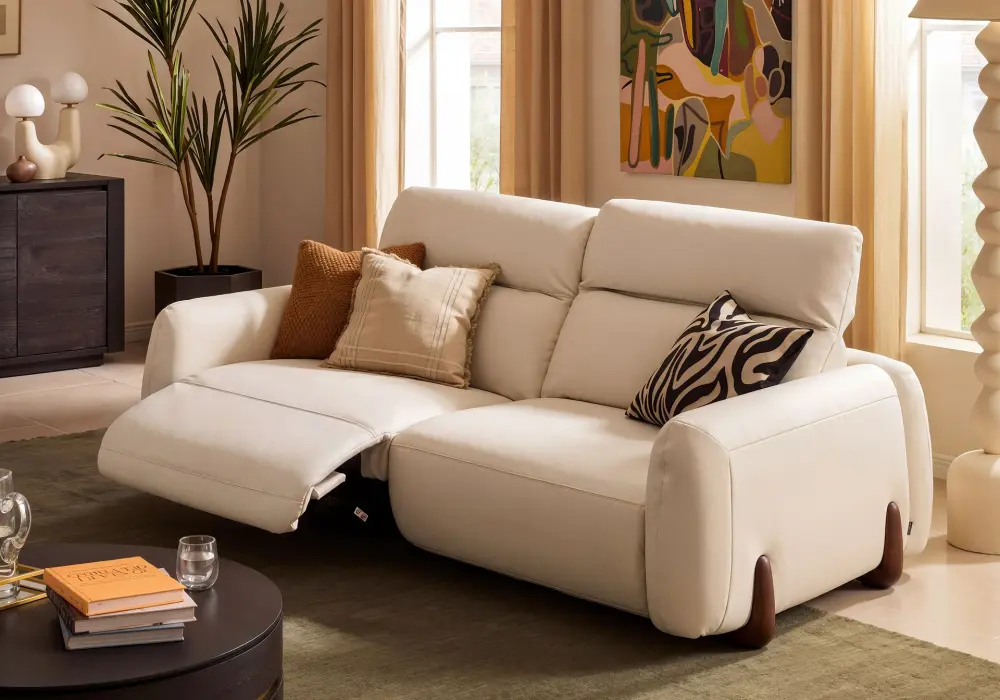
A traditional reclining sofa typically moves its back backward as it reclines. Depending on the model, you may need roughly 203 to 305 mm or more of clearance from the wall or furniture behind it. Wall-hugger recliners require less space because the mechanism allows the seat to move forward as the back reclines. Many models can operate with only a few inches of wall clearance.
Zero-wall or zero-clearance recliners are designed to sit extremely close to a wall, sometimes with only a minimal gap specified by the manufacturer.
Recliner Type | Typical Behind-Sofa Clearance | Best Use |
Traditional recliner | About 203–305+ mm | Open layouts with more space |
Wall-hugger recliner | Often about 76–152 mm | Smaller rooms |
Zero-wall recliner | Minimal clearance | Tight spaces |
Power recliner | Varies by mechanism | Check manufacturer specifications |
These numbers are general planning ranges, not universal requirements. Always check the manufacturer's installation instructions before positioning your sofa.
Power recliners deserve additional attention. Besides allowing room for the reclining mechanism, you need enough space for the power cord, transformer, ventilation, and cable movement. Avoid trapping the power supply tightly between the sofa and wall, and make sure moving components cannot pinch the cord.
Try a cardboard clearance test
One simple way to test your layout is to create a cardboard template representing the furniture you plan to place behind the sofa.
- Measure the maximum depth of the reclined sofa.
- Mark that distance on the floor with painter's tape.
- Place cardboard where your proposed console or sofa table will sit.
- Fully recline every seat.
- Check whether the sofa, armrests, headrests, or cables come into contact with the template.
This is especially useful when buying a narrow console online because product dimensions do not tell you how the furniture will interact with a moving recliner.
Leave enough room for people to walk around the sofa as well. A clearance zone should not become a narrow passage where someone can trip.
Finally, consider children and pets. Moving footrests and reclining mechanisms can create pinch and entrapment hazards. Keep toys, blankets, pet beds, and loose objects away from moving parts, and never use the clearance area as a place to store items that could interfere with the mechanism.
Source Homary
Sofa Tables, Narrow Consoles, and DIY Solutions
Once you know your required clearance, the easiest way to make the space useful is to add a slim sofa table or narrow console.
A standard console can be too deep for a reclining sofa. Instead, look for a shallow design that provides useful storage without occupying the entire clearance zone. Depending on your room, a console can be as shallow as approximately 152 mm deep, although you should still maintain the clearance required for your specific recliner.
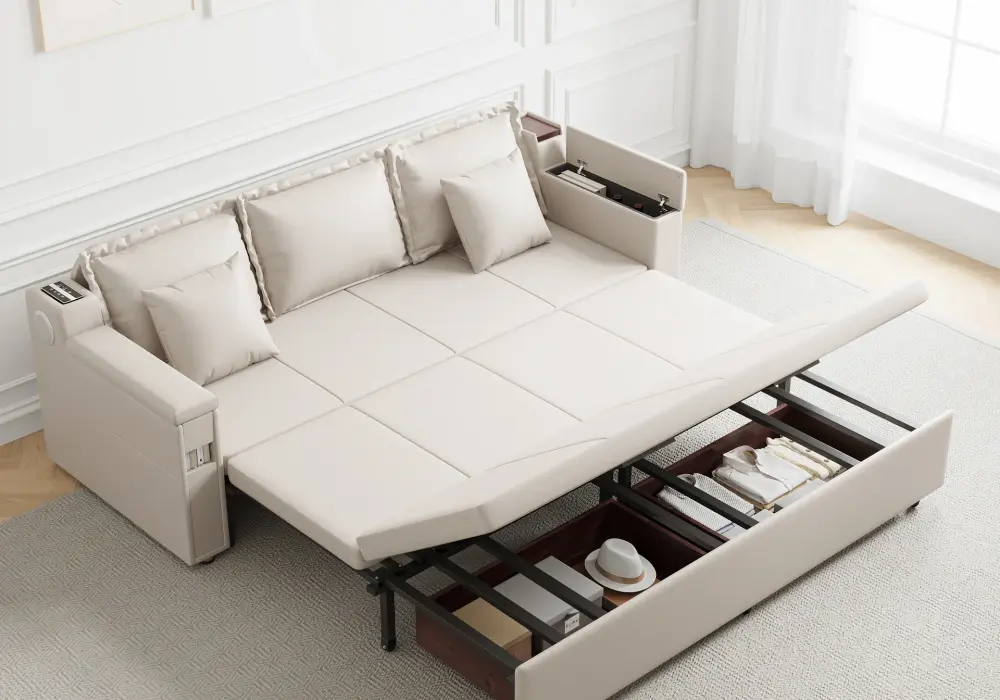
A narrow table behind a reclining sofa can hold decorative objects, books, small plants, remotes, or charging accessories. Models with built-in drawers are particularly useful because they keep small items from accumulating around the sofa.
Consider a C-table for maximum flexibility
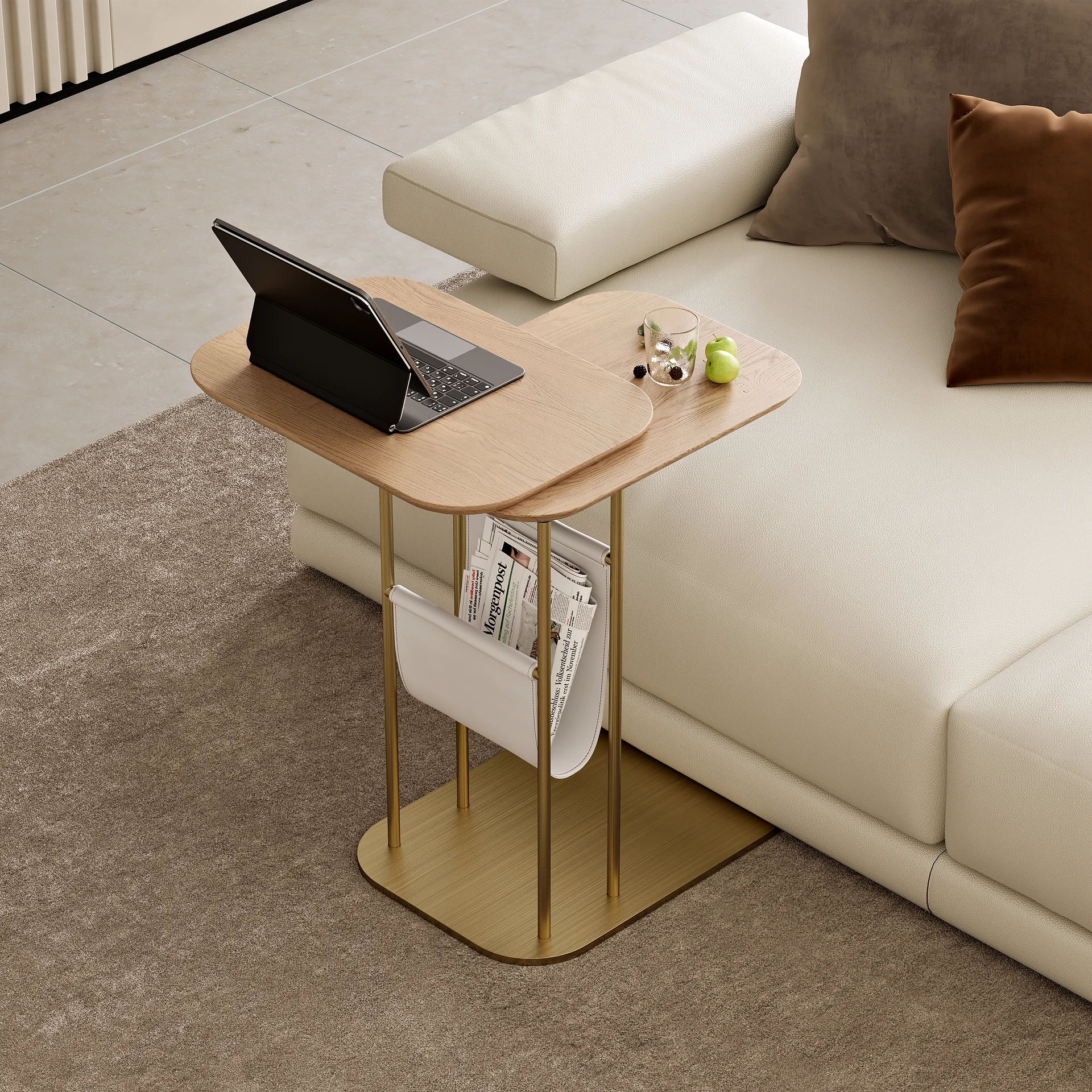
A C-shaped side table is another practical solution when you do not have enough room for a conventional sofa table. Its base can slide underneath the sofa while the tabletop sits beside the armrest.
This makes it useful for drinks, laptops, tablets, books, and remote controls without placing a large piece of furniture directly behind the reclining mechanism.
For modern living rooms, consider a narrow console with integrated USB ports, outlets, or a built-in charging station. This can turn an otherwise unused area into a functional charging zone.
For wall-hugger sofas, pay special attention to the shape of the table. A stepped or tiered design can work better than a deep rectangular console because it accommodates the sofa's movement while providing different levels for décor and storage.
Source Homary
A simple DIY sofa table
If you cannot find a console with the right dimensions, you can build one yourself.
Basic materials:
- One narrow wood board for the tabletop
- Two or three boards for the legs/supports
- Wood screws
- Wood glue
- Sandpaper
- Paint, stain, or protective finish
- Optional cable clips or an under-table power strip
Basic process:
- Measure the available space behind the recliner.
- Determine the maximum table depth without interfering with the reclining mechanism.
- Cut the tabletop and supports to size.
- Assemble the frame with wood glue and screws.
- Sand the edges and apply your chosen finish.
- Add adhesive cable clips underneath if the table includes electronics.
If you have pets, choose closed storage baskets or enclosed compartments rather than open shelves. This keeps charging cables and small accessories away from curious pets and makes the area easier to keep tidy.
Wall Décor and Protection Behind a Reclining Sofa
If your sofa sits close to a wall, you do not necessarily need to fill the entire space with furniture. Wall décor can make the area feel intentional without interfering with the reclining mechanism.
Artwork is one of the easiest options. A commonly used guideline is to position the center of artwork approximately 1448–1524 mm from the floor, then adjust based on the sofa's back height and the room's proportions.
The goal is not to follow a number blindly. If the reclining sofa has a tall back, artwork placed at the standard height may look too high or may interfere visually with the furniture. Stand back and evaluate the entire composition.
Large mirrors can also make a room feel brighter and more spacious. Because a mirror can be heavy, use appropriate wall anchors or mount it directly to studs whenever possible. Do not rely on lightweight adhesive strips for a large, heavy mirror unless the mounting system is specifically rated for its weight and wall type.
Protect the wall from the recliner
A reclining sofa can gradually rub against painted drywall, wallpaper, or baseboards. Even if the sofa does not appear to move much, repeated contact can leave scuff marks.
Useful protection options include:
- Clear acrylic or plastic wall protectors
- Self-adhesive felt or foam wall pads
- Furniture bumper pads
- Baseboard protection strips
- Transparent protective panels
For particularly tight installations, a small acrylic wall protector or padded contact point can prevent the sofa from repeatedly rubbing against the same section of wall.
The baseboard is often overlooked. If the recliner's lower structure or frame comes close to the baseboard, a narrow protective strip can prevent scratches and paint damage.
Hide an unattractive sofa back
If the back of your reclining sofa is not attractive enough to display, create a visual "false wall."
A decorative wood slat panel, vertical wood grille, woven screen, or large tapestry can make the back of the sofa look more intentional. For a floating sofa, this technique can transform an ordinary upholstered back into part of the room's design.
Just make sure any freestanding panel is stable and does not interfere with the sofa's movement.
Lighting, Power, and Cable Management for Reclining Setups
The area behind a reclining sofa can also become a useful lighting and charging station.
A floor lamp works particularly well when you want reading light without placing a table directly behind the sofa. As a general design guideline, the bottom of the lampshade can sit around 51–102 mm above the sofa back, but adjust this based on the lamp's purpose and the height of the sofa.
For reading, the light source should illuminate the seating area without shining directly into someone's eyes. An adjustable-arm floor lamp gives you more flexibility than a fixed lamp.
Power management is just as important as lighting.
Instead of allowing several extension cords to run across the floor, consider a slim power strip with a flat plug. A low-profile power strip can be mounted underneath a console or secured to a nearby furniture surface using a suitable mounting system.
However, do not attach electrical components to moving parts of a reclining sofa or place cables where they can be crushed by the mechanism.
For frequently used charging devices, consider:
- Clamp-on USB charging outlets
- Magnetic charging stations
- Under-table power strips
- Cable clips
- Velcro cable ties
- Braided cable sleeves
- Cable management boxes
A cable sleeve can combine several charging wires into one organized bundle, while Velcro ties make it easier to remove or replace individual cables.
The key is to create a fixed cable path outside the recliner's moving zone. Before using the sofa, fully recline each seat and check that no cord becomes stretched, pinched, or pulled.
Source Homary
Solutions for Sofas in the Middle of a Room or Floating Layouts
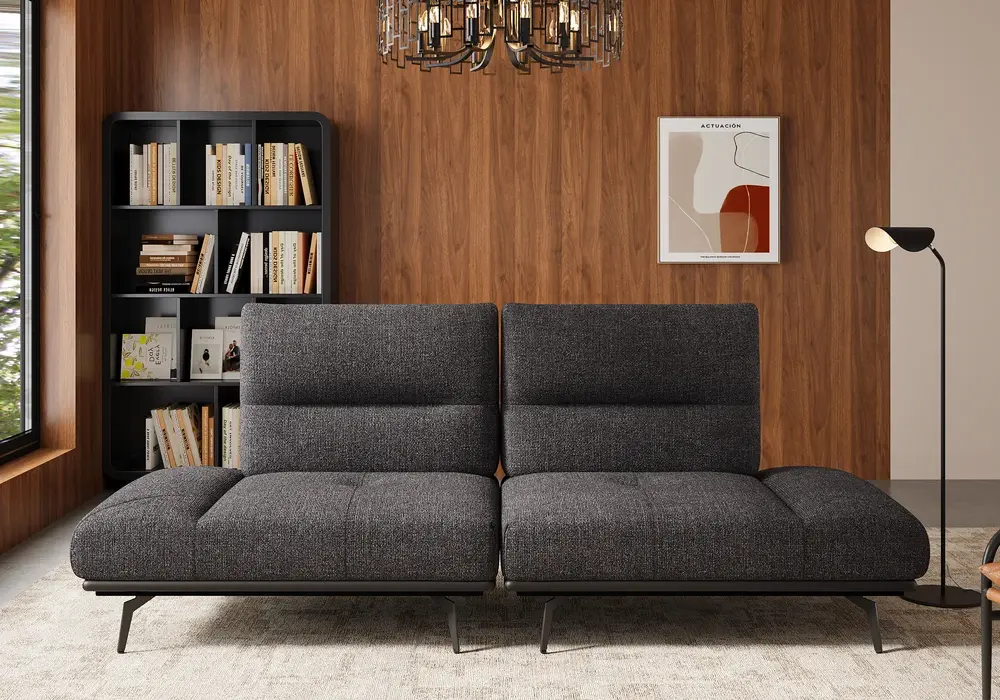
A reclining sofa does not always sit against a wall. In a large living room, open-plan space, or studio, floating the sofa can create better circulation and divide the room into functional zones.
In this situation, the space behind the sofa can become much more than a clearance area.
Source Homary
Use a low bookshelf or plant shelf
A low bookshelf behind the sofa can create a soft room divider while providing storage. A ladder-style plant stand can achieve a similar effect with less visual weight.
Choose a unit that is low enough to preserve the room's sightlines and stable enough not to be knocked over.
Add a narrow bench
A low-back bench behind a reclining sofa provides both visual separation and extra seating. This is particularly useful in large living rooms where you occasionally need additional seats for guests.
Leave sufficient distance between the bench and sofa so that neither interferes with the recliner mechanism.
Try a movable screen
A ceiling-mounted curtain, decorative room divider, metal grid screen, or open wood partition can hide the back of the sofa while defining different areas.
For example, a floating reclining sofa can separate a living area from a dining space without requiring a permanent wall.
Do not forget floor-level cables
Floating recliners create one additional problem: power cords may need to cross the floor.
Whenever possible, position the sofa near an existing outlet. If a cable must cross a walking path, use a purpose-built floor cable cover or low-profile cable raceway rather than leaving a loose extension cord across the floor.
The cable should follow the shortest practical route and remain outside high-traffic areas. A beautiful floating layout is not worth creating a tripping hazard.
Get the Perfect Behind-Sofa Setup Started Today
The best answer to “what to put behind a reclining sofa” depends on two things: how your recliner moves and how much space you have available.
For a wall-mounted arrangement, start with a narrow console, wall décor, protective pads, and integrated cable management. For a floating sofa, consider a low bookshelf, plant shelf, bench, or decorative room divider.
Before buying anything, measure the sofa in both its upright and fully reclined positions. Then choose furniture that fits the remaining space rather than forcing the sofa into a restricted position.
A simple shopping checklist can include a narrow sofa table, wall protector, cable clips, floor lamp, storage basket, and appropriate power-management accessories. With the right combination, the space behind your recliner can become one of the most useful parts of your living room.
FAQ
What kind of table should I put behind a reclining sofa?
A narrow sofa table or shallow console is usually the best choice. Look for a design that fits within your available space without entering the recliner's movement zone. A console around 152 mm deep can work in particularly tight layouts, but always measure your specific sofa first.
For additional functionality, consider a table with drawers, shelves, built-in outlets, or USB charging ports.
How do I protect the wall from damage caused by my reclining sofa?
Use clear acrylic protectors, felt or foam bumper pads, furniture stops, or narrow protective strips at the points where the sofa may contact the wall or baseboard. Before installing protection, determine exactly where the sofa touches the wall when fully reclined.
If the sofa is designed to sit close to the wall, follow the manufacturer's recommended clearance rather than pushing it directly against the wall.
Can I put a power strip behind a reclining sofa safely?
Yes, but the power strip and cables must remain outside the moving parts of the recliner. A low-profile power strip can be secured beneath a nearby console or another stationary surface.
Never allow the power cord to run through the reclining mechanism or become compressed between moving components and the wall. Fully recline each seat to verify that the cable remains loose and protected.
What can I put behind a sofa that's in the middle of the room?
For a floating reclining sofa, consider a low bookshelf, ladder-style plant shelf, narrow bench, decorative screen, wood slat divider, or open shelving unit. These options can hide the sofa's back while dividing the room into functional zones.
Make sure the furniture remains far enough away from the recliner to allow its back and footrests to operate freely.
How do I hide the unattractive back of a reclining sofa?
A low console, decorative wood slat panel, tapestry, room divider, bookshelf, or plant shelf can make the back of a reclining sofa less noticeable. In a floating layout, a low bench can also create an attractive transition between the sofa and the rest of the room.
Avoid attaching heavy or unstable décor directly to the sofa unless it is specifically designed for that purpose.
How much clearance does a reclining sofa need behind it?
The required clearance depends on the reclining mechanism. Traditional reclining sofas commonly need around 203–305 mm or more, while wall-hugger models may require only a few inches. Zero-wall models are designed for very tight wall placement.
Because mechanisms vary by manufacturer, the product's specified clearance should always take priority over general guidelines.
What height should a floor lamp be for behind a reclining sofa?
As a starting point, the bottom of the lampshade can sit approximately 51–102 mm above the sofa back. However, the ideal height depends on the sofa, lamp design, and intended use.
For reading, choose a lamp that directs light toward the seating area without shining directly into the user's eyes. Adjustable floor lamps provide the greatest flexibility.