

Choosing outdoor furniture usually means balancing three competing priorities: durability, comfort, and budget. The strongest frame is not always the most comfortable, while the cheapest set can become expensive if weather damage forces you to replace it after only a few seasons. So, what patio furniture is best for outdoors? The answer starts with your space and climate before it starts with material or style.
This guide covers the buying process from start to finish, including measuring your space, planning the layout, comparing durable outdoor furniture materials, selecting weather-resistant cushions and fabrics, evaluating lifespan and value, and preparing for cleaning and storage. It is designed for first-time buyers, homeowners replacing worn-out furniture, and anyone furnishing a patio, balcony, or rooftop.
The goal is simple: choose outdoor furniture that can actually survive the environment where you use it.
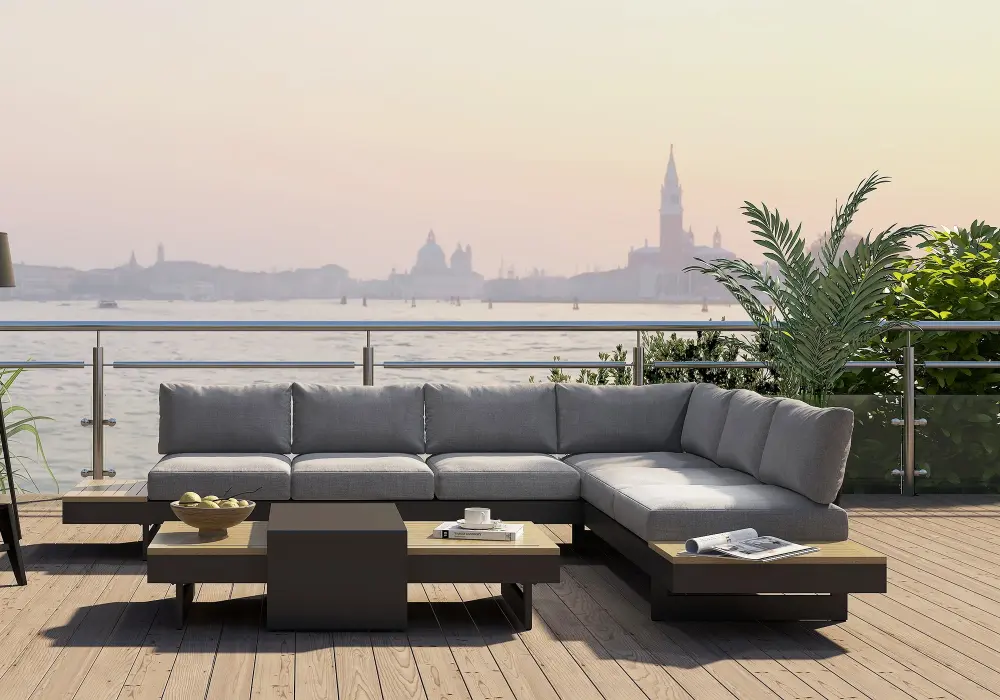
Outdoor Teak & Aluminum Modular Sofa Set
Table of Contents
Patio Furniture Sizing, Layout, and Wind Protection
The best outdoor furniture starts with the right footprint. Before comparing materials or styles, determine exactly how much usable space you have and how people will move through it. Furniture that fits physically but blocks a door, narrows a walkway, or leaves no room to pull out a dining chair will quickly become inconvenient.
Start With Accurate Patio Measurements
Measure the usable length and width of the area, then note doors, stairs, railings, columns, grills, planters, outdoor kitchens, and other fixed elements. Covered patios should also be checked for ceiling height, while balconies and rooftops require careful attention to railings and access points.
Create a simple measurement checklist covering the furniture footprint, walking paths, door clearance, and available storage space. Taking a few extra measurements before shopping can prevent major layout problems later.
Match Furniture Scale to the Outdoor Space
Small balconies generally benefit from compact bistro sets, folding chairs, narrow benches, or modular pieces that can be moved when needed. Mid-size patios have enough room for a dining table or a small lounge setup, but circulation should remain a priority.
Larger backyards can support separate dining and seating zones. Instead of filling every square foot, leave enough open space to create a natural transition between the house, grill, garden, pool, or other outdoor features.
Plan Around Traffic Flow and Daily Use
Think about how the area will actually function. Dining furniture needs room for chairs to move backward. Lounge seating should not obstruct the main entrance into the house. Families with children may also want an open area for play instead of using the entire patio for furniture.
A practical layout often feels more comfortable than a crowded one. The goal is to make every piece useful without turning the space into an obstacle course.
Add Wind and Anchoring Solutions
Wind is particularly important for balconies, rooftops, and exposed patios. Lightweight chairs, tall-backed seating, umbrellas, and narrow tables can shift or tip during strong gusts.
Weighted bases, tie-downs, secure anchoring points, and lower-profile furniture can help. Open-frame designs can also reduce wind resistance compared with broad, solid surfaces. During severe storms or extreme weather, moving vulnerable furniture to a protected location is usually the safest approach.
Outdoor Furniture Materials for Durability and Weather Resistance
The frame is one of the biggest determinants of outdoor furniture durability. Cushions can be replaced and covers can be washed, but a corroded, cracked, or structurally weak frame is much more difficult to repair. For that reason, material selection should be based on both construction quality and climate exposure.
Aluminum for Lightweight, Rust-Resistant Performance
Aluminum is one of the most versatile materials for patio furniture because it is lightweight and naturally resistant to rust. It is easy to move, works well for dining and lounge furniture, and can be powder-coated in a wide range of finishes.
Its relatively low weight can also be a disadvantage in windy locations, so exposed furniture may need weighted bases or anchoring. Coastal environments generally suit aluminum well, but hardware, welds, and damaged coatings still require regular inspection.
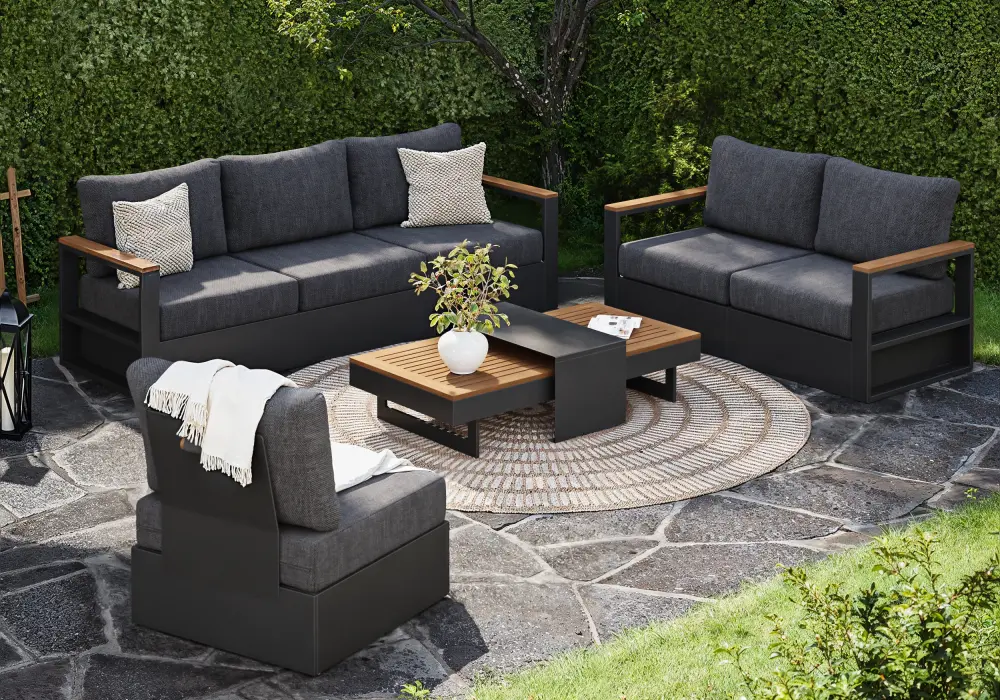
Tevara Convertible Outdoor Sectional Sofa Set
Steel for Strength and Structural Stability
Steel provides excellent rigidity, making it a popular choice for large dining tables, substantial chairs, and other furniture where stability matters.
Stainless steel can provide strong corrosion resistance, while powder-coated steel relies on its protective finish. However, rust-resistant does not mean rust-proof. Scratches, chips, trapped moisture, and poor-quality fasteners can expose the metal beneath the finish. Cleaning salt deposits and repairing damaged coatings can help extend service life.
Solid Wood for Natural Durability
Teak is one of the best-known outdoor hardwoods because its natural oils help it tolerate outdoor exposure. Eucalyptus and acacia can also perform well when they are properly constructed, finished, and maintained.
Wood changes naturally over time. Exposure to sunlight and moisture can produce a silver-gray appearance, surface checks, and color variation. These changes do not necessarily mean the furniture has become structurally unsound.
Synthetic Resin Wicker for Flexible Outdoor Styling
Synthetic resin wicker combines a traditional woven appearance with the practical advantages of synthetic materials. Quality resin fibers can resist moisture and UV exposure, while lower-quality materials may fade, crack, or become brittle with prolonged sunlight.
Pay attention to the frame beneath the wicker as well. A high-quality weave cannot compensate for a poorly constructed or corrosion-prone frame.
Reinforced Plastic and PE for Low-Maintenance Use
Reinforced plastic and polyethylene furniture offers strong resistance to rust and is generally simple to wash. It can be practical for humid environments and areas where low maintenance is a priority.
The main limitations are fading, brittleness, and lower structural rigidity in some designs. UV stabilizers, material thickness, and frame construction all influence long-term performance.
Best Materials for Different Climate Conditions
Climate Exposure | Primary Risks | Materials to Consider |
Coastal / salt air | Salt corrosion, moisture | Aluminum, suitable stainless steel, maintained hardwood |
Humid / tropical | Mold, moisture, corrosion | Aluminum, quality resin wicker, reinforced PE |
Cold / freeze-thaw | Water intrusion, cracking, joint stress | Aluminum, durable hardwood, protected steel |
Hot / dry / intense UV | Fading, brittleness, heat exposure | UV-stable aluminum finishes, quality synthetics, hardwood |
Climate changes the meaning of “durable.” A frame that performs well in a dry environment may need more maintenance in humid conditions, while furniture exposed to intense sunlight may need stronger UV protection than furniture placed under a covered patio.
Understand the Limits of Rust and Corrosion Protection
No finish makes outdoor furniture permanently immune to corrosion. Powder coatings, protective treatments, and corrosion-resistant metals reduce exposure, but they do not eliminate the impact of scratches, standing water, salt, or damaged hardware.
Drainage, frame design, fastener quality, and regular care are just as important as the material name printed on a product specification sheet.
Outdoor Cushions, Quick-Dry Foam, and Weather-Resistant Fabrics
Once the structural material is selected, comfort becomes the next consideration. Outdoor furniture should feel good enough for the way you actually plan to use it, whether that means quick family meals, long conversations, reading, or extended lounging.
Balance Cushion Comfort With Weather Performance
Traditional foam can provide a soft, comfortable feel, but it may absorb and retain water when exposed to repeated rain. In contrast, quick-dry foam and ventilated cushion cores allow moisture and air to move through more efficiently.
For humid or rainy climates, look for cushions with drainage-friendly construction, breathable materials, removable covers, and enough clearance underneath to encourage airflow.
Choose Outdoor Fabrics Based on Exposure
Outdoor Fabric | UV Resistance | Mold/Mildew Resistance | Stain Resistance | Typical Use |
Solution-dyed acrylic | Excellent | Good | Good to excellent | Heavy sun and long-term use |
Olefin | Very good | Very good | Very good | Everyday family use |
Water-repellent polyester | Good to very good | Good with care | Good | Budget-conscious setups |
Solution-dyed acrylic is widely used for premium outdoor applications because the color is incorporated into the fibers rather than simply applied to the surface. This can improve resistance to UV fading.
Olefin provides a strong combination of moisture, stain, and UV performance. Water-repellent polyester can offer good value, although actual outdoor longevity depends heavily on the quality of the fabric, coating, and UV treatment.
Reduce Mold and Mildew Risk
Moisture trapped inside cushions is one of the biggest causes of outdoor fabric problems. After rain, stand cushions on their edges, separate them from each other, and allow air to circulate.
In humid conditions, dry storage is especially important. A well-ventilated storage area is usually better than sealing damp cushions inside an airtight container.
Manage Outdoor Fabric Fading
Fading speed depends on fabric quality, UV exposure, color, and how often the furniture remains in direct sunlight. Lower-quality fabrics may show visible color changes after only a few seasons in intense sun, while higher-quality UV-stable fabrics can maintain their appearance much longer.
Using shade, covers, and cushion rotation can reduce uneven fading and extend the useful life of outdoor upholstery.
Patio Furniture Lifespan, Warranty, and Long-Term Value
Once space, frame material, cushions, and fabric are narrowed down, the purchase should be evaluated as a long-term investment rather than simply by its upfront price.
Understand What an Outdoor Furniture Warranty Covers
A useful warranty should clearly identify coverage for structural components, welds, joints, finishes, coatings, cushions, and fabrics. Different components may have different coverage periods.
Do not assume that a long frame warranty automatically covers fading fabric or cushion deterioration.
Watch for Common Warranty Exclusions
Pay attention to prorated coverage, exclusions for normal fading, weather-related damage, improper maintenance, commercial use, and unauthorized modifications. Some claims may also require original receipts, photographs, or proof of purchase.
Keep the invoice, warranty documents, assembly instructions, and product specifications in one place. These records can make future claims and replacement-part requests much easier.
Compare Patio Furniture by Cost Per Year
Budget Tier | Typical Configuration | Value Focus |
Budget-conscious | Powder-coated aluminum or reinforced plastic + quick-dry cushions | Corrosion resistance and replaceable soft components |
Mid-range | Better-grade aluminum, resin wicker, or solid wood | Balance of durability, comfort, and maintenance |
Long-term investment | Premium hardwood or marine-grade aluminum + modular cushions | Long frame life and component replacement |
A useful comparison method is:
Purchase price ÷ expected years of service = approximate annual cost
For a more realistic calculation, also consider replacement cushion covers, cleaning supplies, furniture covers, storage equipment, and occasional repairs.
A cheaper set may be attractive initially but cost more over time if it needs frequent replacement. On the other hand, spending significantly more does not guarantee better value when the extra features do not match your actual environment or usage.
Prioritize Repairability for Long-Term Value
Before purchasing, check whether replacement bolts, slats, hardware, cushion covers, and touch-up finishes are available separately.
Furniture made from standard, serviceable components is often easier to repair than furniture that must be replaced as a complete unit. Modular designs can be particularly useful because individual sections or cushions can be refreshed without replacing the entire setup.
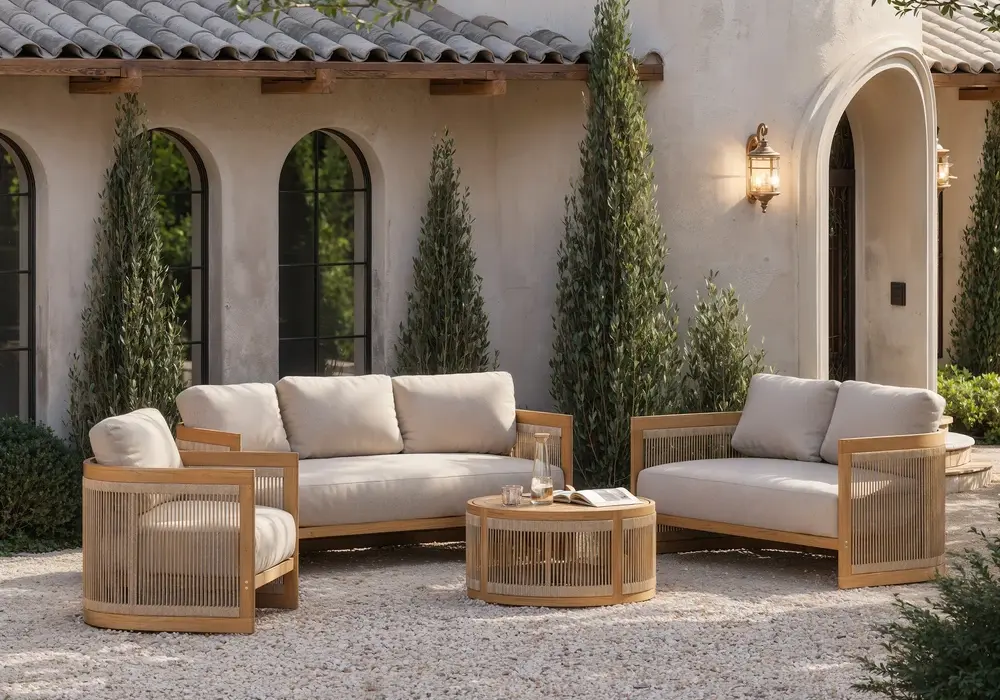
Outdoor Teak & Rope Weave Sofa Set
Outdoor Furniture Assembly, Cleaning, Storage, and Repairs
Buying outdoor furniture is only the beginning. How you assemble, clean, store, and repair it can have a significant impact on how long it remains comfortable and attractive.
Plan for Assembly and Delivery
Simple chairs may take 15–30 minutes to assemble, while larger dining tables and sectional seating can take an hour or more. Some heavier or more complex pieces are easier with two people.
Before delivery, measure gates, doors, stairways, elevators, and other access points. Large boxed furniture can be surprisingly difficult to move even when the assembled piece fits perfectly on the patio.
Choose Breathable Furniture Covers
A good outdoor furniture cover should provide suitable water resistance while allowing enough airflow to reduce condensation. An overly sealed cover can trap moisture against the frame and fabric.
Use properly fitted covers that can withstand wind, and allow wet cushions to dry completely before covering them.
Store and Winterize Outdoor Furniture
Clean furniture before long-term storage and allow every surface to dry thoroughly. Move cushions to a dry, ventilated indoor or sheltered location when practical.
For furniture that remains outside during cold or wet seasons, breathable covers and good drainage are important. In regions affected by freezing temperatures, avoid allowing water to remain trapped in cracks, joints, or porous materials.
Make Simple Outdoor Furniture Repairs Early
Small repairs can significantly extend the life of an otherwise sound piece. Touch-up paint can protect minor coating damage, replacement bolts can correct loose joints, and new cushion covers can restore worn seating.
Basic DIY repairs may cost only a few dollars, while professional refinishing, replacement fabric, or upholstery work can range from tens to several hundred dollars depending on the material and complexity.
Clean Each Outdoor Furniture Material Correctly
Aluminum: Clean with mild soap, water, and a soft cloth. Avoid abrasive pads that can scratch finished surfaces.
Steel: Use soap and water, then dry thoroughly. Treat chips and scratches early to reduce corrosion risk.
Teak and other hardwoods: Use mild soap and a soft brush. Follow the manufacturer's recommendations for oils, sealers, or protective treatments.
Synthetic resin wicker: Use mild soap, water, and a soft brush. Avoid harsh solvents and excessive pressure.
Reinforced plastic or PE: Clean with soap and water. Avoid abrasive cleaners that can dull or damage the surface.
Do not assume that bleach or strong chemicals are safe for every outdoor finish or fabric. Always follow the manufacturer's care recommendations before using stronger cleaning products.
The most effective maintenance routine is usually the simplest: remove dirt and salt deposits, keep joints dry, allow cushions to dry completely, and repair small problems before they become structural ones.
FAQ
Which patio furniture materials last longest in coastal vs. inland climates?
For coastal exposure, corrosion-resistant aluminum, suitable stainless steel, and maintained hardwood are practical options. Inland climates offer more flexibility depending on humidity and UV exposure.
How do I choose outdoor fabrics that resist UV fading, mold, and pet damage?
Look for UV-stable fabrics such as solution-dyed acrylic or quality olefin, along with tight weaves and removable, washable covers.
Is teak, aluminum, or resin wicker the better balance of durability and low maintenance?
Aluminum offers lightweight, rust-resistant performance; teak provides natural durability; and quality resin wicker offers a decorative, relatively low-maintenance option.
What warranty terms matter most, and how do I judge repairability before buying?
Review structural, finish, fabric, and cushion coverage, then confirm whether replacement hardware, covers, and other components can be purchased separately.
How do I prevent rust, corrosion, and wind damage to outdoor furniture?
Clean away salt and moisture, repair damaged finishes promptly, secure lightweight furniture, and move vulnerable pieces during severe weather.
What are the best quick-dry cushion options for humid or rainy climates?
Look for quick-dry foam, ventilated cushion cores, drainage-friendly designs, and removable moisture-resistant covers.
How should I store and winterize patio furniture to extend its lifespan?
Clean and dry furniture before storage, keep cushions in a dry and ventilated location, use breathable covers, and prevent moisture from becoming trapped around frames or fabrics.