

Walk into an outdoor furniture showroom and almost every dining set, lounge chair, and sectional can look equally durable. Put those pieces outside for 5 years, however, and the differences become obvious. One may develop rust, another may fade or crack, while a well-chosen piece still looks almost new.
So, what is the best material for patio furniture? The answer depends less on appearance and more on where you live, how much maintenance you will actually do, and how long you expect the furniture to last.
In this guide, we compare the major patio furniture materials by realistic lifespan, maintenance needs, climate performance, common failure points, and long-term cost. We also explain how to evaluate outdoor furniture claims using recognized testing methods such as ASTM UV and salt-spray testing rather than relying on marketing language alone. Note that these test standards evaluate specific resistance characteristics; they do not guarantee a fixed number of years outdoors. ASTM itself warns that salt-spray results should not be treated as a direct prediction of natural weathering performance.
Here is the roadmap: compare materials first, match them to your climate, choose durable cushions and fabrics, learn the right maintenance routine, and then calculate true cost per year.
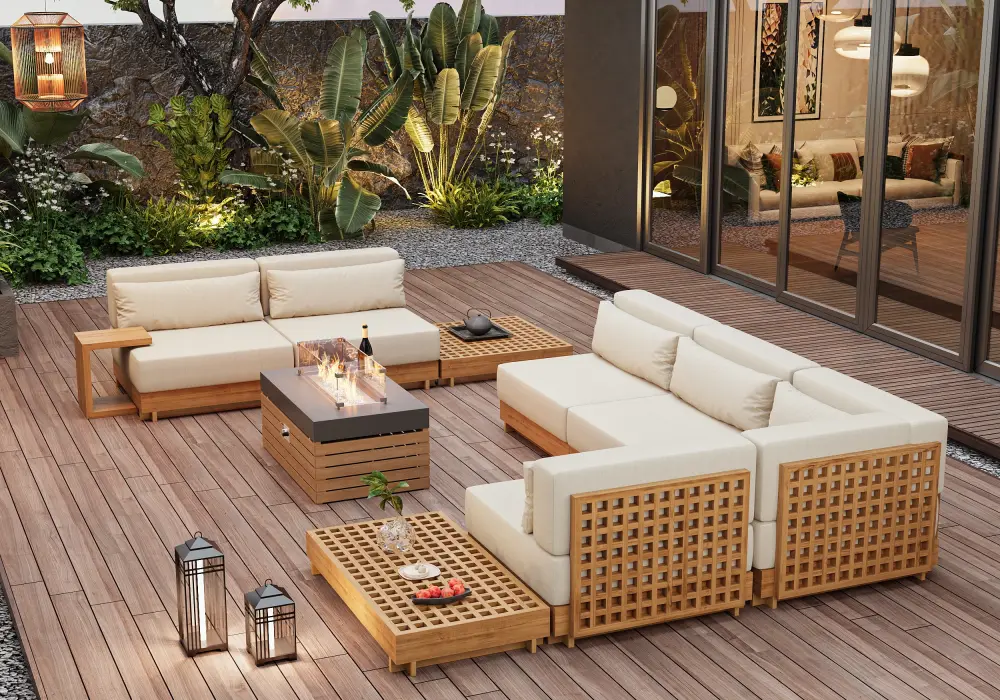
Premium Teak Modular L-Shaped Outdoor Sofa Set
Table of Contents
Patio Furniture Materials Compared: Pros, Cons, and Expected Lifespan
The table below gives practical planning ranges for well-constructed residential furniture receiving basic care. Actual performance depends on frame design, material grade, exposure, drainage, fasteners, UV intensity, and maintenance.
Material | Practical outdoor lifespan* | Main strengths | Common failure modes | Typical maintenance |
Teak | 20–30+ years | Rot resistance, natural oils, repairable surface | Graying, surface checking, loose joints | Clean 1–2× yearly; refinish if desired |
Aluminum | 15–20+ years | Rust-resistant, lightweight, low maintenance | Coating scratches, oxidation, loose hardware | Wash periodically; touch up coating damage |
Synthetic/resin wicker | 7–15 years | Comfortable look, low upkeep, moisture resistant | UV brittleness, fading, broken strands, frame rust | Wash and inspect frame annually |
Steel | 10–15 years | Strong, heavy, stable | Rust, coating failure, weld corrosion | Frequent inspection; rust treatment |
Powder-coated metal | 12–20 years | Durable finish, broad style range | Chips, chalking, corrosion under damaged coating | Clean and repair chips promptly |
HDPE/recycled plastic | 15–25+ years | Moisture, rot, insect resistance | Surface wear, thermal movement, hardware wear | Soap and water |
Concrete | 15–25+ years | Heavy, stable, weather resistant | Cracking, staining, freeze-thaw damage | Seal and clean; protect from hard freezes |
*These are practical editorial ranges, not standardized service-life guarantees.
Teak
Teak is one of the strongest choices for long-term outdoor furniture. Its dense structure and naturally occurring oils help it resist moisture, decay, and insects. A well-made teak frame can reasonably be treated as a 20–30+ year purchase, and some pieces can last much longer with periodic repairs.
The trade-off is appearance. Untreated teak generally weathers from golden brown toward silver-gray. That is a normal aging process, not necessarily structural failure. The common mistake is assuming teak must be heavily oiled. It does not. Oil is mainly an appearance choice, and repeated oiling can increase maintenance.
The weak points are usually joints, fasteners, and surface checking rather than the wood suddenly “rotting away.” Good-quality stainless hardware matters, especially outdoors.
For warranty comparison, teak often has a longer practical life than its warranty suggests. A 5-year furniture warranty, for example, should not be interpreted as “this will last only 5 years.” Warranty periods cover specified defects under specified conditions; they are not equivalent to an engineering service-life rating.
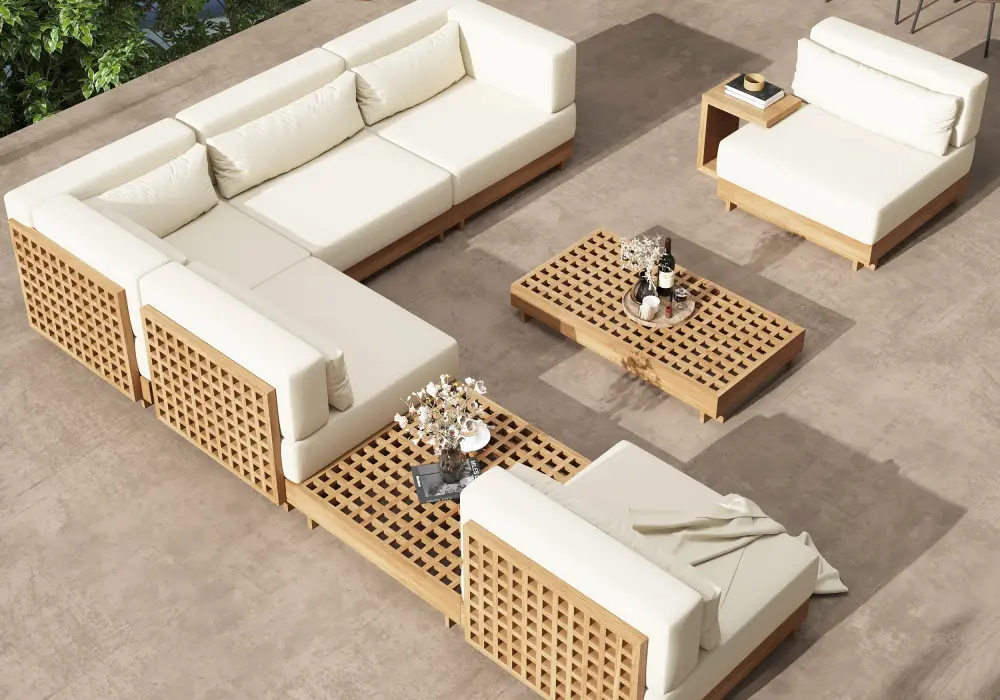
Outdoor Natural Teak Modular Sectional Sofa Set
Aluminum
Powder-coated aluminum patio furniture is arguably the best all-around choice for buyers who prioritize low maintenance. Aluminum does not rust like ordinary carbon steel, and it is relatively lightweight, making furniture easier to move and store.
Its biggest vulnerability is usually the finish, not the aluminum itself. Scratches, chips, poor coating adhesion, and damaged fasteners can allow corrosion to begin at vulnerable areas.
When comparing products, ask about the coating specification and test evidence. ASTM B117 is a recognized salt-spray test for relative corrosion resistance, while ASTM D4329/G154 methods are used for accelerated UV exposure of plastics and related materials. Neither should be treated as a simple “20 years outdoors” certificate.
A quality aluminum frame can reasonably serve for 15–20+ years in residential use, especially when damage to the coating is repaired early.
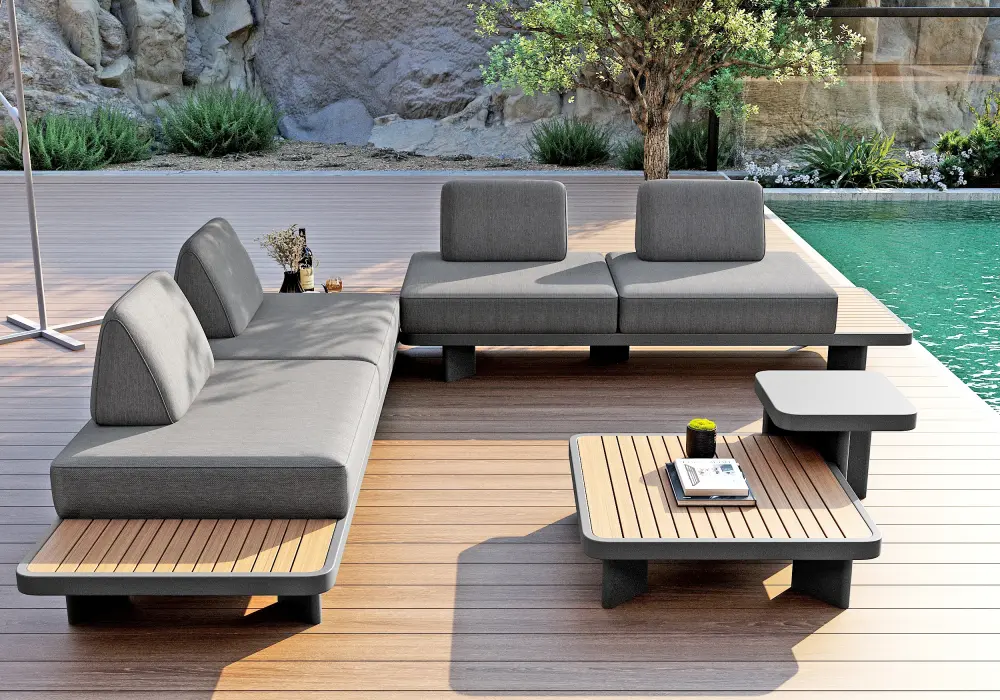
Outdoor Aluminum Modular Sectional Set
Synthetic or Resin Wicker
Outdoor wicker should mean synthetic resin wicker, not untreated natural rattan. Quality versions usually use polyethylene or HDPE strands wrapped around a metal frame.
The material is attractive, comfortable, and easy to clean, but quality varies dramatically. UV stabilizers matter because prolonged sunlight can make low-grade resin brittle. The hidden frame matters just as much: an inexpensive steel frame may rust long before the wicker itself fails.
Expect roughly 7–15 years from good-quality resin wicker, with covered or partly shaded placement extending useful life. Cheap wicker exposed to intense sun can fail much sooner.
The most common failure modes are faded strands, brittle or broken weaving, unraveling, and rust at the inner frame. Because replacement weaving is possible on some furniture, synthetic wicker can be repairable, but major frame corrosion usually changes the economics.
Steel
Steel is strong, heavy, and stable in windy conditions, which makes it appealing for dining tables and substantial seating. But bare or inadequately protected steel is one of the riskiest patio materials in wet or salty environments.
Rust usually begins at scratches, welds, fastener points, and areas where water remains trapped. Once corrosion spreads under a coating, cosmetic repairs may no longer be enough.
For exposed residential furniture, a reasonable planning range is 10–15 years for properly protected steel, with dry conditions and consistent maintenance potentially extending that life. In coastal environments, corrosion can become the limiting factor much sooner.
Powder-Coated Metal
Powder coating is a finish system rather than a base material, so “powder-coated furniture” still needs a steel or aluminum frame. The quality of the coating system determines a large part of its outdoor performance.
Good powder-coated metal can provide a strong combination of appearance, scratch resistance, and corrosion protection. However, the finish is not invulnerable. Chips and scratches should be repaired before water reaches vulnerable metal underneath.
A reasonable planning range is 12–20 years, depending heavily on the underlying metal and coating quality.
For exterior products, ask for the specific coating class or test data rather than accepting “weather resistant” as proof. Standards such as ASTM salt-spray testing and accelerated UV exposure testing are useful pieces of evidence, but they should be considered alongside real-world atmospheric exposure and construction quality.
HDPE or Recycled Plastic
High-density polyethylene, including recycled plastic lumber, is one of the strongest alternatives for buyers who want low maintenance and long outdoor life. It does not rot, splinter, or rust, and quality outdoor formulations can be highly resistant to moisture and UV exposure.
A practical expectation is 15–25+ years for quality products. As one example of what a long warranty looks like, POLYWOOD currently advertises a 20-year residential lumber warranty and states that its HDPE-based furniture is formulated with UV inhibitors and designed for heavy weather exposure. That is a manufacturer claim, however, so it should be viewed as supporting evidence rather than independent proof of lifespan.
Compared with short-term materials, the appeal is simple: very little annual maintenance and no need for staining or sealing.
Concrete
Concrete patio furniture is exceptionally stable in windy conditions and can last for decades. Its weakness is temperature and moisture cycling. Water entering cracks or pores can create problems during freeze-thaw cycles, while de-icing salts can increase surface damage.
Quality concrete or fiber-reinforced concrete furniture can reasonably deliver 15–25+ years, particularly in mild climates. In regions with hard winters, choose pieces designed for outdoor freeze-thaw exposure and avoid trapping standing water.
Which Patio Material Handles Your Climate Best?
There is no universal winner because climate changes the failure mechanism.
Coastal or Salt-Air Climates
Best choices: powder-coated or marine-appropriate aluminum, HDPE/recycled plastic, and well-maintained teak.
Salt-laden moisture accelerates corrosion, making exposed steel a higher-risk option. Aluminum is especially attractive because the base metal does not rust in the same way as carbon steel, although coatings, hardware, and fasteners can still degrade.
Rinse furniture periodically with fresh water, especially after storms or heavy salt exposure. Keep covers breathable, and do not trap wet cushions underneath them.
Salt-spray testing such as ASTM B117 can help compare corrosion resistance under controlled conditions, but ASTM specifically cautions that salt-fog results alone do not reliably predict performance in every natural environment.
Hot-Humid or Tropical Climates
Best choices: aluminum, HDPE, quality UV-stabilized resin wicker, and teak.
Humidity creates problems for trapped moisture, mildew, and corrosion. Prioritize frames with good drainage and fabrics that dry quickly.
The biggest hidden enemy may actually be the cushion. If foam stays wet, the entire seating experience deteriorates even when the frame remains perfect.
Hot-Dry or Arid Climates
Best choices: teak, aluminum, and UV-stabilized HDPE.
Here, intense sunlight and surface heat become bigger concerns than rain. Dark metal can become extremely hot in direct summer sun, while teak and well-designed polymer surfaces can feel more forgiving.
Use shade, breathable covers, and UV-resistant fabrics. Avoid putting unprotected resin products in the most intense reflected-sun locations.
Cold Climates With Freeze-Thaw Cycles
Best choices: aluminum and HDPE/recycled plastic; teak is also strong when properly constructed.
The main risks are water entering cracks, trapped moisture freezing, brittle plastics, and concrete surface damage. Drainage is critical.
At the end of the season, clean everything, allow cushions to dry completely, and move vulnerable concrete or delicate finishes to sheltered storage. For furniture left outside, use breathable covers rather than tightly sealed plastic that traps condensation.
Cushions and Fabric: Comfort, Durability, and Family-Friendly Options
A durable patio frame can outlast its cushions by many years, so upholstery deserves as much attention as the frame.
Quick-dry foam is usually the best premium option for outdoor seating because its open-cell construction allows water to drain through quickly. For daily seating, look for supportive, higher-density foam rather than very soft low-density fills that flatten quickly.
Polyester fiber fill can be comfortable and economical but tends to compress over time and generally provides less structured support than quality foam. Down alternatives offer a soft, indoor-like feel, but they require careful moisture management and are usually less practical for fully exposed patios.
For fabric, prioritize 5 traits: breathability, water resistance, mildew resistance, UV stability, and easy cleaning. Solution-dyed acrylic is a strong example because the color is integrated into the fiber instead of simply sitting on the surface. Sunbrella states that its performance fabrics are solution-dyed acrylic, fade resistant, stain and water resistant, and mold and mildew resistant. Its upholstery warranty is currently 5 years, while certain shade and marine fabrics carry longer warranties.
For families with children or pets, removable covers, tight weaves, durable seams, and easy-clean surfaces are more valuable than delicate decorative textures. Check cushion dimensions carefully before buying replacement covers; even a few inches of difference can cause loose fabric or compressed foam.
How to Maintain, Clean, and Restore Every Patio Material
Simple, regular maintenance usually costs less than major restoration.
Teak: Brush away debris, wash with mild soap and water once or twice a year, and allow it to dry naturally. Leave it silver-gray for minimal upkeep, or lightly clean and refinish it if you want the original warm color. Avoid aggressive pressure washing, which can damage the surface.
Aluminum: Wash with mild soap and water every few months or when visibly dirty. Rinse thoroughly. Inspect scratches and exposed metal; small finish chips should be repaired before corrosion develops around hardware.
Resin wicker: Use a soft brush or vacuum to remove debris, then wash with mild detergent and water. Do not use harsh solvents. Inspect the inner frame annually for rust and loose fasteners. Broken strands can sometimes be replaced individually.
Steel and powder-coated metal: Clean with mild soap and water. Treat rust early with light sanding and an exterior metal primer/paint system compatible with the existing finish. Sanding should remove loose corrosion without unnecessarily stripping intact coating.
HDPE/recycled plastic: Soap, water, and a soft brush are usually sufficient. Avoid abrasive cleaners that can dull the surface.
Concrete: Remove spills promptly, clean with a mild detergent, and reseal when needed according to the product instructions. In freeze-thaw climates, keep water from collecting in cracks and recesses.
For fabric, blot spills quickly rather than rubbing them deeper into the weave. Sunbrella recommends mild soap, lukewarm water, a soft-bristle brush, thorough rinsing, and air drying. For severe mildew, its care guidance includes a diluted bleach-and-soap solution, but also warns that bleach can affect the environment and recommends caution near bodies of water.
Call a professional when a welded frame is cracked, structural joints are failing, corrosion has penetrated deep into the metal, or concrete has major structural cracks. These are no longer simple cosmetic repairs.
For disposal, separate metal, plastic, fabric, wood, and concrete when local facilities allow it. Recycling availability varies by community, so verify local rules rather than assuming every “recyclable” claim means curbside acceptance. The FTC notes that recyclable claims should reflect actual access to appropriate recycling facilities.
Cost, Value, and Sustainability: Making the Final Decision
The cheapest patio set is not always the lowest-cost choice.
A more accurate lifecycle formula is:
Cost per year = (Purchase price + expected lifespan × annual maintenance cost) ÷ expected lifespan
For example, a $1,500 aluminum set lasting 15 years with $30 of annual maintenance costs about $130 per year. A $3,000 teak set lasting 25 years with $60 of annual maintenance costs about $180 per year. The teak costs more annually, but it may deliver longer service and greater repairability.
For sustainability, look for FSC-certified wood and verify the FSC claim rather than relying on vague “eco wood” language. FSC chain-of-custody certification tracks forest-based material through the supply chain.
Recycled aluminum is another strong option; the Aluminum Association reports that recycled aluminum requires about 95% less energy to produce than new aluminum.
For recycled plastics, ask what polymer is used, how much recycled content is included, and whether the finished product can realistically be recycled in your area.
FAQ
What patio furniture material lasts longest in cold climates with freeze-thaw cycles?
Quality teak, aluminum, and HDPE/recycled plastic are among the strongest choices. Aluminum avoids the cracking problems associated with some porous materials, while HDPE handles moisture without rot. Teak also performs well when joints and drainage are properly designed. Concrete needs more caution because repeated freeze-thaw exposure can damage cracks and saturated surfaces.
How do total ownership costs compare for teak, aluminum, and resin wicker over 10 years?
Aluminum often offers the best balance of purchase price and low maintenance. Teak usually costs more upfront but can deliver a much longer useful life. Resin wicker is often the lowest-cost entry point, but replacement can be more frequent, particularly in intense sun. Over a 10-year period, compare purchase price, annual maintenance, cushion replacement, and the likelihood of replacing the entire set rather than looking only at the initial price.
Is premium outdoor fabric worth the extra cost, and how should it be cleaned?
For exposed patios, often yes. Premium outdoor fabrics can offer better UV stability, water resistance, mildew resistance, and stain performance. Solution-dyed acrylic is a strong option. Sunbrella recommends mild soap, lukewarm water, a soft brush, complete rinsing, and air drying for routine upholstery cleaning.
Which patio materials resist rust and corrosion best in coastal, salty air?
Aluminum is one of the strongest choices, followed by HDPE/recycled plastic, which does not rust. Teak also performs well outdoors. Steel requires a much more disciplined approach to coating maintenance and corrosion prevention. Regardless of material, stainless or corrosion-resistant hardware can significantly improve the overall life of a piece.
How hot do common patio materials get in direct summer sun, and which stay coolest to the touch?
Surface temperature depends heavily on color, solar exposure, airflow, humidity, and whether the material is shaded. Dark metal surfaces can become particularly hot in direct sun. Teak, lighter-colored polymers, and furniture with breathable fabrics generally provide a more comfortable touch experience. Shade is often more effective than changing the frame material alone.
Can I repair or refinish teak, aluminum, or synthetic wicker myself — what's involved?
Usually, yes for cosmetic work. Teak can be cleaned, lightly sanded, and refinished. Aluminum and coated metal can be cleaned, lightly sanded where necessary, and touched up with compatible exterior coatings. Synthetic wicker can sometimes be rewoven or have individual strands replaced. Structural cracks, failing welds, deep corrosion, or extensive frame damage should be evaluated professionally.
What sustainability certifications should I look for when buying eco-friendly outdoor furniture?
For wood, look for a valid FSC claim and chain-of-custody information. For aluminum, recycled content is useful, especially because recycled aluminum can require substantially less energy than primary production. For plastic furniture, ask for the polymer type, recycled-content percentage, and realistic end-of-life recycling options. Avoid relying solely on generic labels such as “green” or “eco-friendly” without supporting details.