

Outdoor furniture is made from weather-resistant frames, such as teak, powder-coated aluminum, stainless steel, steel or HDPE, combined with woven resin or rope seats, hardwood or composite slats and cushions covered in water-resistant outdoor fabric. No single material wins everywhere. The right one depends on your climate, how much upkeep you will accept and how the space is used. This guide breaks down what each material does well, where it falls short and which scenarios suit it, so you can read a product listing for outdoor lounge furniture with confidence.
Table of Contents
The Parts of an Outdoor Set
Most outdoor sofas and lounge sets combine four components, and each can be a different material:
- Frame: the structure that carries the weight and takes most of the weather.
- Seating surface: woven strands, slats or a mesh that supports the cushions.
- Tabletops and accents: glass, stone, ceramic or composite surfaces on coffee tables and side tables.
- Cushions and fabric: foam or fiber fill wrapped in a water-resistant cover.
When a listing says "teak sofa set" or "aluminum frame," it is usually describing the frame. Always check the other three parts as well, because a durable frame with a weak weave or untreated cushion cover will wear out first.
Frame Materials Compared
Material | Strengths | Trade-offs | Maintenance |
Teak | Dense hardwood with natural oils that resist moisture; long lifespan; warm look | Higher cost; weathers to silver-gray unless oiled | Occasional cleaning; oil or sealer if you want to keep the golden tone |
Powder-coated aluminum | Lightweight, rust-resistant, easy to rearrange | Can dent; thin versions feel flimsy in wind | Wash with mild soap and water |
Stainless steel | Strong and corrosion-resistant, especially marine grades | Heavy and costlier; can get hot in direct sun | Wipe clean; rinse after salt exposure |
Powder-coated steel or wrought iron | Heavy, stable and wind-resistant | Can rust if the coating chips | Touch up scratches promptly |
HDPE lumber (poly lumber) | Resists moisture, fading and insects; no staining or sealing | Heavier; fewer color options | Rinse with soap and water |
Acacia, eucalyptus and other hardwoods | Warm, natural look at a lower price than teak | Need regular oiling or sealing to last | Seasonal oiling or sealing |
Retail guides consistently rank poly lumber and aluminum among the lowest-maintenance options, teak among the longest-lived, and steel and wrought iron lower on all-weather performance.
Woven Seats and Wicker
Much "wicker" outdoor furniture is not natural at all. Resin wicker, also called synthetic wicker, is usually extruded polyethylene woven over a metal frame, most often aluminum. Guides recommend looking for HDPE rather than PVC: quality HDPE wicker is commonly quoted at 10 to 15 years or more on a good aluminum frame, while lower-grade PVC wicker is quoted at only three to five. Natural wicker made from rattan, willow or bamboo is best kept under cover indoors or on a sheltered porch.
Woven rope, a related look, uses synthetic cord over a metal frame. It offers a softer, handcrafted style, but the same rule applies: a quality frame and UV-stabilized strands matter more than the weave pattern.
Tabletops, Glass and Fire Pit Surfaces
Outdoor tables often use tempered glass, ceramic, sintered stone or composite tops, because those materials resist water and cleaning is easy. Fire pit tables add another factor: parts near the flame need heat-tolerant materials and a wind guard. The 9-piece outdoor teak modular sofa set with fire pit shows how the pieces combine. Its listing describes a teak modular set paired with a propane fire pit table with a glass wind guard, positions it as weather-resistant and says it seats six.
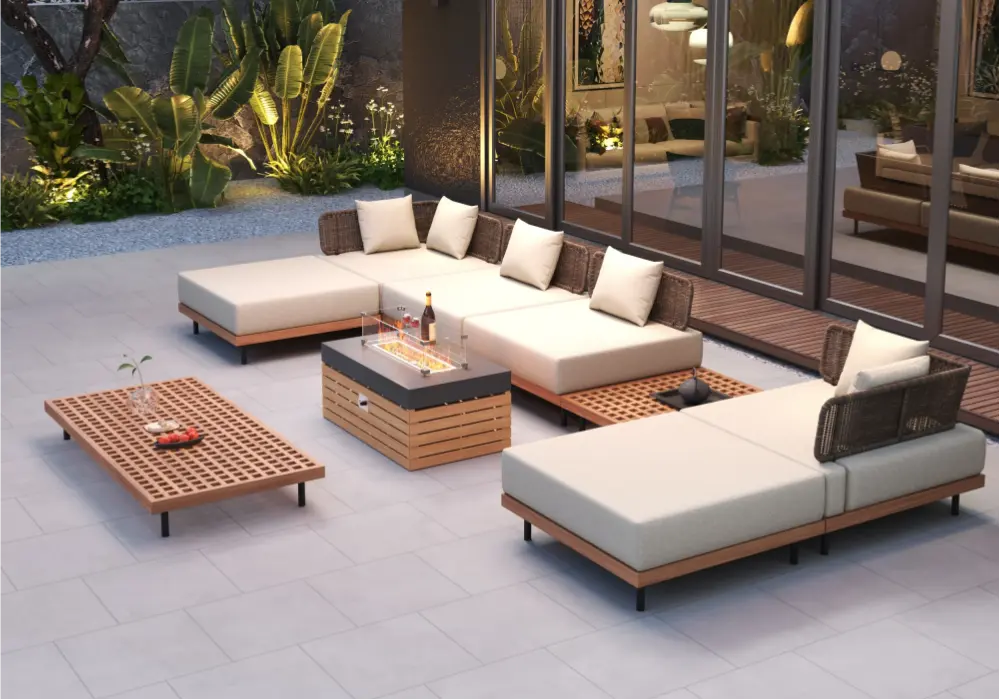
If you are considering any fire pit set, follow the manufacturer's guidance on clearance from cushions, covers and nearby structures. Keep fabrics away from the flame, and use the product's own instructions for fuel and ventilation.
Cushions and Fabrics
Cushions take as much sun and rain as the frame, so the cover matters. Look for solution-dyed acrylic or other outdoor-rated fabrics, which are designed to resist fading, mildew and water. Removable, zippered covers make cleaning easier, and quick-drying fill helps after rain. Even the best covers last longer if you store cushions during heavy storms or the off-season, or use a fitted furniture cover.
Which Material for Which Scenario?
The table below turns the comparison into practical picks. Material choices overlap, so use it as a starting point rather than a rule.
Scenario | Good choices | Watch out for |
Coastal or humid climate | Grade A teak, marine-grade stainless steel, quality powder-coated aluminum | Untreated iron or steel that can rust in salt air |
Hot, sunny and dry | UV-stabilized HDPE, thick powder-coated aluminum | Dark metal that heats up in direct sun, and cheap resin that fades |
Rainy or freeze-thaw climate | Aluminum, HDPE lumber and wicker on aluminum | Natural wicker and untreated wood left uncovered |
Small balcony or rooftop | Lightweight aluminum frames, compact modular pieces | Heavy furniture that exceeds weight limits or blows around in wind |
Family with kids or pets | HDPE, aluminum and tightly woven covers that wipe clean | Soft-weave fabrics that snag, and glass tops at child height |
Covered patio | Hardwoods, teak and rope weaves | Assuming "covered" means "protected from humidity" |
Fire pit lounge | Teak, aluminum and heat-tolerant surfaces near the pit | Cushions and covers close to open flame |
For coastal areas, guides commonly point to marine-grade materials such as 316 stainless steel and Grade A teak, while desert climates call for UV-stabilized HDPE and thick powder-coated aluminum. These recommendations come from furniture retailers, so confirm details in the product specifications.
Sourcing, Certifications and Weight
Two details are easy to overlook on a product page. The first is wood sourcing. Teak and other hardwoods come from forests that vary widely in how responsibly they are managed, so look for a stated certification, such as Forest Stewardship Council (FSC) certification, which indicates wood from responsibly managed forests. If a listing does not mention sourcing, ask the seller.
The second is weight. Heavier frames resist wind, but they are harder to rearrange and may exceed the load limit of a balcony or rooftop deck. Lighter aluminum is easier to move, but on an exposed terrace it may need ballast, weighted bases or anchoring. Check both the product weight and the weight capacity of the surface where the set will sit, and consider how often you will reconfigure a modular layout. Modular sets are flexible, but each extra piece adds storage and cover costs in the off-season.
How Weather Affects Each Material
Understanding the failure modes helps you read a listing:
- Sun (UV): fades fabrics and makes cheaper resin brittle. Look for UV-stabilized resin and solution-dyed covers.
- Rain and humidity: trigger mold on cushions and rust on exposed steel. Good drainage in the frame and quick-dry cushions help.
- Wind: lifts lightweight pieces. A heavier frame, or aluminum with a wide base, stays put better.
- Salt air: corrodes standard metal and fasteners. Marine-grade stainless or aluminum with a thick coating handles it best.
- Freeze and thaw: cracks brittle plastics and can split water-logged wood. Quality HDPE and sealed hardwoods cope better.
Care Basics That Extend Lifespan
- Clean regularly. Mild soap, water and a soft brush handle most surfaces.
- Cover or store in harsh weather. A fitted cover costs little compared with replacing cushions.
- Oil or seal wood if you want the original color. Otherwise let teak weather to a silver-gray, which does not affect its structure.
- Touch up chips. Paint or sealant on a scratch stops rust from spreading.
- Check fasteners. Tighten bolts at the start of each season.
A Quick Buying Checklist
- Identify the frame, the seating surface, the tabletop and the cushion cover, and note the material of each.
- Look for terms such as powder-coated, UV-stabilized, HDPE and solution-dyed.
- Check the weight limit, the cushion thickness and whether covers are removable.
- Confirm the warranty terms, and see what they exclude.
- Match the material to your climate and how much upkeep you will actually do.
Frequently Asked Questions
What is the most durable material for outdoor furniture?
Teak, HDPE lumber and heavy-gauge powder-coated aluminum are widely cited as long-lasting. Which one is best depends on your climate and upkeep habits.
Is aluminum or teak better for outdoor furniture?
Aluminum is lighter, rust-resistant and needs little care. Teak is denser, has a warm natural look and can last for decades, but it costs more and benefits from occasional maintenance. Many people choose by budget and style.
Is resin wicker good for outdoor use?
Yes, if it is made from HDPE over an aluminum frame. Retailers often quote 10 to 15 years or more for quality versions. Lower-grade PVC wicker is quoted at much shorter lifespans.
Does outdoor furniture need to be covered in winter?
Not always, but covers or storage extend the life of cushions and wood. Aluminum and HDPE tolerate year-round outdoor use better than natural wicker or untreated steel.
What is poly lumber?
Poly lumber is HDPE plastic formed into boards. It resists moisture and fading, and it does not need staining or sealing, which makes it one of the lowest-maintenance choices.
What fabric is used on outdoor cushions?
Solution-dyed acrylic and similar outdoor-rated fabrics are common because they resist fading, mildew and water. Removable covers make them easier to clean.