

In furniture, "motion" simply means a built-in mechanism that moves part of the piece. A motion recliner sofa is upholstered seating whose backrest tilts back and whose footrest extends, either by hand or by electric motor. Some models add extras such as an adjustable headrest, rocking, swiveling, or a pull-out bed, but reclining is the core feature.
Within power reclining seating, an electric motor operates those movements at the touch of a button. Manual motion seating uses a lever or release instead.
Because "motion" is a category rather than a full specification, two motion sofas can differ a lot: a compact two-seater with linked back-and-footrest movement and a large sectional with several functions both qualify. The most useful questions are what moves on the piece you're considering, how it moves, and whether that suits the way your household relaxes.
Table of Contents
What Changes When a Sofa Reclines?
A reclining mechanism changes the relationship between the seat, back, and leg support. In some designs these parts move together; in others each has its own adjustment. The product description lists these functions, and the manual explains how to operate them.
A stationary sofa keeps its seating structure fixed during use. Loose cushions can be repositioned, but that doesn't make it a motion recliner. A modular sofa can likewise be rearranged section by section without any reclining mechanism.
Motion is useful when people want different positions for reading, conversation, and watching television. Comfort still depends on seat depth, cushion feel, back shape, and control access, so it's worth trying the sofa in several positions. Check that you can rest your head comfortably, reach the controls, and return to the upright position easily. A single fully reclined photo shows only one point in the range.
Manual and Power Describe Different Operating Methods
Manual reclining uses a release, lever, or similar mechanism, and some designs link the footrest and back movement. The effort needed and the closing method vary by model.
Power reclining uses a motor and an electrical supply. Controls may operate combined movement, separate features, or preset positions, so it helps to look at the control diagram and power requirements before choosing.
Neither is better across the board. A manual design suits people who want a simple arrangement, while others prefer the effortless positioning of a powered one. What matters is that the controls and movements work for the people who will use it.
Also check how the sofa returns upright and what happens during a power outage, since backup batteries, manual releases, and automatic return vary by model. The product documentation will tell you.
Motor Count Does Not Replace a Function List
Terms such as dual motor are helpful, but they don't map out the whole sofa. Ask which functions the motors operate and whether each seat has its own arrangement. Independent headrest, back, and footrest control is a separate detail from the motor count.
The Softplume chenille power reclining sofa is a full sofa example in this group. Its current listing identifies push-button power reclining, a 3124 mm overall width, and adjustable footrest functionality. The seating and control diagrams show which sections operate and how their movement is coordinated.
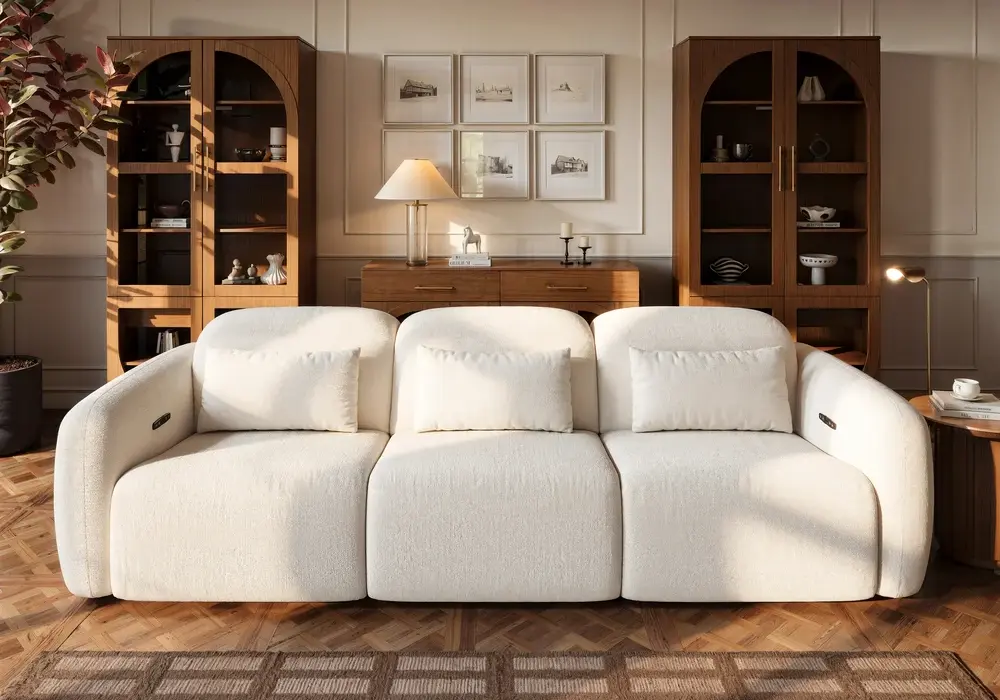
A wide seating surface doesn't always mean every section has its own motor. The number of cushions or seat divisions can differ from the actual control layout, so confirm the positions you need in the specifications.
The product is marketed with zero-gravity terminology, which describes a deeply reclined position that lifts the legs relative to the torso. Try the documented positions and choose the one that feels best for your intended activity.
Reclining, Rocking, and Swiveling Are Separate Motions
Reclining changes the supported sitting position. Rocking adds a gentle back-and-forth movement, and swiveling changes the direction the seat faces. A piece may combine these functions, but each one is listed separately.
The Florvia chenille dual-motor reclining lounge chair is an individual chair, not a sofa. Its current description identifies independent back and footrest control, rocking, and a 270-degree swivel. It shows how several motion features can be combined in one seat.
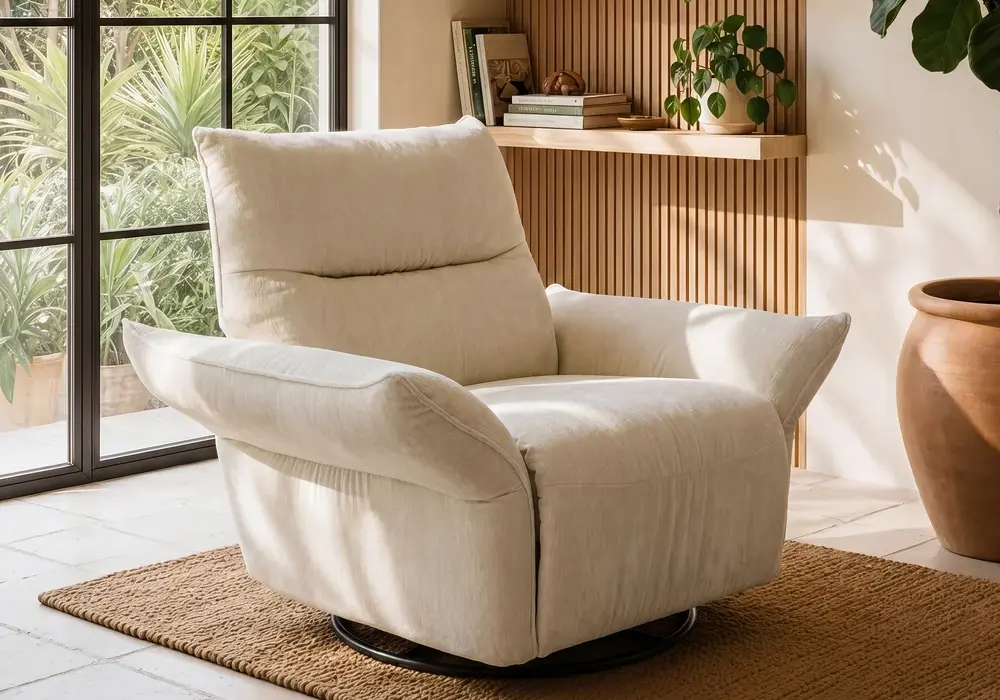
Extra movements affect the surrounding layout. A table beside a turning chair needs more clearance than one beside a stationary sofa, so plan around the chair's full movement range and its power cord routing, not just its upright footprint.
When a sofa listing doesn't mention rocking or swiveling, assume it offers neither, even if a matching chair does. Check each piece's own specifications.
A Reclining Sofa Is Not Automatically a Sleeper
A recliner offers changing seating positions. A sleeper has its own sleeping configuration, with a defined bed surface and size. Reclining farther back doesn't turn a sofa into a bed.
The power reclining sleeper sectional sofa with storage combines reclining with a pull-out sleeping function. The two features work separately: the reclining seats have one operating arrangement, while the sleeper conversion has its own setup and space requirements.
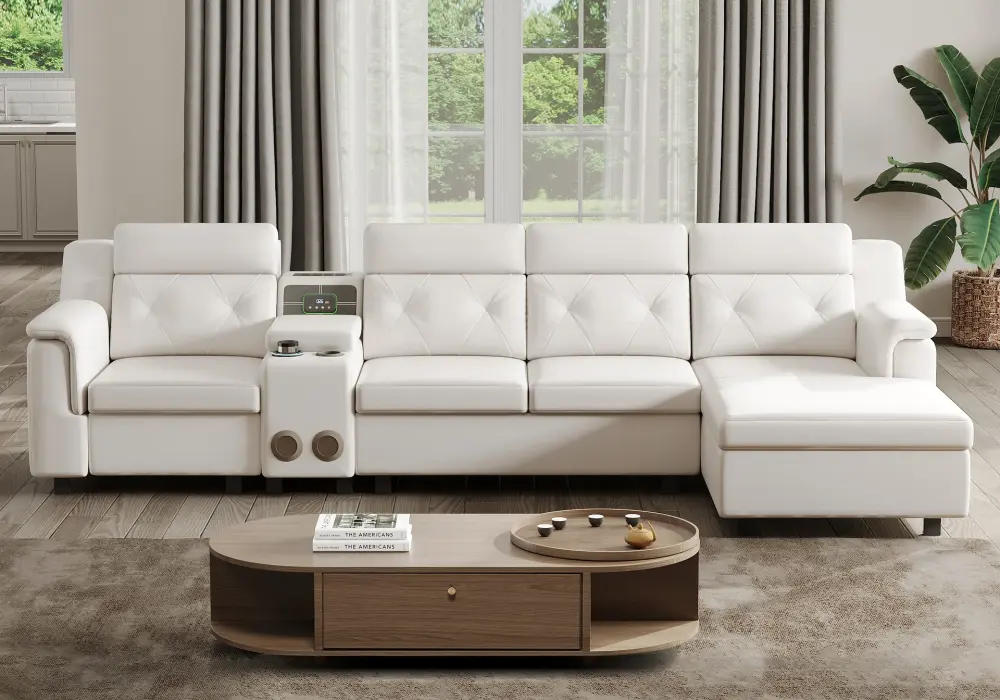
Measure the room for each configuration you plan to use, and check which combinations the instructions allow. A footrest, bed extension, and storage opening may not be able to occupy the same space at once.
Accessories such as speakers, cup holders, and storage add convenience but don't change how the sofa reclines. Evaluate the main seating and sleeper functions first, then decide whether the extras suit your room.
Read Motion Labels as Questions to Resolve
Listing term | What it generally identifies | What to confirm |
Motion sofa | Seating with a changing position or movement feature | Which components and seats move |
Power recline | Motor-operated reclining | Control method, power supply, and available positions |
Manual recline | A non-powered operating arrangement | Release and return method for that model |
Dual motor | More than one motor serving specified functions | Whether the functions are independently controlled |
Swivel or rocker | Directional turning or rocking motion | Range, operating space, and any restrictions |
Sleeper | A separate sleeping configuration | Conversion method, dimensions, and intended use |
Use the table to turn broad terms into a useful specification. A short, confirmed function list tells you more than a collection of appealing labels.
Keep comparisons consistent across products. If one candidate has independent controls and another has linked movement, note that difference directly rather than comparing only by overall size or the number of buttons in the photos.
Plan the Room for the Operating Footprint
Upright dimensions describe only one state. Get the fully operating dimensions and required clearances for the exact piece, since the footrest, back, headrest, or sleeper extension changes how much room it occupies.
Labels such as zero wall or space-saving are best confirmed with a measurement. Ask for the placement drawing and test it against walls, tables, curtains, and walkways. The front of the sofa often needs substantial open floor even when rear movement is limited.
Mark the operating envelope with painter's tape and walk through the room's usual routes. Picture a second person using the adjacent seat at the same time. A practical layout accounts for people and nearby furniture, not just the sofa's maximum outline.
Check the delivery route separately. A large motion sofa often ships in multiple components, so review package dimensions and assembly information before scheduling delivery into a tight room.
Judge Comfort Beyond the Mechanism
Start with seat depth and where your feet land when sitting upright. Then assess back and head support in the positions you expect to use. A wide range of movement can't make up for proportions that don't suit you.
Check control location from the seated position. A panel that's convenient for one person may be hard for another to reach. If several people share the sofa, learn which controls belong to each seat and show guests how they work.
Think about your routine, too. A person reading needs a reachable table and light, and someone watching television needs a good view from the reclined position. Choose the furniture and room layout together.
Compare upholstery and care as a separate part of the decision. Fabric texture, cleaning instructions, and how easily loose items stay organized all affect everyday use. Keep throws and accessories clear of the moving parts.
Understand the Ownership Requirements
Motion furniture works best when used and cared for as the manufacturer instructs. Keep the manual, product identification, and service information handy, and use approved electrical components and replacement parts.
Before regular use, learn how to clear the moving areas, return the furniture to its upright position, and recognize when to stop operating it. If the furniture behaves abnormally or an electrical part is damaged, contact the seller or manufacturer for service rather than opening the motor yourself.
Treat these requirements as part of the buying decision. Choose a product whose operation is easy to understand and suits everyone who will use it regularly.
Frequently Asked Questions
Is a motion sofa the same as a reclining sofa?
The terms often overlap, but motion is broader. A motion sofa may recline, rock, swivel, or combine movements, so read the function list to see exactly what the piece does.
Does every seat on a motion sofa recline?
Not always. Some layouts have fixed sections alongside reclining ones, and the number of visible cushions may not match the control layout. Request a seating diagram if independent movement matters to you.
Is a dual-motor recliner always more adjustable?
Not necessarily. Look at which functions the motors serve and whether the controls are independent, then compare the positions you actually want to use.
Can a motion recliner sofa replace a guest bed?
Only if it has a dedicated sleeper function. Reclining into a lounge position is not the same as a bed configuration, so check the sleeper dimensions and conversion process separately.
Does zero-wall reclining mean the sofa can touch the wall?
Not exactly. Zero-wall designs reduce the space needed behind the sofa, but headrest and back movement still need some clearance. Follow the placement drawing and test the full operating range before fixing the sofa's final position.