

A fancy TV stand can go by several names depending on its design, proportions, storage, and where it is used. In American furniture terminology, the most common elevated terms are media console, credenza, sideboard, buffet, and lowboard. While these pieces can all support a television, they are not interchangeable in size or function.
For today's living room, choosing TV furniture is less about finding a basic stand and more about creating a balanced home entertainment center. A well-chosen piece should suit your TV size, provide enough storage for streaming devices and accessories, complement the room's style, and keep the viewing area visually organized.
If you are shopping for a 55-, 65-, 75-, or 85-inch TV, understanding these names can make it much easier to compare high-end TV furniture before you buy.
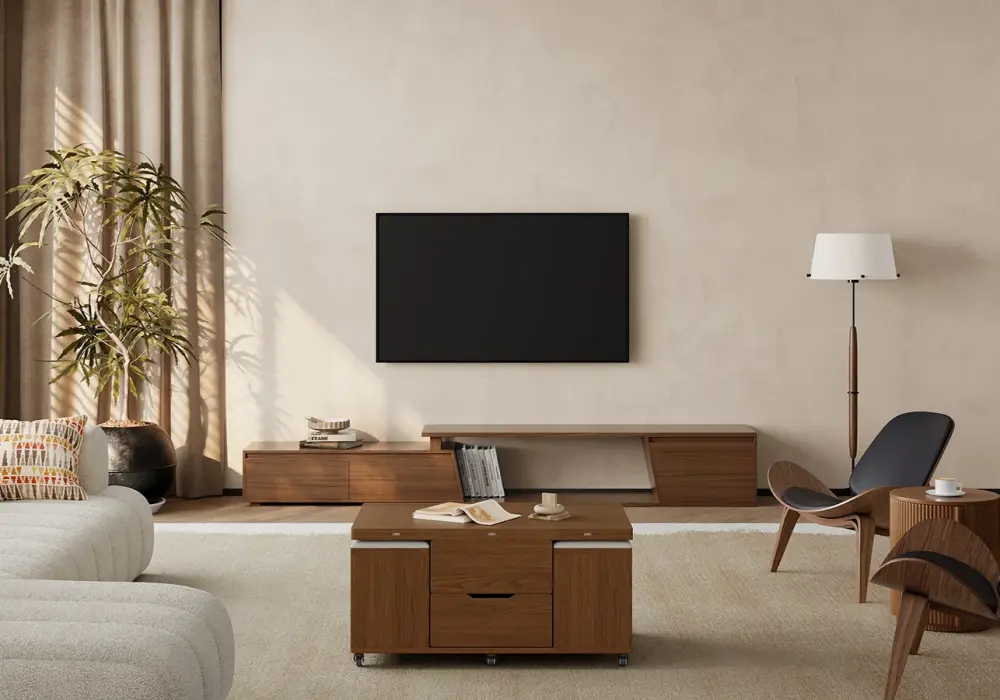
Source Homary
What Is a Fancy TV Stand Called? The Elevated Names to Know
If you search for a more sophisticated alternative to a traditional TV stand, media console is usually the safest American term. It is specifically designed for entertainment equipment and commonly includes cabinets, drawers, shelves, and cable-management openings.
A credenza is another popular choice when appearance is the priority. Traditionally a long, low storage cabinet, a credenza often has clean lines, doors, and drawers rather than an obvious entertainment-center appearance. This makes it especially suitable for contemporary, mid-century modern, and upscale living rooms where you want the television area to look like furniture rather than equipment storage.
A sideboard serves a similar visual purpose but traditionally belongs in dining rooms. It is generally wider and used for storing dishes, linens, and serving pieces. However, a sufficiently wide, structurally sound sideboard can work as TV furniture in a living room.
A buffet is related to the sideboard but is traditionally associated with dining and food service. Buffets tend to be somewhat taller and heavier in appearance, so they are not always ideal for TV viewing unless their height creates an appropriate screen position.
A lowboard is a particularly useful term when shopping for modern, minimalist TV furniture. Common in European and contemporary interiors, a lowboard is a long, low cabinet designed to sit below a television. In the UK, you may also see TV unit or TV cabinet used more frequently, while American furniture and interior-design retailers tend to use media console and credenza.
Term | Typical Role | Common Look | Best TV-Room Use |
Media console | Entertainment storage | Modern, functional | Most versatile |
Credenza | Low storage furniture | Refined, furniture-like | Upscale living rooms |
Sideboard | Dining/storage cabinet | Long and substantial | Design-led TV walls |
Buffet | Dining/storage furniture | Taller, heavier | Selected rooms with suitable height |
Lowboard | Low TV cabinet | Minimalist, contemporary | Large flat-screen TVs |
TV unit | Dedicated TV furniture | Varies | Common UK terminology |
The important distinction is that “fancy TV stand” describes the aesthetic level, not a specific furniture category. A luxury media console, walnut credenza, marble-top sideboard, or minimalist lowboard can all serve the same purpose while creating very different visual effects.
Credenza vs Sideboard vs Console vs Buffet: What's the Difference?
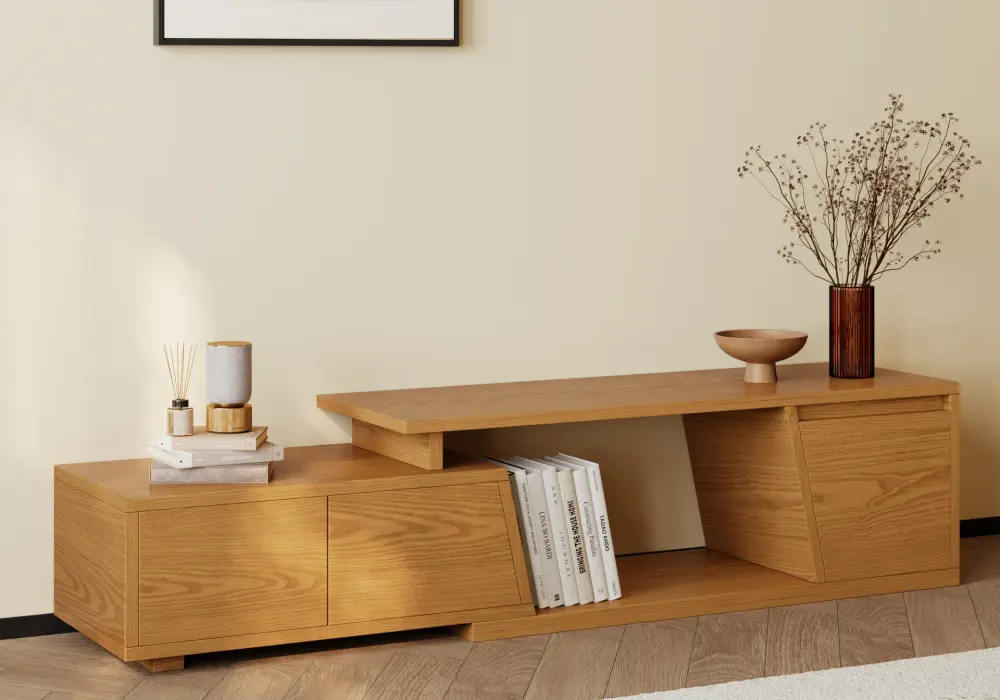
Source Homary
The easiest way to distinguish these furniture terms is to look at their original function, proportions, storage design, and height.
A credenza originated in Italy and traditionally refers to a long storage cabinet. Modern credenzas are typically low and wide, with a strong emphasis on proportion and clean surfaces. They work particularly well beneath a wall-mounted TV because their horizontal profile creates visual balance without competing with the screen.
A sideboard traditionally belongs along the wall of a dining room. It provides storage and serving space and may have a combination of cabinets and drawers. Its substantial construction can make it visually attractive beneath a large television, but you should verify its dimensions and weight capacity before using it as TV furniture.
A console is a broader furniture category. Console tables are often narrow and decorative, while media consoles are specifically adapted for entertainment equipment. A media console typically provides deeper storage, ventilation openings, and cable access that a conventional console table may lack.
A buffet traditionally supports dining and serving functions. Compared with a typical credenza, it may be taller and more substantial. That distinction matters because the cabinet's height directly affects the TV's viewing position.
A practical comparison for TV use
Feature | Credenza | Sideboard | Console | Buffet |
Typical profile | Low and long | Medium-low and wide | Narrow to medium | Medium to tall |
Original use | Storage | Dining storage | Display/storage | Dining/serving |
TV suitability | Excellent | Good | Depends on type | Height-dependent |
Entertainment storage | Often good | Moderate-good | Varies | Moderate |
Best aesthetic | Refined, modern | Transitional | Light, decorative | Traditional |
Key consideration | Width and height | Weight capacity | Depth and stability | Viewing height |
For a TV wall, height is more important than the name on the product page. A beautiful buffet is not necessarily a good TV stand if it places the screen too high. Likewise, a simple media console can look considerably more luxurious when its proportions, materials, and finish complement the rest of the room.
High-End Materials, Finishes, and 2025–2026 Trends for Luxury TV Furniture
A TV console looks expensive because of more than its price tag. Material, finish, proportions, hardware, and visual restraint all influence how high-end the piece appears.
In 2025–2026 interiors, several materials continue to work particularly well for elevated TV furniture. Walnut brings warmth and natural grain, making it a strong choice for mid-century modern and contemporary rooms. Marble or stone-look surfaces create a more architectural appearance, particularly when paired with dark wood or metal. Brushed brass and other muted metal details can introduce subtle contrast without making the piece feel overly decorative.
Rattan or cane doors are another way to soften a large media console. The texture works especially well in modern organic, coastal, and relaxed resort-inspired interiors. For minimalist spaces, flat-front cabinetry in matte neutral finishes can make a large entertainment center visually disappear into the room.
The right choice also depends on the style of the living room:
- Mid-century modern: walnut, tapered legs, warm wood grain and streamlined hardware.
- Modern minimalist: low-profile cabinetry, matte finishes and concealed storage.
- Modern farmhouse: natural wood, black accents and understated hardware.
- Contemporary luxury: stone or marble details, rich wood tones and brushed metal.
- Resort-inspired: natural wood, woven textures, light finishes and soft neutral upholstery nearby.
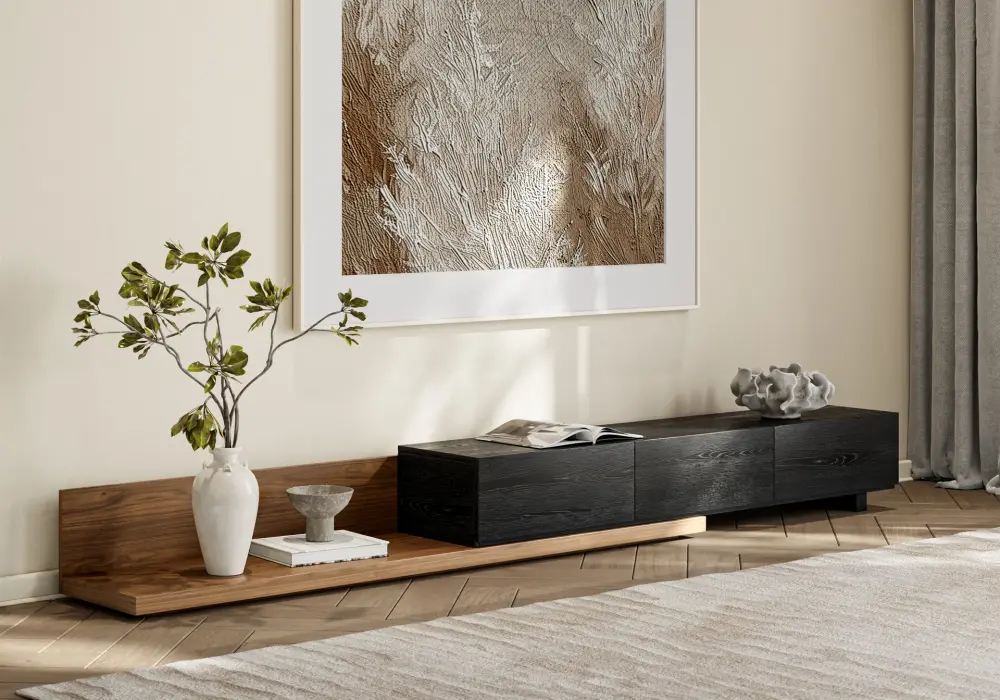
Source Homary
How much should you budget?
Instead of judging luxury solely by price, consider the construction and material combination.
Budget Level | Typical Materials/Details | Expected Look |
Entry | Engineered wood, laminate, basic hardware | Clean and functional |
Mid-range | Veneer, solid-wood accents, upgraded hardware | Refined |
Upper-mid | Premium veneer, stone-look surfaces, metal details | High-end |
Luxury | Solid or premium wood, natural stone, custom construction | Furniture-grade statement piece |
A higher price does not automatically mean better TV furniture. Look for structural stability, durable finishes, quality hardware, appropriate dimensions, and useful storage before paying for decorative details.
How to Choose the Right Console for Your TV Size, Weight, and Room Layout
The first purchasing question should not be “Which style do I like?” It should be:
“What furniture configuration works with my TV, viewing position, and room?”
Start with the TV size. Your console does not have to be dramatically wider than the television, but a cabinet that extends beyond both sides of the screen generally creates a more stable visual composition. For many rooms, allowing roughly 102–305 mm of extra width on each side gives the arrangement a balanced appearance.
For example, a 65-inch television is approximately 1448 mm wide. A console around 1651–2032 mm wide can therefore create a more substantial furniture footprint, depending on the room and surrounding furniture.
The next consideration is viewing height. When seated, the center of the screen should generally be near eye level rather than requiring you to look substantially upward. This is one reason lowboards and low-profile media consoles work so well with modern flat-screen televisions.
TV size and furniture planning
TV Size | Approx. Screen Width | Suggested Console Width* | Typical Room |
55" | ~1219 mm | 1422–1778 mm | Small living room |
65" | ~1448 mm | 1651–2032 mm | Medium living room |
75" | ~1651 mm | 1905–2286 mm | Large living room |
85" | ~1880 mm | 2134–2540+ mm | Large living room/media space |
*These are styling guidelines rather than structural requirements. Always check the manufacturer's dimensions and weight rating.
Weight capacity matters just as much as width. A console intended only for decorative objects may not be designed to support a large television. Check the manufacturer's stated load capacity and compare it with the TV's actual weight, especially if you are placing the television directly on the cabinet.
Your room layout also determines the best furniture type:
- Small living room: choose a compact media console with enclosed storage.
- Narrow room: use a long, shallow console rather than a deep cabinet.
- Large open-plan room: consider a substantial credenza or multi-zone media wall.
- Corner layout: use a corner-compatible cabinet rather than forcing a long console against two walls.
- Fireplace wall: a fireplace media console can integrate the TV and storage, but pay close attention to screen height and heat clearance.
- Wall-mounted TV: pair it with a lowboard or floating media console to create a layered composition.
- Built-in media wall: best when you want the television, storage, lighting, and architectural details to function as one system.
Floating vs. freestanding TV furniture
A floating media console mounts to the wall and leaves visible floor space underneath. It can make a smaller living room feel more open and creates a distinctly contemporary appearance.
A freestanding console is easier to reposition and usually offers more flexibility if you rent, rearrange furniture frequently, or expect to upgrade your TV later.
For floating furniture, however, wall construction becomes a critical purchasing factor. A standard drywall surface may require proper anchoring and access to studs, while masonry or other wall types require different mounting hardware. Never assume that a floating cabinet can support a heavy television simply because the cabinet itself appears substantial.
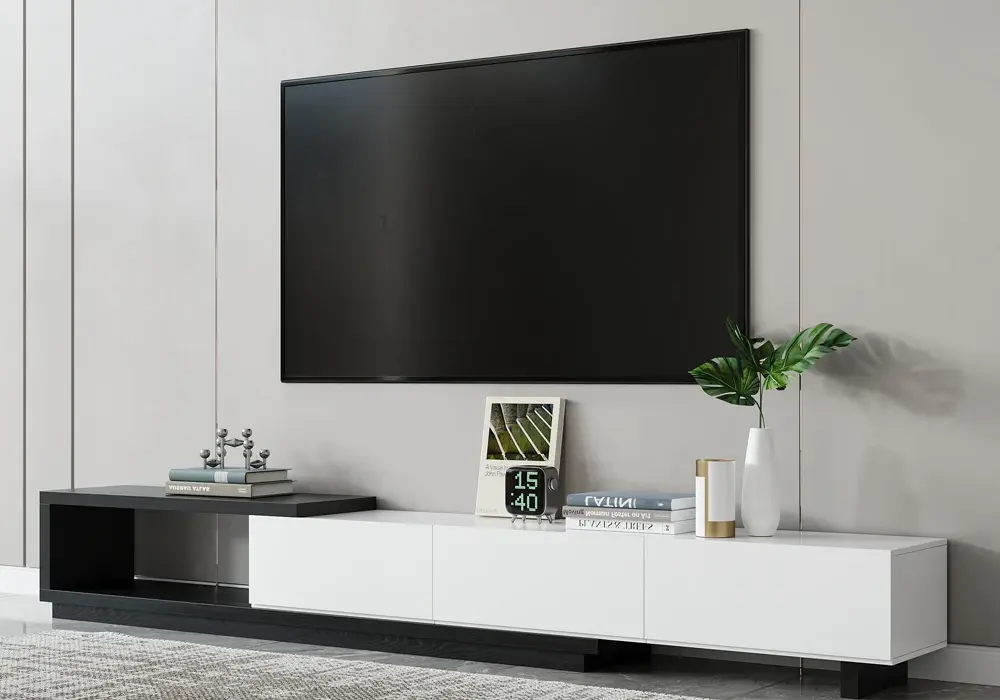
Source Homary
Cable Management, Ventilation, and Durability: Practical Details Buyers Overlook
A luxury TV console should look good from the front and work well behind the doors.
Modern living rooms often contain a streaming device, game console, soundbar, router, power strip, or other electronics. Without proper cable access, even an expensive media console can quickly look cluttered.
Before purchasing, look for:
- Rear cable-management cutouts
- Openings between compartments
- Removable or adjustable shelves
- Enough depth for your electronics
- Ventilation around heat-producing devices
- Soundbar-friendly shelf arrangements
Ventilation deserves particular attention. Electronics generate heat, and completely enclosed compartments may restrict airflow. If you plan to store gaming equipment, receivers, or other heat-producing devices inside the cabinet, look for ventilation openings and enough clearance around the equipment.
Storage should also match how you actually use the room. Closed cabinets are useful for hiding controllers, cables, remotes, and less attractive equipment. Open shelving works better for displaying books, ceramics, artwork, or a small collection of decorative objects.
Durability comes down to construction as much as material. A well-designed console should have stable legs or a strong base, secure doors and drawers, shelves appropriate for the intended load, and a finish that can withstand everyday dusting and occasional spills.
For materials, basic care should be considered before purchase. Wood finishes generally benefit from soft, dry or slightly damp cleaning rather than excessive moisture. Stone surfaces may require product-specific care, while woven doors such as cane or rattan benefit from gentle dusting rather than aggressive cleaning.
The goal is not to think of these details as maintenance chores. Instead, treat them as purchasing criteria. A TV console that looks beautiful but has poor cable access, inadequate ventilation, or insufficient weight capacity is not truly a high-quality entertainment solution.
Source Homary
Build a More Elevated Living Room Media Center
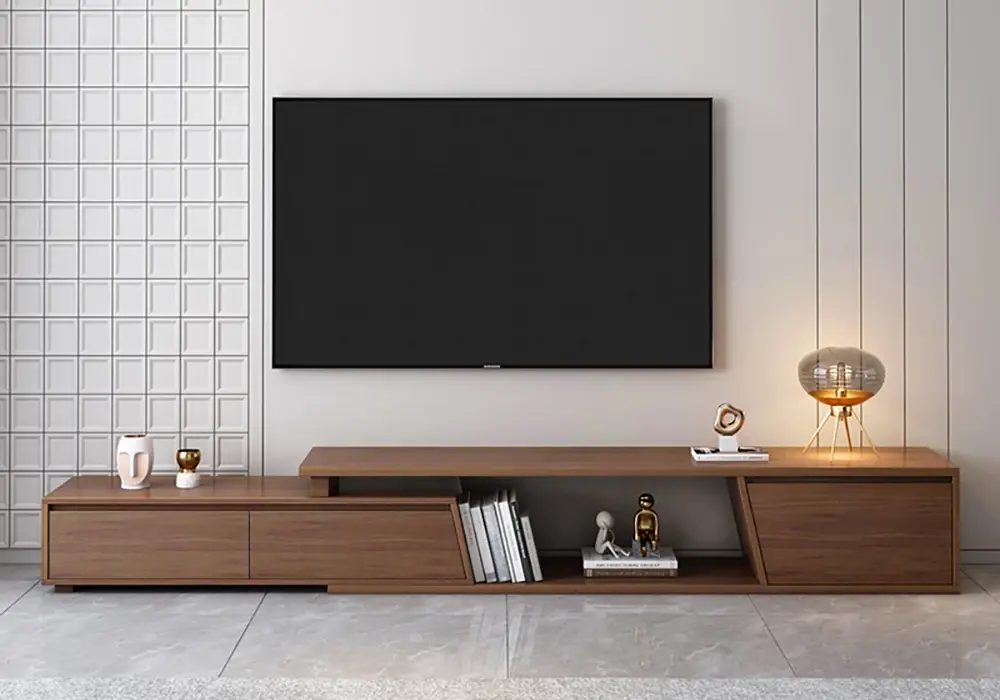
A sophisticated TV area works best when the television is treated as part of the room rather than an isolated black rectangle.
For a resort-inspired living room, combine a low walnut or natural-wood console with textured upholstery, woven accents, warm lighting, and restrained decorative objects. For a contemporary space, a long, low media console can anchor the television while keeping the surrounding architecture clean and uncluttered.
The most effective styling principle is controlled contrast. If the TV is visually dominant, let the furniture underneath provide warmth and texture rather than adding too many competing accessories. A few carefully selected books, ceramics, greenery, or sculptural objects can make the media area feel intentional without turning it into a display shelf.
Ultimately, the best “fancy TV stand” is not necessarily the most ornate one. It is the piece that makes the TV size, furniture proportions, storage needs, viewing height, and overall living-room aesthetic work together.
If you already know your TV size and room dimensions, use those measurements as the starting point for narrowing down media consoles, credenzas, lowboards, and other high-end TV furniture.
FAQ
What is a fancy TV stand called?
In the United States, a fancy TV stand is commonly called a media console, credenza, or lowboard. Depending on its original design and proportions, it may also be described as a sideboard or buffet. For dedicated entertainment use, “media console” is usually the clearest term.
What is the difference between a credenza and a sideboard?
A credenza is typically a long, relatively low storage cabinet with a furniture-focused design. A sideboard traditionally belongs in a dining room and is used for storing dishes, linens, and serving items. Both can work beneath a TV, but you should compare their height, depth, weight capacity, and cable access before using one as a media console.
Can a sideboard or buffet be used as a TV stand?
Yes, provided its dimensions and construction are suitable. Check the cabinet's weight capacity, width, depth, and height before placing a television on it. A buffet that is too tall may create an uncomfortable viewing angle even if it can physically support the TV.
What is a lowboard media console?
A lowboard is a long, low-profile cabinet designed to sit beneath a television or other display. It is particularly popular in contemporary and minimalist interiors because its horizontal proportions balance large flat-screen TVs without visually overwhelming the room.
What is a floating media console, and is it a good alternative to a traditional TV stand?
A floating media console is mounted directly to the wall rather than resting on legs or a base. It can make a room appear more spacious and creates a clean contemporary look. However, proper wall anchoring and weight capacity are essential, especially if the cabinet or television is heavy.
Is a credenza strong enough to hold a large flat-screen TV?
Some are, but the name “credenza” does not guarantee a particular weight capacity. Always check the manufacturer's specifications and compare the TV's actual weight with the cabinet's rated load. For an especially large television, structural stability and a sufficiently wide top are more important than the furniture category.
What materials make a TV stand look expensive?
Walnut and other rich wood finishes, natural stone or marble details, woven cane or rattan panels, and refined metal hardware can all create a high-end appearance. However, proportion, construction quality, finish consistency, and restrained styling often have as much visual impact as the material itself.