

A fancy TV stand is most often called a media console or media cabinet. Depending on its form, you may also see the names credenza, sideboard, entertainment center, lowboard, or TV cabinet. These terms overlap in everyday shopping, but they are not identical. The best name depends on the piece's height, storage layout, media features, and whether it was designed specifically to support a television.
Use "media console" when you want the clearest contemporary term. Use "credenza" when the piece has a furniture-like, low cabinet profile and could work beyond the living room. Use "entertainment center" for a larger system that frames or surrounds the screen. The label matters less than checking width, weight capacity, ventilation, cable access, and storage before you buy.
Table of Contents
The Main Names and What They Usually Mean
Retailers do not follow one universal naming standard, so the same object may appear in several categories. Understanding the usual distinctions makes search results easier to compare.
Media Console
A media console is a low, wide unit designed around televisions and connected equipment. It often includes drawers, open shelves, cable openings, adjustable storage, or ventilated compartments. "Console" sounds more refined than "stand" while still communicating the intended use. This is the safest search term for a polished contemporary TV unit.
Credenza
A credenza is generally a long, low cabinet with doors, drawers, or both. Historically associated with dining or office storage, it is now common in living rooms because its enclosed profile looks more like finished furniture than electronics equipment. Some credenzas work well under a wall-mounted TV, but not every credenza includes ventilation, cord management, or a top rated for a large screen.
Sideboard or Buffet
Sideboards and buffets are storage cabinets traditionally used in dining rooms. They tend to be taller than many TV consoles and may have a deeper body. They can create an elegant television setup when the screen is wall mounted, but height and depth must be checked carefully. A surface that positions the screen too high can be uncomfortable, and solid backs may complicate cable routing.
Entertainment Center
An entertainment center is larger than a simple stand. It may include towers, shelves, a bridge above the TV, display lighting, or integrated storage that spans much of the wall. This format provides abundant storage but needs more visual and physical space. In a compact room, it can feel heavy unless the wall and circulation area are generous.
TV Cabinet or Armoire
A TV cabinet may refer to any enclosed television unit, while an armoire usually has tall doors that can hide the screen. These terms are useful when concealment is a priority. Confirm that the interior opening fits the actual TV width and depth, not just the screen's diagonal category.
Lowboard or Floating Media Unit
"Lowboard" describes a very low, horizontal cabinet, a term common in European and contemporary furniture. A floating media unit mounts to the wall and leaves the floor visible. Both can create a streamlined look, but wall-mounted pieces require appropriate hardware, wall structure, installation, and load planning.
Which Term Should You Search?
Start with your desired result rather than the fanciest label:
If you want | Search term to try |
A polished all-purpose TV unit | Media console |
Enclosed furniture-style storage | Credenza or media cabinet |
A full wall system | Entertainment center |
A traditional cabinet that can hide the TV | TV armoire |
A very low modern profile | Lowboard |
An airy wall-mounted look | Floating media console |
Dining-style storage under a wall-mounted TV | Sideboard or buffet |
Add a material, finish, feature, or approximate width after the category term. For example, search "walnut extendable media console with drawers" rather than "fancy TV stand." Specific language surfaces more comparable products and reduces results that are decorative but unsuitable for your equipment.
Check Function Before Accepting the Label
A beautiful name does not prove that a cabinet is ready for media use. Review the following in the product specifications:
- Overall width: the unit should create a stable visual base for the TV and fit the wall after doors, trim, and adjacent furniture are considered.
- Top load and mounting plan: verify the rated load if the TV will sit on the unit. A wall-mounted screen does not remove the need to verify cabinet loads for components and decor.
- Device clearance: receivers, consoles, routers, and soundbars need enough width, depth, and height.
- Ventilation: enclosed electronics can generate heat. Look for openings or a plan that follows each device manufacturer's clearance requirements.
- Cable access: cord openings reduce the temptation to leave doors ajar or pinch cables against a wall.
- Door and drawer travel: measure the space required to open fronts without hitting a coffee table, rug edge, or walkway.
- Viewing height: test the proposed screen position from the main seat before ordering.
Three Media Console Examples
The Kayla Extendable TV Stand with Three Drawers is best described as an extendable media console. Its contemporary rectangular design, two-tone finish, adjustable width, and three spacious drawers make it a practical choice for modern living rooms. The extendable structure accommodates different room layouts and TV setups, while the concealed drawers keep media accessories organized and out of sight.
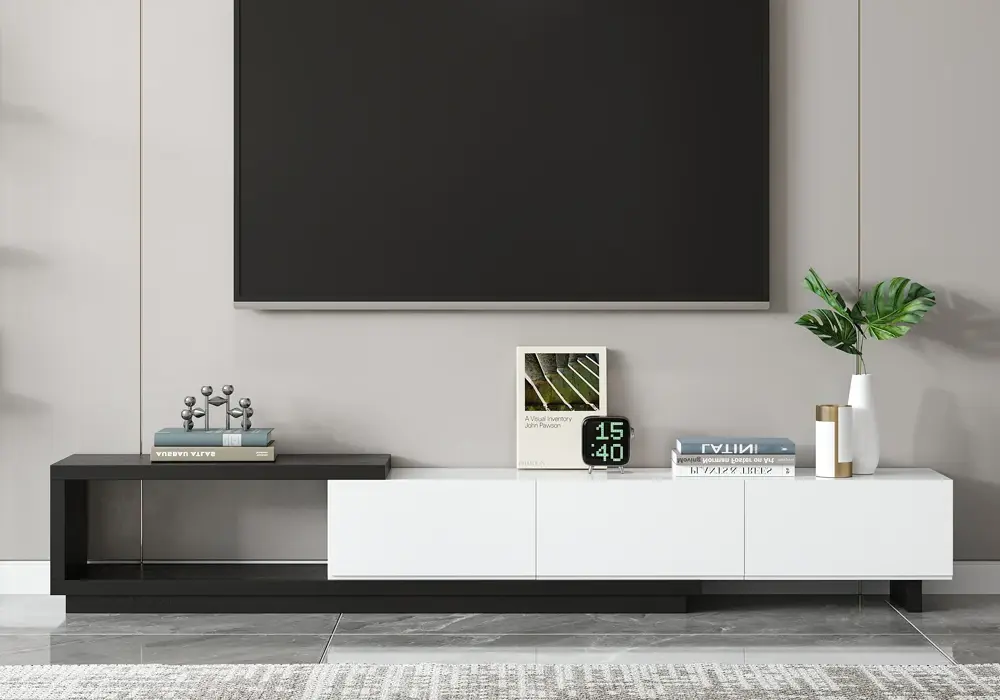
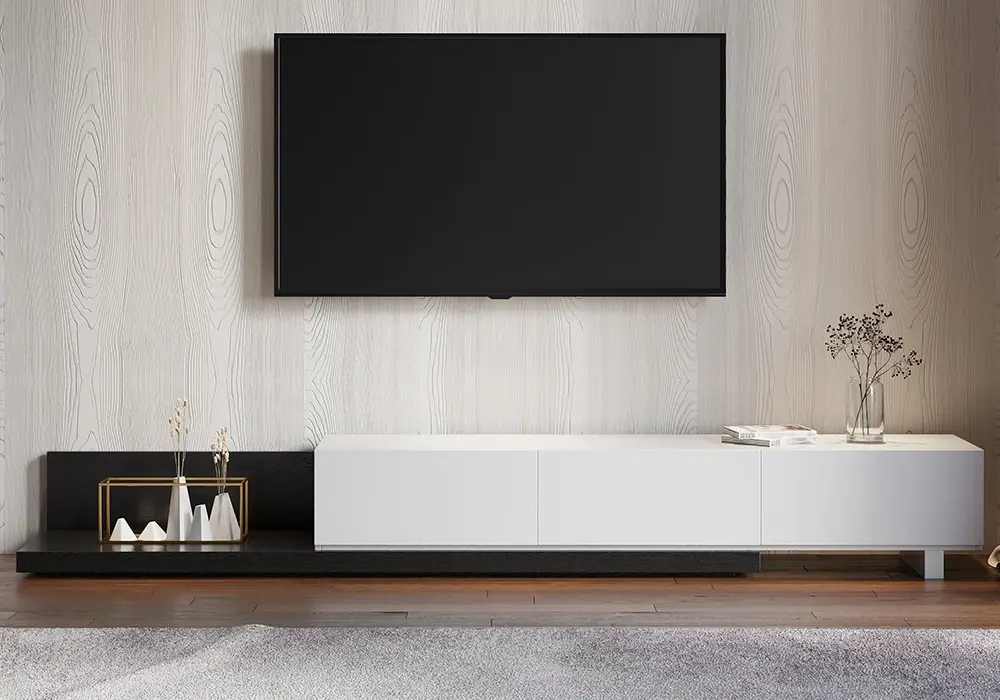
The Quoint 71-100 Inch Extendable TV Stand with Three Drawers fits the "media console" or "lowboard" description. Its long horizontal form is intended to anchor a large screen while providing concealed storage.
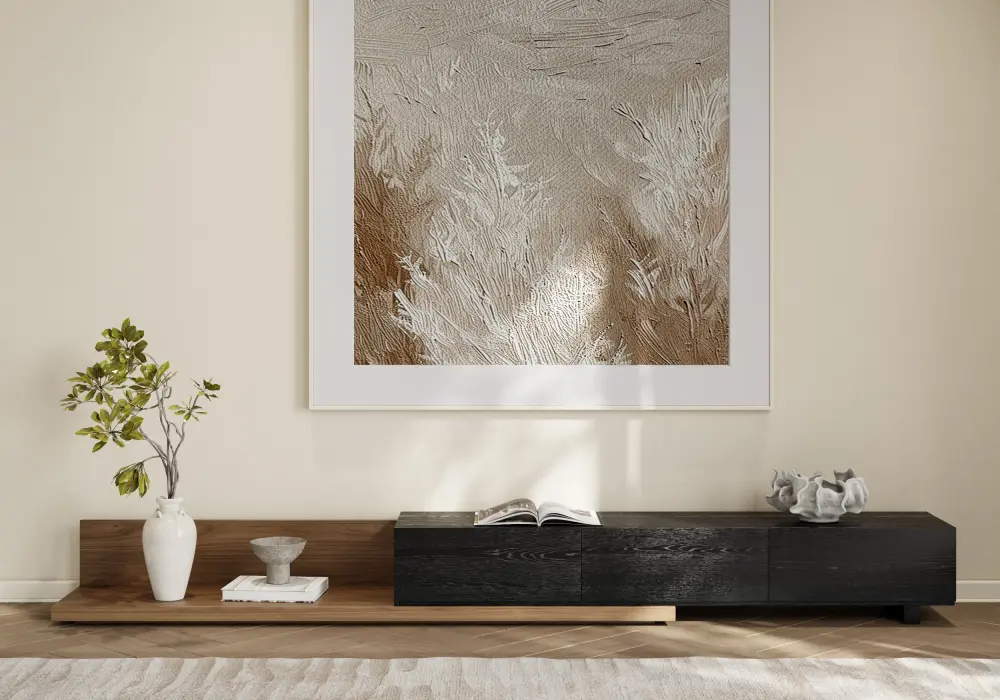
The Extendable Floor Walnut TV Stand with Three Drawers can be called a walnut media console. The floor-standing, extended horizontal profile gives it the visual presence people often mean when they ask for a "fancy" TV stand.
How to Make a TV Stand Look More Elevated
The category name will not create a refined room on its own. Proportion and editing do more of the work. Choose a console that relates to the television and wall, hide excess cable length, and leave open space around vents and controls. Keep tabletop decor low enough that it does not overlap the screen.
Use a small group rather than identical objects at both ends. A lamp or vase on one side can be balanced by two lower objects on the other. Repeat a finish from the room, such as walnut, black metal, stone, or warm white. If the console has strong grain, fluting, color, or asymmetry, reduce the accessories and let the furniture carry the design.
Wall art can help integrate a television, but it should not make the wall difficult to scan. Test the composition with paper templates before drilling. When the TV is wall mounted, center it according to the seating arrangement and viewing comfort, then align the console so the two objects read as one group.
Avoid These Naming and Buying Mistakes
Do not assume a sideboard is automatically strong enough for a television. Do not buy an armoire based only on its exterior width. Do not select an entertainment center before confirming the screen opening and installation path. Do not treat advertised TV size as the unit's exact horizontal measurement. And do not use the word "credenza" as a substitute for checking ventilation, cable management, and device dimensions.
The practical sequence is simple: measure the room and equipment, choose the functional category, then choose the finish and styling details.
Frequently Asked Questions
Is a credenza the same as a TV stand?
Not exactly. A credenza is a low storage cabinet that may work under a television, while a TV stand or media console is usually designed with media equipment in mind. Check load rating, ventilation, depth, and cable access before using a credenza for electronics.
What is the difference between a media console and an entertainment center?
A media console is typically a single low cabinet below the screen. An entertainment center is a larger system that may include side towers, upper shelves, lighting, or storage surrounding the television.
Can I use a sideboard as a TV stand?
Yes, if the dimensions, structure, viewing height, and cable plan work for your setup. Wall mounting the TV can reduce top-load concerns, but the sideboard still needs suitable depth, door clearance, and ventilation for any equipment stored inside.
What do designers call a low TV stand?
Common terms include lowboard, media console, low media cabinet, and floating media unit. "Lowboard" is especially useful when searching for a long, minimal cabinet close to the floor.
What makes a TV stand look expensive?
Good proportion, consistent gaps, controlled cable management, durable hardware, aligned doors and drawers, and a restrained material palette create a more elevated impression. Overdecorating or using a unit that is too small for the TV usually has the opposite effect.