

Kitchen islands are usually made from a combination of materials: a wood or engineered wood cabinet, a worktop such as laminate, stone, or solid wood, and metal hardware. When comparing kitchen islands, assess the top and base separately. A marble patterned surface describes an appearance; it does not automatically identify the material underneath. The right combination depends on how you prepare food, clean, store cookware, and use the island every day.
That distinction matters because the most visible surface is only one part of the purchase. A hard wearing top cannot compensate for unsuitable storage, exposed edges beside a wet work area, or an island that blocks the refrigerator. Start with the jobs the island must perform, then read the construction details component by component.
Table of Contents
Read the material description in layers
Think of an island as four connected systems. The countertop handles spills and food preparation. The cabinet supports that surface and holds your belongings. Doors, drawers, and decorative panels create its appearance. Hinges, slides, fasteners, and feet determine how those parts move and stay aligned.
A product described as a wood island may therefore have an engineered wood cabinet and a separate decorative worktop. A stone topped island can still use wood based storage below. Neither construction is inherently misleading when the specification identifies each component clearly. Problems arise when buyers treat a broad style label as a complete material specification.
Before ordering, find the fields for top material, base material, finish, and care. If those fields conflict with a product title, ask for clarification about the selected size and color. Collections sometimes combine several variants on one page, so general descriptions may cover more than the exact configuration in your cart.
Common kitchen island countertop materials
Top material | What it offers | What to check |
Laminate | Decorative surface with many patterns | Core material, edge sealing, heat precautions |
Solid wood or butcher block | Natural grain and a surface that may be refinished | Finish, food preparation guidance, moisture care |
Natural stone | Individual veining and mineral character | Stone species, sealing requirements, edge support |
Engineered quartz | Manufactured mineral and resin surface | Heat limits and approved cleaning products |
Sintered stone | Manufactured mineral surface formed with heat and pressure | Edge protection, installation support, product care |
Stainless steel | Practical work surface with an industrial appearance | Gauge, scratching, noise, cleaner compatibility |
These are material families rather than guarantees of identical performance. Thickness, manufacturing, finish, joints, and installation can change how two visually similar tops behave.
Laminate and decorative wood surfaces
Laminate is a surface layer applied to a substrate. It can reproduce wood grain, stone patterns, or solid colors without being the material it resembles. That makes it useful when you want a particular look, but it also makes the specification more important than the photograph.
Use a cutting board and an insulated trivet. Laminate manufacturer care guidance warns against placing hot cookware directly on the surface. Wipe up water around edges and joints promptly, and avoid soaking the cabinet while cleaning. A resistant face does not make every seam or underlying board waterproof.
Decorative veneer is different. Veneer is a thin layer of real wood over another material; laminate is a manufactured decorative surfacing system. Both can appear on engineered wood furniture, and both should be identified separately from the core.
Stone and stone look surfaces
Natural marble, engineered quartz, sintered stone, and a marble patterned laminate are different products. Their appearance may overlap, but their composition, care, and repair options do not. Never apply a care routine based only on the veining you see.
Sintered stone is often chosen for a hard, relatively low maintenance surface, although the specific manufacturer's instructions still govern use. Protect exposed corners from heavy impacts and support the top as directed during assembly. Avoid transferring the performance claims of one branded surface to every product in the same broad category.
Natural stone deserves equally specific questions. Ask which stone is supplied, whether sealing is required, and which cleaning products are suitable. A buyer who wants minimal maintenance should compare those answers before choosing a finish.
What the island base is made of
Engineered wood includes several products, such as plywood, particleboard, and medium density fiberboard. They are not interchangeable terms. If a listing says only engineered wood, do not assume it means plywood or a particular board grade.
These materials provide flat panels that can accept paint, veneer, or laminate. Their practical performance depends on construction quality, panel thickness, fasteners, moisture protection, and the finish around vulnerable edges. Look at the cabinet as an assembled structure rather than judging it from a single material word.
Solid wood brings natural variation and can move as humidity changes. That is one reason furniture can combine solid wood components with engineered panels. A combination is not automatically inferior to an all wood claim; what matters is whether the construction suits the intended indoor environment and load.
Metal may appear in the frame, legs, brackets, or hardware. Check the finish and intended environment, especially near frequently wet areas. Stainless steel, painted steel, and aluminum have different characteristics, so a generic metal description should not be stretched into a corrosion guarantee.
Compare three island designs by the questions they answer
The 50 Inch LED Lit Kitchen Island is a useful starting point when you want storage and integrated lighting in a smaller footprint. The current specification identifies engineered wood for both top and base. Separate that construction from the lighting feature: confirm its installation and power requirements without running a cable across an aisle.
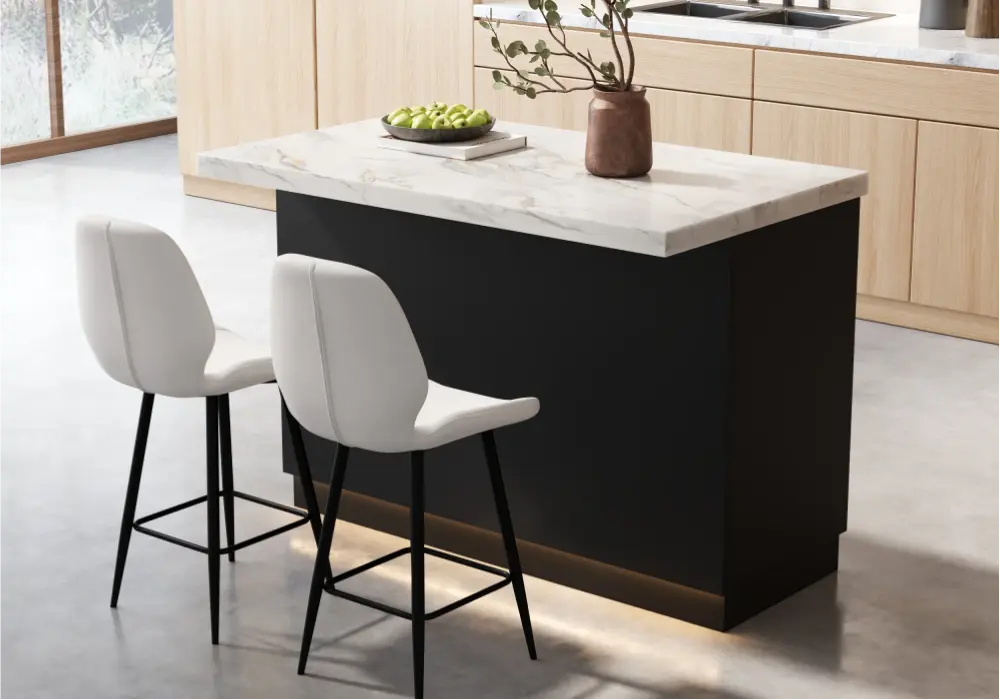
The 50 Inch Wood Kitchen Island in Natural and Gray illustrates why wood appearance and surface construction need separate attention. The current specification lists an engineered wood top and base, so the natural tone should not be interpreted as solid timber throughout. Its nominal width is also only one part of the fit calculation.
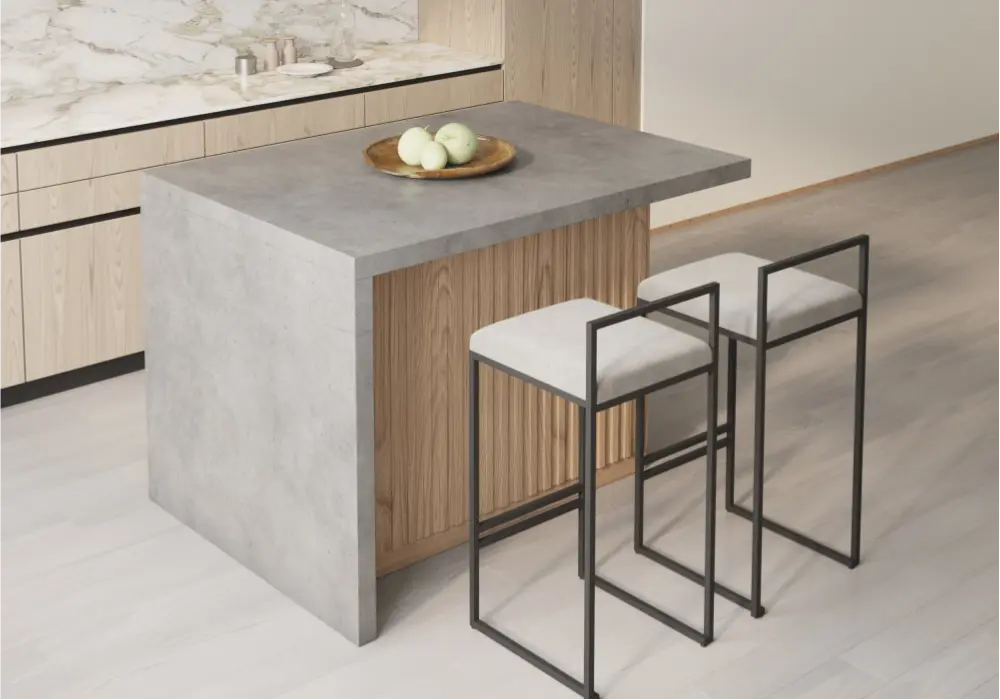
The 72 Inch Waterfall Kitchen Island with Lighting and Storage gives you a different design question: how does the surface continue down the ends? Waterfall describes the visual arrangement, not a universal material. Its current specification lists an engineered wood top and base. Check side panels, joins, and seating clearance before comparing it with a conventional cabinet island.
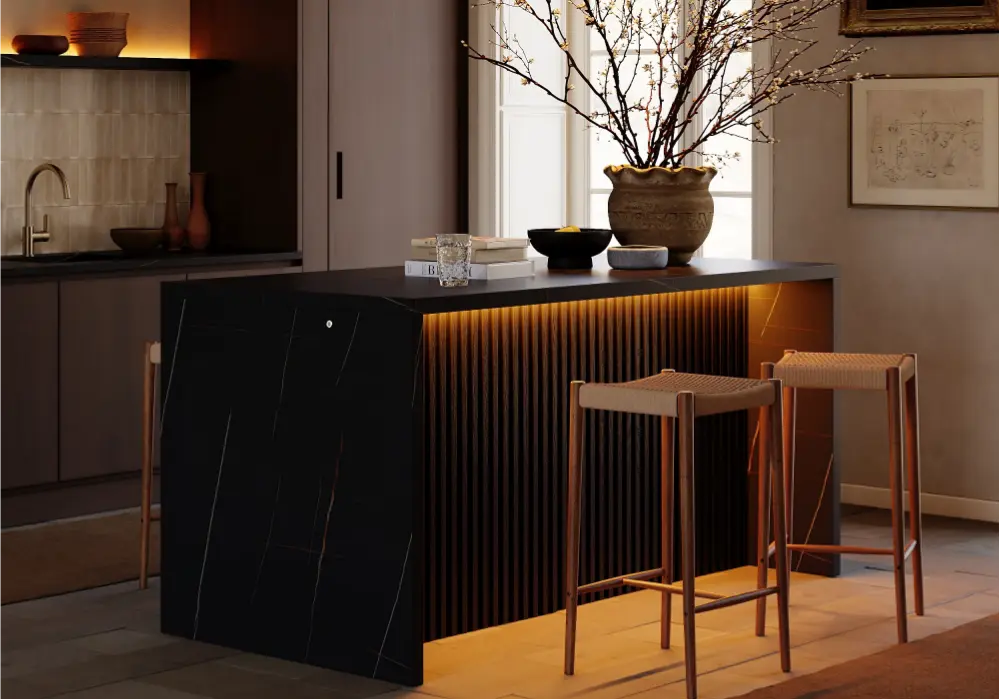
Choose among these approaches by construction and room function rather than by finish alone. A compact island with convenient drawers may serve daily cooking better than a larger statement piece whose storage you cannot comfortably reach.
Match materials to the work you actually do
For frequent food preparation, prioritize a surface with clear cleaning instructions and enough uninterrupted space for a chopping board. Direct cutting is unnecessary for most households and can damage either the surface or your knives. Keep a designated board close to the main preparation position.
For coffee and breakfast, think about repeated small spills, mugs, appliance heat, and cable routing. A coffee maker occupies more than its base measurement: leave room to refill it and manage steam according to its instructions. Do not assume an island with decorative lighting also has appliance rated outlets.
For family storage, inspect drawer dimensions and shelf access. Deep cookware needs usable internal height, while heavy appliances need an explicitly suitable shelf or cabinet load rating. Overall island weight does not establish the capacity of an individual drawer.
For occasional entertaining, evaluate the serving route. A beautiful top loses usefulness if guests must cross the cooking aisle to reach it. Materials matter, but a practical location and easy cleaning routine often have more impact on everyday satisfaction.
Ask these questions before purchasing
Request a clear answer to anything the listing leaves uncertain. What is the exact top material? What is the cabinet core? Is the finish painted, veneered, or laminated? What cleaning products are approved? Are there separate shelf and worktop load limits? Which parts need assembly?
Also check whether the piece is stationary or designed to move. A heavy stone surface is not a reason to drag the cabinet across the floor. Follow the assembly and moving instructions, and arrange suitable help for the listed package weights.
If you plan to add a sink, cooktop, or electrical installation, treat that as a separate design project. A freestanding storage island is not automatically built for appliance cutouts, water exposure, ventilation, or services. Confirm suitability before modifying the furniture.
Frequently Asked Questions
Are kitchen islands usually solid wood?
Not necessarily. Many combine engineered wood cabinets with a separate worktop and decorative finishes. Look for specific top and base descriptions; a wood style name alone does not establish solid wood construction throughout.
Is a marble look island made from marble?
Sometimes, but not always. Marble look can refer to a printed laminate, another manufactured surface, or genuine stone with similar veining. The material field and selected variant should identify what you are buying.
Can I put hot pans on a kitchen island?
Use a trivet unless the exact surface manufacturer expressly permits direct contact. Heat resistance varies by material and product, while finishes, adhesive joints, and nearby decorative components may have different limits.
Is engineered wood suitable for a kitchen island?
It can be suitable for indoor furniture when properly constructed and maintained. Check edge protection, assembly, load limits, and moisture precautions. Water resistant finishes should not be interpreted as permission to leave standing water on the cabinet.
Which material is easiest to maintain?
Choose a surface whose care requirements match your habits. Laminate and many manufactured mineral surfaces can be straightforward to clean, but no material removes the need for spill management, suitable cleaners, and protection from misuse.
How do I compare two similarly priced islands?
Compare the exact top and cabinet materials, usable storage, hardware, dimensions, and assembly requirements. Then test the footprint in your kitchen. Choose the island that supports your routine and fits your available space with clearances intact.