

Finding comfortable seating for a compact room can be surprisingly difficult. Traditional recliners often need substantial space behind the backrest, while bulky sofas can consume most of the available floor area. Wall hugger recliners for small spaces solve part of this problem by using a forward-moving reclining mechanism that allows the chair to sit closer to the wall.
For multifunctional rooms, however, a compact recliner is not the only solution. A convertible sleeper sofa can combine everyday seating and overnight sleeping in one footprint, which may be useful when a small living room also functions as a guest room or home office. The key is to evaluate the room as a whole: dimensions, movement, comfort, storage, and how the furniture will actually be used.
This guide explains how wall-hugging recliners work, how to measure a small room, which mechanisms make sense in tight spaces, and what to compare before buying.

Source Homary
Table of Contents
How Wall-Hugging Recliners Work: Clearance, Reclining Motion, and Real Space Savings
The main advantage of a wall hugger recliner is its reclining trajectory. A conventional recliner typically tilts its backrest toward the wall as the footrest rises, so it needs a noticeable gap behind the chair. A wall hugger design moves the seat forward as it reclines, allowing the backrest to remain relatively close to the wall.
Many wall hugger models work with roughly 10–15 mm (0–1 inches) of space behind the chair, although some compact mechanisms can require less. This is not a universal specification. The required clearance depends on the frame, mechanism, backrest design, upholstery thickness, and whether the chair uses a manual or power system.
Seating type | Typical rear clearance | Main movement | Small-space suitability |
Traditional recliner | 20–40+ mm | Backward | Moderate to low |
Wall hugger recliner | About 10–15 mm | Seat moves forward | High |
Swivel recliner | Varies by model | Recline + rotation | Moderate |
Zero-gravity recliner | Varies widely | Multi-angle positioning | Model dependent |
Convertible sleeper sofa | Model dependent | Seat-to-bed conversion | High for multifunctional rooms |
A wall hugger recliner also differs from a zero-gravity recliner. “Zero gravity” describes a particular reclining position intended to distribute body weight, while “wall hugger” describes how the chair moves in relation to the wall. The two concepts can overlap in one product, but they solve different problems.
It is also important to separate upright depth from operating space. A recliner that looks compact when closed can still occupy considerable floor space when the footrest is extended. Always compare the manufacturer's upright and fully reclined dimensions.
For a small room, the narrowest chair is not necessarily the most space-efficient choice. A slightly wider model with a shallower footprint and a better reclining trajectory may preserve more usable floor space overall.
Measure the Room First: A Small-Space Layout That Still Leaves Clear Walkways
Buying a compact recliner without measuring the entire room can leave you with furniture that technically fits but makes the space difficult to use.
Start with the wall where the recliner will sit. Measure the available width and the distance to nearby furniture such as a coffee table, media console, sofa, desk, or doorway. Then measure the chair's upright depth and full reclining depth.
For a very compact room, an upright depth of around 90 mm or less can be a useful starting benchmark, but the manufacturer's dimensions should always take priority.
Next, measure the delivery route. Check:
- The entrance and interior doors
- Hallway width
- Tight corners and turns
- Elevator doors and interior space
- Staircases and landings
- The final path into the room
A doorway narrower than approximately 70 mm should prompt an extra delivery check. Ask whether the backrest can be removed, whether the product requires assembly, and what the packaged dimensions are.
Consider multifunctional furniture, not just smaller furniture
A small room can sometimes benefit more from combining functions than simply shrinking every item. For example, a convertible sleeper sofa can serve as daytime seating and a guest bed without requiring a separate bed.
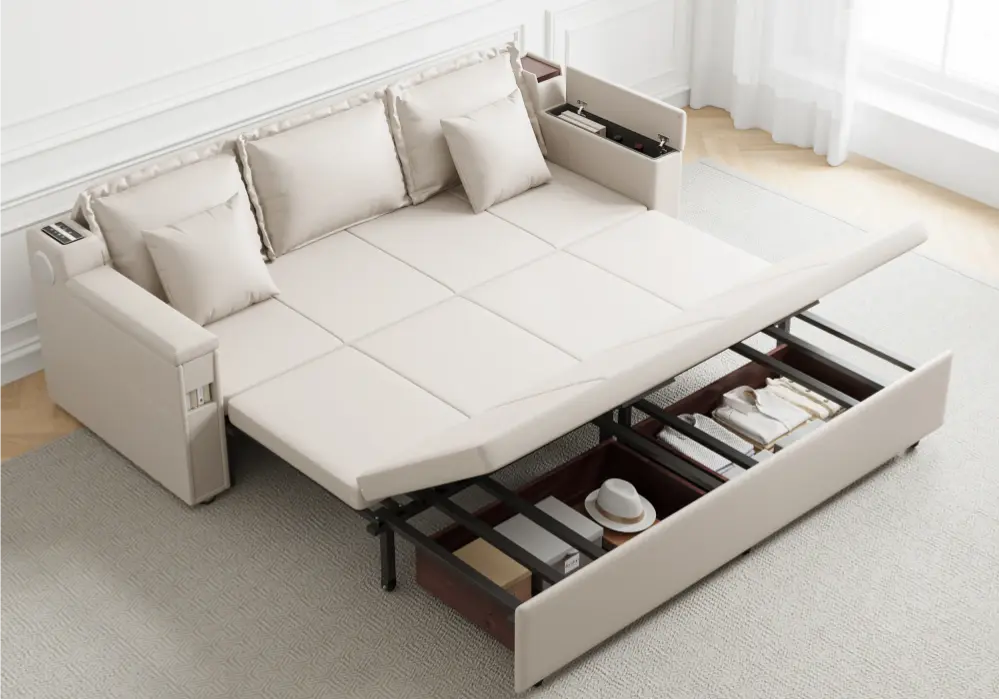
One option worth considering is Homary's 83" 3-Seater Leather Sleeper Sofa with Speaker & USB Ports. The model combines a three-seat sofa with a pull-out sleeper function, under-seat storage, side pockets, and built-in USB ports and speakers. Its practical value in a compact multipurpose room comes from combining several functions rather than trying to make a recliner do everything.
Source Homary
Whether you choose a recliner or sleeper sofa, use painter's tape to mark the furniture footprint and its fully extended position on the floor. This makes it easier to see where the walking paths will actually go.
Ideally, maintain at least one clear primary route through the room. A second route is even better when space allows.
Manual vs. Power Recliners: Choosing the Right Mechanism for Daily Use
Once the dimensions work, the next decision is the reclining mechanism.
A manual wall hugger recliner generally has a simpler design and does not need an electrical outlet. It can be easier to reposition and may appeal to shoppers who prioritize straightforward operation.
A power recliner allows the user to stop at different reclining angles. This can be useful for reading, watching television, relaxing, or spending longer periods in the chair. The trade-off is additional electrical components and the need to position the power cable safely.
Feature | Manual wall hugger | Power wall hugger |
Operation | Lever or mechanical release | Button controls |
Power outlet | Not required | Required |
Weight | Often lower | Often higher |
Position adjustment | Usually limited | More precise |
Best suited to | Simple everyday use | Frequent or flexible reclining |
Swivel, glider, and convertible seating for multifunctional rooms
A swivel recliner can make one chair useful from several directions. That can be helpful when a compact room serves as a living room, reading space, and workspace.
A glider recliner adds gentle movement, although its base still needs to be considered when planning circulation.
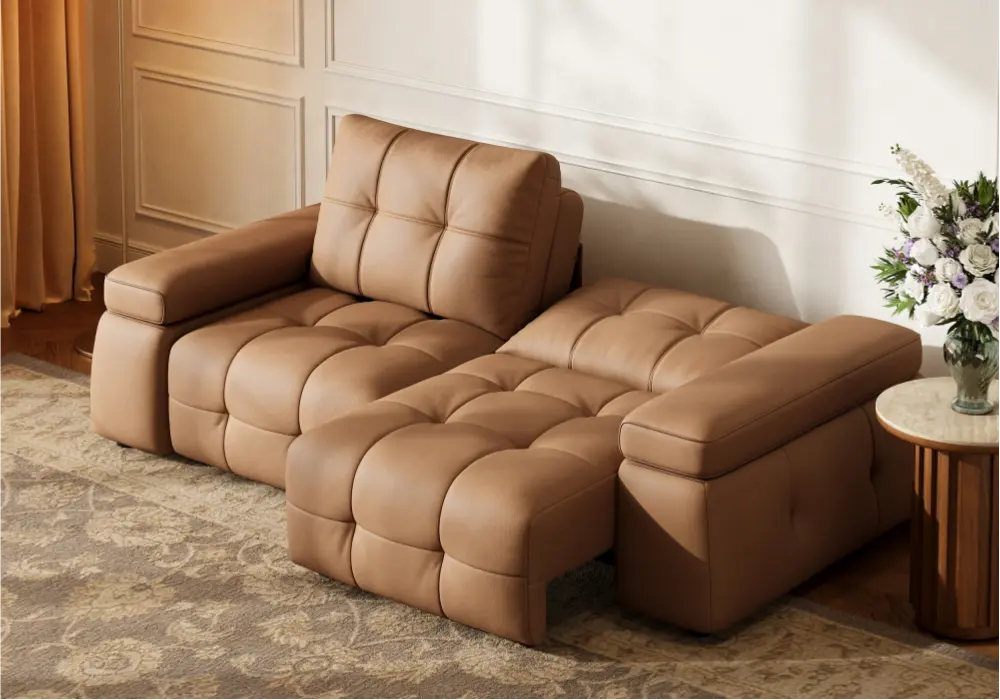
For households that need seating and occasional sleeping space, a convertible sleeper sofa can be a more useful alternative than adding both a recliner and a separate guest bed. Homary's 95" 2-Seater Genuine Leather Power Convertible Sleeper Sofa with Adjustable Armrests, for example, combines power conversion, adjustable armrests, a reclining backrest, and high-resilience foam in a two-seat format. That makes it relevant to rooms where seating needs to perform more than one job.
Source Homary
When comparing powered mechanisms, don't rely exclusively on terms such as “silent” or “quiet.” If possible, listen to the motor operating in a showroom or check independent customer feedback.
Compact Upholstery and Comfort: Keep the Chair Slim Without Losing Support
One of the biggest risks of shopping for small-space furniture is choosing a piece that saves floor space at the expense of comfort.
Slim arms and a compact frame are useful, but the seat still needs enough padding and support. Check seat depth, seat width, back height, footrest support, and the manufacturer's recommended user height and weight range.
Which upholstery works best for everyday use?
Upholstery | Advantages | Potential drawbacks | Suitable for |
Fabric | Soft and breathable | Can absorb spills | Everyday living rooms |
Faux leather | Easy to wipe clean | Can feel warmer | High-use spaces |
Genuine leather | Durable, refined feel | Higher cost | Long-term use |
Performance fabric | Practical stain resistance | Texture varies | Families and pet owners |
For homes with pets, a tight-weave performance fabric can be a practical choice because it may be easier to clean and less prone to exposed loops. No upholstery is completely scratch-proof, however.
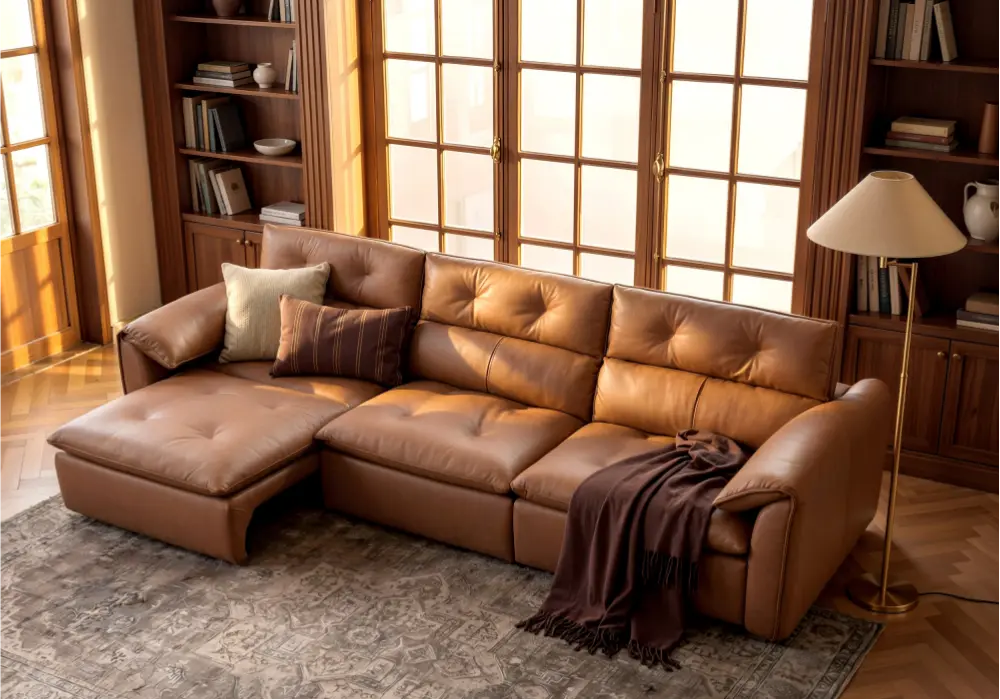
Leather can also be attractive in a compact room because its relatively clean visual surface can make seating look less bulky. For shoppers considering multifunctional furniture, the 126" 3-Seater Genuine Leather Power Convertible Sleeper Sofa with Adjustable Headrests combines genuine leather upholstery with a one-touch power sleeper mechanism and manually adjustable headrests. Its 126-inch width means it is better suited to larger small-space layouts rather than extremely narrow rooms, but the example shows how comfort-oriented features can be integrated into multifunctional seating.
Source Homary
The important lesson is that “compact” should describe how efficiently furniture uses the room, not simply how little padding it contains.
For long-term use, also check warranty coverage. Frame, reclining mechanism, motor, upholstery, and labor may have different warranty terms.
How to Compare Affordable Wall Hugger Recliners Without Buying the Wrong One
A lower purchase price does not automatically make a recliner the better choice. The real value comes from how well it matches your room, body, usage habits, and delivery constraints.
Start with the total cost, not just the listed price. Delivery charges, assembly, stair fees, installation, and removal of old furniture can affect the final amount.
Then compare the following:
What to compare | Why it matters |
Overall width | Determines whether it fits the wall |
Closed depth | Affects circulation |
Fully reclined depth | Shows real operating footprint |
Wall clearance | Confirms placement against the wall |
Weight capacity | Helps match the chair to the user |
User height range | Affects head, back, and leg support |
Warranty | Indicates after-sales protection |
Package dimensions | Determines whether delivery is possible |
Assembly requirements | May affect installation needs |
Return policy | Important if fit or comfort is uncertain |
For compact homes, package dimensions can matter as much as finished dimensions. A chair that fits the room may still be impossible to maneuver through a narrow hallway in its shipping configuration.
This is another reason multifunctional products deserve consideration. If a room needs both a sofa and guest sleeping space, buying one convertible piece may be more space-efficient than squeezing a recliner and separate sleeper into the same area. The right choice depends on whether your priority is personal reclining comfort or flexible seating capacity.
A simple buying priority
For most small-space shoppers, use this order:
Fit → access → comfort → mechanism → upholstery → price
That order helps prevent the common mistake of buying the cheapest or smallest product first and discovering later that it blocks a doorway or creates an uncomfortable room layout.
Final Buying Guide: Create More Usable Space, Not Just a Smaller Furniture Footprint
A wall hugger recliner should fit more than the wall. It should fit the way you move through the room and the way you actually live in it.
Before purchasing, confirm the upright width and depth, wall clearance, and fully reclined footprint. Measure the route from the entrance to the final position and check packaged dimensions. Then match the chair's seat size and support to the intended user.
For multifunctional rooms, also ask whether a convertible sofa could eliminate the need for another piece of furniture. A two-seat power sleeper can combine lounging and guest sleeping, while a three-seat convertible can provide additional seating capacity. These solutions do not replace a wall hugger recliner in every situation, but they can be valuable when one room needs to perform several functions.
Choose upholstery based on actual household conditions rather than appearance alone. Families with pets may prioritize easy-care fabrics, while leather may appeal to shoppers who want a refined look and straightforward cleaning.
Most importantly, don't judge furniture only by its showroom footprint. The best wall hugger recliners for small spaces preserve usable room around the chair while still providing comfortable space for the person sitting in it.
Once you have your measurements, mark the furniture footprint with tape and compare several options using the same checklist. Whether you shop online or visit a showroom, having those numbers ready makes it much easier to eliminate unsuitable choices before delivery.
FAQ: Wall Hugger Recliners for Small Spaces
How much clearance does a wall hugger recliner actually need behind it?
Many wall hugger recliners require around 10–15 mm (0–1 inches) of clearance, but the exact measurement varies by model. Always follow the manufacturer's specified wall-clearance requirement.
What is the difference between a wall hugger recliner and a zero-gravity recliner?
A wall hugger recliner is designed to minimize the space required behind the chair when reclining. A zero-gravity recliner focuses on a particular reclining position that redistributes body weight. Some chairs can combine both features.
Are there wall hugger recliners with an overall depth under 90 mm?
Yes, compact models with an upright depth around or below 90 mm are available. However, the fully reclined depth is equally important because it determines how much floor space the chair uses while operating.
Do wall hugger recliners come in both power and manual versions?
Yes. Manual models use a mechanical release or lever, while power models use an electric motor and controls. Manual chairs are generally simpler, while power models provide more precise positioning.
What are the best pet-friendly upholstery options for a small-space recliner?
Tight-weave performance fabrics are often practical because they can be easier to clean and may be less vulnerable to snagging than loose weaves. No upholstery should be considered completely scratch-proof.
Can I get a wall hugger loveseat for a small apartment?
Yes. Wall-hugging loveseats can provide two reclining seats in one furniture footprint. The main issues to check are width, delivery access, and the fully extended positions.
What should I check before ordering a wall hugger recliner for a condo or tight doorway?
Measure the full delivery route, including the front door, hallway, corners, elevator, stairs, and final room entrance. Confirm packaged dimensions, whether the back can be removed, and the retailer's delivery, assembly, return, and warranty terms.