

A small patio or apartment balcony does not have to feel cramped. With the right furniture dimensions, flexible seating, and a smart layout, even a compact outdoor area can become a comfortable place for morning coffee, casual meals, or evening relaxation.
The key is to shop for the space you actually have—not the patio you wish you had. Before choosing a bistro set or outdoor sofa, measure your usable floor area, identify the door swing, and decide how much clearance you need for walking. Then look for furniture that folds, stacks, stores, or performs more than one job.
This guide covers practical small patio furniture ideas that combine comfort, storage, durability, and style without overwhelming a limited footprint.
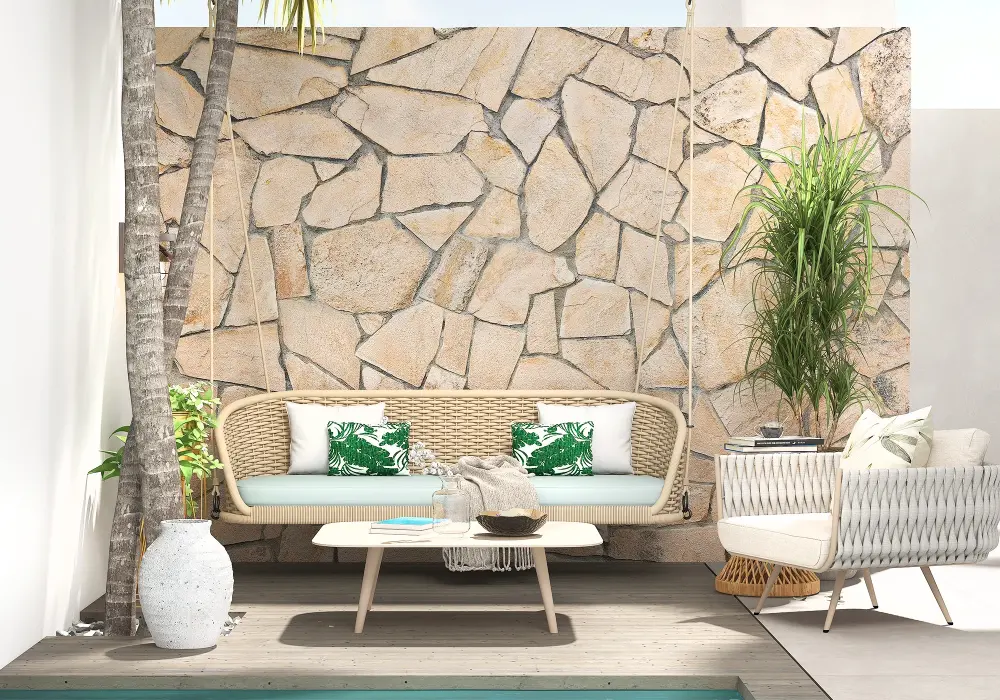
Outdoor Woven Rope Swing Sofa - Homary
Table of Contents
How to Measure a Small Patio and Plan for Clearance
The best small patio furniture ideas start with a tape measure. Measure the usable floor area, not simply the advertised patio dimensions.
Record four measurements:
- Length: Measure from wall to wall.
- Width: Measure at several points, especially if the patio has an irregular shape.
- Door opening: Measure the door width and mark the complete swing or sliding path.
- Walking clearance: Identify the route you need to reach the door, railing, storage area, or stairs.
For a small dining area, allow approximately 610 mm of table space per person for comfortable seating. A compact dining chair generally needs about 457–559 mm of width, while a chair that is pulled away from the table needs additional room behind it.
As a practical minimum, aim for:
- 762 mm of clear walking space where possible.
- 610 mm as a tight but usable passage in a very small space.
- 813–914 mm between furniture and a door when the door swings into the patio, so the opening is not obstructed.
- About 914 mm behind a dining chair if people need to walk past someone who is seated.
For example, imagine a rectangular balcony measuring 1.5 m by 2.4 m. A 610 mm round bistro table with two narrow chairs can fit comfortably near one end, while the remaining space can hold a slim storage bench or vertical plant stand. Rather than centering every item, place the largest piece against the longest wall and keep a continuous path from the door.
A useful trick is to mark furniture footprints on the floor with painter's tape before buying anything. Tape a 762×762 mm square for a table, then mark the chair positions and door swing. This gives you a full-scale layout before spending money.
If you have access to a photo of your patio, you can also overlay these taped measurements on the image. A simple scaled sketch—such as 25 mm on paper = 0.3 m outdoors—makes it easier to test different arrangements.
Compact Seating That Folds, Stacks, or Hangs
Seating usually consumes more floor space than homeowners expect. For a tiny patio, choose chairs that disappear when you do not need them.
Folding Dining Chairs
Folding chairs are ideal when your patio serves different purposes throughout the day. Look for chairs that are approximately 432–508 mm wide and check the folded thickness before purchasing.
A chair that folds to roughly 102–178 mm thick can often slide behind a door, beside a cabinet, or underneath a covered storage area. Lightweight aluminum or steel models may weigh around 2–5 kg, making them easier to move indoors during bad weather.
For two-person dining, two folding chairs plus a small round table can provide a full dining setup while keeping the center of the patio open.
Stackable Stools
Stools can be even easier to store than chairs because they have no backrest. A stack of three or four stools can occupy the footprint of one stool when not in use.
Choose stools around 406–457 mm high for standard dining-height tables. For casual coffee tables, shorter outdoor stools can double as footrests or side tables.
This option works particularly well for narrow balconies where furniture needs to be pushed against a wall.
Hanging or Suspended Seating
A hanging chair can create a comfortable reading corner without using the same visual footprint as a conventional lounge chair. However, this idea requires more planning.
Do not attach a hanging chair to a balcony railing simply because the railing appears sturdy. Verify that the mounting point and building structure are designed to support the intended load, and follow the manufacturer's installation requirements.
Allow enough overhead and side clearance for the chair to move. A practical starting point is to keep approximately 610 mm of free space on each side of the chair and enough vertical clearance to avoid contact with ceilings, walls, lights, or railings.
For apartments, a freestanding hanging-chair frame may be safer and more practical than drilling into a wall or ceiling.
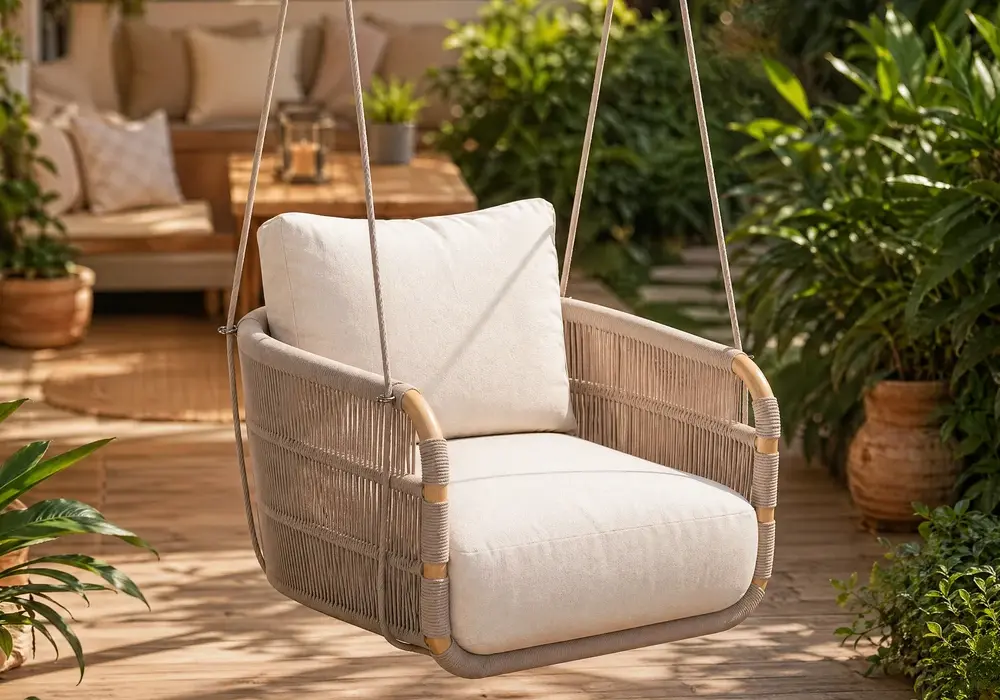
Patio Hanging Swing Chair - Homary
Multi-Functional and Narrow Dining Furniture That Earns Its Footprint
The best small patio furniture does more than one job. If a table can provide dining space, food preparation space, and temporary storage, it earns its footprint.
Drop-Leaf and Folding Tables
A compact drop-leaf table can function as a narrow console when folded and a dining table when the leaves are raised.
For two people, a table around 610–762 mm wide is often enough for casual meals. A rectangular table measuring approximately 762 × 610 mm can work well on a narrow balcony, while a 914–1067 mm round table may suit a larger four-person setup.
If the table folds completely flat, measure its folded depth—not just its open dimensions. A folded table that is only 102–203 mm deep can be stored vertically against a wall.
Storage Benches
A narrow storage bench can provide two seats while hiding cushions, gardening tools, or outdoor accessories underneath.
For comfortable seating, look for a seat height of roughly 432–483 mm and a depth of approximately 406–508 mm. Avoid overly deep benches on balconies because every extra inch reduces walking space.
A weather-resistant storage bench is especially useful when the patio has no closet.
Bar-Height Folding Tables
A bar-height or counter-height folding table can make use of a narrow wall-side zone. Instead of placing a full dining table in the center, position a narrow table against a wall or railing and pair it with two stools.
This arrangement can leave a surprisingly clear walkway.
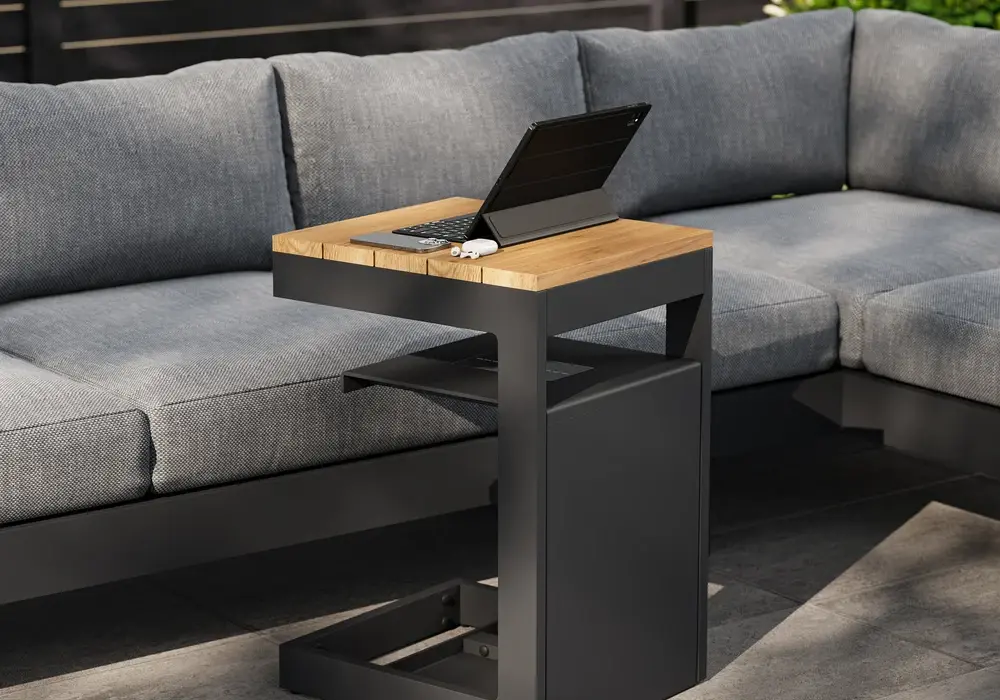
Slim Outdoor Cabinets
A narrow cabinet can provide hidden storage without requiring a large storage box. Look for models around 305–406 mm deep if your balcony is particularly tight.
Use it for gardening supplies, lanterns, cushions, or cleaning accessories. Keep frequently used items at waist height so you do not have to move furniture every time you need something.
A useful way to compare dining options is to think in terms of cost per seat rather than total furniture price. Budget setups may cost around $50–$100 per seat, while mid-range outdoor furniture can be approximately $100–$250 per seat. Premium materials and construction can cost more.
Assembly is usually easiest with folding tables and simple stools. Storage benches and cabinets may require more assembly because of their larger panels and hardware.
For maintenance, wipe food and standing water off outdoor furniture promptly. Check bolts and hinges every few months, especially on folding furniture where repeated movement can loosen hardware.
Space-Saving Patio Layout Ideas for Different Needs
Furniture size matters, but where you put it can make an even bigger difference. Instead of trying to fill the entire patio, choose a layout based on how you actually use the space.
The Two-Person Bistro Layout
For a patio around 1.5 × 1.8 m, start with a small round or square table measuring roughly 610–762 mm across and two narrow chairs.
Place the table near a side wall or railing rather than directly in front of the door. If the chairs can tuck completely under the table, the arrangement becomes even more efficient.
This layout is best for morning coffee, breakfast, or occasional outdoor meals.
The Narrow Lounge Layout
For a balcony around 1.2 × 2.4 m, skip a deep outdoor sofa. Instead, use a narrow bench approximately 406–508 mm deep along the long wall.
Add two small cushions and a compact side table. The result creates a lounge zone without placing furniture across the width of the balcony.
If the bench has built-in storage, it can eliminate the need for a separate outdoor storage box.
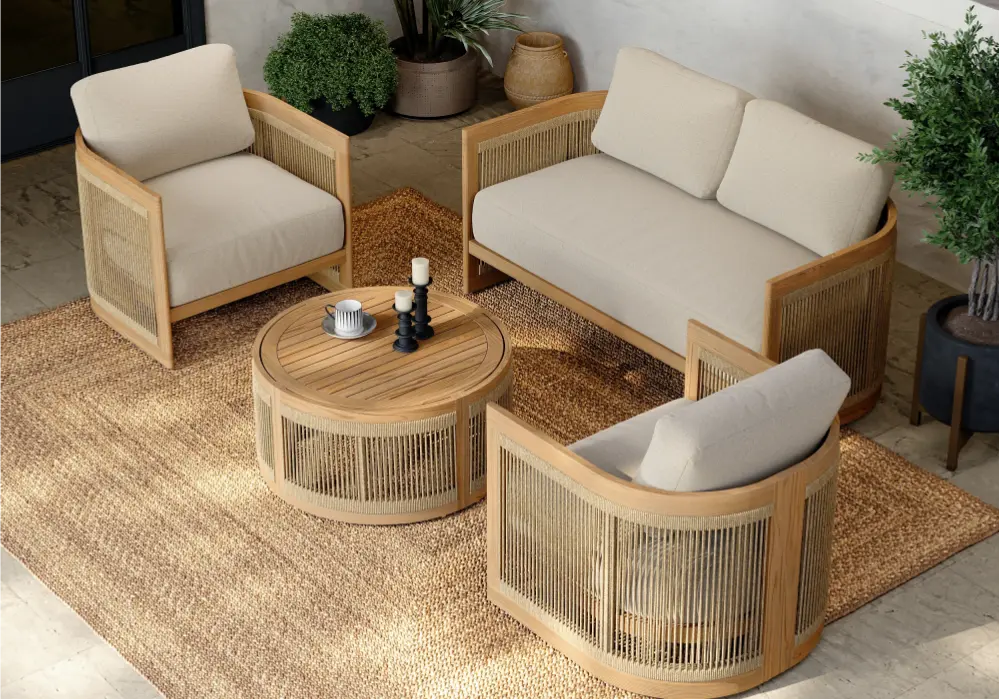
4-Piece Outdoor Teak & Rope Weave Sofa Set - Homary
The Work-and-Dine Balcony
If your patio doubles as an outdoor workspace, use a narrow wall-mounted or folding table around 457–610 mm deep.
A single comfortable folding chair can serve as both an office chair and dining seat. When work is finished, fold the table against the wall and regain most of the floor space.
Add a small clip-on or wall-mounted light rather than a floor lamp.
The Corner Conversation Layout
If relaxing is more important than dining, place an L-shaped bench or two compact chairs into one corner. Keep the opposite side open for movement.
A small nesting table is especially useful here because the smaller table can slide under the larger one when you need more floor space.
The Open-Center Layout
For very small balconies, avoid putting furniture in the center. Arrange the largest pieces around the perimeter and keep a clear central strip.
For example, on a 1.2 × 2.4 m balcony, place a narrow bench along one 2.4 m wall, add a small side table at one end, and use wall-mounted planters on the opposite side.
The open center makes the balcony feel larger and creates a straightforward path from the door to the railing.
Apartment Patio Styling With Privacy, Rugs, and Vertical Greenery
Once the furniture footprint is solved, styling can make a small patio feel intentional rather than crowded.
Add Privacy Without Taking Floor Space
Instead of a freestanding screen that consumes valuable floor area, consider a removable outdoor curtain, retractable shade, or accordion-style divider designed for your balcony.
Keep the installation compatible with your lease and building rules. Avoid attaching heavy items to railings unless the building specifically permits it.
A light privacy panel on one side can also visually define the patio without closing it in completely.
Choose the Rug by the Furniture Footprint
An outdoor rug can make a tiny patio feel like an outdoor room, but an oversized rug can make the space appear smaller.
For a two-chair bistro setup, a rug around 0.9 × 1.5 m may be enough. For a compact seating arrangement, 1.5 × 2.1 m can work if the patio is large enough to preserve a walking path.
A useful rule is to make sure the rug anchors the furniture rather than extending into the main doorway or creating a tripping edge.
Use a Controlled Color Palette
Small patios benefit from two or three main colors. For example, combine a neutral furniture frame with one cushion color and a natural wood or green accent.
Instead of using many small decorative pieces, repeat one accent color across cushions, planters, and a rug. Repetition creates visual consistency without adding physical clutter.
Grow Upward
Vertical greenery is one of the most effective small patio ideas because it adds texture without taking up much floor space.
Use wall-mounted planters, narrow ladder-style plant stands, railing planters where permitted, or vertical trellises. Place taller plants toward the back or corners and keep the central walking area open.
For a simple DIY project, turn a narrow wooden pallet into a vertical plant display after confirming that the material is suitable for outdoor use. Another option is a slim wall-mounted shelf for small pots.
Wall storage can also hold lanterns, gardening tools, or small accessories, reducing the need for another floor-standing cabinet.
The goal is not to fill every wall. One concentrated vertical planting zone often looks better than several unrelated planters scattered around a small patio.
FAQ
What size furniture is best for a small patio or balcony?
Compact furniture is usually the safest choice. Look for chairs around 432–508 mm wide, tables around 610–762 mm wide for two people, and benches no deeper than necessary. Always compare the furniture's open dimensions with your actual patio measurements and walking clearance.
How do I arrange furniture on a narrow apartment balcony without blocking the door?
Start by keeping the door's entire opening path clear. Place a narrow table or bench along the longest wall, then position chairs on the opposite side or at the ends. Aim for approximately 610–762 mm of walking clearance wherever practical, and use painter's tape to test the arrangement before purchasing.
What are the most durable materials for small patio furniture that stays outside year-round?
Aluminum, HDPE, properly protected teak, and quality outdoor-grade PE rattan are generally strong choices for low-maintenance outdoor use. Powder-coated steel can also last well when the coating remains intact. Coastal locations require extra attention to corrosion resistance and hardware.
Which foldable or stackable patio furniture pieces are easiest to store in an apartment?
Folding chairs, folding stools, and flat-folding tables are usually the easiest. Pay attention to the folded dimensions and weight, not just the open size. A chair that folds to only a few inches thick can fit behind a door or inside a closet much more easily than a bulky stackable chair.
How can I make a small patio feel cozy without making it look cluttered?
Use fewer, better-chosen pieces. Anchor the seating with a correctly sized outdoor rug, add two or three coordinated cushions, and move plants upward with wall planters or a narrow vertical stand. Keeping the center and doorway clear will make the patio feel larger while still giving it a comfortable, finished look.