

Recliner sofa height can mean overall height, seat height, arm height, or the height of a raised headrest. These are different numbers, and each answers a different question: will the sofa fit the room, and will it fit your body? A single figure on a product page cannot answer both. This guide gives you typical ranges, a 5-step measuring method, and a simple way to match seat height to your own legs, so you can read any listing with confidence.
Table of Contents
Typical Recliner Sofa Height at a Glance
Most power reclining sofas fall into these general ranges. Treat them as a starting point only; always rely on the dimensions listed for the exact model.
Measurement | Common range | What it tells you |
Overall height (floor to highest point) | about 33–42 in (838–1067 mm) | Whether it fits under windows, shelves, or artwork |
Seat height (floor to cushion top) | about 17–21 in (432–533 mm) | How easy it is to sit down and stand up, and whether your feet reach the floor |
Arm height (floor to arm top) | about 24–28 in (610–711 mm) | Side-table fit and forearm comfort |
Overall height is the figure most people notice first, but it is mainly a room-planning number. It tells you how much vertical space the sofa occupies, and it can change with the headrest position. Seat height is the figure that decides everyday comfort, because it controls how your legs, hips, and knees are positioned when you sit. Arm height sits between the two: it affects how naturally your forearm rests and how well a side table works beside you. Keeping these three apart is the key to comparing recliners fairly, since a sofa can have a low overall profile and still have a seat that feels high or low to you.
How to Measure Recliner Sofa Height in 5 Steps
- Start at the floor. Measure from the finished floor where the sofa will stand, with its supplied legs and cushions in place. Carpet, rugs, and uneven floors can shift the result, so measure on the surface the sofa will actually sit on. Removing a cushion or swapping the feet to get a lower number does not describe the normal assembled sofa.
- Keep the tape vertical. Measure straight up, not along the slope of the backrest. A tape that follows the curve of an upholstered back will give a longer number than the true vertical height. A spirit level or a plumb line held beside the tape helps if you are working alone.
- Overall height: measure to the highest point (back cushion or headrest) in the position you will use. If the headrest adjusts, measure both its lowest and highest settings, because the difference can matter under a window or shelf.
- Seat and arm height: measure to the top of the seat cushion at the sitting area, then to the surface where a forearm rests. Do these unoccupied first, and note that cushions soften when you sit, so the occupied height will be slightly lower.
- Write it down with its label. Note the position next to each number and keep the original unit beside any conversion (1 in = 25.4 mm). Keeping both values prevents rounding from hiding a tight fit.
Be careful with the label "back height": it may mean height from the floor or height above the seat. Confirm which before using it in any calculation, and do not subtract seat height from a vaguely labeled back-height figure and call the result usable support.
How to Choose Recliner Seat Height for Your Body
Seat height is about your legs, not your total height. Two people of the same height can have different leg lengths, so the most reliable method is to sit in the sofa in your usual position and check:
- Feet: both feet should rest flat on the floor, or on the footrest when it is lowered, without your legs dangling. If your feet hang, the seat is too high for you, and pressure builds behind the knees.
- Knees: your knees should sit at roughly a right angle (about 90–100°), with thighs level or slightly sloping down. If your knees rise well above your hips, the seat is too low.
- Front edge: you should be able to slide about two fingers between the front of the cushion and the back of your knee. A deeper seat needs more room here, and a soft front edge can feel different from the firmer central sitting area.
- Standing up: you should be able to rise without pushing hard with your arms. A very low seat makes this harder, particularly with stiff knees or hips.
A quick shortcut: measure from the floor to the back of your bent knee (while seated, shoes on). A seat height close to that number usually feels comfortable. Shorter users often prefer a seat toward the lower end of the range, while taller users or anyone with stiff knees or hips may find a higher seat easier to get out of. Remember that cushions compress, so test the sofa occupied as well as measuring it empty.
If your current chair or sofa fits well, measure it the same way and use it as your personal benchmark. That comparison is more useful than relying on an undefined "average" seat. Where possible, test the sofa with the people who will use it regularly, because different users often prefer different positions and no single seat height suits every sitter.
Three Homary Sofas and Who They Suit
Roomy Seating for Larger Living Rooms
The 123-inch Softplume Chenille Zero Gravity Power Reclining Sofa is built for larger living rooms and households that want generous seating for several people. It is 123 inches wide, and its listed overall height is 33 inches, the bottom of the typical range above. That low profile makes it easier to place near windows or under wall art, because it leaves more headroom than a taller recliner. The 19-inch seat height sits in the middle of the 17–21 inch range, so most average-height adults can rest both feet on the floor without the knees rising or the legs dangling.
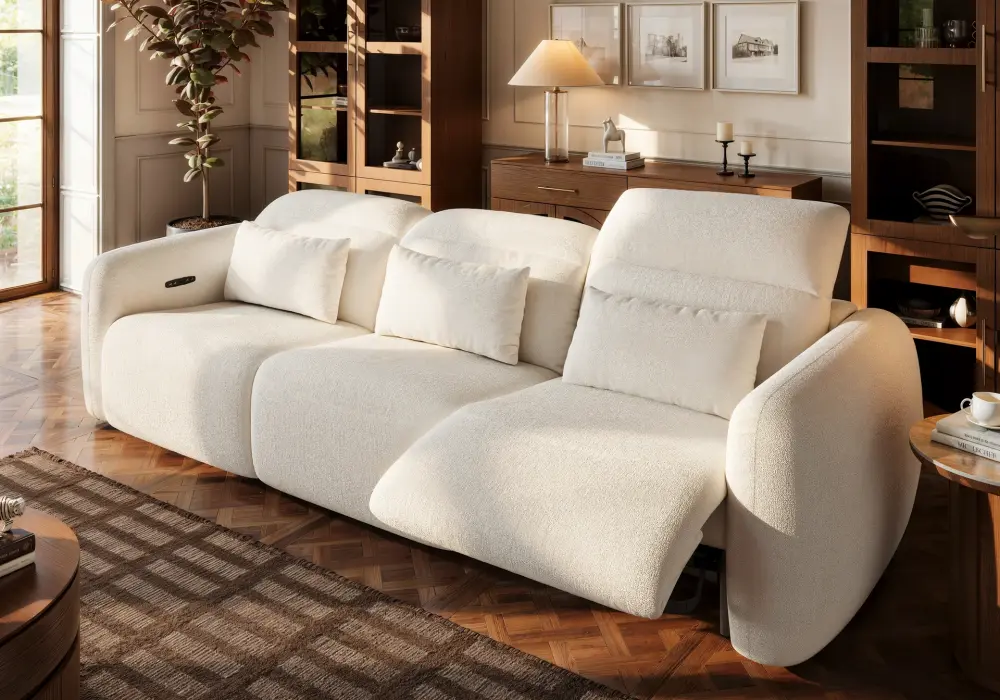
The trade-off is floor space. It is 46 inches deep when closed and 67 inches deep when reclined, so it needs about 21 inches more room when open. Measure floor depth and rear clearance as well as height, and make sure the footrest has a clear path.
Adjustable Headrests for Flexible Lounging
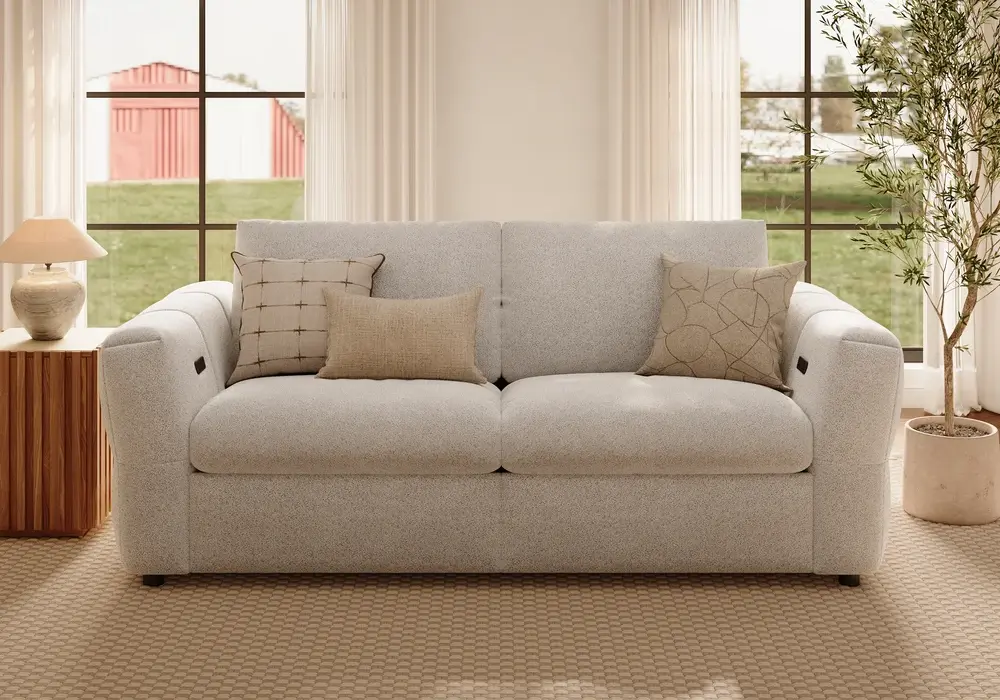
The 86-inch Glidio Chenille Power Reclining Sofa with Adjustable Headrests suits people who read, watch TV, and rest in different postures. Its five headrest positions let you add neck support when you want it and keep it lower when you do not. At 86 inches wide with a closed depth of 39 inches, it fits a mid-sized living room without taking over the floor. Its 20-inch seat height is toward the upper end of the typical range, which makes it a good match for taller users or anyone who finds it easier to stand up from a higher seat.
A Pet-Friendly Two-Seater for Apartments and Smaller Rooms
The 83-inch Softplume Pet-Friendly Chenille Power Reclining Sofa with Adjustable Backrest is a good fit for apartments, smaller living rooms, and homes with pets. It is 83 inches wide and 40 inches deep, with a 33-inch overall height, so it fills less floor and wall space than the larger models above. The adjustable backrest and headrest let you move from a low-profile look to extra head and neck support for reading or TV.
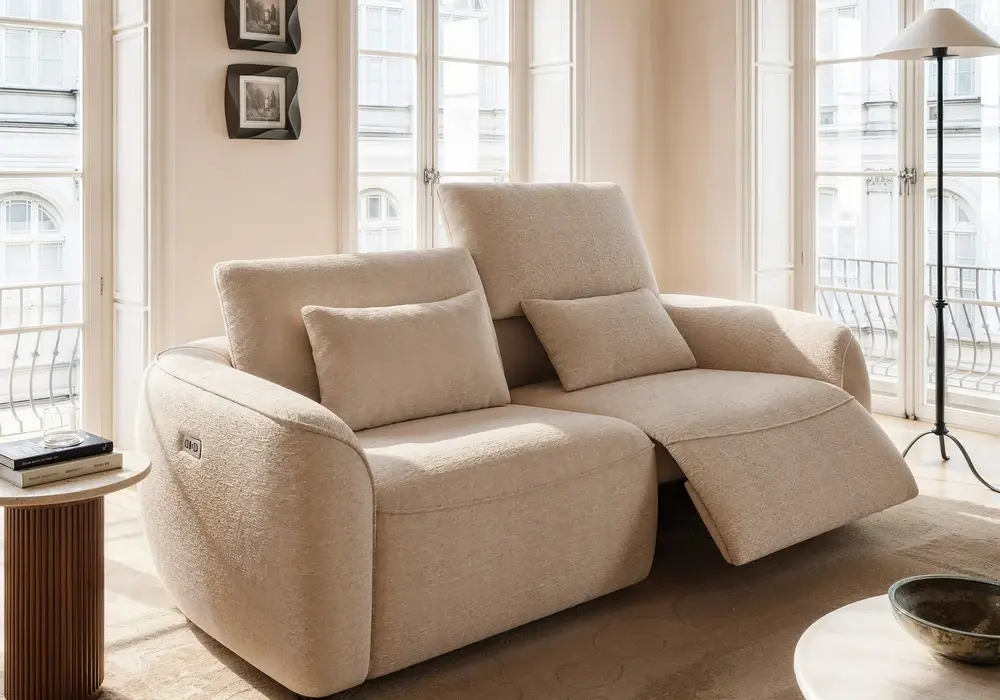
Its 18-inch seat height is toward the lower end of the typical range, which works well for shorter users or anyone who likes both feet flat on the floor.
Checking Recliner Sofa Height Against Windows, Shelves, and Artwork
A sofa that looks fine in a showroom can feel cramped once it sits beneath a window or a wall shelf, so check the numbers before you commit to a spot. Use this method:
- Get the highest operating point. Use the overall height with the headrest at its highest setting (ask the supplier if it is not listed). The resting outline alone understates how tall the sofa gets in use.
- Measure the limit. Measure from the floor to the underside of the shelf or frame, or to the window sill if you want it to stay unobstructed. If the sofa sits near a window, also measure any projecting fixtures such as handles, blinds, or curtain rails separately.
- Subtract and leave a margin. As a practical rule of thumb, aim for at least 3–4 inches (about 76–102 mm) between the sofa's highest point and the shelf or artwork above it. For example, a 36-inch sofa under a 40-inch shelf leaves only 4 inches before accounting for the shelf's depth, so it is workable only if the shelf does not project over the headrest.
- Check the projection. Height is only half the story. Hold a tape or a cardboard cut-out at the shelf's depth to confirm it will not meet the headrest or your head when you recline. A shelf that clears the closed sofa can still be in the way when the back tilts.
- Allow for the mechanism. Recliners need space behind and beside them when open. Follow the manufacturer's stated rear clearance, and keep curtains, window handles, and cords out of the moving parts.
For a quick visual test, mark the sofa's listed height on the wall with painter's tape, or build a temporary outline from cardboard, and view it from the main entrance and from the opposite side of the room. If the margin is under about 2 inches, or the shelf projects over the seating area, choose a lower-profile model or move the sofa.
Final Checklist Before You Order
- Highest operating height, with the headrest where you will use it
- Seat height, tested with your own legs and feet
- Clearance above (windows, shelves, artwork) with at least a 3–4 inch margin
- Width, fully reclined depth, and rear clearance
- Any figure still unconfirmed, followed up with the supplier
Confirm which height matters most to your project, record each figure with its starting point and position, and then check it against the person, the room, and the delivery route it has to serve. An accurate height entry is most useful as one part of a complete room plan, alongside width, open depth, and access around occupied seats.
Frequently Asked Questions
What is the typical height of a recliner sofa?
Overall height is commonly around 33–42 inches, with seat heights around 17–21 inches. Exact figures vary by model and headrest position, so use the listed dimensions of the sofa you are considering and confirm any figure that is missing.
What is a good seat height for a recliner sofa?
One where your feet rest flat, your knees sit at about a right angle, and you can stand up easily. Measuring from the floor to the back of your bent knee gives a useful target, and testing the sofa occupied tells you how the cushion feels once it compresses.
Is seat height the same as back height?
No. Seat height runs from the floor to the cushion top. Back height may be measured from the floor or from the seat, so check the starting point before comparing it with any other figure.
Does a reclining sofa get taller when opened?
It depends on the mechanism and headrest. Reclining usually changes depth more than height, but adjustable headrests can raise the top point. Ask for operating-position dimensions if clearance under a window or shelf is tight.
Can I use one model's seat height for another size in the same collection?
Not without confirmation. A different width, console, or cushion build can change the sitting geometry, so keep each model's dimensions separate.
Can changing the legs lower the sofa?
Only use modifications the manufacturer approves. Different feet can affect stability and mechanism clearance. If the height is unsuitable, choose a better-fitting model rather than relying on replacement feet.