

Pub height patio furniture means a bar-height table, with a top around 1016–1067 mm from the ground, paired with tall stools or chairs whose seats sit 711–787 mm high. When browsing outdoor furniture, compare the actual tabletop and seat measurements first. Dining, counter, bar, and lounge furniture create very different sitting positions, even when the styling looks similar, and what matters most is the fit between your table and your stools.
A tall table suits drinks, casual meals, and conversation with standing guests. It is a poor choice if your main goal is stretching out on a sofa. This guide covers the height categories, the measurements that decide comfort, three bar-stool sets matched to common patio setups, and when a lower arrangement is the better call.
In This Guide
Pub Height, Counter Height, and Dining Height
Use height labels to narrow your search, then confirm the numbers. "Pub" and "bar" usually describe the same elevated arrangement. "Bistro" can mean tall or low, so always check the dimensions.
Furniture type | Approximate tabletop height | Approximate seat height | Typical use |
Standard dining | 711–762 mm | 432–483 mm | Seated meals at ordinary dining height |
Counter height | 864–914 mm | 610–660 mm | Elevated casual dining |
Pub or bar height | 1016–1067 mm | 711–787 mm | Tall seating and standing conversation |
Lounge arrangement | Coffee-table height varies | Sofa seat height varies | Relaxing, reading, and drinks beside low seating |
Match tables and seats within the same category. A counter stool at a bar table leaves you sitting too low, and a thick apron, seat cushion, or footrest can change the fit further.
Don't confuse chair height with seat height. A tall backrest can reach over 1016 mm while the seat itself is much lower. For sitting position, measure the surface that supports the sitter, not the top of the chair back.
Measure the Gap Between Seat and Table
Subtract the seat height from the tabletop height. A gap of 254–305 mm is a good starting point. A 1067 mm table with a 762 mm seat gives you 305 mm to the top surface.
Then check the clearance under the table. An apron, frame, or support rail can reduce knee space, so measure to the lowest point where a sitter's thighs or knees will meet the structure.
With upholstered stools, find out whether the listed seat height includes the cushion. Cushions compress, which changes the seated position, so try a comparable combination where you can.
Check armrests too. If the arms are taller than the space under the tabletop, the stool won't tuck in, and the set takes up floor space all day.
Footrests and Getting In and Out
Tall seating needs a comfortable place for your feet. Look at the height and position of the footrest relative to the seat, not just whether a bar appears in the photo.
Sit fully back and see whether your feet rest naturally. Notice how you get onto the seat and whether the stool stays steady on your surface. A large seat or padded back doesn't make up for an awkward climb.
Consider everyone who will use the patio. If a household member finds high seating difficult, standard dining or lounge furniture is the better shared choice, and you can keep one ordinary-height option for guests. Follow each product's weight, placement, and assembly instructions.
Calculate the Occupied Footprint
The tabletop alone is a poor guide to the space you need. Add the stools in their seated position, their pull-out space, and the route people need around the arrangement.
For example, a 762 mm-deep table with 610 mm of stool space on each long side occupies 1981 mm of depth before you add a walkway. Your own stools may need more or less, so measure them.
Draw the door swing and the route to steps or a gate on your plan. Pull a stool out on the plan and ask whether someone can still pass. A compact table beside the only exit becomes a bottleneck. Aim for a clear route of about 914 mm around the arrangement, and allow more where traffic is heavy.
Three Pub-Height Stool Sets by Use Case
The three Homary stool sets below are bar-height seating, so they suit the 1016–1067 mm tables described above. Each is sold as a set of two stools without a table. Pair them with a table whose top sits 254–305 mm above the seat, and check the apron clearance.
Stool set | Seat height | Overall height | Back and arms | Best for |
Tevara Teak-Armrest Stools | 787 mm | 1067 mm | Back and armrests | Outdoor kitchens, backyard bar counters |
Woven Rope Swivel Stools | 737 mm | 965 mm | Swivel base | Social, conversational layouts |
Teak-Black Stools with Backs | / | 1050 mm | Back and footrest | Small patios, frequent rearranging |
For an Outdoor Kitchen or Backyard Bar: Tevara Stools
The Tevara Outdoor Bar Stools are built for long seats. The 787 mm seat has a 76 mm cushion, and the teak-topped armrests give your arms a place to rest, so they work well at a tall bar counter or outdoor kitchen island, with a tabletop around 1041–1092 mm.
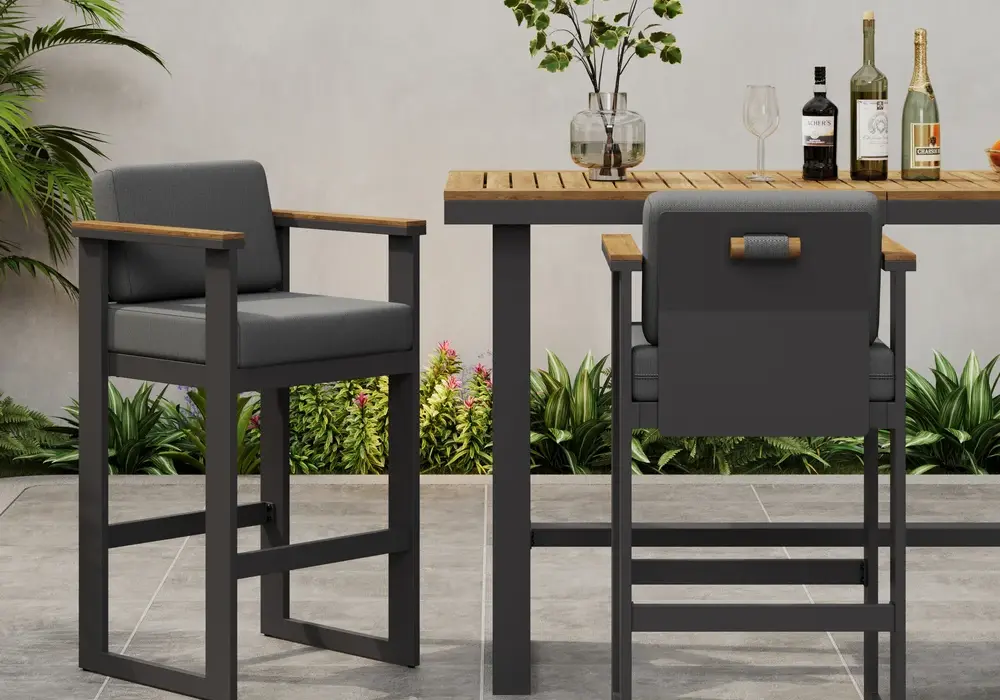
The arms stand 991 mm high, just under a typical tabletop, so they can slide under the table if its apron allows. These are the roomiest of the three at 610 mm deep, so leave extra space behind them for a walkway.
For Conversation and Flexible Seating: Woven Rope Swivel Stools
The Cocaro Set of 2 Outdoor Handwoven Rope Swivel Bar Stools suit a social patio. The 360-degree swivel lets you turn toward a guest, the grill, or the garden without dragging the stool.
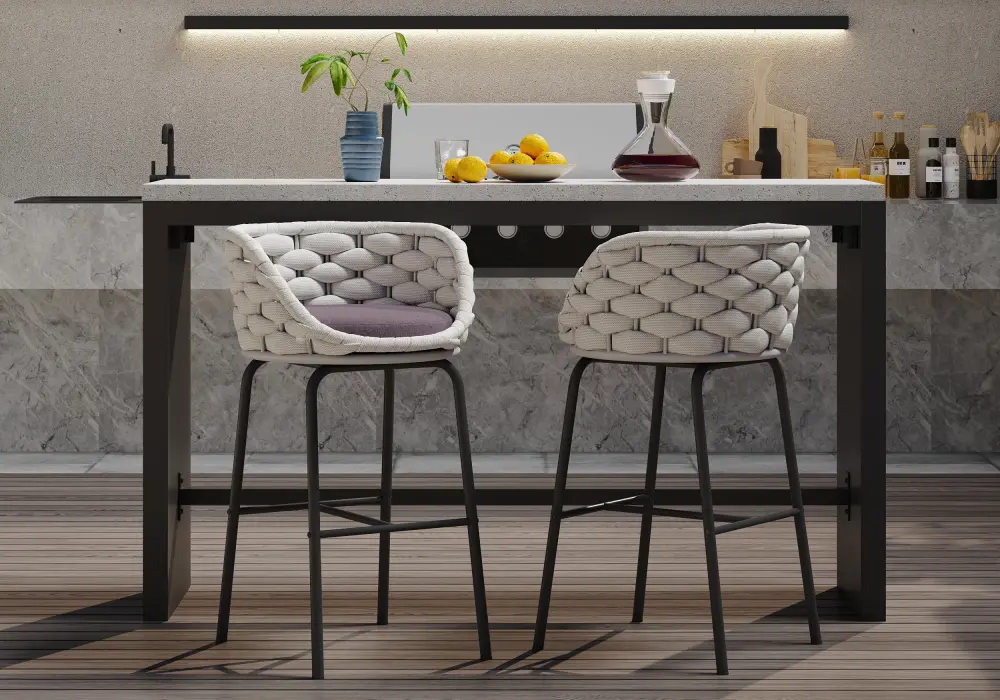
The seat sits at 737 mm, which pairs with tables around 991–1041 mm, and it is easier to climb onto than the Tevara. The low back fits relaxed drinks and chats better than long meals. Place them on level paving so the swivel base turns smoothly.
For Small Patios and Frequent Rearranging: Teak-Black Stools with Backs
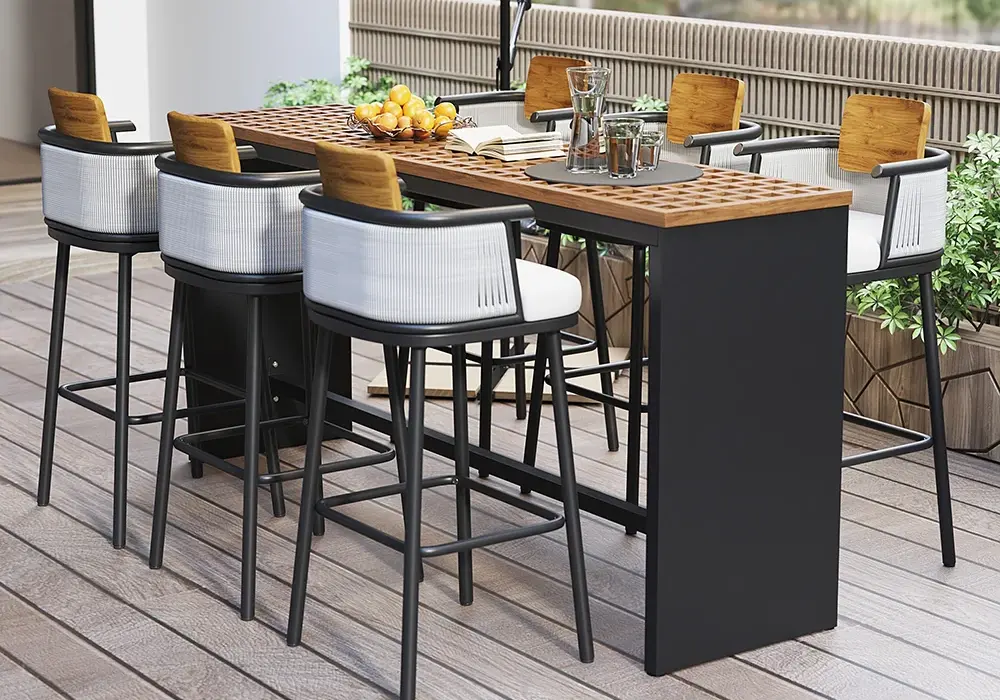
The Outdoor Teak & Aluminum Bar Stools are the most compact option. At about 483 mm wide and 7 kg each, they are easy to push against a wall after dinner, and the backrest and footrest still give you support while you sit.
Decide Whether Tall Seating Fits Your Routine
Choose pub height for short meals, drinks, and conversation that moves between sitting and standing. It works well as a distinct dining area when you have room for stools and circulation.
Choose standard dining height when meals are the main activity and you want ordinary-height seating. Choose lounge seating when reading, reclining, or lingering on cushions matters more than sitting upright at a table.
One height can't do every job. A coffee table beside a sofa is for setting down a drink, and a bar table won't give you the relaxed posture of a sectional. On a small patio, build around the activity you do most. One arrangement that fits your routine beats a bar set and a sofa area that each squeeze out the walking space.
Match Materials and Maintenance to the Setting
Once the height works, compare frames, seats, and hardware separately. Aluminum frames resist rust, teak adds a warm finish, and fabric and canvas seats differ in how they handle sun and rain. Read the manufacturer's instructions on cleaning, covers, and storage, and decide where removable cushions will dry or be stored.
Set each piece on a stable, level area with all feet in contact. Uneven paving affects how a tall stool feels even when it is assembled correctly. If you rearrange often, compare the listed weights.
Plan Shade and Views Without Losing Access
Tall furniture changes the sightline from both the seat and the house. Before you commit to a position, sit at a similar height and look toward the garden, neighboring windows, and any railing. Tall backs can form a visual wall across a glazed door, so a low lounge arrangement keeps the view more open if that is your priority.
If you need shade, plan it alongside the table. Confirm that your table has an umbrella hole or a compatible base, and include the base footprint in your layout. Follow building or property rules, and keep circulation and exits clear.
A Measurement Checklist
Before buying, record the tabletop height, underside clearance, seat height, whether the seat height includes the cushion, stool width and depth, arm height, and footrest position. Add the table footprint and the fully occupied stool layout.
Then rehearse the everyday actions: carrying plates outside, pulling out a stool, setting down a drink, and walking back into the house while someone stays seated. If a dimension is missing, get it before you order.
Frequently Asked Questions
How tall is pub height patio furniture?
Pub or bar tables sit around 1016–1067 mm high, with matching seats around 711–787 mm. Check the seat height rather than the overall chair height, which includes the backrest.
Is pub height the same as counter height?
No. Counter-height tables are lower, around 864–914 mm, with seats around 610–660 mm. Counter stools leave you sitting too low at a bar table, so match the seat-to-table gap instead of relying on labels.
What seat height goes with a 1067 mm table?
Aim for a seat about 254–305 mm below the tabletop, which means 762–813 mm. The Tevara stools at 787 mm fit this range. The Woven Rope Swivel stools at 737 mm suit tables around 991–1041 mm.
Can you use outdoor sofa seating with a pub-height table?
No. The seating positions are too different. Use a sofa with a low table you can reach comfortably, and choose a bar table with bar stools when you want upright dining.
Is pub height better for a small patio?
It depends on the fully occupied footprint. A small tabletop still needs stool space and a walkway. Tape out a bar-height layout and a lower dining or lounge layout, and keep the one that preserves movement.