

Outdoor sofa prices cannot be compared accurately by fabric labels alone. When browsing outdoor sofa sets, compare the frame, seating capacity, cushion construction, textile specification, and included pieces before deciding whether a marine-grade fabric premium is worthwhile. A higher total price does not prove that a sofa uses better upholstery, and a standard outdoor fabric can be appropriate for a sheltered patio.
If you are researching “outdoor sofa prices marine-grade fabric vs standard outdoor fabric,” the useful question is what the extra money actually buys. You need a fabric-level comparison and a complete-sofa comparison. Mixing those two decisions can make an ordinary difference in size or construction look like a textile upgrade.
Table of Contents
What Marine-Grade Fabric Actually Describes
Marine upholstery is developed for applications associated with boats and demanding outdoor exposure. The category includes different textile constructions and coated materials. It is not one universal recipe, and the phrase alone does not identify a shared level of UV resistance, abrasion performance, or waterproofing.
Ask for a named fabric, composition, technical information, and care guidance. A meaningful specification explains what the textile is designed to withstand and what its warranty covers. An unexplained “marine-grade” label offers much less help when comparing two sofas.
Also distinguish seating upholstery from boat covers or enclosures. A fabric intended to keep weather out of a covered structure may feel different from a fabric intended for prolonged skin contact. Choosing a textile only because it sounds tougher can lead to an uncomfortable cushion.
Standard Outdoor Fabric Covers a Wide Range
Standard outdoor fabric is not automatically an inferior category. Outdoor upholstery may use polyester, acrylic, olefin, or other constructions, with different dyeing methods, finishes, textures, and maintenance requirements. The complete specification matters more than a broad label.
For example, composition identifies the fiber but does not answer every durability question. Two polyester fabrics can differ in construction and finish. Likewise, “solution-dyed” describes how color is introduced; it does not tell you how the cushion drains or whether the seams prevent water ingress.
Treat vague terms as prompts for questions. If a page says high-performance canvas, ask what that means for that exact product. Do not translate it into a named textile brand, a marine certification, or a laboratory result that the seller has not provided.
Compare Performance in Separate Categories
The strongest comparison starts with the conditions on your patio. Identify whether fading, slow drying, staining, cleaning effort, or abrasion is your main concern. Then request evidence for that concern rather than asking whether one material is generally “better.”
Comparison point | Information to request | Why it affects value |
Sun exposure | Documented colorfastness or UV-related guidance | Helps assess suitability for an exposed position |
Water | Fabric resistance and complete cushion construction | Separates surface beading from interior moisture |
Cleaning | Approved methods and removable-cover instructions | Shows what maintenance involves |
Wear | Applicable abrasion information and intended use | Helps compare busy household requirements |
Warranty | Covered failures, duration, and exclusions | Reveals the actual scope of support |
Replacement | Availability and quoted cost of covers or cushions | Helps plan future repairs |
When test results are available, compare the same method and conditions. Two numbers from different tests may not be directly comparable. Ask the seller to explain the relevance instead of assuming that the larger number always represents the stronger fabric.
Why Sofa Prices Differ Beyond the Fabric
Frame material, the amount of material used, joinery, finish, cushion dimensions, and the number of included pieces all influence the final price. A deep three-seat sofa and a six-person set are not equivalent purchases, even if both are photographed on a similar patio.
Seat depth is particularly easy to overlook. Deeper cushions use a different amount of upholstery and filling, but that does not automatically make them more comfortable for upright conversation. Compare the actual seating position you want instead of treating more material as an unconditional upgrade.
Matching tables also change the comparison. A set price may include furniture that a standalone sofa price does not. List every included piece, then decide whether you need it. Paying more for a useful coordinated arrangement can make sense; paying for pieces that block circulation does not.
Delivery, assembly, and access should be considered separately. Check the current terms for your address and the selected variant. Do not assume that a published sofa price represents the final installed cost of the entire patio arrangement.
Use a Like-for-Like Quote Method
Create one comparison sheet for the complete sofas and another for any upholstery upgrade. Keep seating capacity, cushion size, frame, and delivery scope consistent wherever possible. If a seller cannot hold those variables constant, record the differences explicitly.
For a fabric-only upgrade, request the additional charge, the exact textile supplied, and whether the filling or seam construction also changes. Otherwise, an “upgrade” might include several changes that cannot fairly be attributed to fabric alone.
Here is a hypothetical calculation, not a market-price claim: if an upholstery option adds $400 to a sofa and you expect to use it for five years, that is $80 per year in your planning model. The calculation does not establish actual lifespan or savings. It simply shows how a known upfront difference fits your budget.
Then ask whether the performance difference solves a real problem. A premium for easier approved cleaning may matter in a busy dining area. A premium based only on a label may not justify itself on a covered porch used occasionally.
Three Homary Examples for Comparing Complete Designs
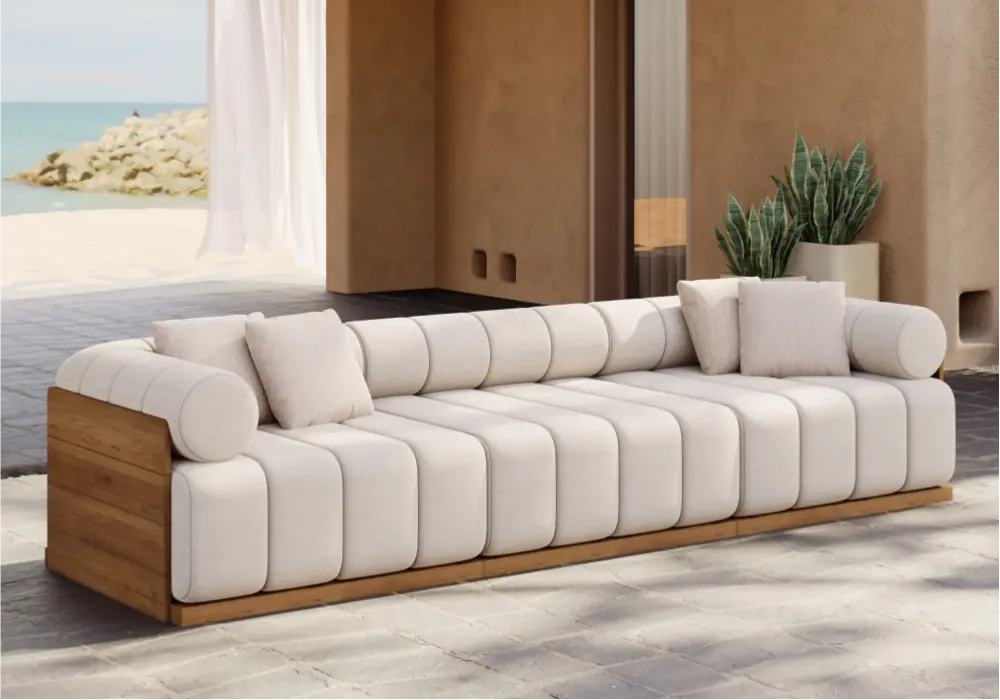
The Resaro three-seater teak deep-seat outdoor sofa in warm white illustrates why frame and seating style belong in a price comparison. Its listed teak construction and deep-seat design are meaningful parts of the product. They should not be treated as evidence of a particular marine upholstery specification.
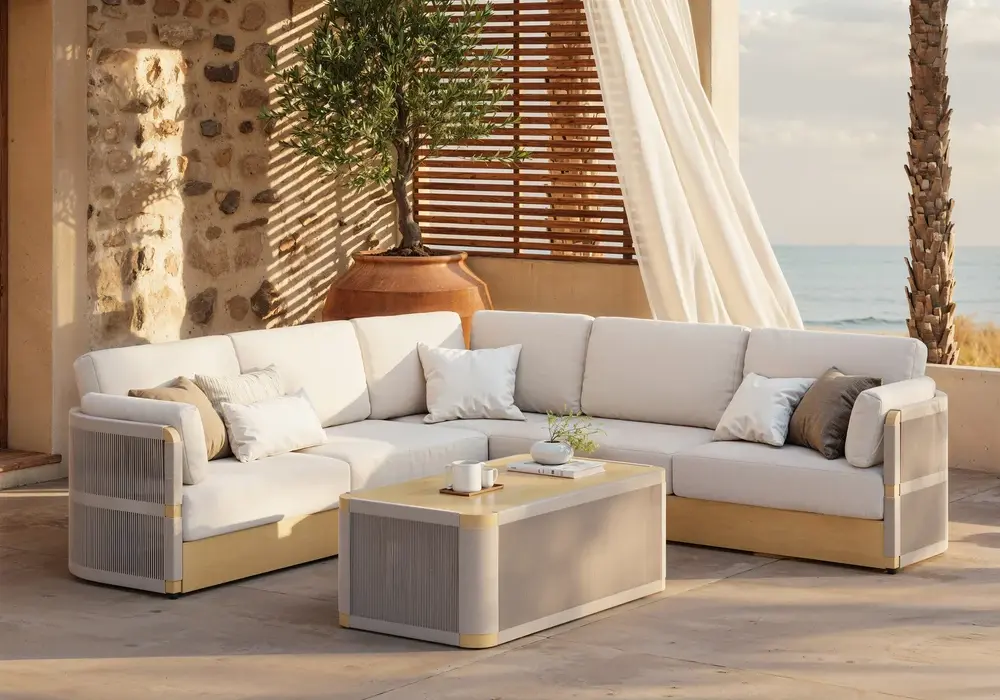
The Costra handwoven rope outdoor sofa set with coffee table offers an L-shaped seating arrangement with a coordinated table. Compare its overall layout and included pieces with your needs first. The product’s textile description should be evaluated on its own terms, without relabeling it as marine-grade fabric.
The Boheva four-piece teak and handwoven rope outdoor sofa set provides another set format for a larger conversation area. Its combination of materials and pieces changes the buying decision beyond upholstery. Compare the current selected configuration and fabric information before drawing conclusions from the total price.
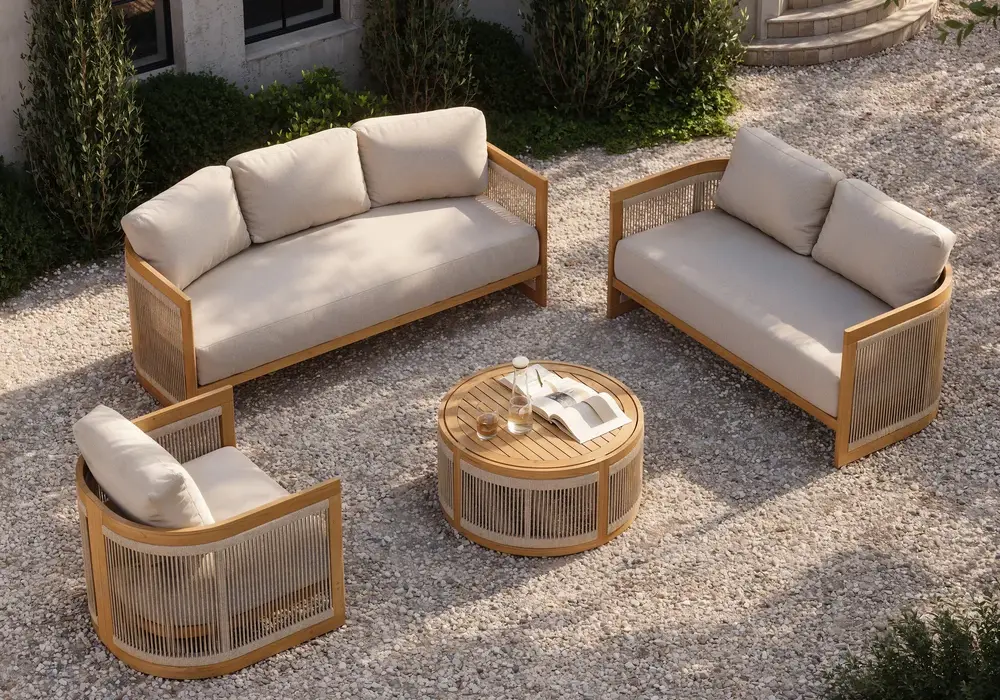
These are examples of different furniture formats, not a controlled fabric test. None should be assigned a marine-grade classification without explicit documentation for the chosen variant.
When a Fabric Premium Is More Likely to Be Useful
An exposed waterfront patio, frequent use, or a demanding cleaning routine can justify closer investigation of specialist upholstery. The strongest case comes when the seller can document performance that directly addresses those conditions and explain the limitations clearly.
A covered location with accessible cushion storage may not need the same specification. You might get more practical value from better-fitting seating, replacement covers, or a protective cover that you can easily use. Put the budget toward the bottleneck in your own setup.
Comfort also deserves a deliberate test. Request a swatch when available and consider texture, temperature, and how the surface feels against bare arms and legs. A technically impressive material is a poor choice if the household avoids sitting on it.
Questions to Resolve Before Paying More
Ask whether the quoted fabric applies to every cushion or only selected surfaces. Confirm any color-specific limitations, whether the same material is available for future replacements, and how the warranty is administered. Keep written product details with the order.
Check cleaning compatibility before buying supplies. Instructions for one specialist fabric should not be transferred to another material simply because both are used outdoors. Strong cleaning methods may be permitted for one textile and unsuitable for another.
Finally, keep the purchase decision separate from predicted savings. Without reliable replacement costs and service-life evidence, you cannot promise that a premium fabric will pay for itself. You can decide whether its documented characteristics are worth the price to you.
Keep swatches and written specifications with each quote so the final order can be checked against the option you evaluated. If a fabric is substituted before delivery, ask for the replacement specification and reassess the choice. A quoted premium only remains meaningful when the supplied textile matches the documented option, including its color, care instructions, and applicable coverage.
Frequently Asked Questions
Is marine-grade fabric always more expensive?
No universal price rule applies. Fabric construction, supplier, order quantity, and the complete sofa specification affect the quote. Compare an actual named upholstery option on the same furniture design whenever possible, rather than assuming that two different sofa prices reveal the fabric premium.
Does marine-grade mean waterproof?
Not necessarily. Marine applications include several fabric types with different purposes. Ask for the exact water-resistance claim and whether it applies to the fabric or the finished cushion. Seams, zippers, filling, and cushion construction still matter.
Is standard outdoor polyester a bad choice?
Not automatically. Evaluate the particular fabric, exposure conditions, care instructions, and replacement options. Polyester composition alone does not establish how the textile was dyed, finished, or tested. A documented product suitable for your patio is more useful than a broad category judgment.
Can I upgrade only the cushion covers?
Sometimes, but confirm dimensions, construction, closures, and compatibility with the existing filling. A new cover does not change the frame or automatically improve interior drying. Obtain a complete quote and ask whether the supplier recommends the proposed combination.
What is the best way to compare value?
Compare equivalent seating and included pieces, then isolate any fabric upgrade. Prioritize documented characteristics that solve your actual exposure or cleaning problem. Choose a comfortable layout first, and pay extra for a specification you understand rather than a label alone.