

The most durable materials for outdoor sofas in harsh weather conditions depend on the exposure: a well-made aluminum frame, suitable teak construction, or another documented outdoor material can each work well in the right setting. When comparing outdoor sofa sets, evaluate the frame, finish, hardware, weave, and cushions together. No material name makes the entire sofa immune to salt, persistent damp, intense sunlight, or severe storms.
Start by defining what harsh weather means at your home. Strong sun, frequent rain, coastal deposits, freezing conditions, and wind create different problems. A useful material choice addresses the most demanding condition you actually face and has a care routine you can maintain.
Table of Contents
Identify the Main Exposure Before Ranking Materials
Write down the conditions at the proposed sofa location, including its shelter and drainage. A shaded wet courtyard is different from a hot, dry terrace, even though both might be described as challenging environments. The same sofa can require different care in those two places.
Then identify the failure you most want to avoid. Is it a finish that becomes difficult to maintain, cushions that stay wet, fading, or furniture that is cumbersome to protect? Your priority determines which specifications deserve the closest investigation.
Main condition | What to investigate first | What a material label cannot establish |
Frequent rain | Cushion construction, drainage, and dry storage | Whether the entire sofa stays dry inside |
Strong sunlight | Textile and finish guidance | A guaranteed color lifespan |
Coastal deposits | Finish, hardware, and cleaning requirements | Complete immunity to corrosion |
Persistent humidity | Airflow and accessible cleaning | Freedom from mildew on accumulated dirt |
Cold and seasonal exposure | Product-specific winter instructions | Suitability for every freezing environment |
Strong wind | Site planning and storm preparation | A safe anchoring method or storm rating |
Use this table to structure questions. It is not a universal ranking, and it does not replace the requirements for the exact product and location.
Aluminum: Evaluate the Finish and Connections
Aluminum is widely used for outdoor frames and can support relatively slender designs. Its practical appeal includes manageable weight, but the complete construction still matters. Check how the frame is finished, how pieces connect, and how the feet meet the ground.
A protective coating is part of the specification, not just a color choice. Ask how to clean it and what to do if it is damaged. Abrasive tools or unsuitable cleaners can create problems that a material comparison based only on the base metal misses.
Mixed components deserve attention. Fasteners, brackets, and decorative parts may use different materials from the main frame. Request information about them when your location has demanding conditions, particularly if deposits accumulate regularly.
Do not equate a light frame with a suitable storm arrangement. The appropriate placement and protection routine depend on the site and manufacturer’s guidance. Furniture weight alone does not establish how a sofa should be secured or stored during severe weather.
Teak: Separate Appearance From Structural Condition
Teak offers natural wood character and is used extensively in outdoor furniture. When exposed to weather, untreated teak can develop a silver-gray appearance. Decide whether that change suits your preference before choosing wood primarily for its original showroom color.
Ask how the specific product should be cleaned and whether a finish or treatment is recommended. Instructions can differ between products, especially when teak is combined with other materials. Do not assume that a generic oiling routine is required or approved for every teak-accent sofa.
Inspect joinery and access to connections as part of the buying decision. Wood species alone does not describe construction quality, assembly, or maintenance. A well-documented product is easier to assess than an attractive wood label with no technical information.
Also distinguish teak accents from an entirely teak frame. A sofa may combine wood surfaces with metal structural parts. That can be a useful design, but each component needs to be evaluated accurately rather than described as a single-material assembly.
Woven Rope and Wicker: Ask What the Weave Is Made From
Rope and wicker describe a look or construction category rather than one guaranteed composition. Natural fibers, synthetic weaves, and other outdoor cord materials have different requirements. Confirm the actual material and intended exposure before treating similar-looking products as equivalent.
Look at attachment points and the accessibility of the woven surface. Can you remove dirt without damaging the fibers or finish? Is the weave structural, decorative, or part of the seating support? Ask for the manufacturer’s cleaning and inspection guidance.
For harsh exposure, request evidence relevant to the exact concern, such as documented UV-related performance or an applicable care limitation. A dense weave is not automatically more durable, and a photograph cannot demonstrate resistance to a specific chemical or climate.
If the material is damaged, ask whether repair or replacement is possible. A small woven detail can affect the practicality of keeping the complete sofa in use, so support matters alongside the original appearance.
Other Materials Need the Same Complete-Product Check
Outdoor furniture may also use stainless steel, coated steel, polymer components, or combinations of several materials. Each deserves a specific assessment of grade, finish, connections, and care. Avoid ranking them solely by weight or by the word stainless.
For polymer furniture, ask about the actual material and intended outdoor exposure. For steel, examine coating and maintenance instructions. For any multi-material sofa, consider the component likely to need attention first rather than assigning the whole product the strongest component’s reputation.
If a seller offers laboratory results, compare the same tests and conditions. A salt-exposure result, a fabric abrasion test, and a fading test answer different questions. None should be converted into an unsupported prediction of a sofa’s lifespan at your home.
Cushions Often Determine Everyday Usability
A durable frame is only part of the experience. If cushions remain damp when you want to sit outside, the sofa is less useful regardless of its structural material. Ask about the fabric, filling, seams, underside, and drying routine together.
Do not infer quick-dry construction from a water-repellent surface. Similarly, removable covers are not automatically machine-washable. Check the label and request clarification when the product description uses broad terms such as performance fabric or canvas.
Plan dry storage before buying a large set. Count the cushions and measure their storage space. If moving them is impractical, investigate the approved protection routine carefully instead of assuming the material can replace that routine.
Replacement upholstery can be important to long-term use. Ask whether covers or complete cushions are available separately and how to identify the correct version. Availability should be confirmed rather than assumed from a collection name.
Three Homary Sofas to Compare Without Overstating Claims
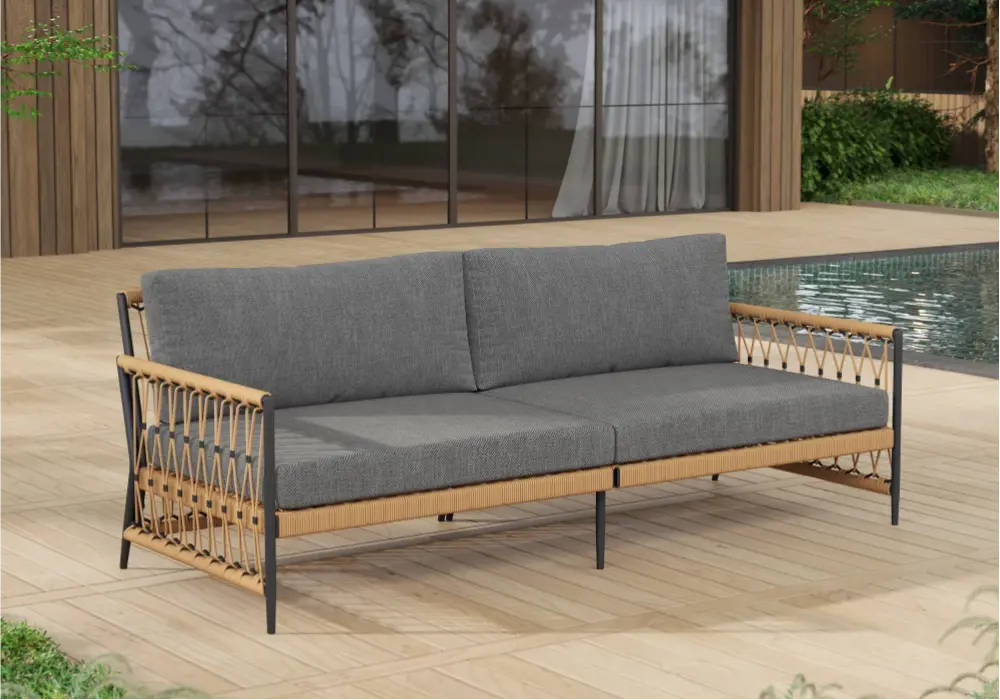
The Ropipe three-seater rope weave and aluminum outdoor sofa in dark gray offers a metal-and-weave format. Evaluate the current upholstery specification and woven-material care for your exposure. A broad outdoor description is not a verified coastal or chlorine-resistance rating.
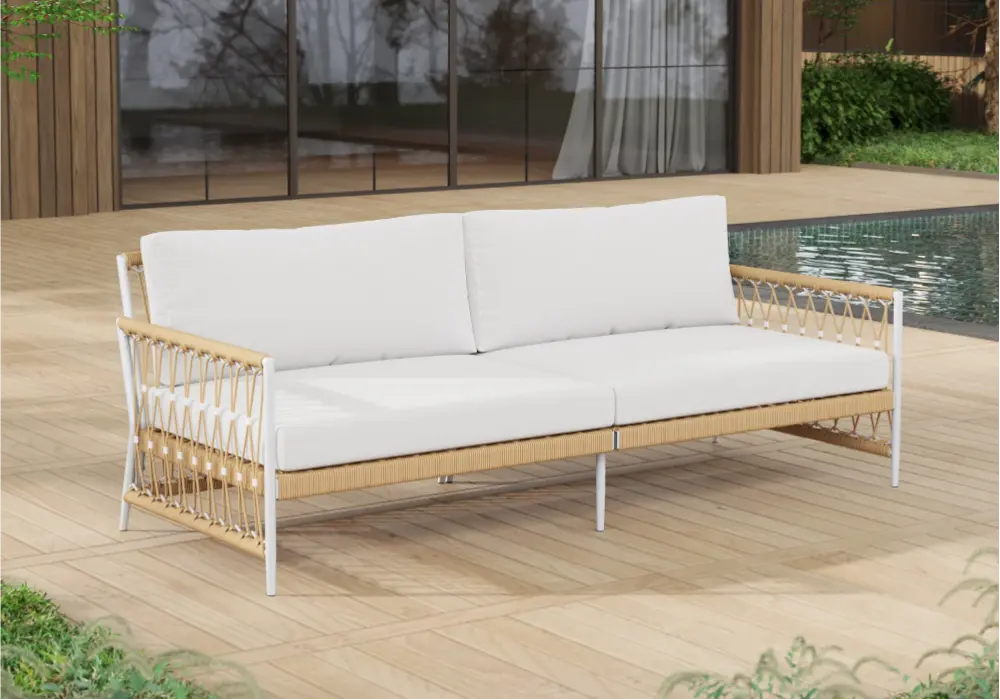
The Ropipe three-seater rope weave and aluminum outdoor sofa in white provides a different color direction within a similar format. Confirm the selected variant’s textile and care details rather than assuming every material field is identical across colors or product versions.
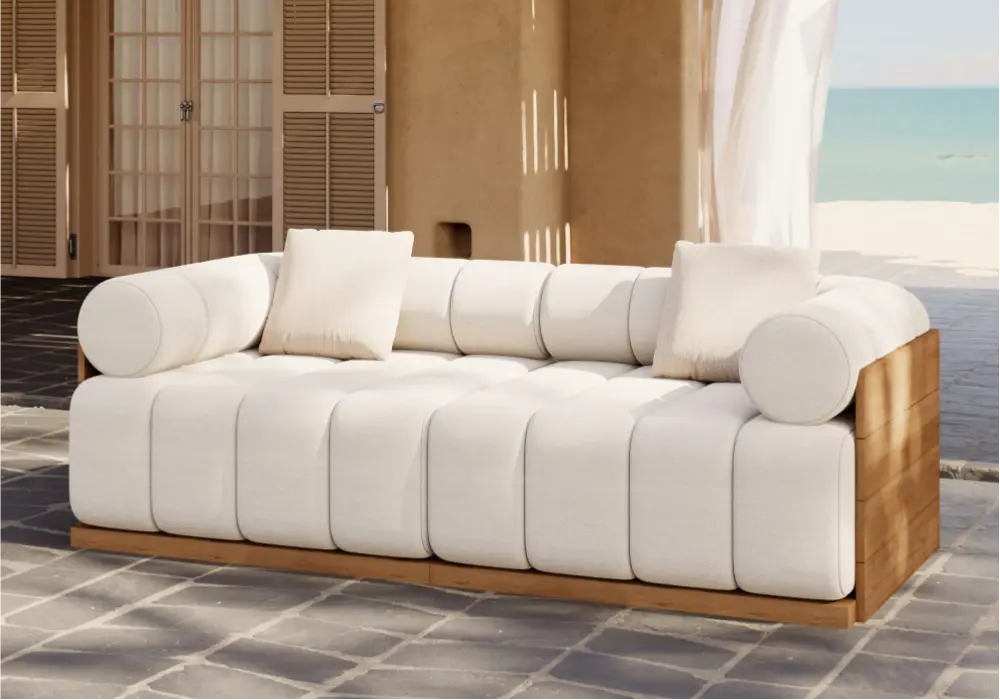
The Resaro two-seater teak deep-seat outdoor sofa in warm white offers a wood-accented, deep-seat direction. Check the current construction details and cushion-care instructions before choosing it for demanding exposure. Its appearance does not establish a whole-product weather rating or eliminate seasonal care.
These options illustrate different sizes and material combinations. They are not a controlled durability ranking. Select a candidate that fits your patio, then request the evidence relevant to your conditions.
Build a Maintenance Plan Around the Weakest Point
List the routine tasks for every component: removing debris, cleaning approved surfaces, inspecting connections, handling cushions, and fitting protection. Put the most frequent tasks within easy reach by leaving access around the sofa.
Avoid persistent moisture traps. Keep the furniture away from standing water and inspect areas beneath cushions, behind planters, and around feet. Follow the product’s ventilation guidance when using covers or storage.
Before severe weather or an extended absence, follow the manufacturer’s preparation instructions. Do not improvise anchors or rely on heavy furniture as a complete solution. Loose components and accessories need their own plan.
The most durable choice is the complete sofa whose construction, documented suitability, and maintenance fit your home. A material shortlist helps, but the final decision belongs at the product and component level.
Keep a simple record of inspections and any approved treatment you apply. Note which component was cleaned or repaired and retain the relevant product instructions. This makes it easier to identify a recurring issue, order the correct replacement, and avoid applying a treatment intended for one material to a neighboring surface.
Frequently Asked Questions
Is aluminum always better than teak in harsh weather?
No. The exposure, construction, finish, hardware, and care routine determine suitability. Aluminum and teak also create different visual and handling characteristics. Compare exact products rather than treating either material as a universal winner.
Does gray teak mean the wood has failed?
Not necessarily. Untreated teak can change to a silver-gray appearance outdoors. Distinguish expected weathering from damage by following the product’s inspection and care guidance. Ask the manufacturer if you notice structural movement or another change you cannot identify.
Is rope outdoor furniture suitable for rain?
That depends on the actual woven material and complete design. Confirm composition, outdoor-use guidance, attachment details, and the cleaning routine. The word rope alone does not establish water resistance or how the cushions behave after rain.
What material is best near a swimming pool?
Ask about the exact finish, textile, and cleaning requirements for splash exposure. Do not assume generic weather resistance proves chlorine resistance. Choose a product with suitable documented guidance and a practical routine for removing deposits as instructed.
Can durable outdoor furniture stay unprotected in storms?
Do not assume so. Durability under normal outdoor exposure does not establish severe-weather safety. Follow product and site-specific preparation guidance, including care for loose cushions and accessories. Choose materials for ordinary use and plan storm protection separately.