

Yes, reclining sleeper sofas do exist, offering a way to combine everyday comfort with a place for overnight guests. Some models feature adjustable backrests for lounging, while others use a powered mechanism to convert the sofa into a bed.
However, the exact functions vary by design, so it’s important to check how each sofa reclines and converts before making a decision. Understanding these features can help you find an option that suits your daily routine, sleeping needs, and available space.
In this guide, we’ll explain the key differences between reclining, sleeper, and convertible sofas, along with practical tips for choosing the right style for your home.
Table of Contents
Understanding the Differences Between Reclining, Sleeper, and Convertible Sofas
Before choosing a sofa, it helps to distinguish between the functions that different product labels describe. Retailer terminology can vary, so always verify the mechanism and specifications of the exact model.
Sofa type | Main function | What to check |
Reclining sofa | Adjusts the sitting or lounging position | Backrest movement, footrest support, and independent controls |
Sleeper sofa | Converts into a sleeping arrangement | Usable bed dimensions, sleeping surface, and conversion process |
Convertible sofa | Changes from one configuration to another | How the sofa transforms and which positions are supported |
Power convertible sleeper sofa | Uses a motor-assisted mechanism to convert into a bed | Whether it also reclines independently and how the controls operate |
Adjustable-back sofa bed | Offers multiple backrest positions and a sleeping configuration | Available angles, stability, and sleeping dimensions |
Reclining Does Not Always Mean Sleeping
A traditional reclining sofa typically allows the backrest to tilt backward, sometimes with a footrest that extends to support the legs. Depending on the design, occupants may be able to adjust their positions independently.
However, a reclining sofa is not automatically suitable for overnight sleeping. Its reclined position may not provide a purpose-designed sleeping surface or sufficient space for a comfortable night's rest.
A Sleeper Sofa Does Not Always Recline
A sleeper sofa converts into a bed, but the mechanism can vary. Some designs unfold, extend, or rearrange their cushions to create a sleeping surface. Others use a powered mechanism to transform the entire seating configuration.
An electric motor does not necessarily mean the backrest and footrest move independently. The motor may only control the conversion between sofa and bed modes.
Can One Sofa Do Both?
Yes, depending on its design.
Some sofas combine adjustable backrests with a flat sleeping surface, allowing you to switch between relaxed lounging and sleeping without a traditional extending footrest.
However, not all sofa beds offer a true reclining experience. If you want independent adjustment of the backrest and footrest, check that both functions are supported. If an adjustable backrest and a flat sleeping surface meet your needs, a wider range of designs may be suitable.
Which Type of Sleeper Sofa Is Right for Your Needs?
The right sleeper sofa depends on how you plan to use it, how often guests stay overnight, and how much room you have. Thinking about your everyday routine first can help you narrow down the features that matter most.
For Everyday Lounging and Overnight Guests
If you want a sofa that supports both relaxed sitting and sleeping, look for a model with an explicitly reclining backrest and a separate bed-conversion function.
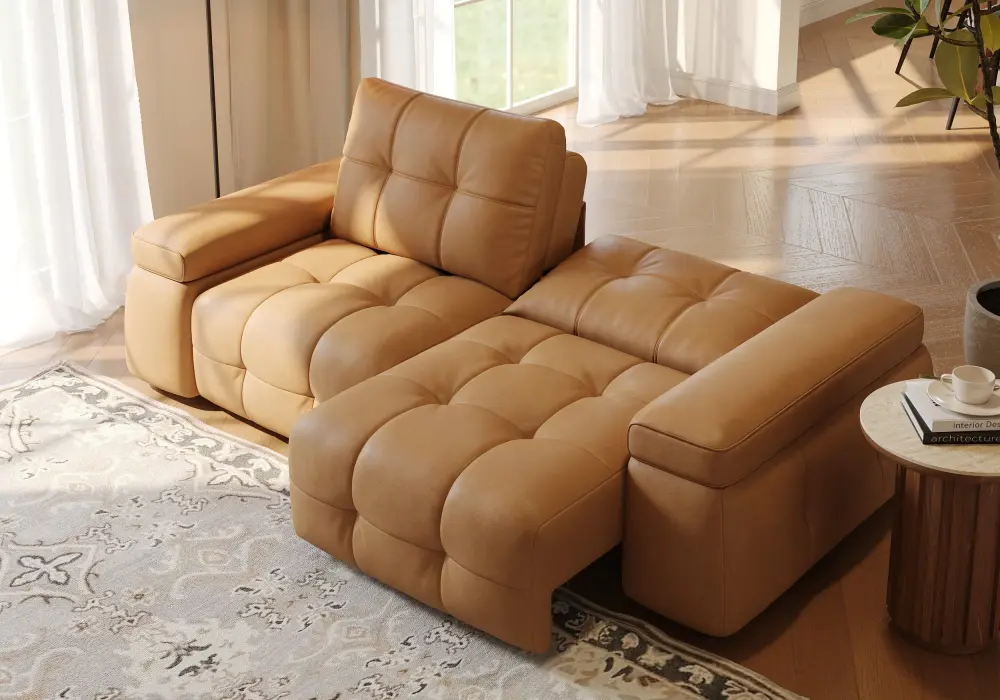
The 241 cm 2-Seater Genuine Leather Power Convertible Sleeper Sofa with Adjustable Armrests combines these functions. Its backrest reclines for everyday lounging, while a one-touch power slide transforms the sofa into a bed. Adjustable armrests and high-resilience foam cushions provide additional flexibility and support.
This type of design is worth considering when you want a comfortable place to unwind during the day without giving up the option of accommodating overnight guests.
For Occasional Guests and Everyday Storage
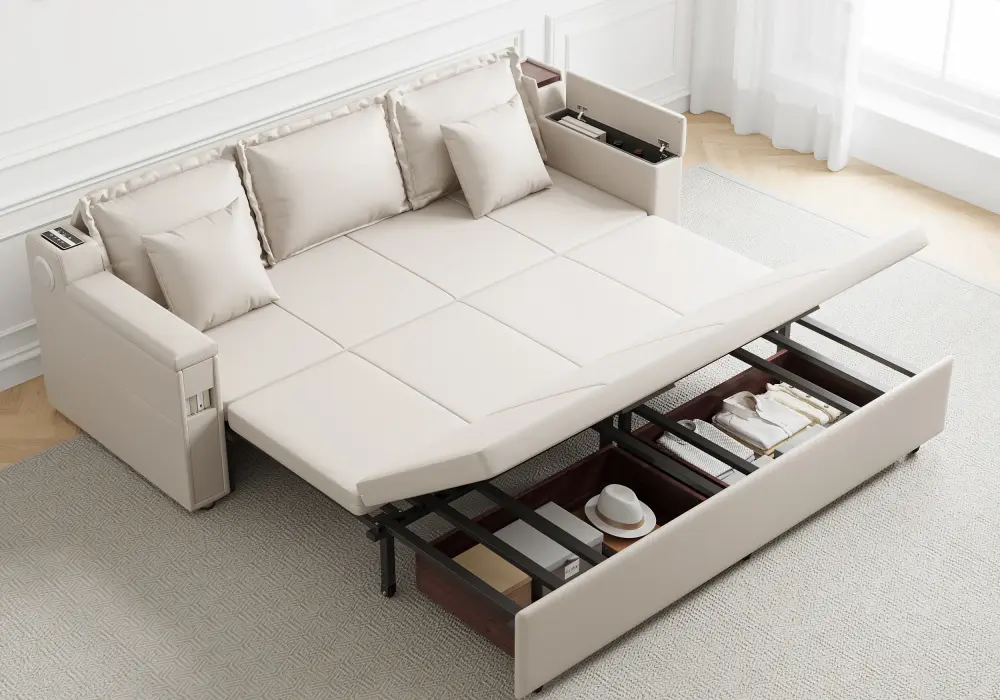
If you mainly need a place for visitors to sleep, built-in storage can make a sleeper sofa more practical. A 211 cm King 3-Seater Leather Sleeper Sofa with Speaker & USB Ports converts into a bed and includes an under-seat storage drawer and side pockets for keeping bedding and everyday essentials organized.
Its description also highlights easy-care PU leather upholstery, high-density foam cushions, built-in Bluetooth speakers, and USB charging ports. These features can be useful in a multifunctional living room where the sofa serves as seating, guest accommodation, and a place to relax with music or charge devices.
This style is especially relevant when storage and everyday convenience are higher priorities than having a dedicated reclining function.
For Spacious Seating and a Modern Look
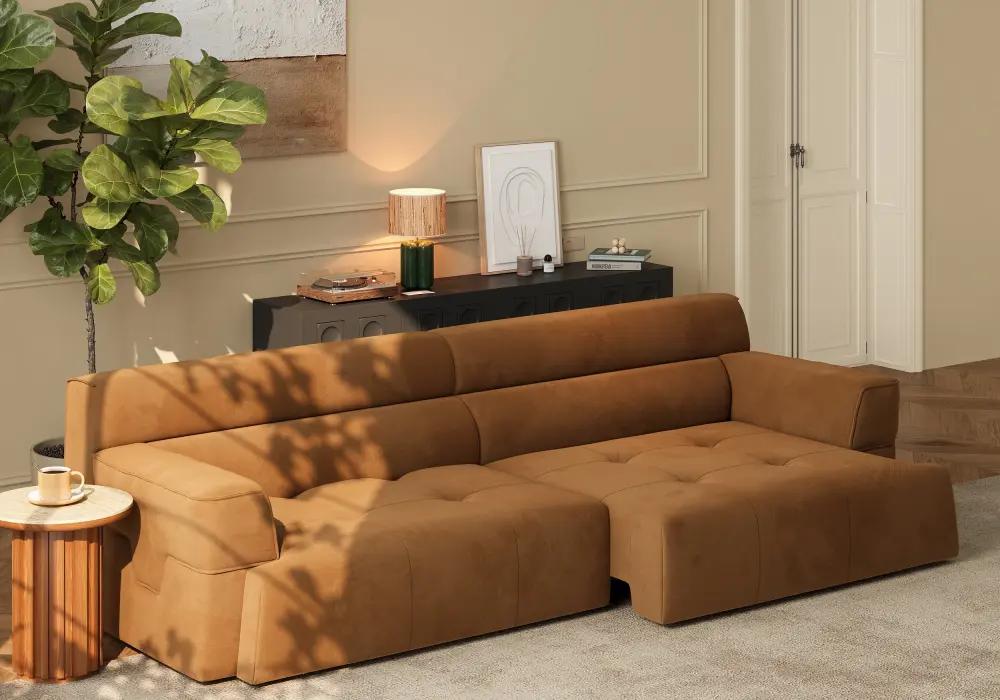
In a larger living room, a wider sleeper sofa can provide generous everyday seating while creating an additional place to sleep. The 307 cm 2-Seater Performance Velvet Power Convertible Sleeper Sofa features deep seating, a low-profile block silhouette, and power-assisted conversion into a bed.
Its performance velvet upholstery is designed to resist stains, while high-resilience foam cushions and a metal frame provide support and structure. The contemporary design makes it a potential fit for living spaces where a substantial sofa is part of the room's overall look.
Ultimately, choose according to the function you will use most. If reclining comfort is essential, prioritize a model that explicitly offers a reclining backrest as well as bed conversion. If overnight accommodation, storage, or spacious seating matters more, those features may have a greater influence on your decision.
Check Your Space Before Choosing a Sleeper Sofa
A sofa can look ideal in a product photograph and still be impractical in your home. Space planning should account for both everyday seating and the fully converted sleeping arrangement.
Measure Both Configurations
Start by measuring the available width and depth of the room. Then compare those measurements with the manufacturer's dimensions for the sofa in its seated and sleeping positions.
Allow for the movement required by the mechanism, not just the final footprint. Depending on the design, the sofa may need clearance behind it, in front of it, or around its adjustable components.
A simple way to test the layout is to mark the sofa's footprint on the floor with painter's tape. Outline the seated configuration first, then mark the sleeping configuration separately.
Keep Walkways and Furniture Accessible
Think about what happens when the sofa is open.
- Can someone walk to the door without stepping around the bed?
- Where will the coffee table go during conversion?
- Can nearby drawers and doors still open?
- Is there enough room to make the bed and change the bedding?
If the sofa will be used for overnight guests, consider their access to the room's exit and the space available for personal belongings.
Plan for Power and Delivery
For a powered sleeper sofa, confirm the required power connection and cable arrangement. Follow the manufacturer's instructions to avoid routing cables through moving parts or placing them where they could become pinched.
Also measure the delivery route, including doorways, staircases, corners, and elevators. Confirm the packaged dimensions and whether assembly is required.
These checks are particularly important for larger models, where the delivery route may be more restrictive than the finished room.
What Else Should You Check Before Buying?
Once you have identified the right configuration, verify the details that affect everyday use.
Sleeping Dimensions and Surface
Check the usable sleeping width and length rather than relying on the overall sofa dimensions. Determine whether the sleeping surface consists of the seat cushions, a separate mattress, or an extending platform.
If guests will use the sofa regularly, ask about the manufacturer's intended use and evaluate the sleeping surface whenever possible. Confirm the dimensions before buying bedding, especially when product labels use different bed-size terminology.
Conversion Effort and Operation
For a manual model, understand which parts must be lifted, pulled, or repositioned. For a powered model, ask how the controls work and whether the manufacturer provides an approved procedure for situations where power is unavailable.
Watch the entire conversion process, including returning the sofa to seating mode. The everyday operation matters just as much as how the furniture looks when fully open.
Upholstery, Maintenance, and Warranty
Check the upholstery composition and recommended cleaning methods. Genuine leather, leath-aire descriptions, and performance velvet are different material categories and should not be treated as interchangeable.
For powered furniture, review the warranty coverage for the motor, controls, mechanism, frame, and upholstery. Ask how replacement parts and servicing are handled in your location.
Include delivery, assembly, bedding, and any required accessories in your total cost comparison.
Frequently Asked Questions
Does Every Power Sleeper Sofa Recline?
No. Power may refer only to the mechanism that converts the sofa into a bed. Independent backrest movement, footrest extension, and separate occupant controls must be confirmed for the exact model.
Can I Use a Reclining Sofa as a Guest Bed?
Not necessarily. A traditional recliner is not automatically designed for overnight sleeping. If you need both functions, look for a model with an intended sleeping configuration and confirmed usable dimensions.
Does an Adjustable Armrest Mean the Sofa Reclines?
No. Adjustable armrests are a separate feature. They may change the seating or lounging arrangement, but they do not establish that the backrest reclines or that a footrest extends.
Is Overall Sofa Width the Same as Bed Width?
No. The arms, frame, and conversion mechanism can affect the usable sleeping area. Always use the manufacturer's bed-mode dimensions when evaluating the space available for sleeping.
Is a Manual or Powered Sleeper Sofa Better?
It depends on your priorities. A powered design may simplify conversion, while a manual design uses a different operating process and does not rely on electrical power for its intended mechanism. Compare the actual operation, room requirements, and service arrangements rather than assuming one type is always more convenient or durable.