

To use a recliner sofa, sit back fully, find your control (a handle on a manual recliner, or buttons on a power model), and adjust in small steps until your back and legs feel supported. To close it, reverse the same control until the back is upright and the footrest is fully down, then stand. The steps below cover both types, plus comfort positions, a troubleshooting checklist, and what to look for if you are choosing a new sofa.
Note: Controls vary by model. Treat these steps as the general routine, and check your manual for the exact panel layout. This is the only place in this guide we will say it.
Table of Contents
How to Use a Manual Recliner
Manual recliners use a handle, lever, or release to unlock the mechanism. Your body weight does most of the work.
- Sit all the way back, so your back rests against the backrest.
- Find the release. It is usually a pull handle or lever on the side, or sometimes a push-back design with no handle.
- Pull the handle gently while leaning back. The footrest rises as the back tilts.
- Stop where it feels right. Many manual models let you pause at a middle position instead of full recline.
- To close, lean forward and push the footrest down with your legs, or pull the handle again. Make sure the footrest is fully closed before standing.
Never force the mechanism if it sticks. Check for objects behind or under the sofa first.
How to Use a Power Recliner
Power recliners replace the lever with buttons or a controller, so adjustment is smooth and repeatable.
- Sit down and locate your seat's control. It is typically a button panel at the side or a small controller.
- Press or hold the recline button. Some models move only while you hold the button, while others move with one touch. Release to stop.
- Adjust in small steps. Pause after each movement to feel the back angle and leg height.
- Use the separate headrest control if there is one. Many sofas keep this separate, and some headrests are adjusted by hand.
- Press the return button until the sofa is fully upright and the footrest is down. Wait until movement stops before you stand up.
Keep your hands, feet, pets, and cables clear of the moving parts during every adjustment.
Find a Comfortable Position for What You're Doing
You do not need full recline every time. Match the position to the activity.
- Reading: Keep the back only slightly reclined and the footrest low. Use the headrest or a small cushion to support your neck.
- Watching TV: Use a mid recline with your legs raised a little, so your head can still see the screen without craning.
- Napping or resting: Choose the deepest position, ideally a zero-gravity setting where your legs sit raised and your back is evenly supported. Zero-gravity seating is designed to take pressure off the body, but it is a comfort feature rather than a treatment.
- Chatting with guests: Stay upright or just barely reclined so you can face people.
If you feel your lower back or neck is unsupported, return one step and adjust the headrest or add a small lumbar cushion.
How Much Space Does a Recliner Need?
Traditional recliners need clearance behind them for the backrest to tilt. Measure the sofa fully reclined, not just upright, and test your layout with tape on the floor before placing furniture around it.
Zero-wall designs solve this for smaller rooms. The 2261 mm Softplume chenille power reclining sofa is a good example. Its zero-wall design lets it recline fully without being moved away from the wall, so it fits where a standard recliner would need an extra gap behind it. It is also a dual-motor model with one-touch adjustment and a zero-gravity position, which makes it a convenient reference for the napping position described above. You still need room in front of the footrest, so check the product's stated clearances.
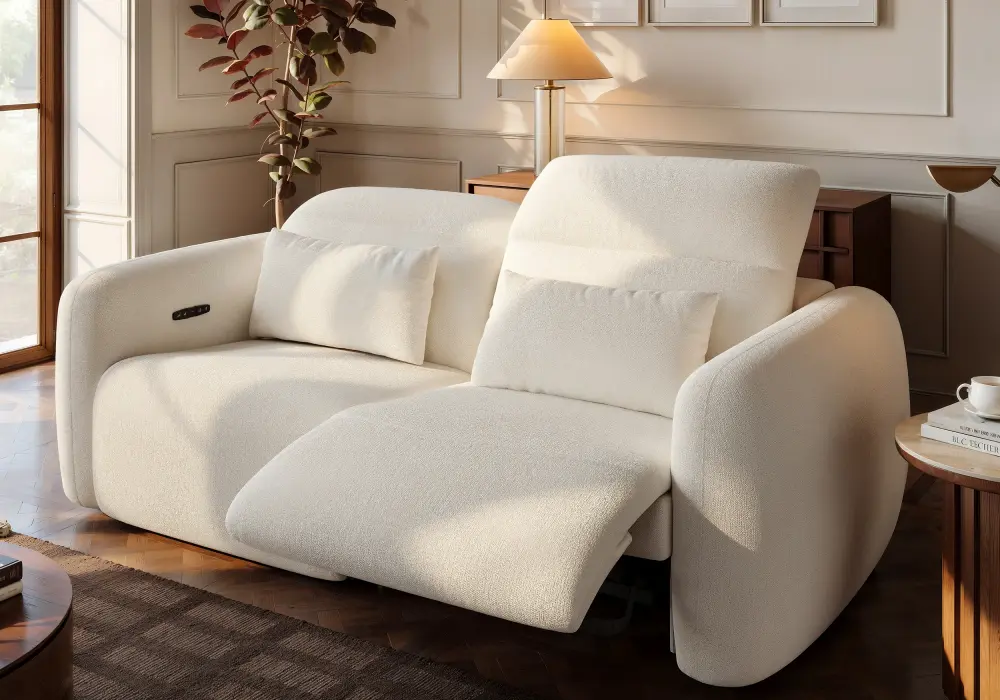
Don't Mix Up the Seat Controls and the Extras
On many modern sofas, reclining is only one feature. Learn each function separately.
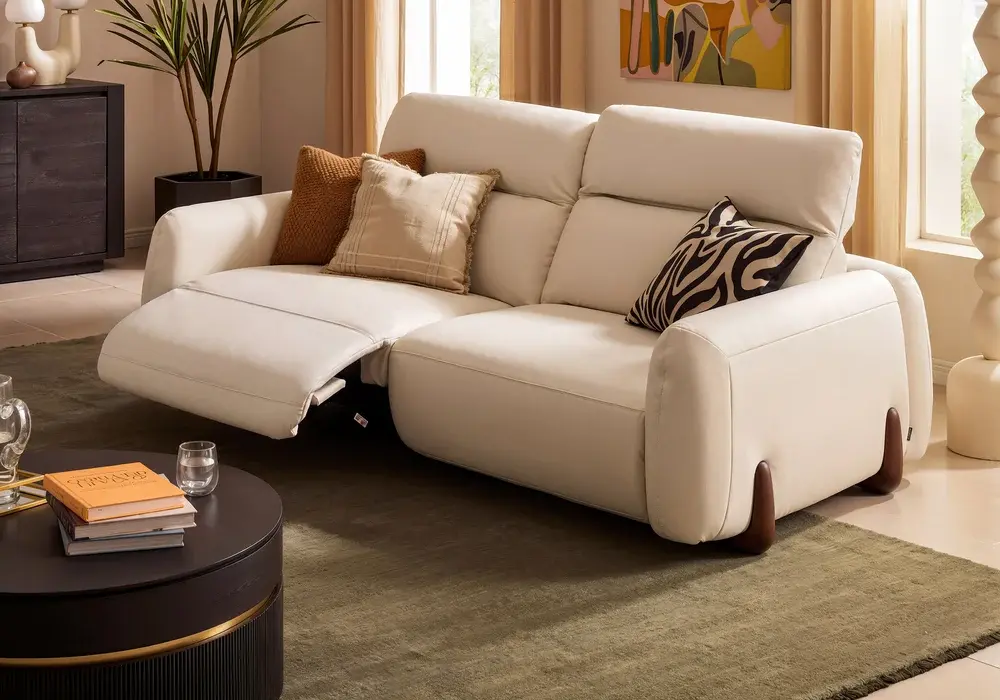
Headrests may be manual even on a power sofa. The Glidio Curva power reclining sofa is a clear example. Its two end seats recline by motor using a simple 2-button control panel, which also holds built-in USB and USB-C charging ports. The headrests, however, are adjusted by hand to different angles. If the seat moves but the headrest does not, that is the design working as intended, not a fault. Its genuine leather contact areas and high-resilience foam also suit the "reading" and "TV" positions above, where steady support matters more than deep recline.
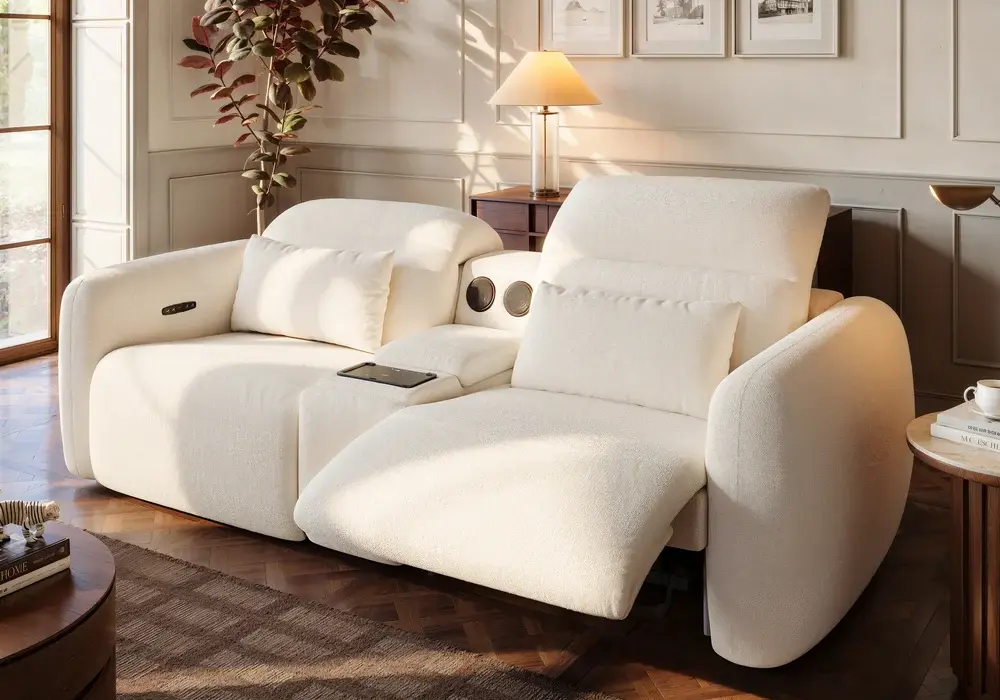
Center consoles are separate from the reclining controls. The 2591 mm Softplume model offers the same zero-gravity, zero-wall dual-motor recline as the 2261 mm version, plus a multifunctional console with storage, hidden cup holders, Bluetooth audio, wireless charging, Type-C, and USB-A. Treat the console like its own device: learn the audio and charging functions on their own, keep drinks in the cup holders only, and make sure the console lid closes properly after use. For movie nights, it keeps your phone, drink, and sound within reach of your seat.
What to Do If Your Power Recliner Won't Move
Work through this list in order. Most problems are solved in the first three steps.
- Check the power. Is the sofa plugged in, and is the outlet working? Try another device in the same outlet.
- Check the plug and cable. Make sure the connection is firm and the cable is not pinched, bent, or trapped under a leg.
- Check the controller connection. Make sure the control cable is fully seated, and that the button panel or controller is not loose.
- Check the remote battery if your model uses a wireless remote.
- Wait for overload protection to reset. Some systems pause after repeated use. Unplug for a few minutes, then plug back in and try again.
- Look for obstructions. Remove anything caught behind or under the footrest, such as toys, cushions, or pet items.
If it still does not work, or you notice damaged cables, a burning smell, or water exposure, stop using it and contact the seller or manufacturer. Do not open electrical housings or force a stuck footrest.
Frequently Asked Questions
How do I close a power recliner?
Press and hold the return or close button until the back is fully upright and the footrest is completely down. Wait for the movement to stop before standing.
Why won't my power recliner go back?
Most often something is blocking the footrest, or the power or controller connection is loose. Run through the troubleshooting checklist above, and wait a few minutes if overload protection may have triggered.
How do I adjust the headrest on a recliner sofa?
It depends on the model. Some headrests have their own button, while others, like the Glidio Curva's, are adjusted by hand even though the seats are powered.
What is the best angle to relax in a recliner?
Use a slight recline for reading, a mid recline for TV, and a zero-gravity position for resting, where your legs are raised and your back is evenly supported.
Can a recliner sit against the wall?
Only zero-wall designs, such as the Softplume sofas above, are made to recline without being pulled away from the wall. A standard recliner needs clearance behind it.
Do all seats on a reclining sofa recline?
Not always. Some sofas have reclining end seats with a fixed center, so check the seating layout before assuming every section moves.