

Figuring out how to style an entryway bench is the fastest way to turn a forgettable hallway into the warmest handshake in your home. The short answer: use the bench as the focal point for a three-zone design; create visual interest with layered design elements in each zone (the top wall zone, the middle seat zone, and the bottom floor zone) to give your entry area a sense of purpose. If you can get these three zones working together, even if your entry is relatively small, it will look professionally decorated. In this guide, we break down exactly how the pros do it, which bench style fits your space, and the small finishing touches that make the biggest difference.
Table of Content
Why The Entryway Bench Earns Its Spot
An entryway does lots of behind-the-scenes labor. This area is the barrier between the outside and your personal space. In many cases, this “in-between” area becomes storage for coats, shoes, and random “stuff” from going out. A bench is a single product that serves every purpose in an entryway. You sit to pull your boots off, you stash them underneath, and the surface becomes a landing pad for keys, bags, and the dog leash.
That’s why style matters here more than you think. A bare bench is just something to drop clutter into. A well-styled entryway bench makes a strong first impression, telling guests that they have arrived at a space that has been cared for. Also, this ritual helps keep the rest of your home tidier daily. The goal is to make the bench look effortless while still doing the heavy lifting of a functional entry.
Start With Placement And Proportion
Before you even begin styling cushions, ensure you have mastered the basics of the entryway bench.
There’s nothing decorative that will fix a bench that doesn’t fit in the space. Measure the wall where you plan to put the bench, and allow some breathing room on each side. Generally speaking, a good rule of thumb is to let your entryway bench take up approximately two-thirds of the usable wall area. Never go from one end of the wall to the other. You want a little air around it so the piece reads as a feature, not as built-in. The seat height of 17 to 19 inches (432 to 483 mm) generally provides adequate comfort for most adults; this is the typical seating height you typically find on a standard dining chair.
Then think about clearance. Many entries land somewhere around 8 by 10 feet (2438 by 3048 mm), giving you enough room for an entry bench with a small console or even a mirror, while still allowing for enough clearance to move through the entrance way. However, if you’re working with a smaller space like a 5 by 5 foot (1524 by 1524 mm) entry, a simple backless bench located tightly against the wall will keep the pathway open. If you are working with a true foyer, you have the luxury of a deeper bench with arms or a high back. Ultimately, when creating an entryway bench design, match the scale of the bench to the scale of the space, and everything else tends to follow much more naturally.
How To Style An Entryway Bench: The Three-Zone Method
This is a framework designers reach for again and again. Think of your entryway bench as the middle layer of a vertical story, then dress the zone above it and the zone below it so the eye travels naturally from floor to ceiling.
Above The Bench
The wall above the bench is where you can add some depth and character to the area. Mirrors have long been the most common addition as they reflect light and make an entrance appear more spacious, in addition to giving people their last look before leaving. If a mirror feels too predictable for your personality, create a small gallery wall, a single large painting, or an array of hooks to hang coats, hats, and scarves.
If you’re going for a coat rack or a few elegant hooks, aim to place them at around 60 to 66 inches (1524 to 1676 mm) off the floor so they are within easy reach. The trick here is to leave a little negative space between the top of the bench and the bottom of whatever you hang, roughly 8 to 12 inches (203 to 305 mm), so the two elements feel related without crowding each other.
On The Bench
Styling can get really fun at this point. Add a cushion or fold up a throw to create softness on the entryway bench that invites others to actually sit. The bench should look like it is a functional place to sit in order to be inviting. Now add some life, like a small potted plant, a stack of design books, a tray for keys and sunglasses, or a sculptural piece with some weight to it.
The designers’ secret here is to follow the rule of three and vary your heights. Group your items in odd numbers and vary their heights to create movement in the arrangement. Keep one side of the bench clear, though. You still need somewhere to set a bag or sit down, so resist the urge to fill every inch. It’s not a low display shelf, it’s a bench after all.
Below The Bench
The empty space under the bench is perfect for additional storage that will allow you to keep the area around the bench neat by concealing clutter. Slide in a pair of woven baskets for hats, gloves, and dog supplies, or line up a tidy row of shoes if your bench sits high enough. Natural-fiber baskets add both texture and warmth.
Choosing The Right Bench For Your Space
How you style an entryway bench depends a lot on which bench you started with. Some are straight up for sitting, while others build in cabinets, flip-top compartments, or open shoe shelves. Here is how the main styles compare so you can match the piece to your needs.
Bench Style | Best For | Storage | Typical Footprint |
Upholstered bench with shelves | Families who want comfort plus shoe storage | Open lower shelves | Medium (1016 - 1346 mm) |
Bench with side cabinet | Hiding clutter behind closed doors | Concealed cabinet + seat | Medium-large (1194 mm +) |
Flip-top storage bench | Small entries needing tucked-away space | Hidden under-seat compartment | Compact (813 - 1016 mm) |
Backless slim bench | Tight hallways and petite nooks | Little to none | Compact |
Hall tree with bench | Renters and busy households | Hooks + shelves + seat | Large, tall |
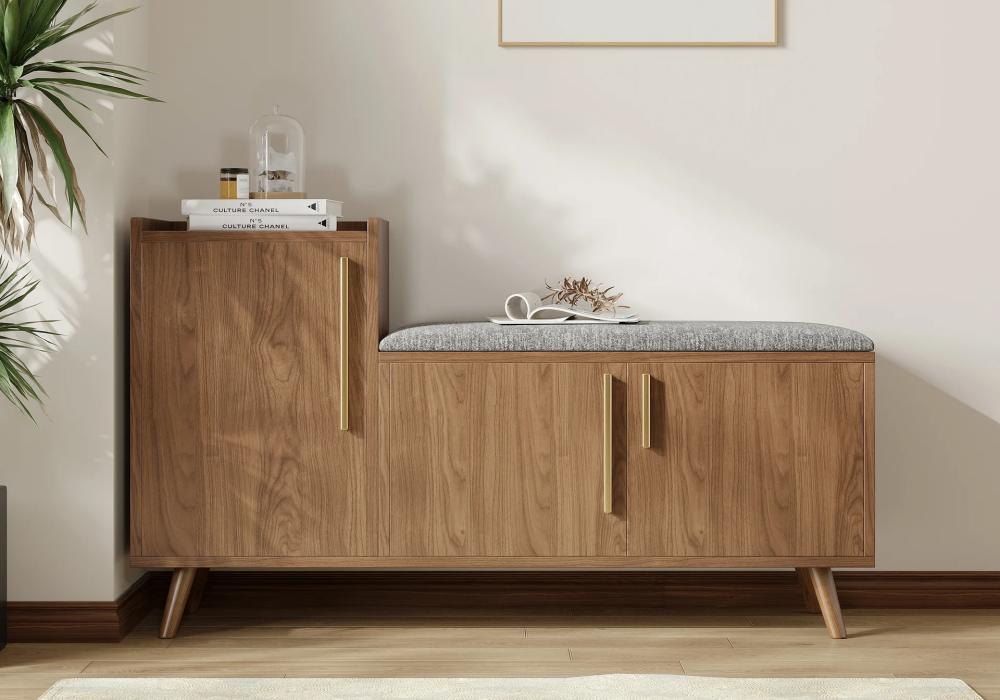
If you want the cleanest look and something that is practical, a bench with a built-in cabinet keeps everyday chaos behind closed doors. This walnut entryway bench with a side cabinet pairs a cotton-and-linen cushioned seat with concealed shoe storage, which makes it easy to keep the surface styled while the mess stays hidden. The design is clean and elegant, making this a versatile option.
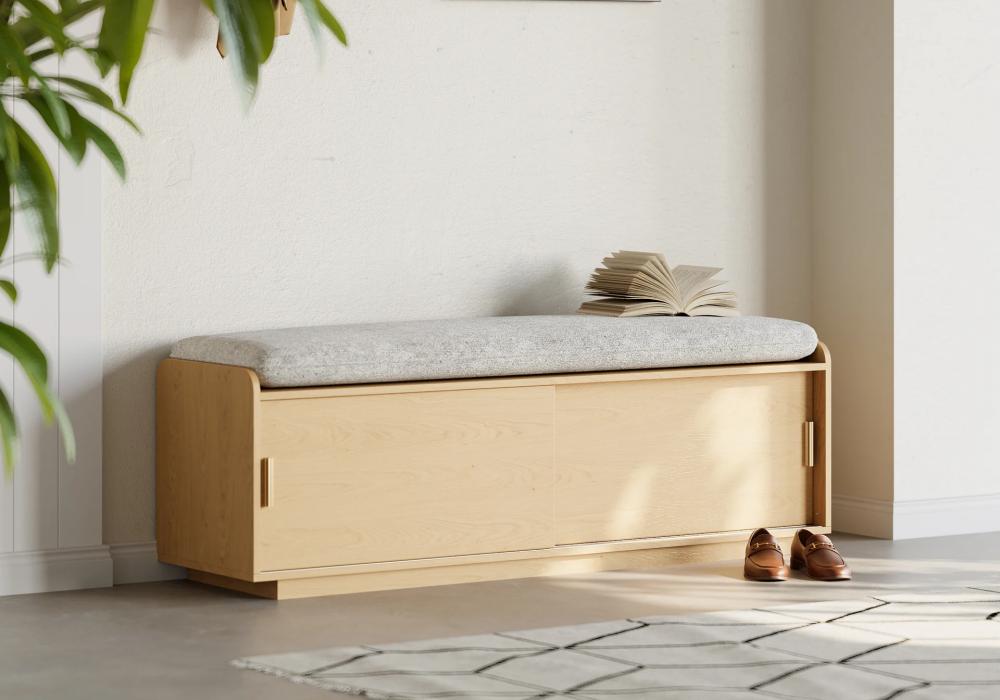
Not every entryway bench is meant to be styled, and that is the point of a piece like this wooden entryway bench with a cotton-linen seat and sliding-door storage. It is built for people who want the cleanest possible look with the least possible fuss. The sliding doors are the smart part here: they glide sideways instead of swinging out, so they never block the walkway, which makes this style especially friendly for narrow halls where a hinged cabinet would get in the way.
Still browsing? It helps to compare options side by side in our full entryway benches collection before you commit to a finish and footprint.
Color, Texture, And Seasonal Styling
Once your bench has been placed you can use color and texture to create an emotional connection. Color is easy; just pick a couple of colors that are already used somewhere else in the house and it will help create a sense of continuity versus disconnection. A neutral bench with a single saturated cushion, a warm wood tone against a crisp white wall, or a black frame anchoring a light, airy hall all feel deliberate.
Neutral does not have to be boring. Build it up by layering different textures. Use a nubby cushion next to a smooth wood seat. Place a glossy ceramic vase beside a woven basket. Add a small rug or runner to provide warmth at your feet. The combination of soft and hard, matte and glossy is what adds dimension to a styled entryway bench.
Seasonal swaps are an easy way to keep your entry area from getting stale without having to do a complete overhaul. If you have time to give a little bit of decorating effort about once every three months, you can add a few stems of greenery in a vase for spring, then swap that out with a big woolen throw and warm-toned pillow for fall; or simply swap the artwork or framed photo on the wall when you want a different look. Because you will be making changes just to decorative objects on surfaces, a quick five-minute update will make it feel like new again throughout the year.
To extend the look beyond the bench itself, a slim console table on the opposite wall or a few coordinating pieces from the wider entryway furniture range can turn a single bench into a key player in the overall picture.
Expert Tips For Styling An Entryway Bench
A few hard-won pointers that separate a well-thought-out entry from a cluttered one:
- Buy for your real life and not your dream life. If the mud from your family’s shoes is consistently tracked into your home, you are going to want to place your money towards a closed cabinet system or a flip-top style instead of shelving as they require constant cleaning and maintenance. Honest function beats aspirational styling every time.
- Anchor the bench with a rug. Using a small runner or a rug that can be easily cleaned creates the visual definition of where the bench sits, helps protect your floors from dirt brought into the house by shoes, creates some level of comfort, and visually weighs the entryway bench down so that it is not floating up against the wall.
- Properly planning lighting can make this area come alive at night. A single table lamp placed on an adjacent console table or two wall sconces over the bench adds to the overall ambiance and creates a sense of warmth and welcome when the sun goes down.
- Leave one-third of the seat clear. While it may be fun to add all sorts of decorative elements to your bench, ultimately, a bench that has no seating room misses the entire purpose of having a bench.
- Invest in a quality bench, accessorize on a budget. The bench is the piece you will keep for years and will endure the most traffic, so choose a quality frame and a durable, cleanable cushion fabric. Cushions, baskets, and art can be swapped easily as your taste evolves.
Common Styling Mistakes To Avoid
The most frequent misstep is overcrowding. An entryway bench piled with mail, three plants, and a sculpture stops being an entryway bench and becomes a dumping ground.
Another common mistake new designers make is not considering scale. They will choose a bench that is too large and consumes a small hallway or a tiny bench that blends into a very large foyer. The last common mistake is by designing without any thought toward storage; this means the stylish design will be overrun with clutter by next week.
Bringing It All Together
The essence of designing an entryway bench is to create a vertical narrative from floor to wall with the bench at the center. Nail the placement and proportion, layer the three zones, choose a bench that suits your real habits, and finish with texture, color, and a decoration that ties into the rest of your house. Do that, and the first thing anyone sees when they walk through your door will be a space that feels both beautiful and genuinely useful, which is exactly what a great entry should do.
Frequently Asked Questions
What should I put on top of an entryway bench?
You want to keep the design of the area above the bench simple and practical. Add a cushion or throw to give the area some comfort. Place a small tray or dish to hold keys and glasses. You may also add one or two decorative elements like a potted plant or a small stack of books. Keep items clustered together in odd numbers.
How big should an entryway bench be?
Aim for one that will take up approximately two-thirds of your wall space. The typical height for seating is 17-19 inches (432-483 mm) for adult seating. If you have a narrow entryway, consider using a compact bench or even a backless bench to provide access through the passageway.
How do I style a small or narrow entryway with a bench?
You need to get a slimmer bench, place it up against the wall, and go “up” rather than out. Add some functionality such as a mirror or hooks on the wall, and then store items in baskets located under the bench. A flip-top bench is your best bet for this type of area because the storage stays completely hidden beneath the seat until you lift it.
Should the entryway bench match the rest of my furniture?
It should coordinate, not match exactly. Pull one or two colors or a wood tone from an adjacent room so the entry feels connected to the home. A bench that contrasts slightly, like a dark frame in a light hall, can actually look more designed than a perfect match.
What is the best entryway bench for shoe storage?
Choose an entryway bench that has either lower open shelves, a lift top, or a lower cabinet. Closed cabinets keep clutter out of sight, while open shelves make grab-and-go easier. Match the storage style to how messy your daily shoe situation really is.