

To style a glass coffee table, group a few objects on a tray, choose pieces with enough visual weight to read through the glass, and keep everything under the top tidy, because a transparent surface shows it all. A glass top is the lightest option in a living room: it keeps sight lines open and lets a rug or wood legs show through. That is also what makes it unforgiving. Whether you already own one or you are choosing a coffee table for a small room, these steps will help you make the surface look intentional without losing the airy feel.
Table of Contents
Why Glass Tables Are Different to Style
On a wood or stone table, the surface hides what is underneath and gives objects a visible backdrop. Glass changes three things:
- You see through it. The floor, the rug and anything stored beneath are part of the picture, so they need to look good too.
- Objects lose their anchor. Without a colored surface behind them, small items can seem to float or disappear. A tray or a contrasting object gives them definition.
- Marks show. Fingerprints, rings and dust are more obvious on glass, which makes a tidy, minimal layout easier to keep up.
None of these are reasons to avoid glass. They are reasons to plan the styling: fewer items, deliberate color and a clean view underneath.
Start With a Table That Suits the Room
A transparent top works best in rooms where you want the furniture to recede. The 32" round glass mid-century modern coffee table is a clear example. Its listing describes a turned frame made of solid ash wood encircling a transparent glass top, in an Art Deco-inspired style, and notes that it can hold heavy books, decorative objects and drinks.
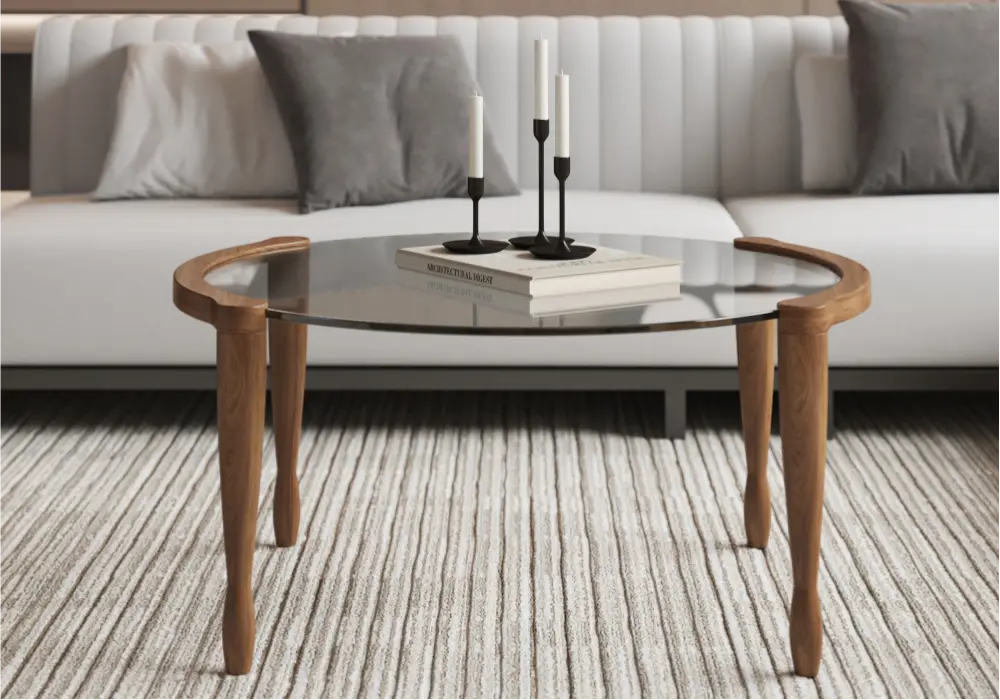
The wood frame gives you a warm outline, so you can style the top with one or two materials that echo it, such as a ceramic bowl in a similar tone or a woven tray. A round shape also means no sharp corners, which is helpful in a compact living room or a home with young children.
Get the Height and Spacing Right First
Styling cannot fix a table that is out of proportion with the seating. Design guides from Bob Vila, Wayfair and others suggest:
- A standard coffee table height of about 16 to 18 inches.
- A tabletop level with the sofa seat cushions or 1 to 2 inches below.
- Around 14 to 18 inches between the table edge and the sofa, for reach and legroom.
Glass tops make these numbers even more important, because a table that is too low or too far away is obvious when you can see right through it.
The Four-Part Formula
Anchor With a Tray
A tray is the best tool for glass. It gives your objects a solid base to sit on and adds a patch of color or texture where the eye can land. Choose an opaque tray in wood, marble, leather or metal, and avoid a glass or mirrored one, which just adds more transparency. A round tray echoes a round table, while a rectangular one adds contrast. Cover about a third to half of the surface.
Add Height With One Taller Piece
A vase, a sculptural object or a candle in a tall holder breaks the flat plane. Keep it under about 12 inches, so it does not block the view across the room. Items with a solid body, such as ceramic or dark glass, read better on a transparent table than clear glass or thin metal.
Add a Low, Textured Piece
A shallow bowl, a stack of books or a small woven basket gives the grouping weight. Pick items with matte finishes or visible texture, because glossy objects reflect the glass and tend to blur together. If you use books, choose ones with attractive covers or neutral spines, since both the top and bottom of the stack are visible.
Bring In Something Living
Plants look especially good on glass because the leaves cast soft shadows and you can see the stems through the surface. A small potted plant, a bud vase with one stem or a bowl of lemons adds life. If you prefer low upkeep, dried stems in a ceramic vase work well.
Style the Space Beneath the Glass
This is the step that separates a polished glass table from a messy one.
- Keep the area under the table clear. If you see the floor, the rug and the legs, make sure they look good. Move magazines, remotes and baskets elsewhere.
- Use the rug as a design element. A solid or subtly textured rug shows through glass and looks calm. A busy pattern can compete with the objects on top.
- If you need storage, use a contained basket. A single woven or leather basket on the floor beneath the table hides blankets or magazines and still looks planned.
- Check the wood or metal frame. If the legs are visible, keep the finish consistent with other furniture in the room.
Pick a Palette That Works Through Glass
Because glass has no color of its own, your accessories carry all the visual interest. A few combinations that work:
Room style | Tray and objects | Accent |
Mid-century | Walnut or teak tray, ceramic bowl in a warm tone | One brass or amber piece |
Modern minimal | Matte black or white tray, a single sculptural vase | A green plant |
Soft neutral | Woven tray, linen-toned ceramics | A small stem in a clear bud vase |
Glam | Marble tray, brass candle holder | A bowl of dried flowers |
Pick two main colors from the room and repeat them on the table. Because glass is neutral, almost any palette sits comfortably on it.
Coordinate With the Rest of the Room
A glass table is a background piece, so the objects around it set the tone. A few ways to tie it in:
- Echo the frame. If the legs are wood, repeat that tone in a side table, a picture frame or the tray. If they are metal, repeat the finish in a lamp base or a candle holder.
- Limit other glass. One glass surface per seating area is plenty. If you also have a glass-door cabinet or a mirror nearby, choose a solid-top side table for contrast.
- Layer texture nearby. A wool throw over the sofa arm and a textured pillow soften the hard, smooth look of the table and make the whole zone feel warmer.
- Keep the rug simple. Because the rug shows through, a subtle weave or soft pattern gives the table a calm backdrop.
In a small room, a glass top is especially useful because it does not visually block the floor. Take advantage of that by keeping the nearby floor open, and avoid crowding the table with extra poufs or baskets.
Keep the Glass Looking Its Best
A few habits make glass easier to live with:
- Use coasters. They prevent rings and protect any surface from hot mugs.
- Add a small non-slip pad under the tray if you have pets or children, since smooth trays can slide on glass.
- Wipe with a microfiber cloth and a glass cleaner. Doing a quick pass once a week keeps fingerprints under control.
- Check the specs. Look for information on the glass type and thickness in the product listing, and ask the retailer if it is not stated. Tempered glass is commonly specified for tables for its strength, so confirm it for the model you choose.
- Avoid heavy objects dropped onto the surface. Place items gently and use trays for heavy decor.
Lighting and Reflections
Glass reflects light. A table directly under a bright overhead fixture can produce glare, while a table next to a window can show every smudge. Soft, indirect light works best. A table lamp on a side table, a floor lamp behind the sofa or candles on the tray give the surface a gentle shimmer without harsh reflections. If the glare bothers you, move the lamp or choose an opaque tray to break it up.
Seasonal Swaps
- Spring: a low bowl of fresh tulips, a pale ceramic piece and a linen coaster set.
- Summer: lemons in a wooden bowl, a glass hurricane with a candle and a small trailing plant.
- Autumn: dried grasses in a ceramic vase, a mini pumpkin trio on the tray and a warm-toned candle.
- Winter: an evergreen sprig in a bud vase, brass candle holders and a stack of books about a favorite subject.
Common Mistakes
- Too many small objects. On glass, clutter looks scattered. Group items in threes.
- Clear on clear. A glass vase on a glass top disappears. Add color or texture.
- Ignoring the underside. Anything stored beneath is on display.
- Skipping coasters. Glass shows water rings quickly.
- Going too tall. A table that sits in the middle of a room works best with a low profile.
Frequently Asked Questions
What looks best on a glass coffee table?
A tray with a low bowl, a taller vase and a small plant is a reliable combination. Choose pieces with some color or texture so they stand out against the clear top.
Should I put a tray on a glass coffee table?
Yes, in most cases. It anchors your objects and adds a solid base. Pick an opaque tray in wood, marble or leather so it adds definition.
How do I keep a glass coffee table from looking cluttered?
Limit yourself to three to five items, and keep the area beneath it clear. If you add books or magazines, stack them neatly and use a basket for extras.
What should I put underneath a glass coffee table?
Nothing, ideally, except a good rug. If you need storage, a single basket is better than loose items.
Is a glass coffee table safe with kids and pets?
Rounded corners help, and tempered glass is commonly used for strength. Check the product description for the glass type, and avoid placing heavy or fragile decor near the edge.
How tall should a glass coffee table be?
Aim for 16 to 18 inches, level with your sofa cushions or 1 to 2 inches below them. That height suits most sofas and keeps drinks within easy reach.