

To style a dining table when not in use, choose one clear focal arrangement, leave most of the top open, and make the display easy to move before a meal. The best approach depends on the shape, finish, and daily role of your dining table. A bowl, a small group of vessels, or a low tray can give the room a finished appearance without turning the surface into permanent storage.
Start with the table you own rather than a collection of accessories you want to display. A sculptural base, striking stone pattern, or warm wood finish may already provide enough interest. The decoration should support those features while leaving the room ready for ordinary life.
Table of Contents
Decide how quickly the table needs to become usable
A table used for every meal should have a display that moves in one or two actions. A bowl and vase can be lifted away easily; a runner covered with several loose objects takes more time. If the table also supports work or homework, prioritize that reset even more strongly.
A separate dining room can accommodate a slightly more composed arrangement, but it still benefits from a practical limit. Choose a contained central area and leave the surrounding surface open. The table should look ready to welcome people rather than reserved for objects.
Consider where the display goes during meals. A sideboard, shelf, or nearby counter can hold it temporarily. If there is no sensible destination, reduce the size or number of objects before adding more decoration.
Choose one focal idea
Begin with one of three approaches: a single substantial object, a grouped arrangement, or a low tray. A broad bowl can provide enough shape by itself. Two or three vessels can create variation, while a tray can contain small items and simplify clearing.
Avoid combining every approach at once. A runner, tray, bowl, several vases, candles, and stacked objects can compete for attention and consume the useful surface. Select the element that suits the table's proportions, then add only what improves the composition.
Repeat one color or material from elsewhere in the room. That might be the warm tone of a wood chair, the muted color of curtains, or the metal finish of a light fixture. The relationship can be subtle; matching every object exactly often makes the arrangement feel rigid.
Style the shape of the tabletop
Table shape | Arrangement to try | Detail to protect |
Round | One centered bowl or compact group | Open surface around the arrangement |
Rectangular | A low composition following the long axis | Clear ends and useful dining edges |
Oval | Softly grouped objects near the center | The curved outline and easy movement |
Extendable | A movable display for the everyday size | Access to the extension mechanism |
On a round table, keep the display visually compact so the curve remains apparent. A wide bowl can suit a broad top, while a slender vase may work on a smaller one. If the table is small, fewer pieces help the remaining surface feel intentional.
On a long rectangular table, a modestly elongated arrangement can relate to the shape. That does not require filling the entire center. Leave visible space between objects and keep the ends available for everyday use.
An oval table can take a linear arrangement, but avoid making it so rigid that it fights the curved edges. Rounded vessels, soft foliage, or a gently folded textile can repeat the softer outline without hiding it.
Work with the finish rather than covering it
Wood tones often pair naturally with matte ceramics, linen, or simple glass. A strongly patterned top may benefit from quieter accessories in fewer colors. The aim is to let the table remain visible as a major part of the room.
Glossy surfaces reflect both objects and light. A busy group can therefore appear even busier once its reflections are included. Try one low matte object before adding multiple reflective vases or polished metal pieces.
Protect the finish with suitable pads or a dry protective layer as recommended by the furniture maker. Check the underside of ceramics and trays for rough edges. Do not assume a decorative object is harmless simply because it is lightweight.
For plants or fresh flowers, use a watertight container and wipe up drips immediately. Place a suitable barrier under any vessel that can collect condensation. A natural or stone look finish does not identify its resistance to standing water.
Three tables and styling directions to try
The Walnut Finish Rectangular Extendable Dining Table can support a simple arrangement that follows the long axis. Try one shallow bowl and a modest vessel, leaving enough exposed top to show the warm finish. Keep the display movable so the extension can be used without unloading a large decorative installation.
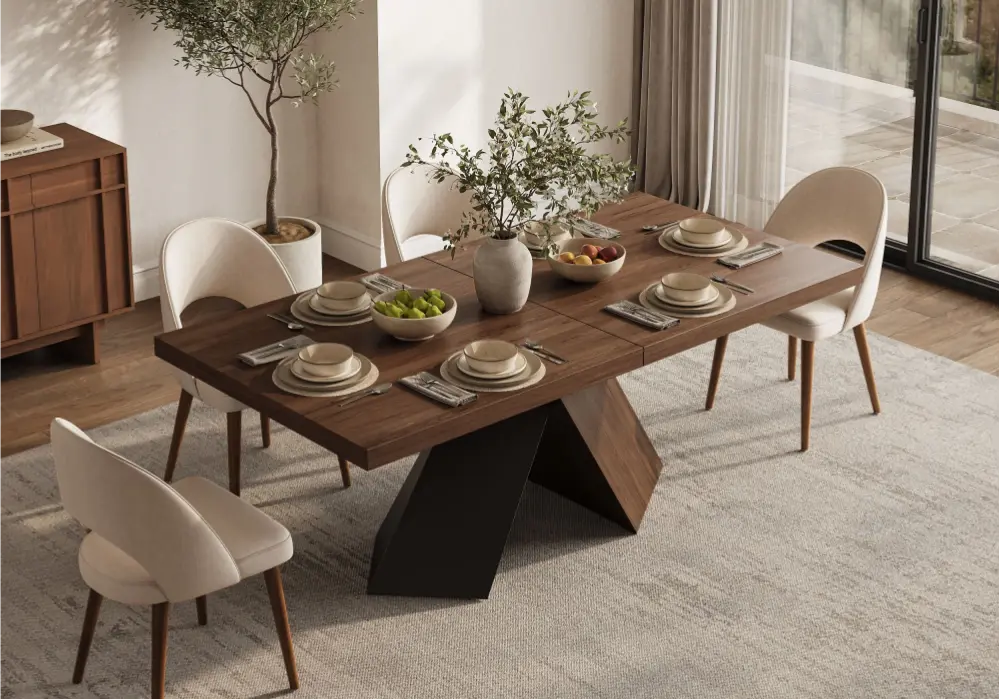
Style it at the size used most often. An arrangement spread across the fully extended surface may look crowded after the leaf is stored. Instead, create a central composition for daily life and add serving pieces when the table expands for guests.
The 71 Inch Rectangular Sintered Stone Dining Table has a glossy patterned surface and a distinctive metal pedestal. Let those features do much of the visual work. A quiet tray or one matte bowl can create focus without competing with the top and base.
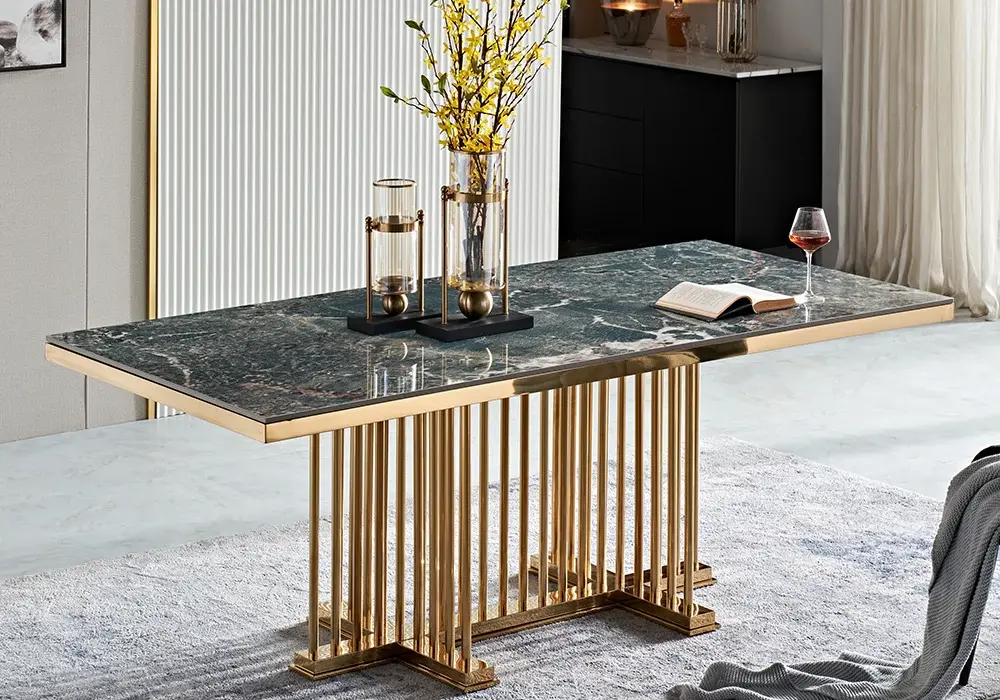
If you add flowers, consider a restrained color rather than several saturated tones. Check the arrangement from the room entrance, because the reflective surface can amplify its scale. Keep water contained and use finish appropriate protection beneath the vessel.
The Fluve Oval Extendable Dining Table in Washed White suits a softer composition. A low rounded bowl, a simple linen textile, or a small grouping of curved vessels can relate to its oval shape. Leave the ends clear so the silhouette remains visible.
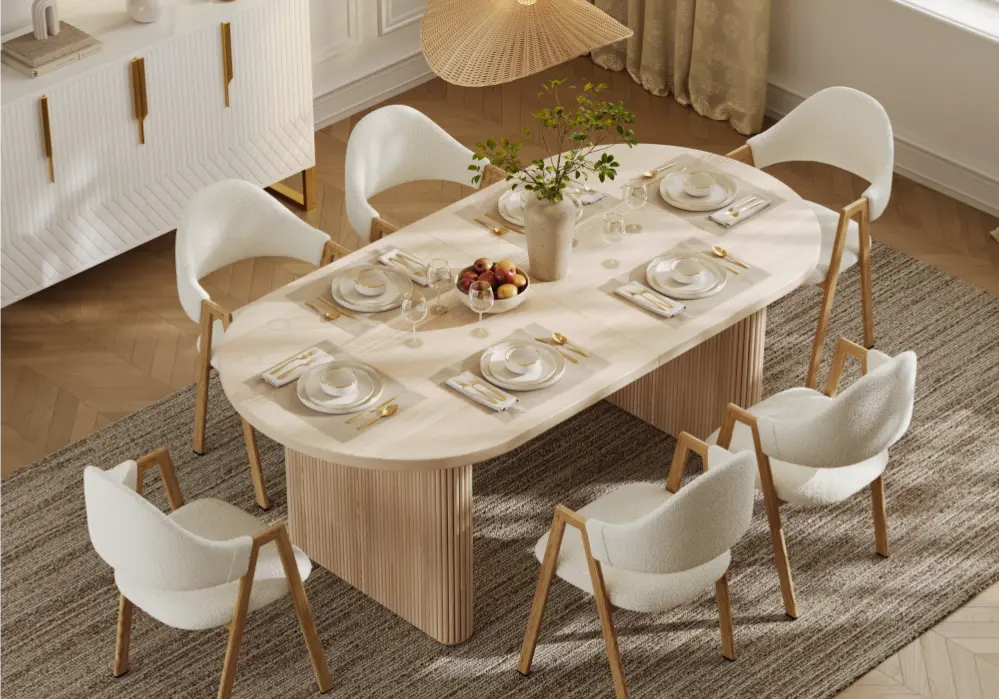
Its extension function should stay part of the styling plan. Avoid objects that straddle moving sections or require sliding across the finish. Lift the arrangement away before operating the mechanism, following the table's instructions.
Set height from sightlines and use
A tall vase can look attractive in an empty room, but it may block conversation once people sit down. For a display that stays during casual meals, choose a low arrangement that keeps faces visible across the table. Test it from a seated position rather than judging while standing.
If you prefer a tall branch arrangement between meals, make it easy to remove. Check that it does not interfere with a pendant or nearby passage. Keep heavy or unstable objects away from edges where they can be knocked.
Use variation in height only when it helps the composition. A low bowl beside a taller vessel can feel balanced without requiring a third object. Count the objects by their visual weight rather than following a fixed decorative formula.
Decide whether a runner helps
A runner can add softness and define a central zone, particularly on a long top. Choose one that suits the table's daily function and can be washed or maintained realistically. Check the textile care instructions and its compatibility with the tabletop finish.
You do not need a runner if the surface already has strong character. On a compact table, a textile can divide the top into smaller looking sections. Try the display without it first, then add it only if it improves the balance.
Avoid allowing fabric to catch on chairs or interfere with the extension mechanism. If children or pets can pull a hanging end, choose a shorter arrangement or another approach. Use flameless lighting for decorative ambiance where an open flame would create an unnecessary hazard.
Keep everyday settings restrained
Leaving a complete place setting out can create a formal display, but it also collects dust and makes the table less flexible. For most daily dining areas, storing plates and cutlery until needed is more practical. A central arrangement can make the room feel finished without staging a meal continuously.
If you like visible placemats, keep them clean and choose a number that suits the table's normal use. Do not let them become landing zones for mail, chargers, and unrelated items. Give those belongings another destination so the dining surface stays available.
For seasonal changes, replace one element rather than building a new display from scratch. Different foliage, a textile, or a bowl's contents can shift the mood. Store the previous objects instead of accumulating every season on the table at once.
Finish with a simple reset routine
At the end of the day, remove items that do not belong, wipe the surface according to its care instructions, and return the chosen display. Check under vessels periodically for moisture, dust, or abrasive debris. This small routine helps the table stay attractive without demanding elaborate styling.
Before buying accessories, test the idea with objects you already own. View the arrangement from the doorway and from a chair. If the table still feels open, the display is stable, and clearing it is easy, you have enough decoration.
Frequently Asked Questions
Should I leave plates on a dining table when it is not in use?
You can, but it is rarely necessary for an everyday table. A simpler central display is easier to clean and clear. Store plates until needed if the surface also serves work or family activities.
What is the easiest centerpiece to maintain?
A dry bowl, simple tray, or stable ceramic vessel is straightforward. Choose an object with a suitable underside and protect the finish as needed. Fresh flowers require more attention to water and cleaning.
How many objects should I place on the table?
Use the fewest needed for a clear composition. One substantial object can be enough; a small group can also work. Table size, visual weight, and the ease of clearing matter more than a fixed count.
Should the centerpiece stay during meals?
Only if it leaves enough serving space and does not block conversation. Test from a seated position. A display designed to move can be taller or more sculptural between meals.
How do I style an extendable dining table?
Style the everyday closed size and keep the objects easy to lift away. Remove them before operating the extension mechanism. Add serving pieces for gatherings instead of maintaining a display sized for the largest configuration.
How can I make the table look finished without buying decor?
Clear unrelated items, clean the surface, and choose one suitable bowl or vessel you already own. Repeat a color from the room and leave open space. Add another object only if the arrangement needs it.