

To pick patio furniture, start with how you plan to use your outdoor space, measure the available area, and choose materials suited to the conditions. Then compare seating comfort, layout flexibility, maintenance, storage, delivery, and total cost.
The best patio furniture is not necessarily the largest set or the one that looks best in a product photo. It is the arrangement that fits your space, supports your everyday routine, and creates a comfortable setting for the gatherings you actually host.
Whether you are furnishing a small patio, a spacious deck, or a backyard lounge area, this step-by-step guide will help you narrow your options and make a more confident choice.
Table of Contents
Step 1: Define How You Want to Use Your Patio
Before comparing furniture styles, decide what you want to do in your outdoor space. Dining, conversation, reading, sunbathing, and family lounging all call for different furniture arrangements.
Start by considering how many people usually use the patio, then account for occasional gatherings separately.
For two people who spend quiet evenings outdoors, a compact sofa with a coffee table may provide everything they need. A household that regularly hosts friends may benefit from a modular sectional with additional seating options. If outdoor meals are a priority, a dining table and comfortable chairs may be more useful than a large lounge arrangement.
Think about the way people sit, too. A chaise or deep lounge sofa is ideal for stretching out, while upright seats may work better for conversation. Ottomans offer flexibility because they can serve as footrests or additional seats, depending on the design.
Look beyond the number of pieces in a set. Coffee tables, ottomans, and other accessories can contribute to the total piece count without providing permanent seating.
The goal is to choose furniture around your routine, not to fill the patio with as many pieces as possible.
Step 2: Measure Your Usable Patio Space
Once you know what you need, measure the area where the furniture will go.
Draw a simple floor plan and mark doors, steps, drains, fixed planters, railings, and other features that affect placement. For an irregularly shaped patio, measure the usable sections rather than treating the entire area as available seating space.
Include the routes people regularly take between the house, garden, gate, pool, or other outdoor areas. Furniture should fit around these routes rather than obstruct them.
When comparing furniture dimensions, consider the complete arrangement. A sectional's return, chaise, projecting arms, and corner pieces can change its footprint considerably. Individual module dimensions may not represent the assembled configuration.
A simple way to test your layout is to mark the proposed furniture footprint on the ground with painter's tape. Place chairs where people would sit and imagine someone walking past an occupied seat. Open nearby doors and check that the main routes remain practical.
For a small patio, a loveseat, compact sectional, or modular seating arrangement may create a better balance between comfort and movement. In a larger space, separate seating zones can help distinguish conversation, dining, and relaxation areas.
Remember to measure the delivery route as well. Gates, stairways, narrow passages, and door openings can affect whether large furniture pieces can reach their intended location.
Step 3: Consider Sun, Rain, and Other Outdoor Conditions
Furniture that looks suitable in a showroom may have different maintenance needs when placed outside.
Consider the exact conditions where your furniture will sit:
- Direct sunlight: Prolonged sun exposure can affect finishes, fabrics, and cushion colors over time.
- Rain and moisture: Uncovered seating areas may require different materials and care routines from sheltered patios.
- Wind exposure: Strong winds can affect lightweight furniture, loose cushions, and accessories.
- Coastal air or poolside use: Salt spray, humidity, and pool chemicals may influence material and hardware maintenance.
- Seasonal weather: Heavy rain, snow, or long periods without use may require additional protection or storage.
Look at the furniture frame and cushions as separate components. A weather-resistant frame does not automatically mean the cushions can remain outdoors in every condition.
Consider where cushions and accessories will go when they need protection. An outdoor storage box, covered porch, or nearby indoor space can make regular care much easier.
A practical description of your intended location might be: "Uncovered patio, afternoon sun, occasional heavy rain, and indoor cushion storage near the kitchen."
Thinking about exposure this way helps you choose furniture that fits your actual environment rather than relying on broad descriptions such as outdoor or all-weather.
Step 4: Compare Frames, Finishes, and Cushions
Materials affect the appearance, maintenance, and everyday performance of outdoor furniture. Instead of evaluating a set by its overall look alone, consider what each component contributes.
Component | What to consider | Why it matters |
Frame | Material, finish, assembly, and care instructions | Influences maintenance needs, appearance, and construction |
Teak wood | Natural grain, weathering, and care requirements | Develops a distinctive appearance as it ages outdoors |
Aluminum | Frame construction, finish, and hardware | Offers a relatively lightweight alternative to heavier frame materials |
Woven sections | Exact material and outdoor suitability | Helps distinguish synthetic wicker from other woven materials |
Cushions | Fabric, filling, cleaning, and drying instructions | Affects comfort and the care routine after outdoor use |
Tables | Surface material, dimensions, and finish | Influences cleaning, appearance, and everyday functionality |
Covers | Compatibility, fit, and usage guidance | Helps protect furniture when the recommended care routine calls for it |
Understand Natural Wood and Synthetic Materials
Natural teak is valued for its grain and natural oils. Over time, exposed teak can develop a silver-gray appearance. Gloster's teak guidance explains this gradual weathering process.
Whether you prefer the natural aging process or want to maintain a different color appearance, follow the care instructions appropriate to your furniture's finish.
Aluminum frames offer another approach to outdoor construction. Their relatively low weight can make furniture easier to reposition, while their finish and hardware still require appropriate care.
Synthetic PE rattan can create a woven appearance without using natural rattan. Its actual outdoor performance depends on the material and construction rather than the woven look alone.
Understand Cushion Performance
Cushion performance depends on more than the outer fabric. The cover, insert, seams, and drying requirements all influence how cushions should be used and maintained.
For example, Sunbrella's fabric guidance distinguishes between water-resistant and waterproof fabric options. This illustrates why product-specific descriptions matter: a water-resistant cover should not automatically be treated as completely waterproof, and a fabric specification does not necessarily describe the entire assembled cushion.
Removable covers can make routine cleaning easier, but removability does not automatically mean machine washing is suitable. Use the cleaning instructions provided for the specific fabric and filling.
When comparing furniture, consider the frame, finish, cushions, and hardware as a complete system rather than assuming that one material determines the performance of the entire set.
Step 5: Choose Seating That Feels Comfortable
Comfort depends on how you sit and what you expect the furniture to do.
For conversation and casual meals, you may prefer a more upright seat with supportive back cushions. For reading or relaxing, a deeper seat and a more reclined position may be more appealing.
If possible, try the furniture before buying. Notice how the seat height feels, whether the back support suits you, and how easily you can get up from the seat. Consider the needs of everyone who regularly uses the patio.
When shopping online, compare seat depth, seat height, backrest design, and cushion construction with furniture you already find comfortable. Product photos can suggest a style, but they cannot establish how the furniture will feel in everyday use.
Think about table access, too. A large central coffee table may work well for a group, while a side table may be more convenient beside the end of a sectional.
Also consider flexibility. Adjustable seating can help the same arrangement work for conversation during the day and relaxed lounging in the evening. Modular furniture may offer similar versatility by allowing different seating configurations.
The right choice is the one that feels comfortable for your main activity, not simply the one with the most dramatic appearance.
Step 6: Choose a Patio Furniture Set for Your Lifestyle
Different patio furniture sets serve different needs, from flexible seating for outdoor gatherings to adjustable lounge arrangements and cozy evenings around a fire pit. These three options illustrate how materials, modular design, and additional features can shape the way you use your outdoor space.
For Flexible Seating and Outdoor Gatherings
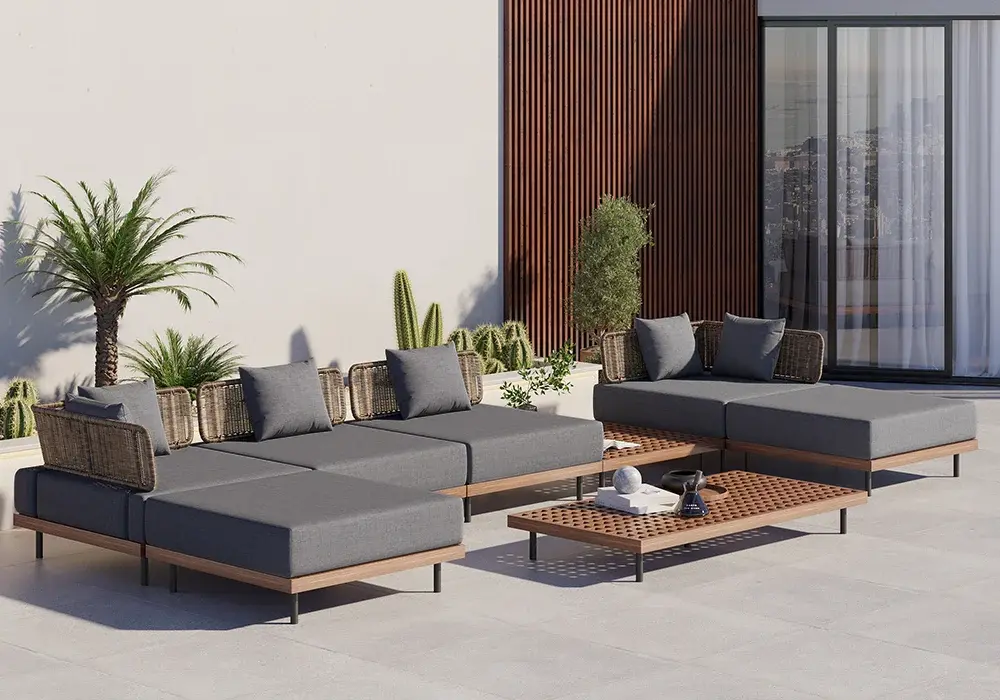
The 8 PiecesTeak & Aluminum & Rattan Outdoor Sectional Sofa Set with Coffee Table combines natural teak, a lightweight aluminum frame, and handwoven PE rattan backrests for a layered outdoor look. Designed to seat up to six people, it includes corner sofas, armless chairs, two ottomans, and a teak-top coffee table.
Its modular layout makes it suitable for patios where seating arrangements may change between everyday lounging and group gatherings. Gray cushions with removable covers add comfort, while their water-resistant, stain-resistant, and fade-resistant properties help simplify routine care.
The two ottomans can serve as extra seats or footrests, giving the arrangement additional flexibility. The combination of teak, aluminum, and woven backrests also creates a mix of natural textures and contemporary outdoor styling.
This type of set is particularly suited to a patio where relaxed conversation, flexible seating, and a central gathering area are the main priorities.
For Everyday Lounging with Adjustable Seating
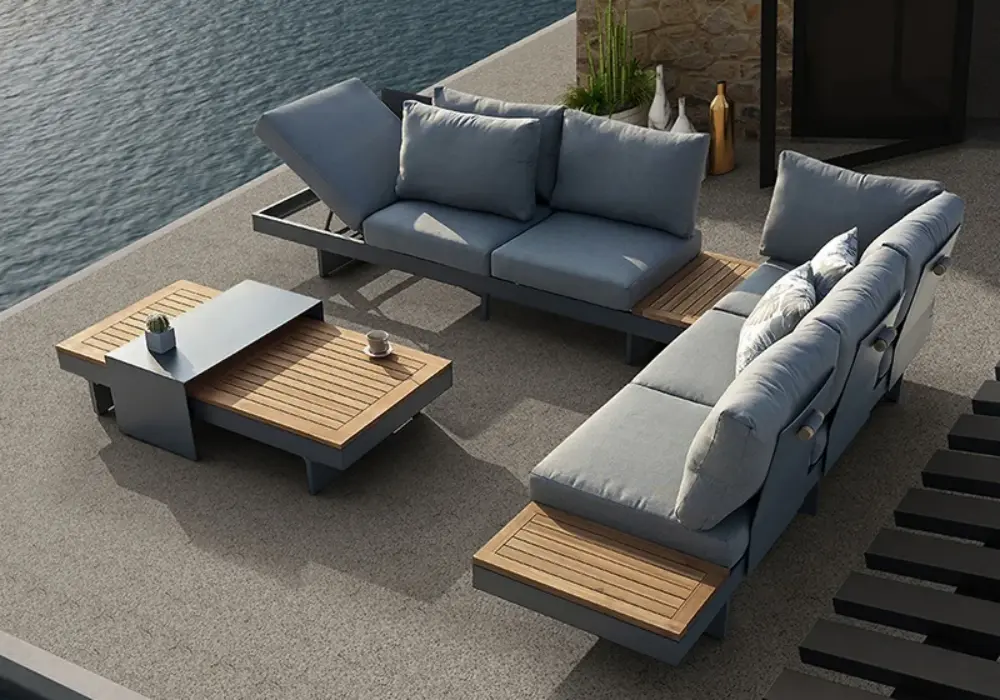
The Tevara 4-Piece Outdoor Teak & Aluminum Modular Sofa Set with Coffee Table for 6 in Gray offers a more adaptable approach to outdoor relaxation. With seating for up to six and a matching coffee table, its modular design supports either two three-seat sofas or an L-shaped arrangement.
FSC-certified teak adds natural warmth, while the weather-resistant aluminum frame provides structural support. Adjustable aluminum side frames allow the seating to shift from a conventional sofa position to a more relaxed lounging configuration.
Its removable cushion covers feature UV-resistant and water-resistant fabric, helping make routine care more manageable. The pet-friendly upholstery is designed to resist scratches and simplify cleaning, making the set a practical option for households that share their outdoor space with pets.
For extended exposure to heavy rain or snow, an outdoor furniture cover is recommended. This set suits patios where everyday lounging, adaptable seating positions, and a coordinated sofa-and-table arrangement are central to the design.
For Outdoor Evenings Around a Fire Pit
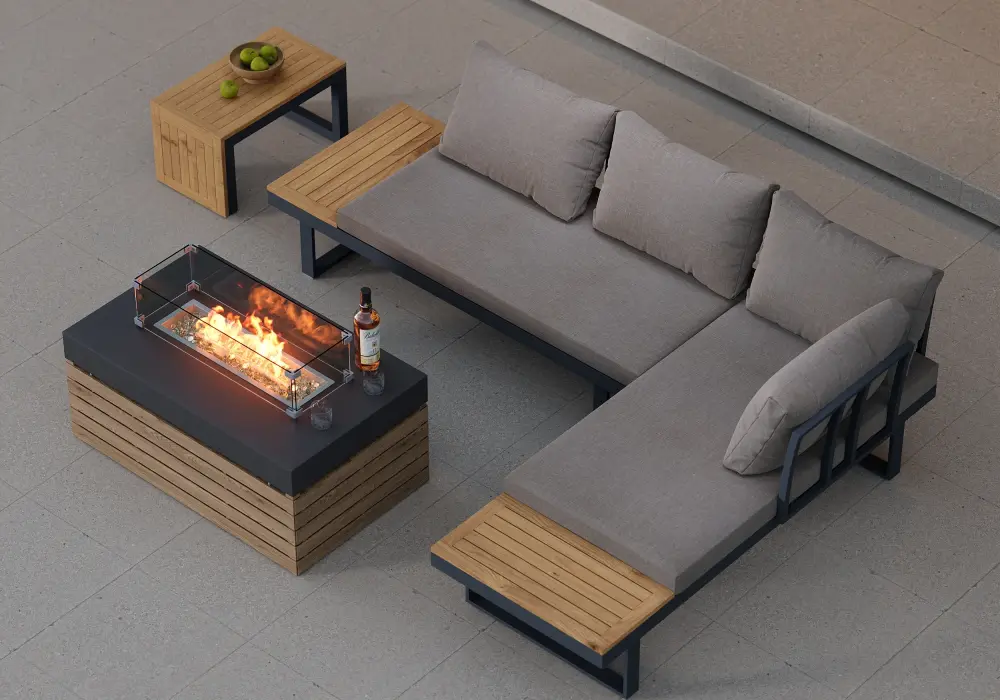
The 4-Pieces Modular L-Shaped Teak Sectional Outdoor Sofa Set with Fire Pit in Gray brings seating and a fire feature together in one outdoor arrangement. Its modular design supports L-shaped or straight layouts, while the teak surfaces and aluminum alloy frame combine natural wood tones with a durable metal structure.
The set features a CSA-certified propane fire pit with a maximum heat output of 50,000 BTU. Its included components are listed as a glass cover, left and right sofas, a rectangular coffee table, and a 1968 mm propane hose adapter.
The polyester cushions feature waterproof upholstery and stain- and spill-resistant properties, with high-elasticity foam padding for comfortable seating. The coffee table uses a thermal-transfer finish to create a wood-like appearance on aluminum.
A fire feature changes the way the entire patio is used, creating a natural focal point for evening gatherings. The propane tank connects outside the fire pit, and a tank cover is not included. Follow the manufacturer's operating instructions, placement requirements, and safety clearances when installing and using the fire feature.
Each of these sets offers a different approach to outdoor living: flexible group seating, adjustable everyday lounging, or a gathering space centered on a fire pit. The best fit depends on the atmosphere you want to create and how you plan to use your patio throughout the year.
Step 7: Plan for Cleaning, Cushion Care, and Storage
Outdoor furniture is easier to enjoy when its maintenance routine fits your lifestyle.
Before choosing a set, think about where cushions and loose accessories will go when they are not in use. Measure the available storage space and consider how easily you can move items between the patio and storage area.
Removable cushion covers can help simplify cleaning, but always follow the manufacturer's instructions for washing, spot treatment, and drying. Different fabrics and cushion fillings may require different care methods.
Consider how you will protect the assembled furniture when necessary. Covers should suit the furniture's configuration and intended use. For modular sets that change shape frequently, a practical cover arrangement may be especially useful.
Seasonal storage also deserves attention. Some furniture may be easier to move or store than other pieces, depending on its size, weight, and construction. Make sure the care routine is realistic for the people who will use the patio.
Natural wood may require occasional maintenance depending on the finish and the appearance you want to preserve. Metal frames, woven sections, and cushion fabrics also have their own care requirements.
A furniture set that looks attractive but demands more maintenance than you can comfortably provide may not be the best long-term choice.
Step 8: Compare Total Cost, Delivery, and Warranty
The purchase price is only one part of the cost of furnishing a patio.
Depending on the set, additional expenses may include outdoor covers, cushion storage, side tables, assembly, and delivery services. Compare the complete cost of creating your intended arrangement rather than comparing product prices alone.
Look at the current product contents list to understand what is included. Product photography may show styling accessories that are not part of the selected set, and similarly named configurations may differ.
Delivery is another practical consideration. Measure gates, stairways, passages, and doors along the route to the patio. Large furniture can sometimes fit the intended outdoor area but still be difficult to bring into position.
Finally, review the current warranty and return terms for your location. Pay attention to which components are covered, what maintenance is required, and whether replacement cushions or parts are available.
A purchase is easier to evaluate when you account for the furniture, accessories, delivery, maintenance, and potential replacement needs together.
Make the Final Choice With a Simple Comparison Sheet
Before deciding, summarize the main information for each shortlisted set.
Decision factor | What to record |
Main use | Dining, conversation, lounging, or entertaining |
Seating | Usual number of users and seating arrangement |
Layout | Complete footprint and available movement space |
Materials | Frame, finish, woven sections, and table surface |
Cushions | Fabric, comfort, cleaning, and drying requirements |
Storage | Space for cushions, accessories, and seasonal protection |
Delivery | Access route, assembly, and delivery arrangements |
Total cost | Furniture, accessories, delivery, and other required expenses |
After-sales support | Warranty terms and parts or cushion availability |
Once the essentials are clear, compare the options based on how well they support your everyday routine. A larger set is not necessarily better, and a feature-rich arrangement is not automatically more suitable for every patio.
Choose furniture that fits the available space, feels comfortable, and can be maintained without unnecessary effort. A good patio arrangement should be easy to enjoy on an ordinary day as well as when friends and family come together.
Frequently Asked Questions
What Should I Measure Before Buying Patio Furniture?
Measure the usable patio area, fixed obstacles, doors, and main access routes. Then account for the complete assembled furniture footprint, including chaises, projecting arms, tables, and ottomans. Check the delivery route and available storage space as well.
Is a Bigger Patio Set Always Better for Entertaining?
No. A larger set is useful only when it provides appropriate seating without making movement and table access difficult. Flexible extra seating may be more practical than permanently filling the patio with a larger arrangement.
Should I Choose a Matching Set or Separate Pieces?
A matching set can simplify coordination and provide a consistent look. Separate pieces offer more flexibility when working with an unusual layout or specific seating needs. Both approaches can work well when the furniture suits the space, intended use, and maintenance routine.
What Is the Most Common Patio Furniture Buying Mistake?
Choosing furniture based on its appearance before considering how the complete arrangement will work. Sectional returns, chaises, occupied chairs, and tables all use space. Measuring the patio and visualizing the assembled layout can help prevent an arrangement that feels cramped or inconvenient.
What Is the Best Material for Patio Furniture?
There is no single best material for every patio. Teak offers a natural wood appearance, aluminum provides a relatively lightweight frame option, and woven synthetic materials create a distinctive outdoor style. The right choice depends on the local conditions, desired appearance, maintenance preferences, and product construction.
How Can I Make Patio Furniture Last Longer?
Follow the care instructions for the exact frame, finish, cushions, and accessories. Clean materials appropriately, allow cushions to dry according to their instructions, and use covers or seasonal storage when recommended. Routine care should match both the product requirements and the conditions in which the furniture is used.