

A coffee table is more than a place to put your coffee cup. It can anchor the seating area, improve the flow of a room, provide valuable storage, and influence the overall look of your living space. The challenge is finding one that balances proportion, comfort, durability, function, and style.
The best coffee table should feel naturally connected to your sofa rather than looking too large, too small, or difficult to move around. Before you shop, measure your sofa, check the available walking space, and think about how you actually use your living room. Do you eat or work from the sofa? Need space for toys and remotes? Have young children or pets? Prefer a minimalist tabletop with little visual clutter?
This guide explains how to pick a coffee table with practical measurements, material comparisons, storage ideas, decorating tips, and realistic price ranges.
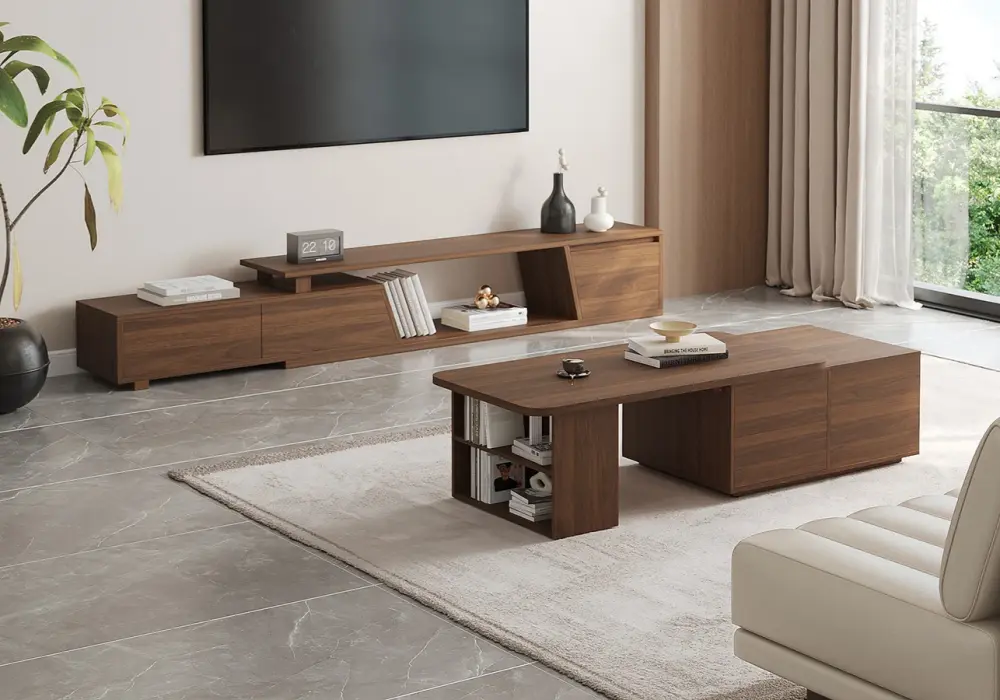
Table of Contents
How to Choose the Right Coffee Table Size and Clearance
Getting the dimensions right is the most important step because even a beautiful coffee table can feel awkward when its proportions are off.
Choose a Coffee Table Height That Works With Your Sofa
As a general rule, the coffee table should be about the same height as the sofa seat or slightly lower. A table that is much higher can feel visually heavy and make reaching for drinks uncomfortable, while a very low table may be inconvenient for everyday use.
Many standard sofas have a seat height of approximately 17–20 inches (432–508 mm). For most living rooms, a coffee table around 16–18 inches (406–457 mm) high is a comfortable starting point. Measure from the floor to the top of the seat cushion rather than relying on a standard sofa measurement.
Your lifestyle also matters. A lower table can work well in a relaxed lounge setting, while a slightly taller design may be useful if you regularly eat, write, or work from the sofa.
Match the Coffee Table Length to the Sofa
For a balanced appearance, the table length is usually around two-thirds to three-quarters of the sofa length.
For example, an 84-inch (2134 mm) sofa will generally pair well with a coffee table around 56–63 inches (1422–1600 mm) long. This leaves enough visual space on each side while keeping the table connected to the seating area.
Avoid choosing a coffee table that extends far beyond the sofa, especially in smaller rooms. Conversely, a very short table in front of a large sectional can look undersized and leave the center of the room feeling disconnected.
Leave Enough Space Around the Coffee Table
Clearance is just as important as the table's dimensions.
Aim for approximately 12–18 inches (305–457 mm) between the edge of the coffee table and the front of the sofa. This gives most people enough legroom while keeping the tabletop within easy reach.
For major walking paths, allow at least 30 inches (762 mm) of clearance whenever possible. In especially busy rooms, a little more space can make the layout noticeably easier to navigate.
Also consider television sightlines and leg position. Make sure the table is not so wide that it forces your knees into the underside, blocks a preferred footrest position, or becomes a visual obstacle between the sofa and TV.
Measurement | Practical guideline |
Typical sofa seat height | 17–20 inches (432–508 mm) |
Coffee table height | About equal to or slightly below seat height |
Coffee table length | 2/3–3/4 of sofa length |
Sofa-to-table clearance | 12–18 inches (305–457 mm) |
Main walkway | At least 30 inches (762 mm) |
Example for an 84-inch (2134 mm) sofa | About 56–63 inches (1422–1600 mm) table length |
How to Choose the Best Coffee Table Shape for Your Room
Once the size is right, choose a shape that complements both your furniture and your traffic flow. Rectangular, square, round, and nested tables can all work well, but each solves a different layout problem.
Rectangular Coffee Tables: Best for Standard Sofas
A rectangular coffee table is the easiest match for a traditional straight sofa. Its long shape follows the sofa's horizontal lines, making it especially effective in larger living rooms.
It also provides plenty of usable tabletop space for books, trays, drinks, and decorative objects. Choose one when the room has enough length and the furniture arrangement is fairly linear.
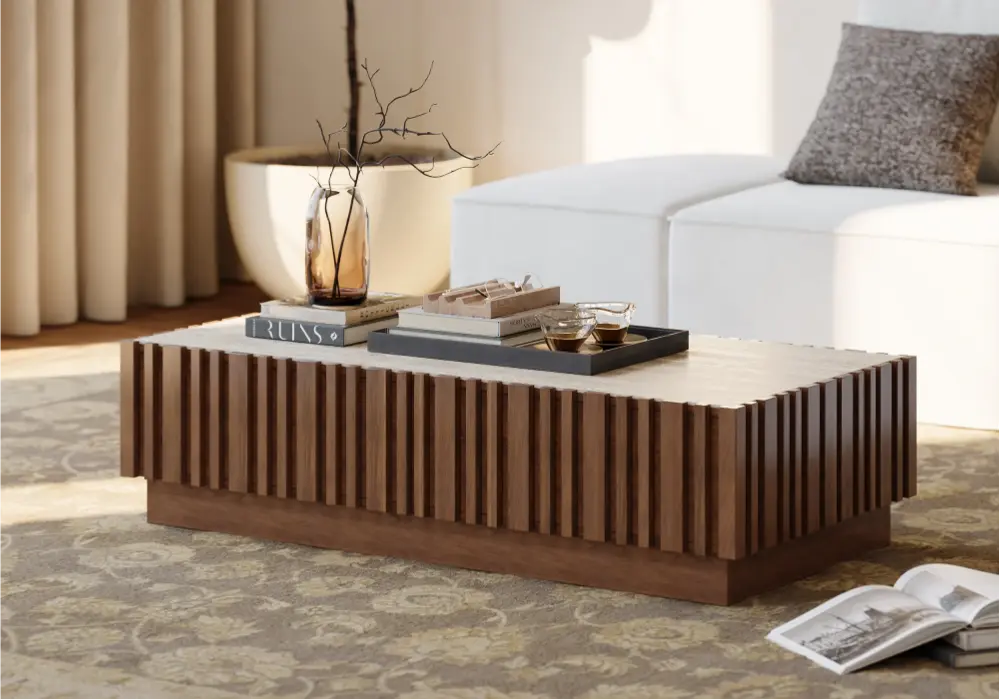
For a warm contemporary look, a piece such as the 47-inch (1194 mm) Ash Wood Slatted Coffee Table with Sintered Stone Top can work well in front of a standard sofa. Its rectangular silhouette keeps the arrangement visually balanced while combining the warmth of wood with a more streamlined stone-look surface.
Round Coffee Tables: Better for Smaller Rooms and Softer Traffic Flow
Round tables can be particularly useful in small living rooms, apartments, and compact seating areas because they eliminate sharp corners and can make movement around furniture feel more fluid.
They are also a smart option for homes with young children because there are no pointed corners to navigate around. A round table can soften a room that already contains many straight lines from sofas, cabinets, and shelving.
Square Coffee Tables: Ideal for Sectionals
A square coffee table can work beautifully with an L-shaped or U-shaped sectional because it fills the central seating zone evenly. The key is to avoid choosing one that leaves too little space for people to move between the table and the surrounding seats.
Use the same clearance principle: measure the distance on every accessible side rather than assuming a square table will automatically fit.
Nested and Modular Coffee Tables: Flexible Solutions for Small Spaces
Nested coffee tables are an often-overlooked solution. Two or three tables can slide together for a compact footprint and separate when you need extra surface area.
Modular designs offer a similar advantage. You can move individual pieces around the room for game night, entertaining, or cleaning. This flexibility can be especially valuable in apartments or multipurpose living rooms where furniture needs to adapt throughout the day.
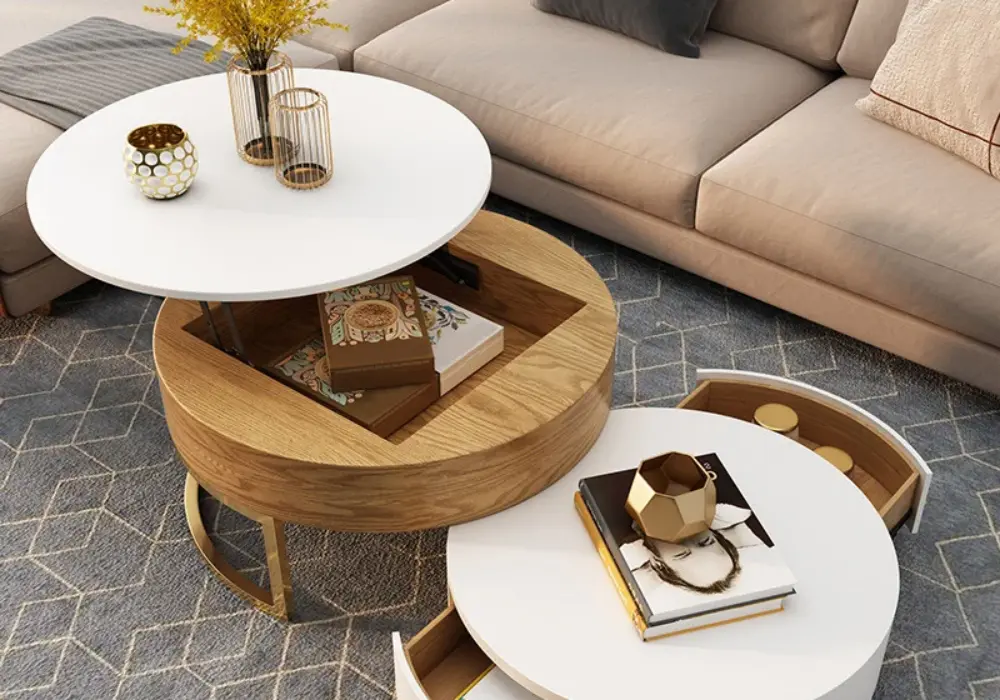
A practical example is the Modern Round Lift-Top Nesting Wood Coffee Tables with 2 Drawers, which combines a compact nested arrangement with added storage. This type of design can be particularly useful when you want flexible surfaces without committing to one oversized table.
Compare Coffee Table Materials for Durability, Maintenance, and Safety
Material affects much more than appearance. It determines how often you need to clean the table, how easily it shows scratches and stains, and whether it is practical for children and pets.
Material | Strengths | Maintenance | Best for |
Wood | Warm, versatile, repairable | Dust and wipe; treat spills quickly | Everyday family rooms |
Tempered glass | Light visual appearance, easy to see through | Regular glass cleaning | Small or modern rooms |
Metal | Durable, sleek, often scratch-resistant | Wipe with a soft cloth | Contemporary interiors |
Marble | High-end appearance, unique pattern | Prompt spill cleanup; use coasters | Design-focused rooms |
Rattan/Wicker | Lightweight, textured, relaxed | Dust regularly; avoid excess moisture | Coastal/boho styles |
Recycled/eco materials | Lower-impact options, varied finishes | Depends on material | Sustainability-focused homes |
Wood Coffee Tables
Wood remains one of the most practical choices for everyday use. Oak, walnut, maple, and other hardwoods offer different grain patterns, colors, and levels of hardness.
For maintenance, dust with a soft cloth and clean spills promptly. Avoid letting standing water remain on unfinished or poorly protected surfaces. A well-made wood table can also be refinished later, which may extend its useful life.
Glass and Metal Coffee Tables
Tempered glass gives a room a lighter, less visually bulky appearance. It can work especially well in smaller spaces because you can see the floor underneath it. However, fingerprints and smudges are more visible, so regular cleaning is part of the trade-off.
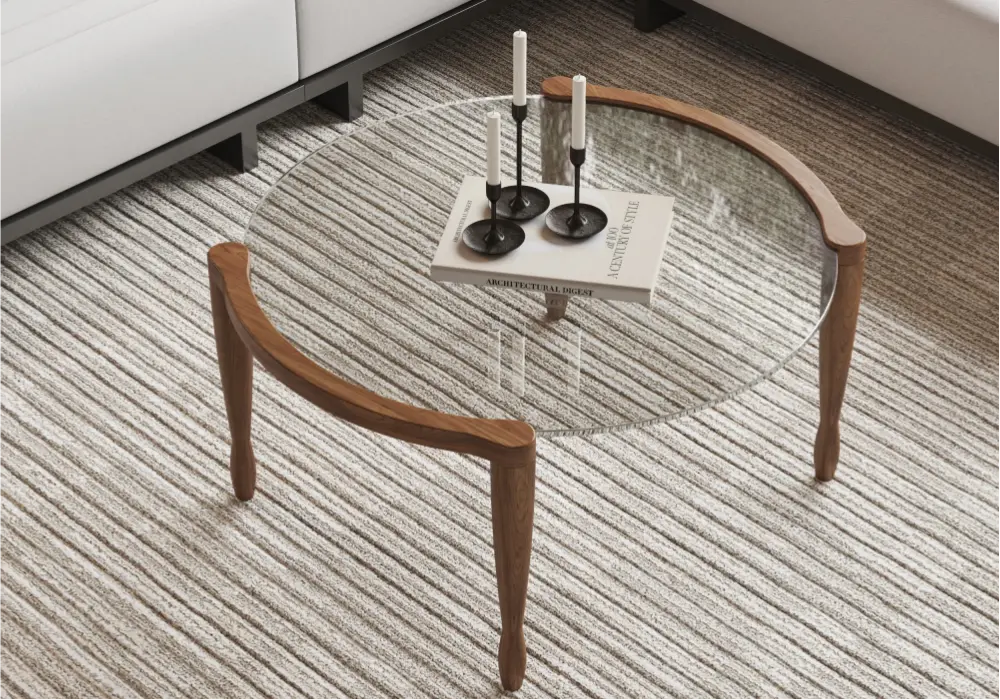
For a mid-century or contemporary setting, a Mid-Century Modern Glass Round Coffee Table with Wood Legs shows how a glass top can keep the center of a room visually open while wood legs add warmth and contrast.
Metal tables are generally easy to wipe down and suit contemporary, industrial, and minimalist rooms. Look for stable construction and protective finishes, especially if the table will be exposed to frequent contact with children or pets.
Marble, Rattan, and Sustainable Materials
Marble creates a sophisticated focal point, but it requires more thoughtful care. Wipe spills promptly, particularly acidic liquids, and use coasters or protective surfaces to reduce staining and etching.
Rattan and wicker add texture and a casual feel, but their woven surfaces can collect dust and may be less convenient for heavy everyday use.
For a more sustainable choice, consider responsibly sourced wood, reclaimed wood, recycled materials, or products made with low-VOC finishes and adhesives. The environmental impact depends on the entire manufacturing process, so look beyond the label and check what the product is actually made from.
How to Choose Coffee Table Storage and Decor Without Losing Tabletop Space
A coffee table can combine storage and style, but too much functionality can make the piece feel bulky. Start by deciding what the table needs to hold every day.
Lift-Top Coffee Tables for Work, Dining, and Hidden Storage
A lift-top coffee table raises part of the tabletop, making it easier to work on a laptop, eat, or write from the sofa. The space beneath can also provide hidden storage.
This design is particularly useful for small apartments or households where the living room serves multiple purposes. For example, the 47-inch (1194 mm) Fluted Lift-Top Walnut Coffee Table with 2 Drawers combines a lift-top format with drawers, making it a practical option for anyone who wants a work-friendly surface while keeping everyday items out of sight.
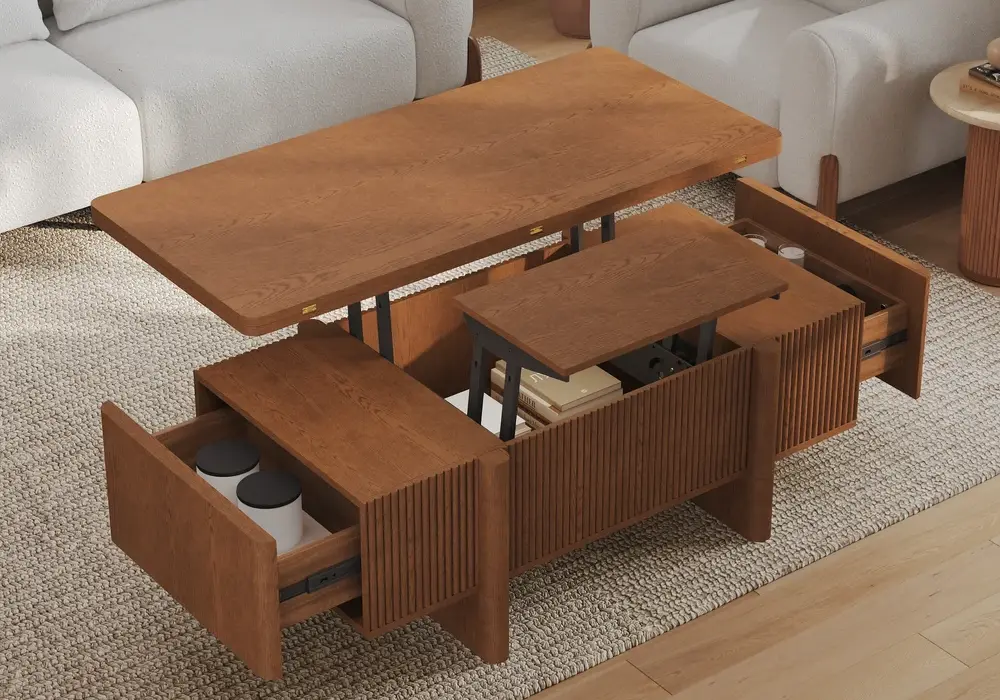
The trade-off is weight and visual complexity: lift mechanisms can make the table heavier than a simple fixed-top design.
Drawers and Shelves for Everyday Clutter
Drawers are useful for small objects such as remotes, chargers, game controllers, and notebooks. Open shelves are better for books, baskets, and decorative objects that you want to access quickly.
Before choosing storage, think about whether you prefer hidden organization or open display. Too many compartments can limit legroom and make the table look crowded.
Match the Coffee Table to Your Existing Decor
For a cohesive room, look at the undertones of your sofa, flooring, walls, and other wood furniture.
Warm wood tones generally work naturally with beige, cream, terracotta, and warm neutrals. Cooler walnut, black, or gray finishes can complement contemporary spaces with cooler colors.
You do not need every piece to match exactly. A better approach is to repeat one or two colors, materials, or design details across the room.
Style the Tabletop Without Overcrowding It
Once the table is selected, keep the tabletop useful. A simple arrangement can include a tray, a stack of books, a small plant, and one sculptural object.
Leave enough open space for everyday activities. A beautifully styled coffee table that cannot hold your laptop, drinks, or remote control is not doing its job.
How Much Should You Spend on a Coffee Table?
Budgeting is easier when you think in tiers rather than searching for the cheapest possible table.
Price tier | Typical range* | What to expect |
Budget | Under $200 | Engineered wood, simple metal, basic construction |
Mid-range | $200–$600 | Better finishes, stronger construction, more material choices |
Upper mid-range | $600–$1,200 | Solid wood, quality stone, refined hardware and finishes |
Premium | $1,200+ | Designer construction, specialty materials, handcrafted details |
*Prices vary significantly by retailer, size, material, and region.
What to Look for at Each Price Level
At the budget level, prioritize stability and dimensions over decorative details. A simple, well-constructed table is usually a better buy than a complicated design with weak hardware.
In the mid-range, you can often find stronger joinery, better finishes, more durable surfaces, and more refined storage mechanisms. This is a useful range for shoppers who want a balance between quality and cost.
At higher price points, you may be paying for solid hardwood, natural stone, custom dimensions, premium hardware, designer work, or handcrafted construction. These features can be worthwhile when the table is intended as a long-term piece.
Should You Buy a Vintage or Secondhand Coffee Table?
Absolutely—especially when you value solid construction and unique character.
When shopping secondhand, inspect the frame, joints, tabletop, drawers, and hardware. Solid wood construction is often a positive sign, but do not assume every older table is automatically better made.
Open every drawer several times to check whether it slides smoothly. Look for loose joints, major warping, water damage, odors, and structural repairs. Also estimate refinishing costs before deciding whether a bargain is actually a bargain.
Good places to look include local antique shops, estate sales, consignment stores, architectural salvage businesses, community marketplaces, and reputable vintage furniture sellers.
Final Thoughts: Pick a Coffee Table That Works for Real Life
The best coffee table is not simply the most attractive one in the showroom. It is the one that fits your sofa, respects your walking space, suits your household, and supports the way you actually use the room.
Start with measurements, then narrow your choices by shape, material, storage, style, and budget. A thoughtful decision at each step will help you find a table that looks right today and remains useful for years.
For your next step, measure your sofa and living room, write down your preferred material and budget, and compare tables against those numbers—not just against their photos. Share your sofa dimensions or room layout in the comments, and you can use the same framework to identify the most suitable coffee table size and shape.
FAQ: Frequently Asked Questions About Choosing a Coffee Table
What size coffee table should I buy for a standard 84-inch (2134 mm) sofa?
For an 84-inch (2134 mm) sofa, a coffee table around 56–63 inches (1422–1600 mm) long is a strong starting point because it represents roughly two-thirds to three-quarters of the sofa length. Also leave about 12–18 inches (305–457 mm) between the table and sofa for comfortable legroom.
Should a coffee table be higher or lower than the sofa seat?
A coffee table is typically the same height as the sofa seat or slightly lower. A difference of a few inches is usually comfortable, but always measure your actual sofa because cushion height varies considerably.
Is a round or rectangular coffee table better for a small living room?
A round coffee table is often better for a small room because the lack of sharp corners can improve circulation and make the layout feel less crowded. A rectangular table can still work when the room is long and narrow and has enough clearance.
What is the most durable coffee table material for homes with kids and pets?
For many households, a well-finished hardwood table is a practical choice because it offers durability and can often be repaired or refinished. Rounded edges can also improve safety. The best option depends on your specific cleaning and usage needs.
Are lift-top coffee tables worth it for storage and everyday use?
They can be worth it when you regularly work, eat, study, or use a laptop from the sofa. A lift-top adds useful hidden storage and can create a more ergonomic work surface. However, the mechanism may make the table heavier and more complex than a fixed-top model.
How much should I budget for a quality coffee table?
A reasonable starting point is $200–$600 for a good mid-range coffee table, although prices vary widely by material, size, brand, and construction. Spend more when you specifically want solid hardwood, natural stone, premium hardware, custom sizing, or handcrafted quality.
Where can I find good vintage or secondhand coffee tables?
Try antique shops, estate sales, consignment stores, salvage businesses, local marketplaces, and established vintage furniture dealers. Inspect the joints, tabletop, drawers, hardware, and overall stability, and include potential repair or refinishing costs in your budget.