

A reclining sofa with a tall seat height raises the surface you sit on in the upright position. Start by comparing the floor-to-cushion height with a seat you already find comfortable. Around 19 to 21 inches is a reasonable higher-seat band to investigate, depending on what you are comparing it with. In the power reclining collection, look for the dimension drawing as well as the height headline. Cushion compression, usable depth, and the position of your feet matter just as much as the stated height.
Table of Contents
Measure from the floor to the upright seat
Overall height tells you where the back or headrest ends. Seat height is the distance from the floor to the seating surface. For a fair shopping comparison, use the measurement shown for the upright seat. A number at the front of an extended footrest indicates a different point. Check which arrows touch the cushion and where they start on the drawing. A side view can clarify whether you are looking at seat height, arm height, or the furniture's maximum height with the headrest up.
At home, choose a sofa or chair you already use. With it unloaded and on its usual floor, measure vertically from the floor to the front part of the seat surface. Note if the cushion slopes down at the back. A softer cushion can sit higher when nobody is on it and feel lower once you sit. If you can sit in the model you are considering, compare the loaded feel directly. A photograph or retail height alone cannot tell you how far the foam yields.
Measure where you usually sit. An end recliner may feel different from an upright center section or a neighboring chair. If you plan to read, watch movies, and talk to guests in the same seat, try those positions separately. The upright position is worth trying even if you expect to spend most of your time reclined, since you will use it each time you sit down and get up.
Check the fit with your feet and back together
Sit with your back supported and see whether your feet rest naturally on the floor. Check whether the front edge presses into the back of your legs. If you have to slide far forward to get your feet down, you may be dealing with excessive depth, excessive height, or a combination. Try a seat with similar height and less depth to see which measurement changes the fit.
You can build a useful shortlist from two familiar seats. Measure one you find easy to get in and out of and another you find too low or too deep. Compare where your knees sit and where the cushion ends while you are upright. Keep the measurements as baselines. That gives you a much better reference than guessing how a particular height will feel from your standing height.
Footwear and flooring can change the test. If you mostly use the sofa barefoot, check that way. Try the same seat on the floor or rug you expect to use, and check that the rug sits flat around any moving parts. In a showroom, describe your usual posture to the salesperson and spend enough time upright to feel whether you are holding yourself forward or resting against the back.
Read seat depth, arm height, and support together
Seat depth is usually measured from the front edge of the seat toward the back cushion. Ask which reference points the maker uses. A deep seat can feel good in a reclined position and still be awkward upright for someone who needs back support close to the edge. At home, a loose lumbar pillow can help bring the support forward if the sofa's shape and moving parts allow it to stay clear during use.
Check the arm position while sitting upright. An arm may support your forearm for reading but feel too wide to reach comfortably if you sit in the middle of a broad seat. On an armless model, think about where you place your arms when using a tablet or moving between sitting and standing. Someone who uses the furniture differently may prefer a separate chair.
A headrest can change viewing or reading comfort when you recline. Move it independently if the design permits and check whether it meets your head where you expect. A seat that heightens your line of sight can still put a headrest too far forward or too low for your torso. Use your preferred reading and viewing positions to judge the whole seat.
Compare three published upright seat heights
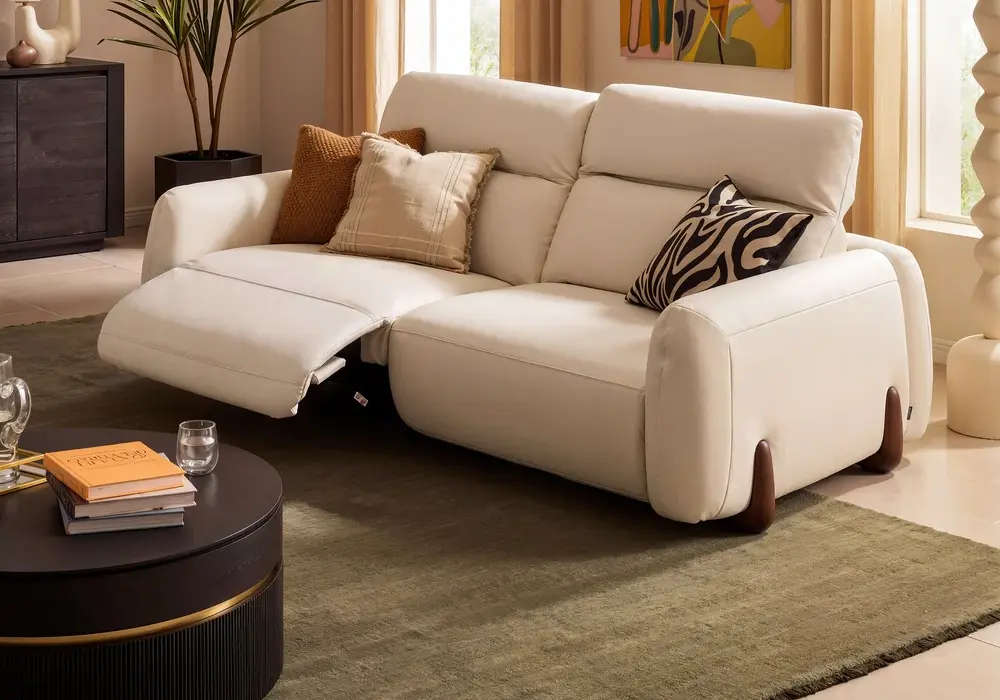
The 85-inch Glidio Curva leather power reclining sofa shows an upright seat height of about 17 inches and a seat depth of 26 inches on its dimension drawing. Both ends recline, and the headrests are manually adjustable. It is a useful lower-height reference if you are deciding whether you want a higher seat. Compare its depth with a sofa you already sit on and think about what happens when the cushion compresses.
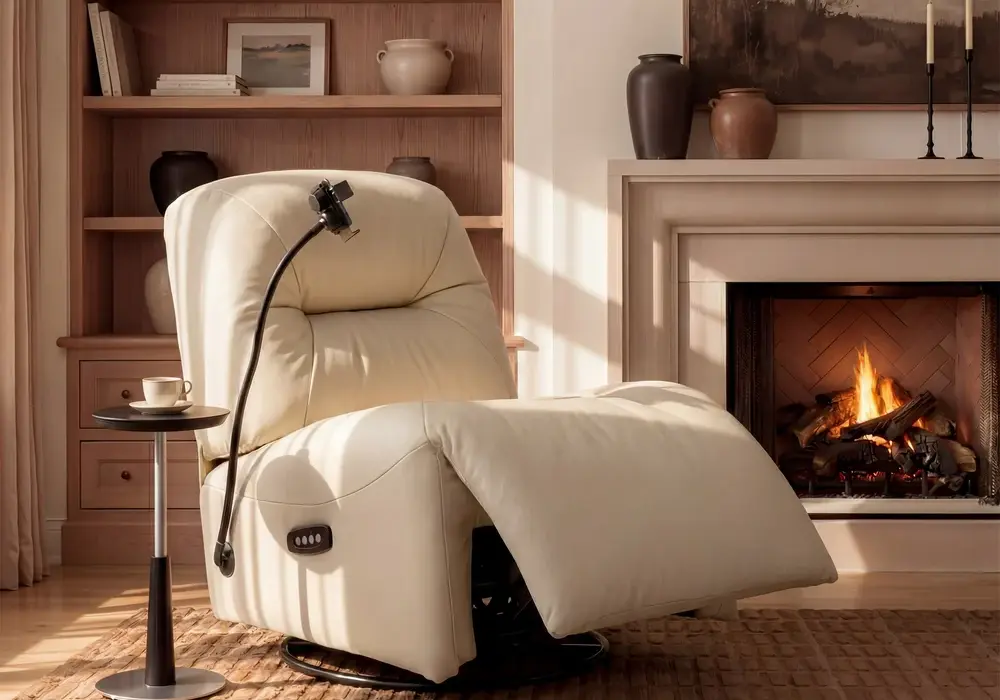
The Glidio dual-motor swivel reclining lounge chair shows approximately 18 inches of upright seat height and 24 inches of seat depth. It gives one person a seating option separate from the main sofa. If a pair of people have different height and depth preferences, check the chair's swivel and recline envelope and see whether one seating position would work better for the person who wants to sit closer to the floor or nearer the back.
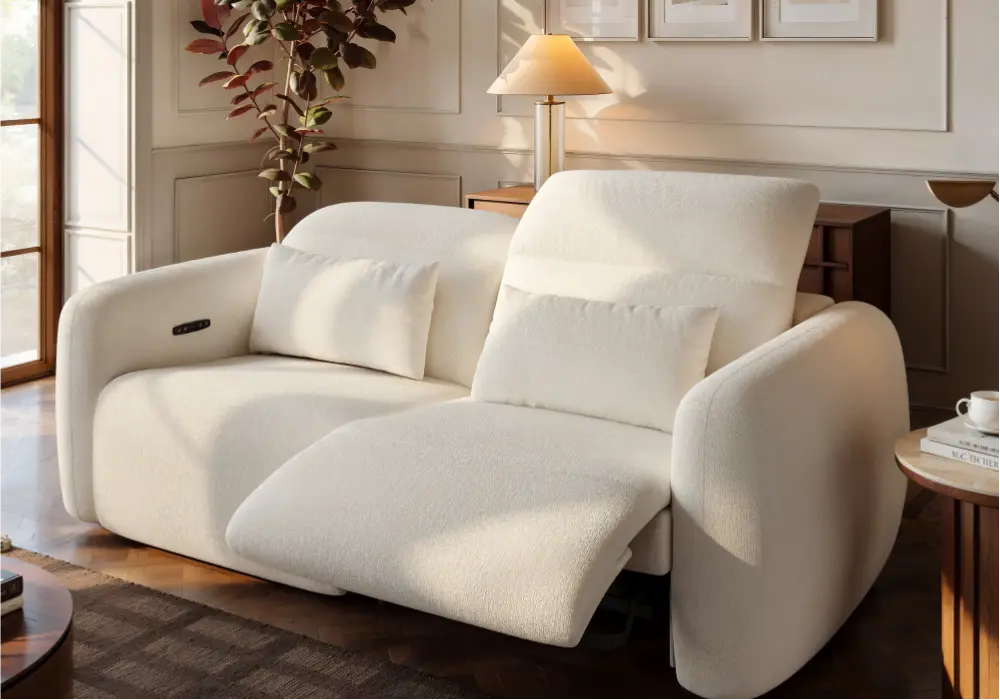
The 89-inch Softplume chenille zero-gravity power reclining sofa shows about 19 inches of upright seat height and 26 inches of seat depth. This is the highest listed upright measurement of these three examples. Check whether the deep cushion lets you sit upright with your feet comfortably placed, then compare the extended drawing with the room around your coffee table.
Match the higher seat to the layout
Look at the sofa open and closed. Measure from its intended position to the nearest table, wall, doorway, or ottoman. Trace the recliner through its full movement and confirm the manufacturer's front and rear clearances. A product with a space-saving recline design can still need room in front and a place for the cord. Test the layout when the adjoining seat is occupied and someone wants to walk behind or past the reclining position.
A favorite side table may suddenly feel low if you change the seating height and arm height. Hold a book or glass where you usually put it while sitting, keeping your back supported. Check that switches and device connections are within comfortable reach. If the sofa has a powered feature, follow its instructions for placement and power. Keep the intended operating area clear and confirm how to route its cord.
If you shop from home, put a steady chair you know in the proposed sofa location and use it to check sight lines. Compare your everyday seat heights with those on your shortlist. Ask for the dimension drawing for the precise upholstery and configuration when a collection has more than one model. The room plan and a good height measurement together tell you whether the sofa will be comfortable to use there.
Compare height numbers with the same rounding convention
Some drawings print both inches and centimeters and round them separately. A printed 19 inches and a metric value near 49 centimeters describe roughly the same height for this kind of furniture comparison. Use the units you measured at home and avoid choosing between two close models based on a fraction converted from a rounded label. Cushion shape, how far the seat slopes back, and where the drawing locates its arrow can matter more. If you need a precise target height, ask the retailer where the measurement was taken on the exact configuration, or sit in a floor model and measure to the nearest part of the seat you can compare consistently. Keep a note of whether you measured the cushion with or without someone sitting on it.
If household members prefer different heights, test whether one taller chair beside a lower sofa solves the problem. That also gives you a real-world comparison in the same room, where flooring and sight lines are consistent.
Frequently Asked Questions
Is a 19-inch seat tall for a reclining sofa?
It is higher than some lower lounge seats and a practical point to compare when you want an elevated feel. Cushion firmness and depth can make two seats with this measurement feel different. Test a similar seat in the upright position before using the number as a cutoff.
Does a tall back mean the seat is higher?
Back height describes an entirely different measurement. A model can have a low sitting surface and a tall or adjustable back. Compare the floor-to-seat measurement and the headrest position separately.
How do I measure a soft seat at home?
Measure the unloaded upper surface at the front, then note how far you sink when you sit. If another person helps with the comparison, keep the tape outside the seat mechanism. Use the furniture as it normally sits on the floor.
Can a deep, tall sofa work for shorter legs?
Possibly. Check whether you can maintain back contact with the seat while your feet reach the floor in the way you prefer. Shallower seating or approved loose back support can change the fit. Try sitting upright as well as reclining.
Does zero-gravity recline affect the advertised seat height?
Compare the upright seat height when choosing how high you want to sit. A zero-gravity mechanism changes the angle and position during recline. Review the open drawing separately for the space the legs and footrest need.