

Is your TV stand slowly turning into a pile of remote controls, tangled cables, random books, and dusty picture frames? With the right layout, proportions, and a few carefully chosen accessories, you can turn this functional piece of furniture into an organized focal point for your living room.
This guide takes you through a simple process: plan the layout → choose the right size → build color and texture → balance storage and display → finish with cable management and safety. You’ll also find practical measurements, styling formulas, budget ideas, and a checklist you can use before and after decorating.
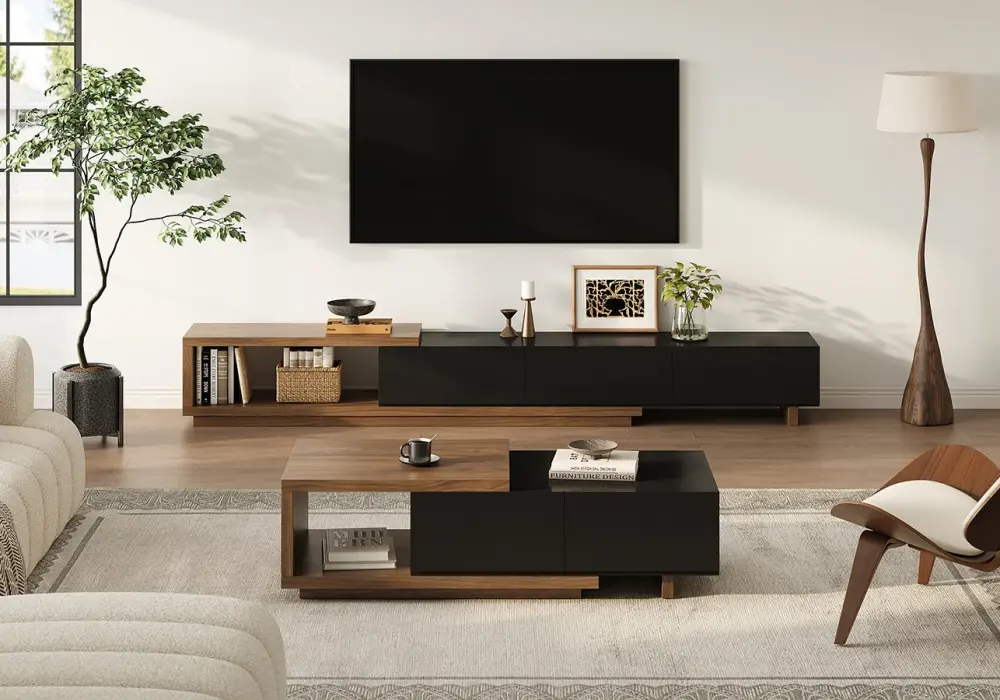
Quoint 1803-2540mm Extendable TV Stand of Homary
Table of Contents
The 5-Step Styling Plan: Layout, Balance & Proportion Before You Decorate
Before buying new decor, start with the layout. Even beautiful accessories can make a TV wall look messy if the television is too large for the cabinet, the stand is too narrow, or everything is concentrated on one side.
Follow these five steps to create a balanced setup.
Measure Before You Style
Measure your TV, TV stand, wall, and available floor space. Note the TV’s actual width rather than relying only on its screen-size label.
It is also helpful to measure the distance between the main seating area and the screen. You don’t need to create a perfectly calculated viewing setup, but the TV should feel appropriately sized for the room and comfortable to watch.
A simple trick is to use painter’s tape to mark the approximate TV and console dimensions on the wall or floor. This lets you judge proportions before moving heavy furniture.
Check the Proportions
As a quick decorating rule, the TV stand should be at least two-thirds the width of the TV. If space allows, a wider console usually creates a more balanced appearance and gives you room for decor, speakers, and storage.
For viewing height, a useful starting point is to place the center of the screen around 105–115 cm (42–46 in) from the floor. Adjust this based on your sofa height and preferred viewing position.
The goal is comfort rather than following one exact number.
Choose One Main Supporting Element
The TV is already the largest visual element, so avoid creating another oversized focal point directly beside it.
Instead, choose one main supporting object, such as:
- A tall plant
- A table lamp
- A large framed artwork
- A sculptural object
- A vertical stack of books
Then use smaller accessories around it.
Create Visual Balance
Balance doesn't require matching objects on both sides.
For example, a tall plant on the left can be balanced by a lamp, books, and a small decorative object on the right.
A simple formula is:
Tall + medium + low = balanced
Try to vary the height of objects rather than placing several items of identical height in a straight line.
Step Back and Edit
Once everything is arranged, step several feet away and look at the entire TV wall.
Ask yourself:
- Is the TV still the focal point?
- Does one side feel heavier?
- Are there too many small objects?
- Are cables visible?
- Does the color palette work with the rest of the room?
- Is there enough empty space?
Then remove one or two things if necessary.
Good TV stand styling is often more about editing than adding.
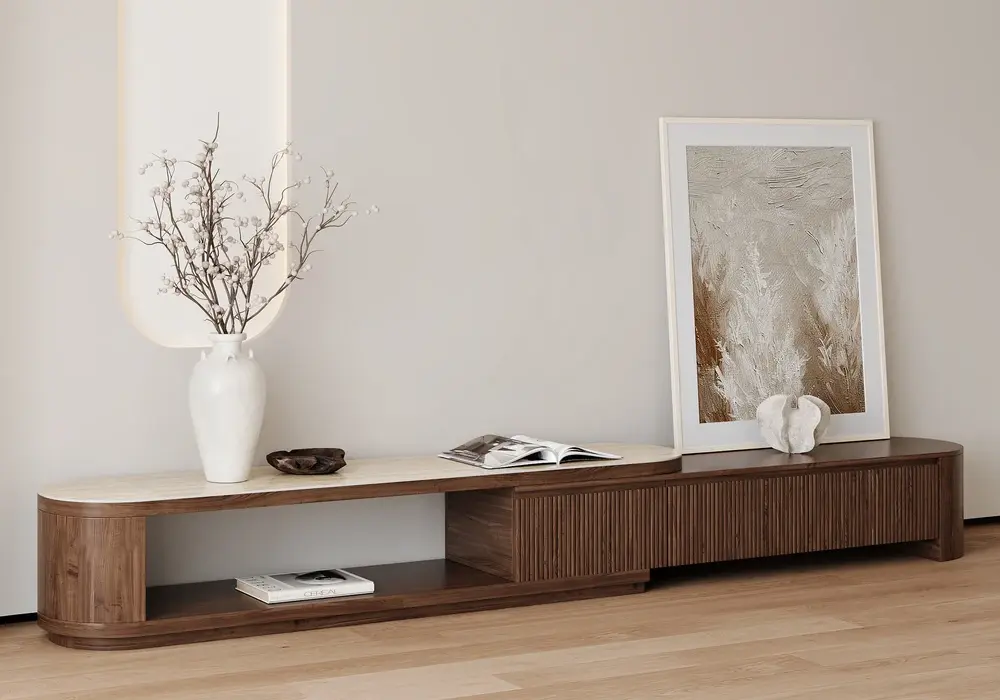
Velar 1803-2896mm Extendable Fluted TV Stand of Homary
Quick Styling Rules
Element | Recommended Starting Point |
TV stand width | At least ⅔ of TV width |
Screen center height | 105–115 cm / 1067–1168 mm |
Main decor colors | Neutral base + 1–2 accent colors |
Object grouping | 3–5 related pieces |
Height variation | Tall + medium + low |
Open space | Leave visible breathing room |
For small apartments, prioritize closed storage and avoid filling the entire tabletop. In an open-plan room, a longer console can help define the TV zone without adding a visual barrier. If the TV shares a wall with a fireplace, keep the console and accessories relatively simple so the two focal points don't compete.
TV Stand Sizing Guide: Matching Width, Height & Proportion to Your Screen
Choosing the right TV stand is one of the most important steps because the wrong proportions can make the entire TV wall feel unbalanced.
Focus on width, height, and depth.
TV Stand Width
A console that is wider than the television generally looks more intentional and gives you space for accessories and electronics.
Here is a practical reference:
TV Size | Approx. TV Width* | Minimum Proportional Stand Width | Comfortable Styling Range |
1092 mm | 97 cm / 965 mm | 66 cm / 660 mm | 122–152 cm / 1219–1524 mm |
1397 mm | 122 cm / 1219 mm | 81 cm / 813 mm | 152–183 cm / 1524–1829 mm |
1651 mm | 145 cm / 1448 mm | 97 cm / 965 mm | 165–203 cm / 1651–2032 mm |
1905 mm | 165 cm / 1651 mm | 109 cm / 1092 mm | 183–213 cm / 1829–2134 mm |
*Approximate dimensions for a typical 16:9 TV. Always check your specific TV model before purchasing furniture.
The minimum width is a proportion guideline, not necessarily the ideal furniture size. If your room allows, a wider console often provides a more balanced visual base.
How High Should a TV Stand Be?
If your TV sits directly on the cabinet, consider the combined height of the stand and TV.
A simple calculation is:
Stand height + half the TV height ≈ screen center height
For example, if the TV is approximately 70 cm (699 mm) tall and you want the screen center around 110 cm (1092 mm) from the floor:
110 − 35 = 75 cm
A cabinet around 70–75 cm high could therefore be a reasonable starting point.
For a wall-mounted TV above a low console, you have more flexibility. A low cabinet can create a cleaner, more contemporary look while the TV is positioned separately.
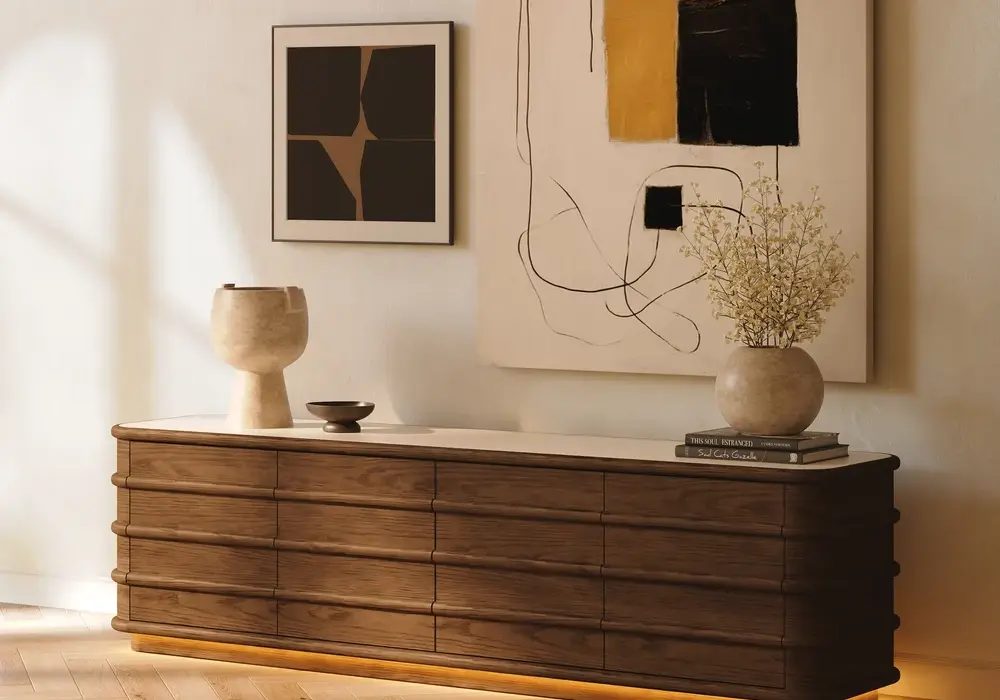
2032 mm Ash Wood Walnut TV Stand of Homary
Avoid Common Proportion Problems
Large TV + narrow console: The screen can visually overpower the furniture.
Small TV + extremely long console: This can work in minimalist interiors, but too much empty surface may make the TV appear undersized.
Tall console + large TV: The combined height can make the screen uncomfortable to watch.
Deep console + small room: Even if the width works, excessive depth can reduce walking space.
Before buying, measure the wall, floor area, outlets, TV dimensions, viewing distance, and any soundbar or speaker equipment.
Color, Texture & Seasonal Styling: How to Layer Decor That Doesn't Look Cluttered
Once your furniture is the right size, decorating becomes much easier. The key is to create visual interest without filling every available surface.
Start With a Simple Color Palette
A reliable formula is:
Neutral base + one or two accent colors
For example:
- Warm white + wood + olive green
- Beige + black + muted blue
- Gray + natural wood + terracotta
- Cream + walnut + soft green
Use the neutral colors for most of the room and repeat your accent colors in small details such as books, artwork, ceramics, cushions, or plants.
Mix Textures and Materials
Instead of buying objects that all have the same finish, combine contrasting materials.
For example:
Wood + metal + textile
You could pair a wooden console with a metal lamp and a woven basket.
Other combinations include ceramic, glass, natural fiber, stone, and fabric. A mixture of textures can make a small collection of accessories feel more layered without requiring more objects.
Use the 3–2–1 Formula
For open areas of the console, try grouping accessories rather than spreading individual objects evenly across the entire surface.
A simple formula is:
- 3 small related items
- 2 medium objects
- 1 taller piece
For example, combine several books with a small ceramic object, then place a lamp or plant nearby.
Vary the heights and leave gaps between groups.
Style for the Seasons
You don't need to completely redesign the TV stand every season.
Instead, keep the main furniture and larger accessories consistent, then replace a few small accents.
Spring: greenery, botanical prints, lighter ceramics
Summer: woven textures, linen, lighter neutral accessories
Autumn: warm-toned books, textured objects, deeper accent colors
Winter/holidays: seasonal greenery, small decorative pieces, subtle metallic accents
Store seasonal accessories together in a labeled container so changing the look takes only a few minutes.
Add Lighting Without Creating Glare
Lighting can make a TV wall feel warmer, especially in the evening.
Good options include:
- Soft backlighting behind the TV
- A dimmable table lamp beside the console
- A low-intensity LED strip behind the TV or cabinet
Avoid placing a bright light directly in the viewer's line of sight. More importantly, check the screen from the sofa after installing the light. If you can see a strong reflection on the screen, move or dim the light.
Storage vs. Display: Organizing Open Shelves, Drawers & Hidden Compartments
A well-decorated TV stand should hide everyday clutter while keeping frequently used items easy to access.
Divide storage into three simple categories.
Keep Everyday Items Accessible
Store remote controls, game controllers, headphones, and frequently used cables in a small tray or box.
This prevents small items from spreading across the entire tabletop.
Organize Electronics and Accessories
Use drawers or baskets for chargers, spare cables, batteries, gaming accessories, and other small electronics.
Closed storage is especially useful for objects that don't contribute to the room's visual style.
Hide Seasonal and Rarely Used Items
Reserve deeper drawers or closed compartments for seasonal decorations, backup cables, and equipment that you don't use regularly.
For open shelving, use attractive baskets or boxes to hide visual clutter while keeping the shelves easy to access.
Style Open Shelves Without Clutter
Use the 3–2–1 method, vary object heights, and leave intentional empty space.
For example:
Top shelf: books + ceramic object + small plant Middle shelf: basket + framed photo Bottom shelf: larger basket + one decorative item
Avoid placing too many tiny objects together. Small collections tend to look more intentional when grouped on a tray.
Clean the cabinet and shelves regularly, and follow the furniture manufacturer's care instructions to avoid damaging painted, coated, wood, or laminate surfaces.
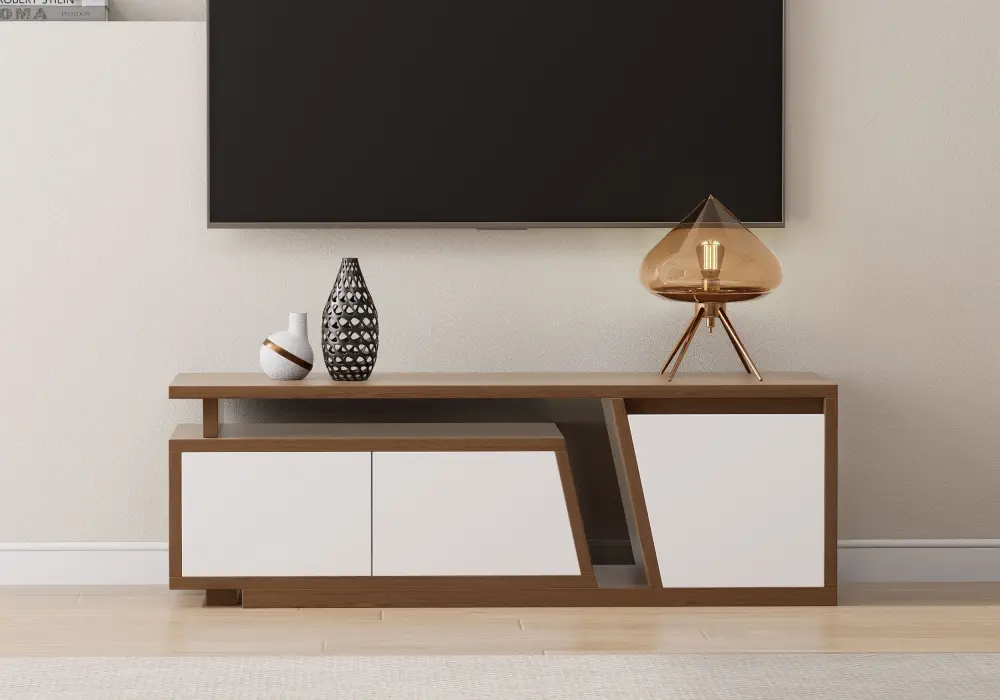
Fero 1194-1803mm Extendable TV Stand of Homary
Cable Management & Electronics Safety: Keeping Your Setup Clean and Child-Safe
A stylish TV stand can still look messy if power cords and HDMI cables are visible. Cable management should therefore be part of the decorating process, not an afterthought.
Create Dedicated Cable Routes
Useful accessories include:
- Cable sleeves
- Reusable cable ties
- Adhesive cable clips
- Cable labels
- Cable-management boxes
- Cable grommets for suitable furniture
Group cables according to their function rather than tying every cable into one large bundle.
For example:
TV: power + HDMI
Gaming: console + HDMI + controller charging
Network: router or streaming equipment
Label both ends of important cables so they are easy to identify later.
Hide the Power Strip
A lidded cable-management box can conceal excess cable length and a power strip while making the area look cleaner.
However, don't place heat-producing electrical equipment in a completely enclosed space if it requires ventilation. Follow the manufacturer's instructions for safe operating conditions.
Plan Before Wall Mounting
For a wall-mounted TV or floating console, plan cable routes before installation.
Check:
- Outlet locations
- HDMI and network cable paths
- Wall construction
- Possible wiring or plumbing inside the wall
- Console mounting points
- Ventilation requirements
Never drill blindly into a wall.
Child- and Pet-Friendly Safety
If you have children or pets, safety should take priority over appearance.
Consider using suitable:
- TV anti-tip or anchoring straps
- Furniture anchoring hardware
- Outlet covers where appropriate
- Cord-management systems
- Secure storage for loose objects
Make sure the TV and furniture are secured according to the manufacturer's instructions and that cords do not form accessible loops.
Frequently Asked Questions
How do I choose the right height for a TV stand to ensure comfortable viewing?
Start with the screen center approximately 105–115 cm (1067–1168 mm) from the floor, then adjust based on your seating height and personal comfort. The screen should not require you to consistently tilt your head upward or downward.
What size TV stand should I buy for a 55-inch or 65-inch TV?
A typical 55-inch TV is approximately 122 cm (1219 mm) wide, while a 65-inch TV is approximately 145 cm (1448 mm) wide. As a basic proportion rule, the console should be at least two-thirds as wide as the TV. If space permits, a 152–183 cm (1524–1829 mm) console works well for many 55-inch setups, while 165–203 cm (1651–2032 mm) can provide a balanced base for a 65-inch TV.
Always check the actual dimensions of your television.
What are the most effective ways to hide cables and power strips behind a TV stand?
Use cable sleeves, reusable ties, clips, labels, and a lidded cable-management box. If appropriate for the furniture, a cable grommet or routing hole can keep cords from hanging over the edge.
Keep electrical equipment ventilated and accessible for maintenance.
How can I style open shelves on a TV console without creating clutter?
Group objects instead of filling every shelf. The 3–2–1 method is a useful starting point: combine several small objects with medium and taller pieces, vary their heights, and leave intentional empty space.
What budget-friendly materials and DIY projects can refresh an old TV stand?
Repainting the cabinet, replacing handles, and adding cable-management hardware are three relatively simple upgrades. Sandpaper, suitable furniture paint, new hardware, and cable grommets can refresh an existing console without replacing the entire piece.
How do I childproof a TV stand and secure a TV to prevent tipping?
Use suitable TV anchoring and furniture anti-tip hardware, following the manufacturer's instructions and the requirements of your wall and furniture construction. Keep cords organized and out of reach, and avoid placing heavy or easily pulled objects near the edge of shelves.
Which lighting options work best around a TV to enhance ambiance without causing screen glare?
Soft backlighting, dimmable LED strips, and carefully positioned table lamps are good choices. Check the screen from your normal seating position after installation and reposition or dim any light that creates distracting reflections.