

The best way to decorate a kitchen island is to keep its main job visible. Start with one low, movable focal point, leave the busiest prep and seating zones clear, and repeat two or three materials or colors already used in the room. A fruit bowl, compact vase, tray, or pair of everyday objects is usually enough. If you must move several decorations every time you cook, the island is overstyled.
That answer sounds simple because it is. A kitchen island is not a mantel or display shelf; it is a work surface that may also serve as a dining table, storage cabinet, homework station, or serving area. The decoration should make those uses feel more intentional rather than compete with them.
Table of Contents
Start With the Island's Daily Job
Before buying a centerpiece, write down the island's two most frequent uses. A prep-first island needs an open cutting and mixing area. A seating-first island needs clear place settings and unobstructed sightlines. An island with a cooktop or sink needs extra attention to heat, splashes, and cleaning. A mobile or extendable island needs decor that can be lifted with one hand before the surface moves.
Divide the top into three practical zones:
1. Active zone: the area used for chopping, mixing, cooking, washing, or serving. Keep it clear.
2. Reach zone: the area used for stools, outlets, napkins, salt and pepper, or frequently handled items. Use only compact objects here.
3. Display zone: the least interrupted corner or center section. This is where one decorative grouping can live.
This function-first approach matches the guidance in Architectural Digest's kitchen island overview, which emphasizes preserving utility and using restrained accents instead of covering the work surface.
Use a Simple One-Three-Five Styling Rule
One substantial object often looks calmer than several tiny ones. Try a wide bowl, a low planter, or a sculptural pitcher when the island is narrow. On a larger top, group three related objects on a tray: for example, a vase, a small bowl, and a candle that is used only when the kitchen is not active. Five objects can work on a very long island, but treat them as one composition rather than spreading them edge to edge.
Vary height without building a visual wall. A tall branch arrangement may suit the end of an island, while the center should usually remain low enough for people to see across it. Keep breakable pieces away from stool edges and circulation paths. If children use the island, favor stable, washable objects with rounded profiles.
Choose a Tray When You Need Fast Resetting
A tray converts several loose objects into one movable unit. It is especially useful when the same island shifts between breakfast, remote work, meal prep, and entertaining. Pick a tray that occupies only a small fraction of the top and can be lifted without removing everything on it. Avoid deep trays that hide spills or collect unopened mail.
Let Everyday Items Do the Decorating
The most convincing island decor often earns its place. A fruit bowl, ceramic utensil crock, wooden board, tea canister, or attractive salt mill adds texture while remaining useful. Edit the selection to items handled several times a week. Packaging, appliance cords, paper piles, and bulk food storage usually create visual noise rather than warmth.
Match Scale to the Island
The size of the decoration should relate to the uninterrupted part of the countertop, not the island's total advertised length. An extendable dining section, leaf, or pull-out table needs its own clearance. Measure the surface in its everyday position and again when fully extended. Then mark the intended display footprint with painter's tape.
For a compact island, aim for a centerpiece that leaves generous room on every working side. On a long island, do not feel obligated to fill the whole surface. A single grouping at one end can balance pendant lights and stools while preserving a broad center zone for serving. When a sink or cooktop occupies the middle, place decor away from splash, steam, and hot-pan areas.
Build Color and Material Continuity
Look at the finishes already present: cabinet color, countertop pattern, floor tone, hardware metal, stools, and lighting. Select two or three cues to repeat. A warm wood bowl can connect oak stools to a white counter. A black tray can echo dark cabinet pulls. A cream vase can soften strong veining without introducing another competing color.
Contrast is useful when it has a reason. If the room is mostly pale and smooth, one dark or textured object can create a focal point. If the countertop already has dramatic pattern, quieter decor usually works better. Natural materials such as wood, ceramic, stone, linen, and greenery tend to layer easily because their surfaces are varied but familiar.
Decorate for Seating, Lighting, and Sightlines
Counter stools contribute more visual weight than small countertop objects. Choose stool height, back profile, and spacing before finalizing decor. High-back stools and large pendants already make a strong statement, so the island top may need only one understated piece. Backless stools and minimal lights leave more room for a taller arrangement.
Check the view from the kitchen entrance, the adjacent living area, and each seat. People should be able to talk across the island without leaning around flowers. Pendant light pools should reach the worktop rather than illuminate the top of a tall arrangement. Keep decorative branches away from open flames and appliance heat.
Style for Normal Days and Hosting Days
Daily decor should survive wiping, cooking, and quick meals. Hosting decor can be more layered because serving ware temporarily becomes part of the arrangement. Instead of buying separate decorative objects, build the event setting from useful pieces: a cake stand, chilled drink container, linen napkins, serving boards, or a bowl of citrus.
Create a storage destination for the daily centerpiece before guests arrive. A cabinet shelf or pantry spot prevents the tray from becoming floor clutter. After the event, restore the island to its everyday configuration. A repeatable reset is more valuable than a photograph-perfect display that lasts one evening.
Product Examples That Support Different Styling Plans
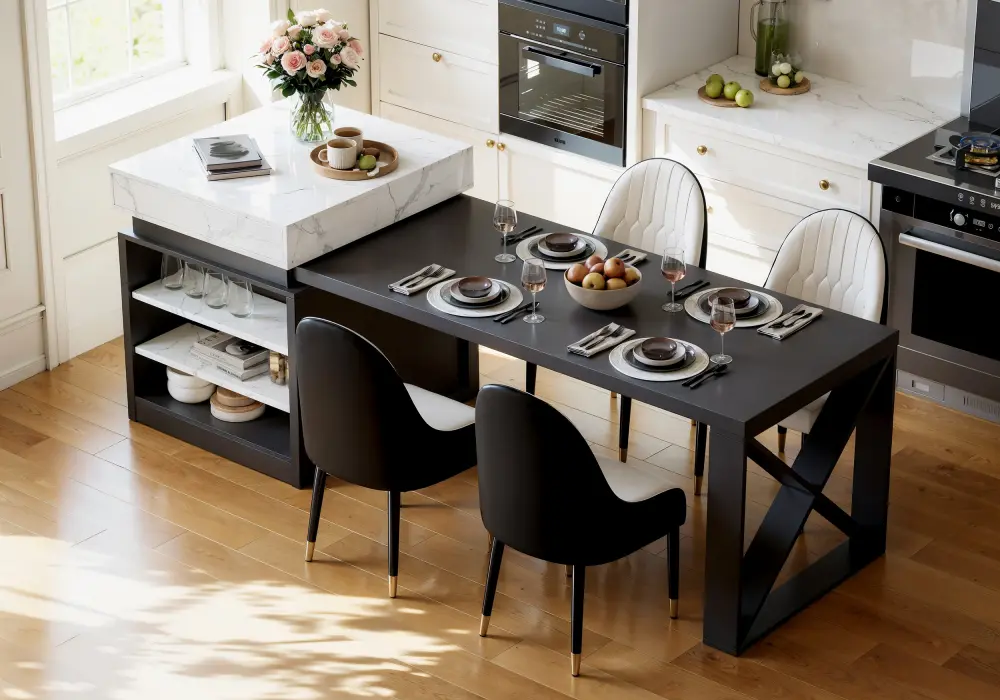
The Modern 1854-2362 mm Extendable White and Black Kitchen Island with Dining Table combines a pull-out dining surface with open and concealed storage. Because the working footprint changes, keep the top arrangement compact and movable. A low tray near the fixed end can carry a bowl and napkins without blocking the extendable section.
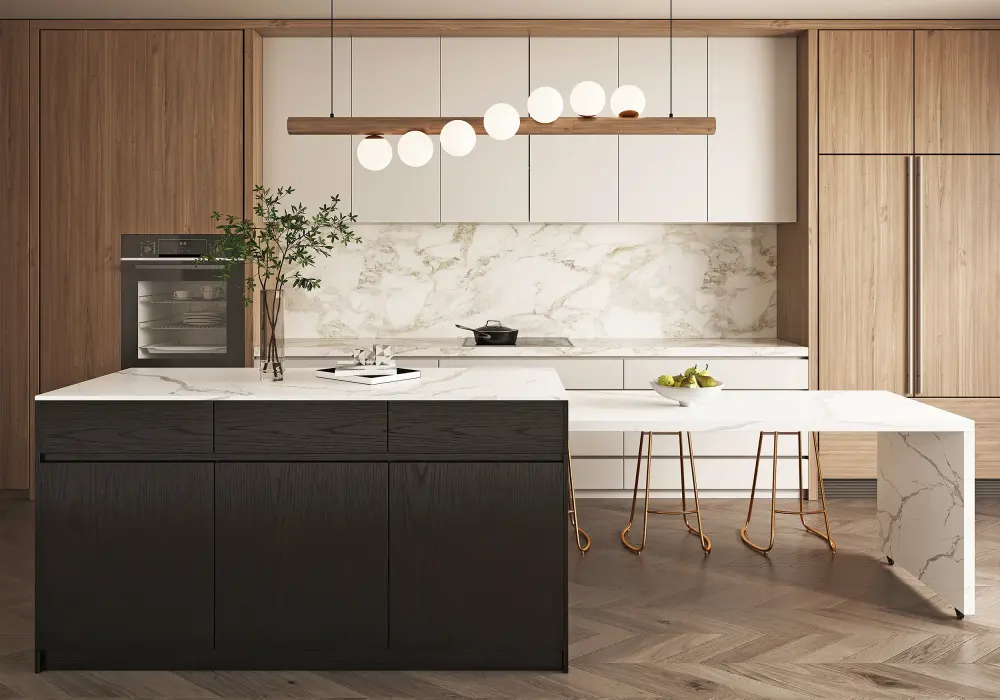
The Modern 2057-2692 mm Extendable Marble Pattern Kitchen Island with Doors and Drawers already has a visually active top and a dark base. A quiet ceramic vessel or wood bowl will usually complement the pattern better than several colorful objects.
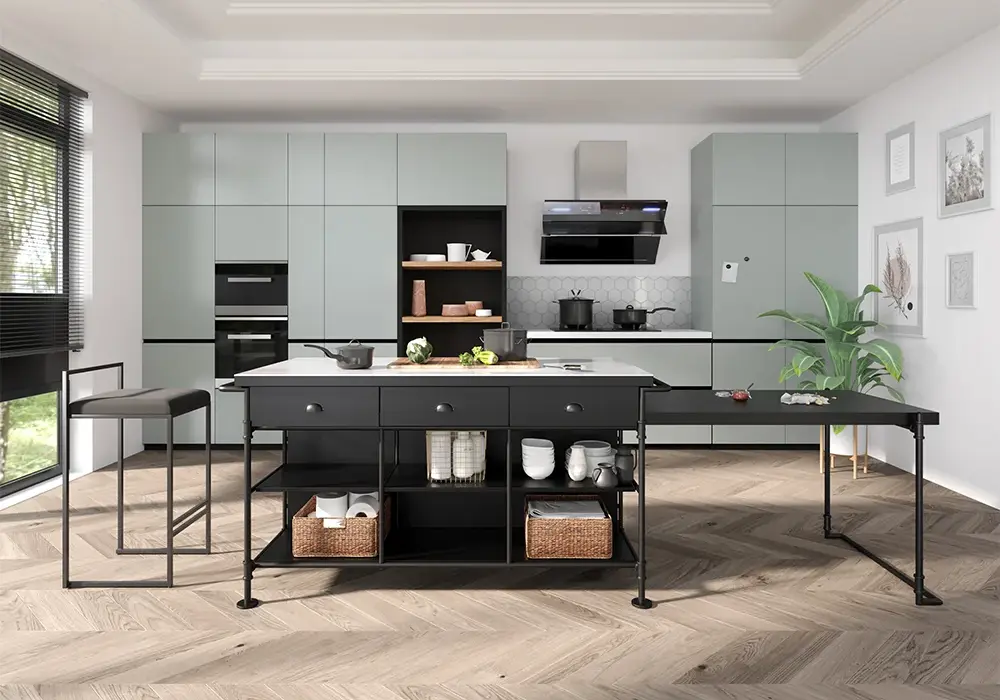
The 1524 mm Industrial Extendable Faux Marble Kitchen Island with Three Drawers offers drawers and shelves that can absorb visual clutter. Use that storage before adding decor, then let one black, white, wood, or metal accent reinforce the industrial palette.
A Five-Minute Island Styling Checklist
- Remove everything and clean the full surface.
- Restore only objects used several times a week.
- Protect the active prep, sink, cooktop, seating, and extension zones.
- Add one movable focal grouping in the display zone.
- Repeat a color or material already present in the room.
- Check sightlines from every seat and doorway.
- Photograph the result, then remove one item if the surface still feels busy.
Frequently Asked Questions
What should I put in the middle of a kitchen island?
Use one low, stable, easy-to-move item such as a fruit bowl, shallow tray, planter, or vase. Choose something proportionate to the free countertop area and keep it away from sinks, cooktops, and stool edges.
How do I decorate a small kitchen island?
Let one useful object do the work. A bowl for fruit or a tray for salt, pepper, and napkins adds character without consuming much space. Keep at least one uninterrupted work zone and avoid scattering small accessories across the top.
Should kitchen island decor match the cabinets?
It does not need to match exactly. Repeat one cabinet, hardware, countertop, floor, or stool color so the display feels connected. A controlled contrast can work well when the rest of the room remains visually calm.
Can I use flowers or plants on a kitchen island?
Yes, if the arrangement is stable, does not block conversation, and can tolerate the available light and temperature. Keep soil, falling petals, and strong fragrance away from food preparation. Faux greenery can be practical when it looks natural and stays clean.
How often should I change kitchen island decor?
Change it when the room's use, season, or maintenance needs change, not on a fixed schedule. A good everyday arrangement may remain for months. Seasonal updates can be as small as changing fruit, foliage, linen color, or serving pieces.