

A well-decorated dining table can transform an ordinary meal into a memorable occasion. Whether you are setting the table for a quick family dinner, a weekend brunch, or a festive holiday gathering, thoughtful styling can make your dining space feel warmer, more inviting, and more polished.
The good news is that learning how to decorate a dining table does not require professional design skills or an expensive collection of tableware. A few simple principles—proportion, color, lighting, and function—can make almost any table look intentional.
In this guide, you will discover practical dining table decor ideas for different table shapes, room sizes, occasions, and budgets. We will begin with the fundamentals, including how your table shape affects your decorating choices. Then, we'll cover color and lighting, explore versatile dining table centerpiece ideas, and walk through easy table-setting layouts. Finally, you'll find budget-friendly and DIY ideas that help you create a stylish table without overspending.
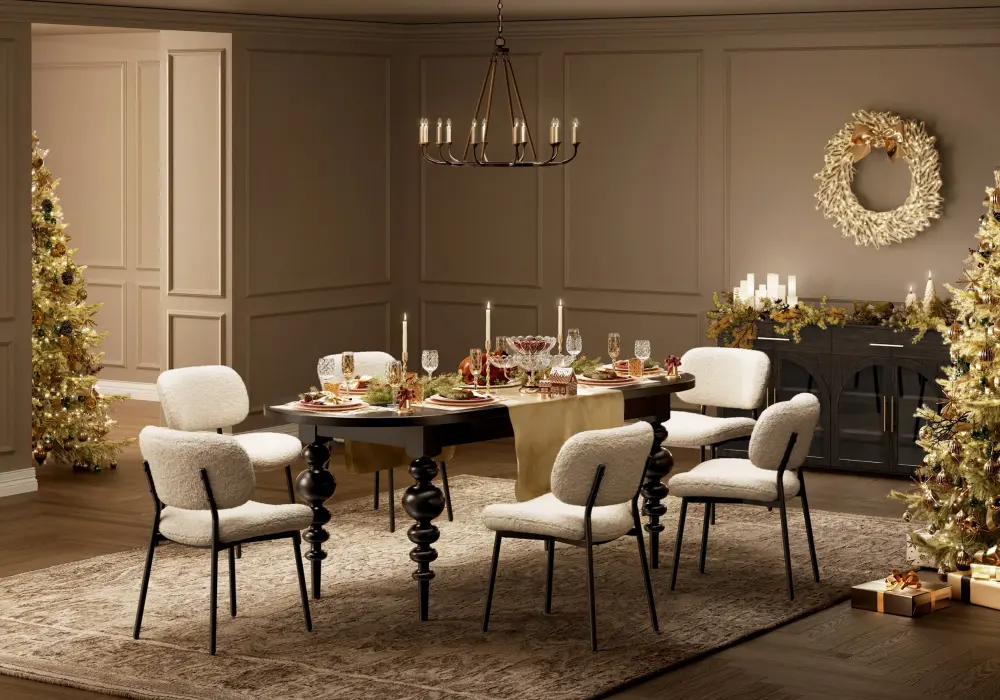
Extendable Black Oval Dining Table
Table of Contents
Know Your Table: Shape, Size & Space Constraints
Before choosing a centerpiece or buying new accessories, start with the dining table itself. The shape, dimensions, and amount of surrounding space all influence what will look balanced and what will remain practical.
How Table Shape Affects Dining Table Decor
Different table shapes naturally call for different decorating strategies.
Round dining tables usually work best with a single central focal point. A round vase, footed bowl, sculptural object, or compact floral arrangement can reinforce the table's symmetry without making it feel crowded.
Oval dining tables combine the length of a rectangular table with softer edges. A narrow runner or low greenery arrangement can emphasize the table's elongated shape while maintaining an open appearance.
Rectangular dining tables give you more flexibility. A long centerpiece, several small vases, or a sequence of candle holders can fill the center without relying on one oversized decorative object.
Narrow or extendable tables require more careful planning. Choose slim accessories that can be moved quickly when you need additional seating or serving space.
How to Decorate a Small Dining Table
Small dining areas benefit from simple, multifunctional decor.
Choose accessories that take up minimal tabletop space, such as narrow candle holders, small bud vases, or a compact centerpiece bowl. Edge-hugging arrangements can also leave more room in the middle for plates and serving dishes.
Foldable, stackable, or easily removable accessories are particularly useful in apartments and compact dining rooms. A decorative tray, for example, lets you move several pieces at once when mealtime begins.
Most importantly, keep the scale appropriate. A small table usually looks more balanced with a few well-chosen pieces than with a collection of oversized accessories.
Match Decor Scale to Your Table
The shape and size of your dining table establish the proportion rules you will use for the centerpiece, place settings, and accessories in the sections below.
Dining Table Decor Basics: Color, Scale & Lighting
Once you understand your table's proportions, the next step is to create visual harmony. The most effective dining table decor ideas usually rely on a simple color palette, consistent scale, and lighting that supports the mood.
Easy Dining Table Color Combinations
A simple color formula can make decorating much easier.
One reliable approach is warm neutrals + one accent color. Try ivory linen, natural wood, and beige ceramics with olive green, terracotta, muted blue, or another accent tone.
A monochromatic palette is another easy option. Combining several shades of white, cream, gray, or one dominant color creates a cohesive look without requiring many decorative elements.
For seasonal decorating, use the season as a starting point rather than a strict rule.
Season or Occasion | Color Palette | Decor Ideas |
Spring | Soft pastels + green | Fresh flowers, light linens |
Summer | White + blue or sandy neutrals | Glassware, woven textures |
Autumn | Terracotta + amber + brown | Dried leaves, wood, ceramics |
Winter | Jewel tones + neutrals | Candles, velvet textures, metallic accents |
Celebrations | White + green | Greenery, candles, fresh flowers |
Follow Simple Table Proportion Rules
A practical starting point is approximately 24 inches (60 mm) of tabletop space per guest. This gives each person enough room for a plate, utensils, glassware, and comfortable movement.
Avoid filling every inch of the tabletop with decorative objects. Leave enough clear space for serving dishes and everyday use.
Also consider the relationship between the table and the surrounding furniture. Guests should be able to pull out their chairs and move around the dining area without bumping into walls or other furniture.
Choose Lighting Based on the Occasion
Lighting has a major effect on the atmosphere of a dining room.
For intimate evening dinners, candlelight adds warmth and softness. For casual celebrations, warm string lights can create a relaxed atmosphere. A dimmable overhead light offers the most flexibility because you can keep it brighter for everyday meals and lower the intensity when entertaining.
For example, a minimalist dining table could use:
White linen + brass candlesticks + neutral ceramics + a dimmed pendant light.
The goal is to create a layered atmosphere without making the table visually complicated.
Centerpiece Ideas That Actually Work
The centerpiece is often the focal point of the table, so choosing the right arrangement can make a significant difference. The best dining table centerpiece ideas balance visual interest with function.
Low Floral and Greenery Centerpieces
Low arrangements are among the most versatile options for everyday dining.
Try eucalyptus, olive branches, dried grasses, seasonal greenery, or a line of small bud vases. Natural textures work especially well when paired with wood, linen, ceramic, or stone finishes.
For rectangular and oval tables, a low greenery runner can emphasize the length of the table while keeping the center visually open.
Footed Bowls With Fruit or Decorative Objects
A footed bowl adds dimension while keeping the arrangement contained.
For everyday styling, fill it with lemons, oranges, apples, pears, or other fruit. For seasonal decorating, replace the contents with pinecones, dried flowers, ornaments, or natural decorative objects.
This type of centerpiece is also easy to remove when the table needs to become a serving area.
Tall Candlesticks for an Elegant Look
Tall candlesticks can instantly make a dining table feel more sophisticated.
Choose brass, black metal, ceramic, wood, or another finish that connects with the rest of your dining room. Two or three candle holders in varied heights can create visual rhythm, while identical holders create a more formal and symmetrical appearance.
Tall arrangements need additional planning, however. They should not create a solid visual barrier across the table.
Sculptural Centerpiece Ideas
A centerpiece does not have to contain flowers.
A sculptural ceramic vase, carved wooden bowl, stone object, handmade vessel, or artistic decorative piece can provide a strong focal point in a contemporary or minimalist dining room.
This is especially useful when you prefer low-maintenance decor and want pieces that can remain on the table year-round.
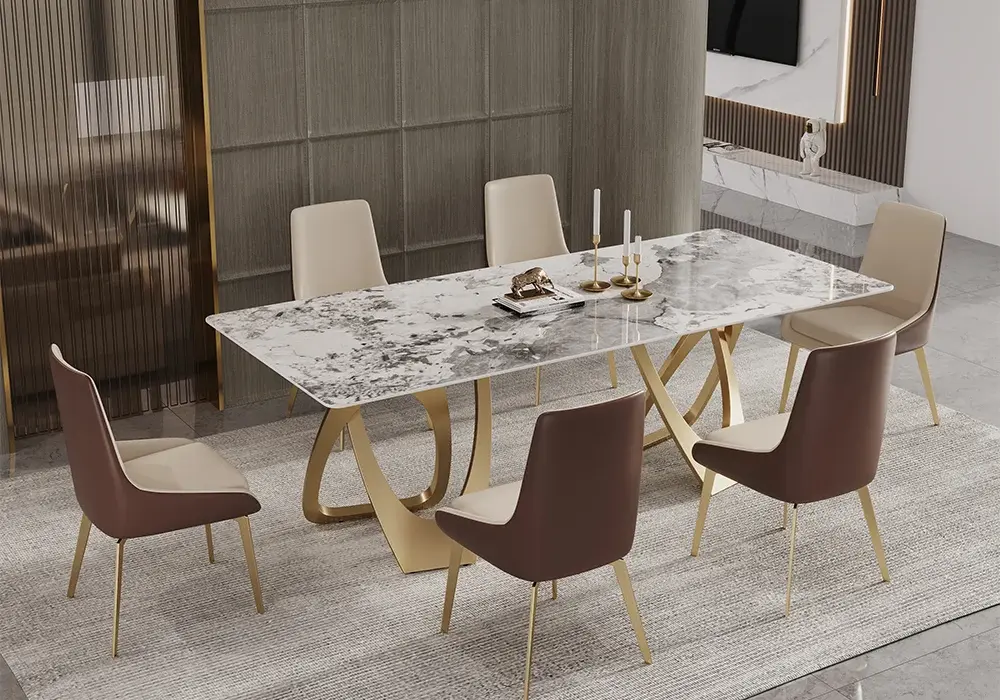
Modern Rectangle Faux Marble Dining Table
How Tall Should a Dining Table Centerpiece Be?
For comfortable conversation, keep the main portion of a low centerpiece below about 12 inches (30 mm).
This height helps preserve clear sightlines between guests. When using taller decorations, place them toward the ends of a rectangular table or separate them into smaller groupings so guests can still see across the table.
Choose the Right Centerpiece for Your Table Shape
Your centerpiece should complement the geometry of the table.
A round table generally benefits from one central focal point.
An oval table works well with a low elongated arrangement.
A rectangular table can use one continuous centerpiece or several smaller decorative groupings spaced along the length.
An extendable table benefits from modular decor. Several small vases, candle holders, or bowls can be separated when the table is expanded.
Use Durable and Sustainable Materials
For a more sustainable approach, consider dried flowers, reclaimed wood, natural fiber textiles, ceramic vessels, and reusable decorative objects.
Homes with children or pets may benefit from stable, unbreakable materials. Flameless LED candles can also provide a candlelit appearance without an exposed flame.
Ultimately, a successful centerpiece should enhance the table without preventing people from eating, talking, or serving food comfortably.
Place Settings & Table Layouts for Every Occasion
Once the centerpiece is established, build the rest of the table around it. A well-organized place setting creates visual order while making the table easier for guests to use.
Everyday Family Table Setting
For an everyday family meal, keep the setup practical.
Place the dinner plate in the center of each guest's space. Put the fork on the left and the knife and spoon on the right. A folded napkin can go beside the plate or underneath the fork.
A low centerpiece and a few water glasses complete the look without requiring excessive styling.
This is one of the easiest table setting ideas to repeat every day.
Formal Dinner Table Setting
A formal dinner calls for more symmetry and slightly more structure.
Center the plate in front of each chair and position the cutlery evenly. Place the napkin on the plate or to the left of the forks. Water and wine glasses can be placed above the knife area.
The key is consistency. Each place setting should have similar spacing and alignment.
Festive and Celebration Table Setting
Holiday and celebration tables allow you to add more decorative detail.
Start with a runner or tablecloth, then layer the centerpiece, plates, napkins, cutlery, and glassware. Add one small decorative accent at each place setting, such as a sprig of greenery, a handwritten name card, or a seasonal ornament.
Rather than giving every place setting a different look, repeat the same detail across the table for a more cohesive result.
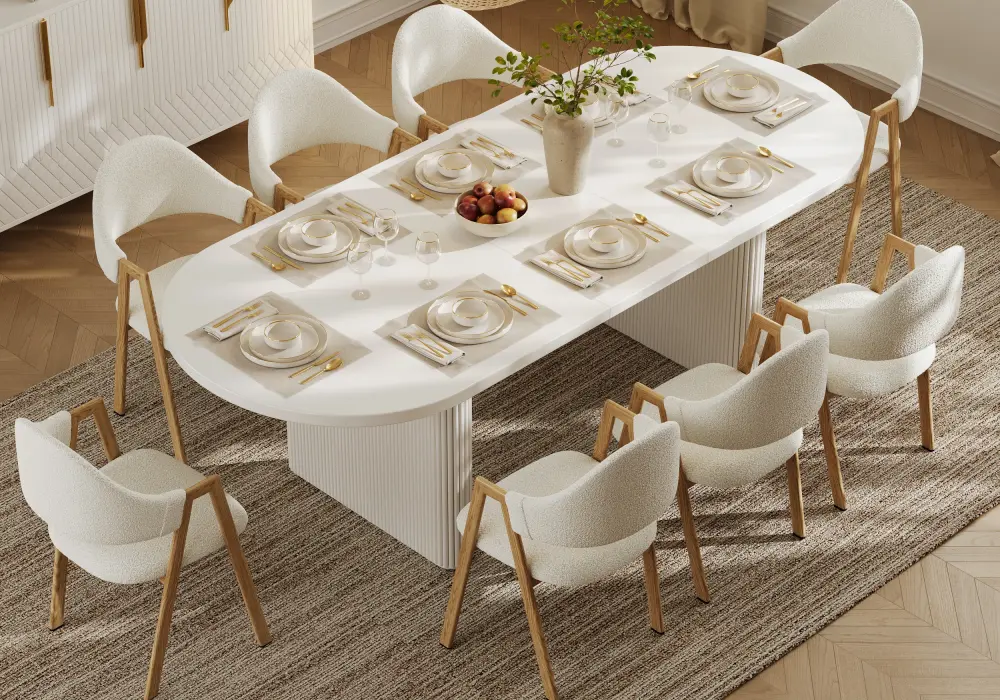
Extendable Oval White Dining Table
Casual Buffet-Style Table
A buffet-style arrangement prioritizes function.
If the table is being used for serving food, move large decorative objects to the ends or temporarily remove them. Keep the serving area clear and use smaller accents that can be moved quickly.
This approach works especially well for multifunctional dining rooms and extendable tables.
Dining Table Setting Spacing Guide
Table Element | Recommended Starting Point |
Space per guest | About 24 in / 60 mm |
Plate | Centered with the chair |
Fork | Immediately to the left of the plate |
Knife and spoon | Immediately to the right |
Napkin | Beside or beneath the plate |
Glassware | Above the knife area |
Centerpiece | Clear enough to preserve conversation |
Three Easy Napkin Folds
The Basic Rectangle Fold
- Fold the napkin in half.
- Fold it in half again.
- Place it beside the plate or underneath the fork.
This is the fastest option for an everyday or last-minute dinner.
The Triangle Fold
- Fold the napkin diagonally.
- Bring the side corners toward the top.
- Tuck the layers underneath.
- Place the finished fold on or beside the plate.
This adds a small decorative detail without taking much time.
The Cutlery Pocket Fold
- Fold the napkin into a rectangle.
- Create a front flap with one section of the fabric.
- Tuck the cutlery into the pocket.
- Place the finished napkin beside or on the plate.
It is practical, decorative, and especially useful for casual entertaining.
Table Runner vs. Placemats
A table runner emphasizes the length of a rectangular or oval table and creates a visual foundation for your centerpiece.
Placemats define each guest's dining area and are often more practical for everyday family meals.
Choose a runner when you want a continuous decorative effect. Choose placemats when you want flexible, easy-to-clean individual dining zones.
Budget-Friendly & DIY Styling Hacks
Stylish dining table decor does not need to be expensive. Before shopping, look at what you already own and decide which pieces can be reused in a new combination.
Build a Dining Table Decor Budget
Budget | Suggested Focus |
Under $25 | Napkins, candles, thrifted vases, greenery |
$25–$75 | Runner, placemats, centerpiece bowl |
$75–$150 | Quality linens, statement decor, upgraded lighting or tableware |
Think of these ranges as flexible guidelines rather than fixed spending requirements. A single thrifted statement piece can sometimes change the entire appearance of a table.
Shop Secondhand for Unique Decor
Thrift stores, resale shops, discount home stores, flea markets, and local secondhand marketplaces are excellent places to look for dining accessories.
Search for versatile pieces such as:
- Ceramic bowls
- Glass vases
- Candle holders
- Wooden trays
- Baskets
- Vintage serving pieces
Choose items that can work across multiple seasons instead of buying something designed for only one occasion.
Repurpose What You Already Own
A decorative tray from the living room can become a centerpiece base. A pitcher can become a vase. A small plant can replace a traditional floral arrangement.
Moving an item from another room can make your dining space feel refreshed without adding anything new to your home.
Try Same-Day DIY Dining Table Decor
Turn a Glass Jar Into a Vase
Tools: Clean glass jar, ribbon or twine, optional paint Time: 10–20 minutes
Wrap the jar with twine or ribbon, or add a simple finish that matches your table's palette. Fill it with fresh greenery or dried flowers.
Create Simple Dyed Napkins
Tools: Plain cotton napkins, fabric dye, gloves, container Time: 30–60 minutes plus drying
Choose a single color for a coordinated appearance, or create subtle variations between napkins for a relaxed handmade look.
Refresh Old Candle Holders
Tools: Existing candle holders, suitable decorative finish, painter's tape Time: 20–40 minutes plus drying
Give old candle holders a new finish that coordinates with your dining room. Always follow product directions when using decorative finishes around candles.
Make a Simple Tray Centerpiece
Tools: Tray, vase, candle, small bowl Time: About 5 minutes
Place three objects of different heights on a tray. The grouped arrangement feels intentional and can be lifted from the table in one move when you need more serving space.
Choose Reusable Decor for a More Sustainable Table
Instead of relying on disposable decorations, prioritize reusable table linens, refillable or long-lasting candles, ceramic accessories, dried flowers, and natural materials.
The most sustainable decorating strategy is often the simplest one: buy fewer pieces, choose versatile designs, and use them in different ways throughout the year.
FAQ: How to Decorate a Dining Table
How tall should a dining table centerpiece be so guests can talk comfortably?
A low centerpiece should generally stay below about 12 inches (30 mm) to maintain clear sightlines. Taller pieces can be used at the ends of rectangular tables or spaced apart so they do not block eye contact between guests.
What's the easiest table setting layout for everyday family meals?
Start with a dinner plate centered with each chair. Place the fork on the left, the knife and spoon on the right, and the napkin beside or underneath the fork. Finish with a low centerpiece and water glasses.
How can I decorate a dining table on a tight budget using thrifted items?
Look for ceramic bowls, glass vases, candle holders, trays, and wooden accessories at thrift stores or secondhand markets. Choose pieces with complementary colors or finishes, and repurpose items from other rooms before buying anything new.
How do I choose a color palette for a seasonal or celebratory table?
Use two supporting colors and one main accent. Spring works well with soft pastels and green, autumn with terracotta and amber, winter with deep jewel tones, and celebrations with crisp white and green. Natural wood and neutral linens can help balance brighter colors.
What are three quick napkin folds for a last-minute dinner?
The basic rectangle, triangle, and cutlery pocket folds are three simple options. The rectangle takes the least time, while the triangle and pocket fold add more visual interest without requiring advanced folding techniques.
How do I style a small or round dining table without it feeling crowded?
Use fewer, smaller decorative pieces. A round table often looks best with one compact centerpiece, while a small rectangular table can use a narrow runner and a few slim accessories. Choose decor that is easy to move when serving food, and avoid oversized centerpieces.