

The secret to decorating a coffee table tray is creating a balanced vignette using the rule of three—combining objects of varying heights, textures, and functions into a cohesive arrangement that looks intentional rather than cluttered. When you style coffee tables, a tray serves as both a practical organizer and a visual anchor that defines the decorative zone on the table surface. The tray collects your chosen objects into a single composition, making the arrangement feel curated and complete rather than like a random collection of items scattered across the tabletop.
Table of Contents
Why Use a Tray on a Coffee Table?
A tray is the single most effective tool for styling a coffee table because it creates instant structure. Without a tray, individual items on a coffee table tend to look scattered and unintentional. The tray draws a visual boundary around your arrangement, telling the eye that these objects belong together as a deliberate composition.
Beyond aesthetics, a tray serves practical purposes. It allows you to quickly clear the table for use—simply lift the entire tray and set it aside. It catches wax drips from candles, contains spills from small vases, and prevents decorative objects from scratching the table surface. When entertaining, a tray transforms into a serving surface for drinks and appetizers.
The tray also provides a textural and material layer that enriches the tablescape. A wooden tray adds warmth to a stone-top table, a metal tray introduces a reflective gleam, and a lacquered tray brings a pop of color. This material contrast is what separates a styled coffee table from a bare one.
The Rule of Three and Other Styling Principles
The rule of three is the foundational principle of tray styling. The human eye finds odd-numbered groupings—three, five, or seven objects—more visually pleasing and dynamic than even-numbered arrangements, which can feel static and symmetrical.
When applying the rule of three, select objects that differ in height, shape, and texture. A classic combination is a tall item (a candle or small vase with flowers), a medium item (a decorative object or book), and a low item (a small bowl, dish, or stack of coasters). This height variation creates visual rhythm and prevents the arrangement from looking flat.
The triangle principle builds on the rule of three. Arrange your objects so that their tops form a triangle when viewed from any angle. The tallest object anchors the back or center, medium objects flank it, and the lowest items fill the foreground. This triangular silhouette is naturally pleasing and ensures the arrangement looks complete from every viewing angle.
The texture principle requires that you mix at least two contrasting textures within the tray. Pair smooth glass with rough ceramic, polished metal with natural wood, or glossy lacquer with matte stone. Texture contrast adds depth and sophistication that color alone cannot achieve.
The function principle reminds us that the coffee table is a living surface. Include at least one functional item—coasters, a remote control tray, a small dish for keys or jewelry—alongside purely decorative objects. This balance of form and function is what makes the arrangement feel lived-in rather than staged.
Choosing the Right Tray
The tray you select sets the tone for the entire arrangement. Consider size, material, shape, and color.
Size : The tray should occupy roughly one-third to one-half of the coffee table's surface area. A tray that is too small looks lost; one that is too large overwhelms the table and leaves no room for other items. For a 35-inch round coffee table, a tray measuring 14 to 18 inches in diameter works well. For a 32-inch round table, a 12-to-16-inch tray is appropriate.
Material : Match the tray material to your room's aesthetic. Wooden trays suit Scandinavian, farmhouse, and mid-century modern interiors. Metal trays in brass or nickel complement traditional and glam styles. Lacquered trays in bold colors work in contemporary and eclectic spaces. Rattan or woven trays add organic texture to coastal and bohemian interiors.
Shape : Round trays soften the lines of rectangular and square tables. Rectangular trays echo the geometry of rectangular tables and provide clear zones for arranging objects. Square trays offer a middle ground and work well on round tables. Choose a shape that either complements or deliberately contrasts with your table shape—both approaches can be effective.
Color : A neutral tray in wood, white, or black provides a versatile base that lets your decorative objects take center stage. A colored or patterned tray becomes a statement piece itself and requires more restrained styling on top.
Essential Items for a Coffee Table Tray
A well-styled tray typically includes a combination of these elements:
Candles are the most common tray centerpiece. A pillar candle in a glass hurricane adds height and warmth. A taper candle in a small holder creates a more formal look. Choose unscented candles for living areas, as strong fragrances can be overwhelming in enclosed spaces.
Small vases with flowers or greenery bring life and natural color. A single stem in a bud vase is often more effective than a full bouquet, which can look crowded on a small tray. Eucalyptus, olive branches, and dried flowers are low-maintenance options that last for weeks.
Books or magazines add personality and color. Stack two or three coffee table books horizontally and top them with a small object—a trinket dish, a sculptural piece, or a single bloom. Choose books with covers that complement your color scheme.
Decorative objects reflect your personal style. Sculptural pieces in ceramic, brass, or stone add visual interest. Crystals, shells, or found objects from nature bring organic texture. Choose objects that are meaningful to you rather than generic decor store purchases.
Functional items ground the arrangement in daily life. Coasters protect your table surface while adding color and pattern. A small dish corrals small items like keys, earrings, or wrapped candies. A tiny box can hold remotes or charging cables.
Step-by-Step Tray Styling Guide
Follow these steps to create a polished coffee table tray arrangement:
Step 1: Start with the tray. Place the tray slightly off-center on the coffee table, leaving space on one side for a stack of books or a single larger object outside the tray. This asymmetry feels more natural than perfect centering.
Step 2: Place the tallest object. Position your tallest item—a candle in a hurricane, a small vase with tall greenery—toward the back or slightly off-center within the tray. This establishes the vertical anchor of your triangular composition.
Step 3: Add the medium-height object. Place a medium item—a small stack of books, a decorative box, or a medium vase—next to the tall object. Offset it to the opposite side to begin building the triangle silhouette.
Step 4: Fill in with low items. Add small, low-profile objects—coasters, a trinket dish, a single bloom laid flat—to fill the foreground and create depth. These items should be the shortest elements in the arrangement.
Step 5: Step back and assess. View the tray from multiple angles. Adjust spacing so that no two objects are touching—leave small gaps between items to let each piece breathe. Check that the arrangement looks balanced from the front, sides, and top.
Step 6: Add natural elements last. Tuck a sprig of greenery or a single flower stem into the arrangement as the finishing touch. Natural elements soften hard surfaces and make the composition feel finished and alive.
Seasonal Tray Decorating Ideas
Refresh your coffee table tray throughout the year to reflect the changing seasons:
Spring : Swap dark candles for pastel pillars. Add a small vase of tulips or a potted succulent. Incorporate light green and soft pink tones through ceramic objects and books.
Summer : Embrace bold colors and natural textures. A shell collection in a small dish, a bright bloom in a bud vase, and a coral or turquoise accent book bring summer energy.
Fall : Layer in warm tones with amber candles, a small pumpkin or gourd, and dried wheat or pampas grass stems. A rust-colored ceramic object ties the palette together.
Winter : Create a cozy arrangement with white candles, pine or cedar sprigs, and metallic accents in gold or silver. A small bowl of wrapped candies adds a festive touch.
Matching Your Tray to Your Coffee Table
Your coffee table's material and shape should guide your tray selection and styling approach.
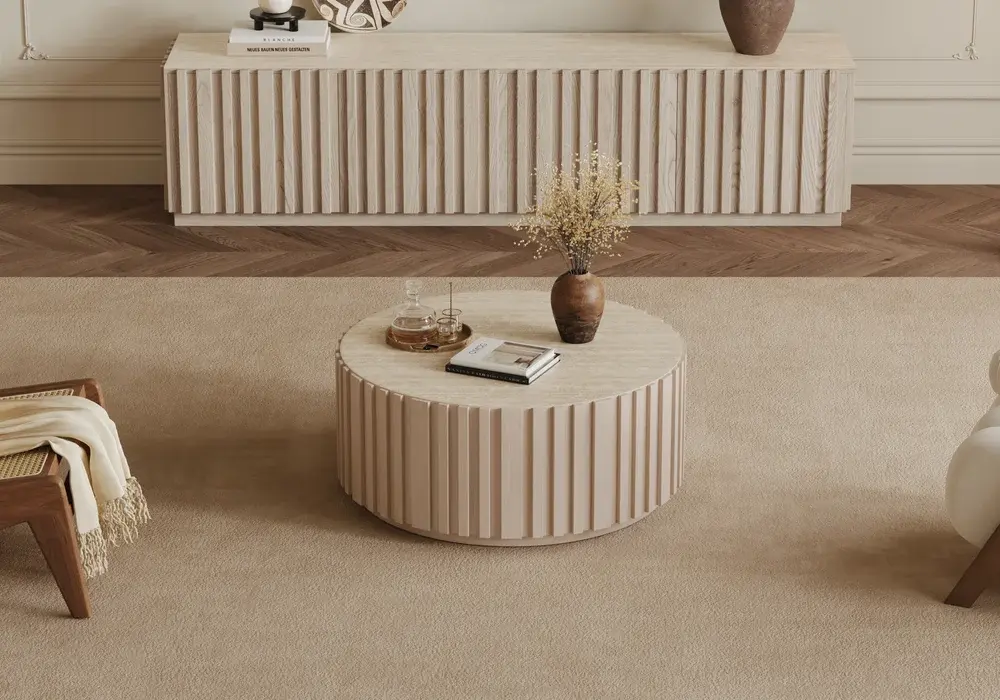
The Aura 35" Round Coffee Table features a washed-white ash wood base with a sintered stone surface in an oatmeal tone. The slatted, mid-century modern design pairs beautifully with a natural wood or woven rattan tray. The sintered stone top provides a cool, smooth surface that contrasts nicely with warm wooden tray materials. With two hidden drawers, the table already offers storage, so the tray can focus purely on decorative styling.
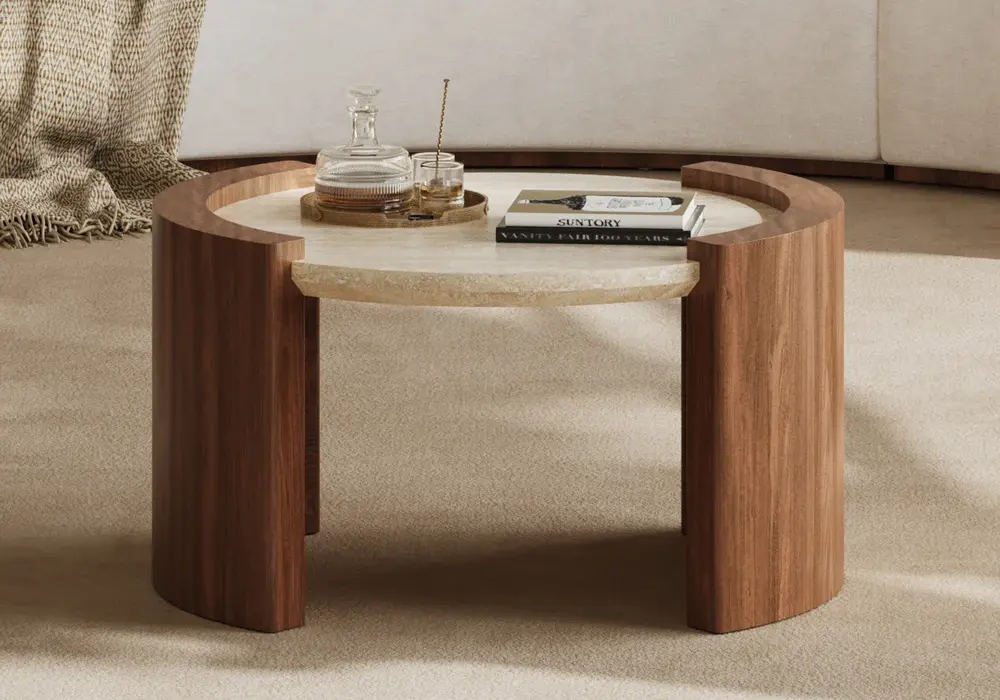
The 28" Round Walnut Coffee Table has a more intimate surface area. Its walnut base and beige travertine top call for a smaller tray—10 to 12 inches in diameter. A brass or antiqued metal tray adds warmth against the travertine, while a cream candle and a single dried flower stem create a simple, elegant vignette appropriate for the table's compact proportions.
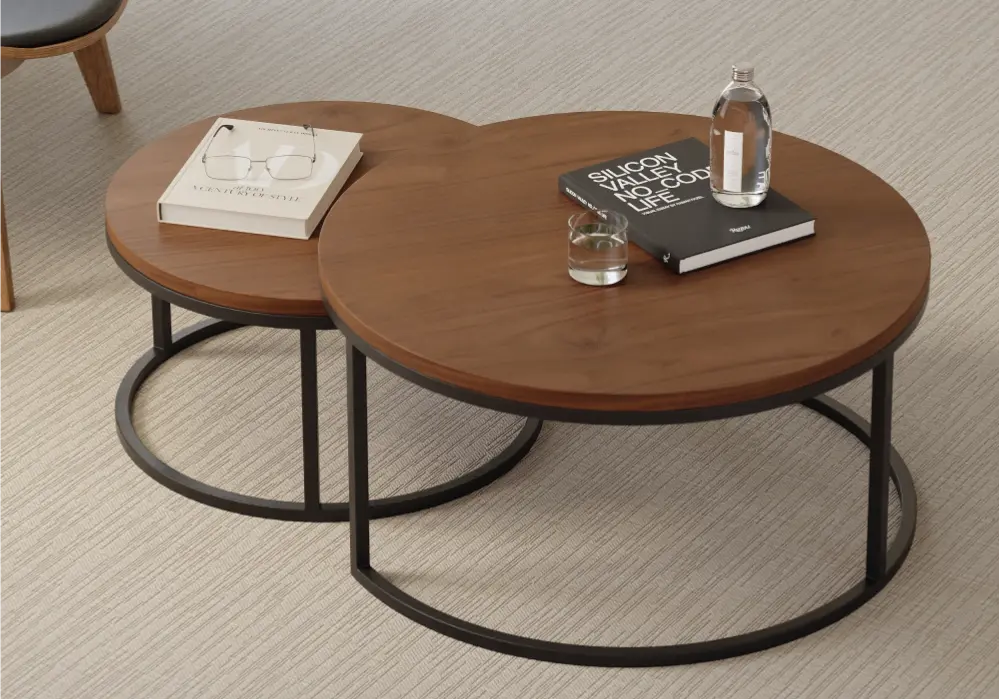
For nesting coffee table sets like the Walnut and Black Nesting Coffee Table Set, style the larger table with a primary tray arrangement and use the smaller nested table for an additional stack of books or a single decorative object. The carbon steel frames and walnut tops pair well with black metal or dark wood trays. When the tables are separated for entertaining, each surface should look styled independently yet complementary.
Frequently Asked Questions
What size tray should I use on my coffee table?
Choose a tray that occupies one-third to one-half of your coffee table's surface area. For a 35-inch round table, a 14-to-18-inch tray works well; for a 28-inch table, select a 10-to-12-inch tray.
What items should I put on a coffee table tray?
A well-styled tray typically includes a tall item (candle or small vase), a medium item (books or decorative object), and a low item (coasters or trinket dish), following the rule of three.
Should the tray match the coffee table material?
Not necessarily. Contrasting materials—such as a wooden tray on a stone table—often create more visual interest than matching materials. Aim for complementary rather than identical tones.
How do I style a tray on a nesting coffee table set?
Style the larger table with a primary tray arrangement and use the smaller table for a secondary element like a book stack or single object. Both surfaces should look styled independently yet harmonize when the tables are nested.
Can I use real flowers on a coffee table tray?
Yes, a small bud vase with a single stem or a tiny cluster of flowers adds life to the arrangement. Choose long-lasting varieties or use dried flowers and greenery for a low-maintenance option.
How often should I change my coffee table tray decor?
Refresh your tray seasonally or whenever the mood strikes. Swapping candles, flowers, and accent objects four times a year keeps the arrangement feeling current without requiring a complete redesign.