

A coffee table can be the visual focus of a living room, but it is also one of the easiest places to create clutter. A few books, a candle, a remote control, and yesterday’s coffee cup can quickly turn a carefully designed room into a messy one. The solution is not to remove everything—it is to style the surface with intention. In this guide, you will learn how to decorate a coffee table using simple rules for scale, proportion, layout, product selection, safety, maintenance, and seasonal updates. You will also find useful size references, shopping guidelines, budget ideas, and step-by-step styling techniques that you can apply immediately.
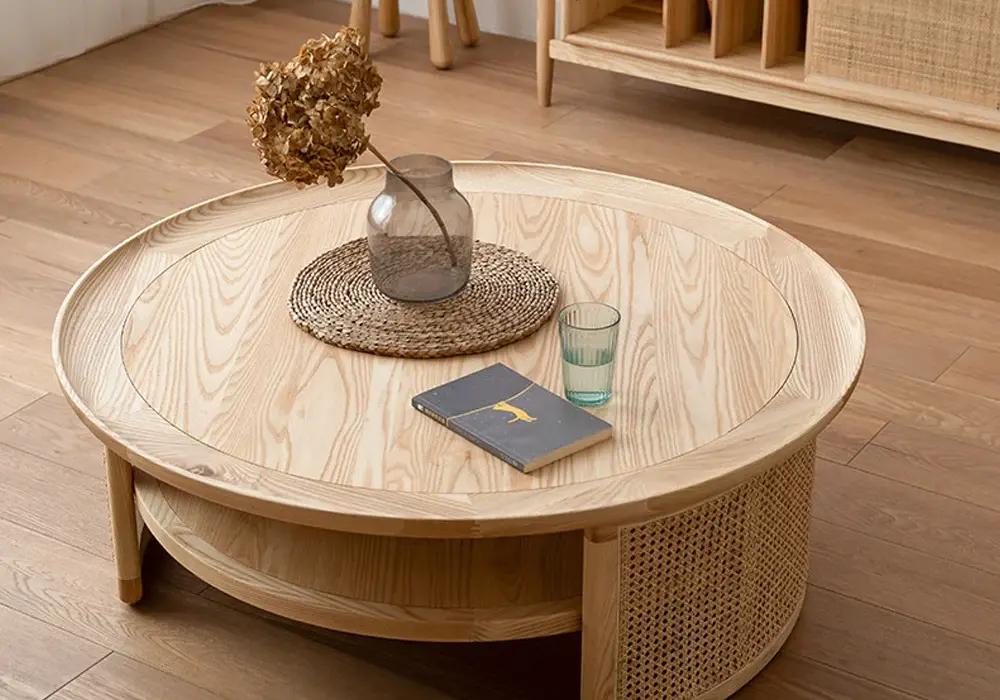
Japandi Round Wood Coffee Table of Homary
Coffee Table Styling Rules: Scale, Proportion, and Layout Basics
The best coffee table styling starts with proportion. Before buying decorative objects, consider the table's shape, size, height, and how much usable space you need to leave open.
A useful starting point is to keep decorative items within roughly one-third to one-half of the tabletop area, leaving the rest available for drinks, books, snacks, or everyday use. Your centerpiece should also relate to the furniture around it. A very large vase on a small table looks heavy, while tiny objects disappear on a large rectangular table.
Reference guide by table shape
Coffee table type | Styling approach | Useful spacing guide |
Round | Use one central grouping or 3–5 objects arranged asymmetrically | Keep the main grouping about 152–254 mm from the outer edge |
Rectangular | Divide the surface into 2–3 visual zones | Leave about 203–305 mm of clear working space around major groupings |
Square | Create one central composition or four balanced zones | Keep decorative pieces visually inside the central 60–70% |
Narrow/long | Use one linear arrangement rather than multiple bulky clusters | Keep décor shallow and leave at least 102–152 mm of usable width |
Odd-number groupings are particularly easy to style. A group of three might include a vase, a small candle, and a stack of books. Five objects can work when two or three are visually connected by color or material.
Height is equally important. Instead of placing five objects at the same level, create at least three heights: low, medium, and high. For example, a stack of books can sit at 76–127 mm, a bowl at 127–178 mm, and a vase at 254–356 mm. Exact dimensions can vary, but the visual principle remains the same: layered heights create depth.
Try the “three-part sightline” method. First, choose the tallest object. Second, place a medium-height object slightly off-center. Third, balance both with a low object such as a tray or book stack. Then view the table from the sofa and walking paths. The tallest item should not block conversation or obscure the television.
A simple setup sequence
- Start with a tray. Use it to define the main styling zone and keep small objects visually connected.
- Add books or magazines. Stack two or three, preferably with the largest book at the bottom.
- Add greenery or a centerpiece. Place it slightly off-center instead of directly in the middle.
- Add one functional accent. A coaster set, small bowl, or candle can make the arrangement feel lived-in.
- Remove one item. A final edit often makes the arrangement look more polished.
The goal is not to fill the table. It is to create a composition that feels intentional while preserving enough empty space to use the furniture comfortably.
How to Choose a Coffee Table Centerpiece That Balances Style and Function
Choosing a centerpiece becomes much easier when you treat it as a decision rather than a hunt for one “perfect” decorative object. Start with the room's style, then consider material, size, and function.
For a minimalist room, choose one strong focal point such as a sculptural vase, stone bowl, or understated ceramic vessel. For a traditional or layered room, combine books, a decorative box, a vase, and a tray. For a natural or relaxed style, wood, linen, rattan, ceramic, and greenery usually work well together. For a modern space, glass, metal, smooth stone, and geometric forms can create a cleaner look.
Centerpiece decision guide
Need | Recommended centerpiece | Why it works |
Small table | Low bowl, compact vase, small sculpture | Uses vertical space without overwhelming the surface |
Large table | Oversized vase, large tray, layered grouping | Provides enough visual weight |
High-traffic room | Tray + durable bowl | Easy to move and practical |
Entertaining frequently | Low centerpiece | Keeps drinks and conversation unobstructed |
Minimalist style | One sculptural object | Creates a strong focal point without clutter |
Family home | Heavy ceramic, wood, or metal piece | More stable than lightweight décor |
Luxe look | Stone, glass, polished metal, or designer object | Adds texture and visual sophistication |
A single focal object is best when you want simplicity or when the table is relatively small. A multi-piece composition works better on larger surfaces or in rooms where the décor needs to feel more layered.
Think about maintenance too. A fragile object that needs constant repositioning may not be a practical centerpiece for a high-use room.
Budget can also guide your choices. These are useful planning ranges rather than strict rules:
Budget level | Approximate décor budget | Shopping strategy |
Low | $20–$60 | Tray, secondhand books, small vase, faux greenery |
Mid-range | $60–$200 | Quality tray, ceramic vessel, books, candles, seasonal accents |
High | $200+ | Statement vase, natural stone, artisan ceramics, premium design pieces |
You do not need to spend a lot to make a coffee table look expensive. A simple arrangement with consistent colors, varied textures, and careful spacing often looks more sophisticated than an expensive collection of unrelated objects.
Practical Styling Techniques: Trays, Books, Greenery, and Lighting
The most reliable coffee table formulas use a small number of familiar elements: a tray, books, greenery, and a source of soft light. The trick is knowing how to combine them without making the surface look crowded.
Style the tray first
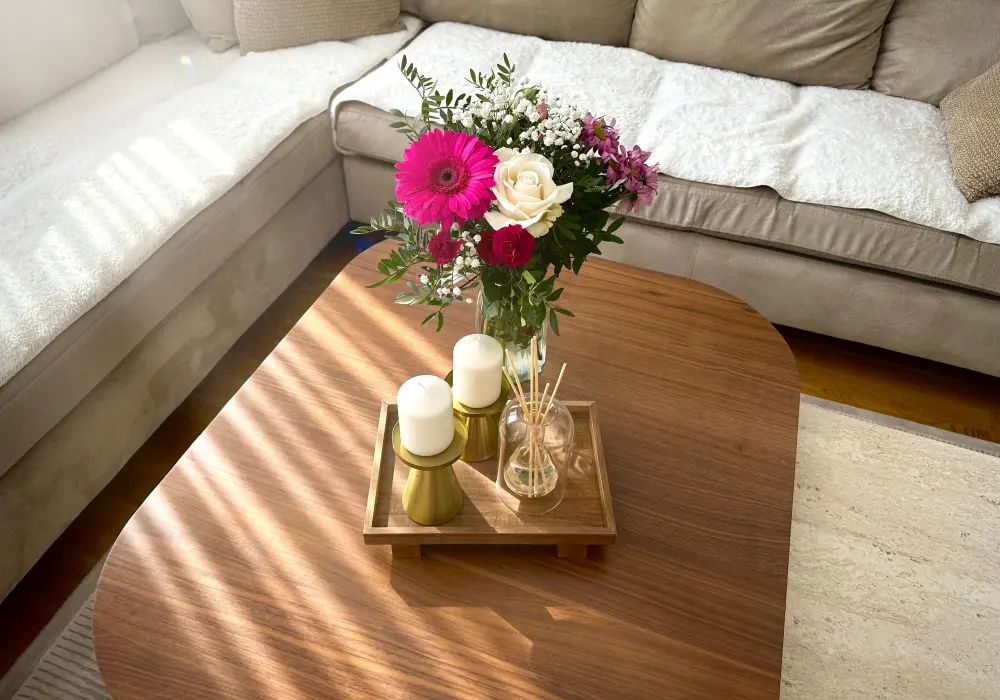
A tray creates a visual boundary and makes everyday items easier to move when you need the table for meals or entertaining. Choose a tray that leaves a visible border of tabletop around it. A useful starting point is to keep the tray at roughly one-third to one-half the table's width, depending on the table shape.
For a rectangular table, place the tray slightly off-center. On a round table, a round or square tray can create contrast. On a narrow coffee table, choose a shallow tray rather than a wide decorative box that consumes valuable space.
To keep small items from sliding, use a tray with a raised edge or add a thin non-slip liner underneath. Avoid attaching heavy décor permanently unless the surface and finish are designed for it.
Source pexels
Use books as visual layers
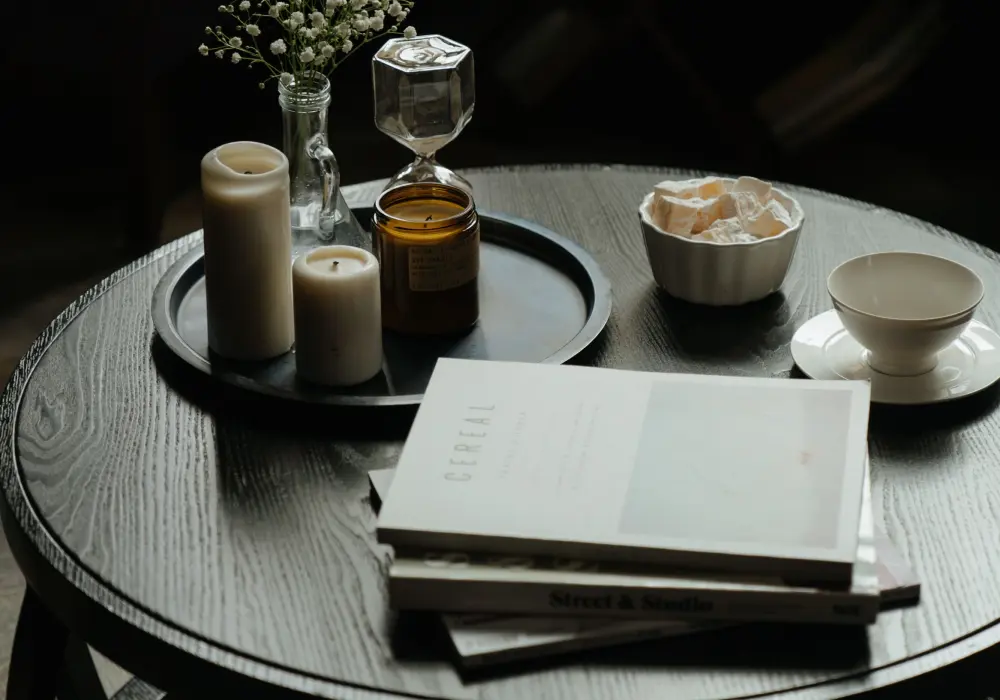
Books are both decorative and functional. Place two or three books in a horizontal stack, with the largest book on the bottom. A smaller decorative object can sit on top, such as a small bowl or candle holder.
If the table is large, create a second book grouping rather than building one extremely tall stack. You can also use magazines in a vertical holder or basket at one end of a large rectangular table.

Source pexels
Choose the right greenery
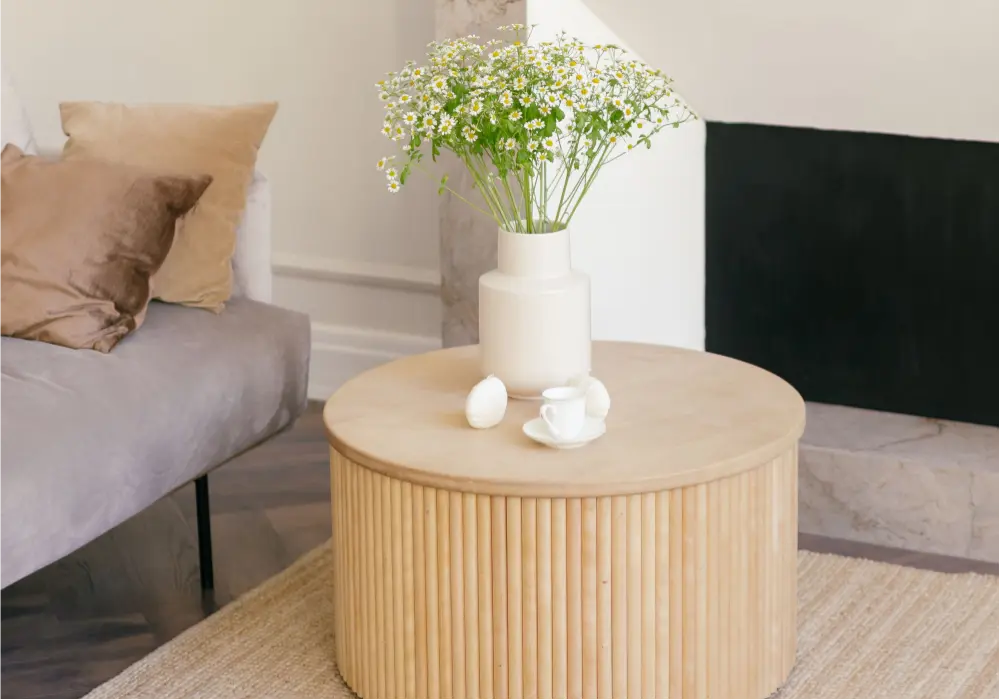
Real flowers bring fragrance and natural variation, but they require watering and can shed petals or pollen. Preserved or dried arrangements require less maintenance but can be more delicate. Faux greenery is highly practical for households that want a consistent appearance throughout the year.
A useful comparison:
Option | Advantages | Considerations |
Fresh flowers | Natural, fragrant, constantly changing | Requires water and regular replacement |
Dried/preserved | Long-lasting, textured, seasonal | Can collect dust and may be brittle |
Faux greenery | Easy care, consistent appearance | Quality varies; inexpensive versions may look artificial |
For a balanced arrangement, choose one dominant color and one or two supporting tones. A neutral room might use green, cream, and natural wood. A colorful room can repeat an existing accent color rather than introducing a completely new one.
Source pexels
Add lighting carefully
Candles and decorative lighting can make a coffee table feel warmer, but safety comes first. Use stable candle holders on a flat, heat-resistant base and keep open flames away from books, greenery, curtains, and anything flammable. Never leave a lit candle unattended.
For homes with children or pets, flameless LED candles can create a similar effect without an open flame.
Mix materials to keep the composition interesting. A good formula is one hard material + one soft/natural material + one reflective material. For example: ceramic + wood + glass. This creates contrast without requiring many colors.
For a narrow table or small side table, use a simple three-item template:
small tray + one book + compact vase
This gives you shape, height, and function without overwhelming the furniture.
Finally, protect the surface. Coasters, felt pads, small dishes, and heat-resistant mats can be incorporated into the design instead of hidden away. A set of attractive stone or leather coasters can actually become part of the styling.
Source pexels
Kid- and Pet-Safe Styling: Durable Materials and Easy Maintenance
A beautiful coffee table should also survive everyday life. When children or pets share the home, prioritize stable, durable pieces over delicate objects with sharp edges or narrow bases.
Good options include scratch-resistant wood finishes, tempered or reinforced glass where appropriate, substantial ceramic pieces, and metal décor with wide bases. Heavy objects are generally harder to knock over than lightweight decorative pieces, but they should still be positioned safely.
Avoid placing breakable glass objects near the table edge. Avoid tall, narrow vases in areas where pets or children can easily reach them. Sharp-edged sculptures and loose cords should also be kept away from active areas.
Instead of risky décor, consider these swaps:
Higher-risk choice | Safer alternative |
Open-flame candle | Flameless LED candle |
Tall narrow vase | Low, wide ceramic vase |
Delicate glass sculpture | Wood, metal, or solid ceramic object |
Small loose objects | Tray-contained accessories |
Sharp decorative box | Rounded-edge basket or bowl |
Placement matters as much as the material. Keep the heaviest objects toward the center or within a stable tray. Avoid stacking unstable items directly beside one another. Felt pads under ceramics and metal objects can also reduce scratching and help prevent sliding.
Maintenance should be simple enough to become a habit. Dust decorative items weekly, wipe spills as soon as they happen, and inspect the tabletop regularly for moisture rings or scratches.
Basic care by material
Surface | Routine cleaning | What to watch for |
Wood | Soft, slightly damp cloth; dry immediately | Standing water and heat |
Stone | Gentle cleaner suitable for the stone type | Acidic spills and harsh chemicals |
Glass | Glass cleaner or mild soapy water | Abrasive particles that can scratch |
Metal | Soft dry/mildly damp cloth | Excess moisture and abrasive cleaners |
A practical maintenance schedule is simple: quick wipe daily as needed, full surface cleaning weekly, and a deeper inspection monthly. Rotate decorative objects occasionally so one area of the table does not receive constant pressure, sunlight, or moisture exposure.
The best family-friendly styling is not necessarily the least decorative. It is styling that uses durable materials, stable forms, and fewer loose pieces.
Seasonal Coffee Table Decor: Simple Swaps to Keep Your Style Fresh
You do not need to completely redesign your coffee table every few months. A better approach is to keep the core structure and change only a few visible details.
Use this three-step seasonal swap method:
Step 1: Keep the core pieces
Keep your main tray, neutral vase, staple books, and other timeless objects. These are the foundation of the arrangement.
Step 2: Replace the small accents
Change one or two elements such as flowers, candles, a small bowl, decorative object, or book cover. This creates a noticeable update without requiring a full shopping trip.
Step 3: Adjust color and texture
Seasonal styling works largely because of changes in color and texture. Lighter fabrics and fresh greens can make a room feel brighter during warmer periods, while deeper tones, heavier ceramics, wood, and textured accessories can create a cozier feel during cooler periods.
For holidays or special occasions, focus on one themed layer rather than covering the entire table. A small decorative accent, seasonal greenery, or a subtly patterned object can signal the occasion while keeping the overall design cohesive.
Seasonal update framework
Season or occasion | Add | Keep | Swap |
Spring | Light ceramic accent | Tray, books, neutral vase | Fresh or faux greenery |
Summer | Bright flowers or natural materials | Core arrangement | Heavy textures |
Autumn | Warm-toned ceramic or dried stems | Books and tray | Colors and textiles |
Winter | Cozy textures, metallic or candlelight details | Core structure | Greenery and accent pieces |
Holiday | Small themed centerpiece | Neutral foundation | One or two accent pieces |
Storage is what makes seasonal decorating sustainable. Use separate boxes or fabric bags for seasonal accessories. Group similar items together, wrap fragile pieces individually, and label each container clearly. Keep an inventory on your phone so you know what you already own before buying more.
For a low-cost seasonal approach, reuse the same tray, books, vase, and neutral containers while changing greenery, candles, and small accents.
For a higher-end approach, invest in one or two statement pieces per season—such as artisan ceramics, premium preserved botanicals, or a distinctive decorative object—then reuse them for several years.
The key is to change the details, not the entire design. A well-styled coffee table should feel like part of the room rather than a constantly changing display.
Ultimately, decorating a coffee table is less about filling every inch and more about creating a clear visual hierarchy. Start with scale and proportion, choose a focal point that matches your lifestyle, layer a few complementary materials, protect the surface, and edit anything that feels unnecessary. With those principles in place, even a simple table can look polished, practical, and intentionally designed.
FAQ
How do I determine the right scale and proportion for my coffee table decor based on table shape and size?
Start by considering how much usable space you need. As a general guideline, decorative groupings should occupy roughly one-third to one-half of the tabletop, leaving open space for everyday use. Round tables often work well with one central grouping, while rectangular tables can support two or three smaller visual zones. Always consider the table height as well; very tall décor can interfere with sightlines and conversation.
What are centerpiece options that look stylish but remain safe for homes with kids and pets?
Choose stable, low-profile pieces with broad bases. Heavy ceramic bowls, substantial wood objects, low metal sculptures, and wide vases are practical options. Replace open-flame candles with flameless LED versions, and avoid delicate objects with sharp edges or narrow bases in high-traffic areas.
What are the best tray styling techniques and how do I choose the right tray size?
A tray should define a styling zone without taking over the table. A useful starting point is a tray that covers approximately one-third to one-half of the table's width, depending on the shape. Use it to group books, a bowl, a small vase, or candles. Raised edges and non-slip liners can help keep objects in place.
How should I arrange books and magazines to look curated rather than cluttered?
Use two or three books in a horizontal stack, placing the largest book on the bottom. Add one small object on top to create a clear focal point. On larger tables, use a second small grouping rather than creating one very tall pile. Choose books that relate to the room's colors or overall style for a more cohesive appearance.
How do I choose between real and faux flowers or greenery for a coffee table?
Choose fresh flowers when you value fragrance and natural variation and do not mind regular care. Dried or preserved arrangements work well for texture and longevity. Faux greenery is the easiest option for consistent, low-maintenance styling. The quality and realism of faux plants matter, so choose materials and shapes that look convincing from normal viewing distance.
How can I protect my coffee table surface from heat, spills, and scratches while keeping it stylish?
Use attractive coasters, felt pads, decorative trays, and heat-resistant mats as part of the design. Wipe spills promptly, particularly on wood and porous stone. Avoid placing hot objects directly on the tabletop, and use protective pads underneath ceramics, metal décor, and other objects that may scratch the surface.
Can you provide an easy seasonal swap plan for coffee table decor, including timing and storage tips?
A simple approach is to make a seasonal refresh four times a year, or before major holidays. Keep the tray, books, and neutral centerpiece as permanent pieces. Replace greenery, one or two small accessories, and selected colors or textures. Store seasonal items in labeled containers, wrap fragile pieces individually, and group items by season so the next swap takes only a few minutes.