

Choosing patio furniture is about more than picking a style you like. The right outdoor furniture needs to fit your space, match your local climate, feel comfortable for everyday use, and hold up to sun, rain, wind, and seasonal changes. It should also fit your budget and be practical to assemble, maintain, store, and repair.
Before you buy a patio dining set, lounge chairs, or an outdoor sectional sofa, start with measurements and your intended use. Then compare frame materials, cushions, fabrics, construction quality, and warranties. This approach helps you avoid common problems such as blocked doorways, rusting frames, faded cushions, or furniture that becomes difficult to store during severe weather.
This guide explains how to choose patio furniture step by step, with practical measurements, material comparisons, budget guidance, and maintenance tips to help you make a confident purchase.
Table of Contents
Measure Your Patio and Define How You’ll Use It
The best way to choose patio furniture is to measure your available space before looking at styles or furniture sets. A beautiful six-person dining set is not a good choice if it blocks your back door or leaves no room to walk around it.
Measure the Usable Space, Not Just the Total Patio Size
Measure the patio or balcony's usable length and width, then subtract areas that cannot realistically hold furniture. Pay particular attention to:
- Door-opening and door-swing areas
- Steps and stairs
- Outdoor grills and fire pits
- Permanent planters or large trees
- Utility equipment
- Existing railings and pathways
Leave approximately 90–100 cm (889–1016 mm) for comfortable walking routes wherever possible. This is especially important between a dining table and a wall or between seating and a frequently used door.
A simple paper or painter's-tape outline on the floor can help you visualize the footprint before ordering anything. If you're buying a sectional, measure the individual sides rather than relying only on the manufacturer's advertised overall dimensions.
Match Furniture to the Way You Use Your Patio
Think about what you actually do outdoors. A small bistro table may be ideal for morning coffee for two, while a family that regularly hosts barbecues may need a dining table with six or more seats.
Patio use | Furniture to consider | Key measurement |
Coffee for two | Bistro table + 2 chairs | Small footprint |
Family meals | Dining table + 4–8 chairs | Table clearance |
Lounging | Sofa + lounge chairs + coffee table | Walking space |
Entertaining | Sectional + extra chairs | Flexible seating |
Balcony dining | Folding table + narrow chairs | Door and railing clearance |
Game-day parties | Modular seating + side tables | Easy circulation |
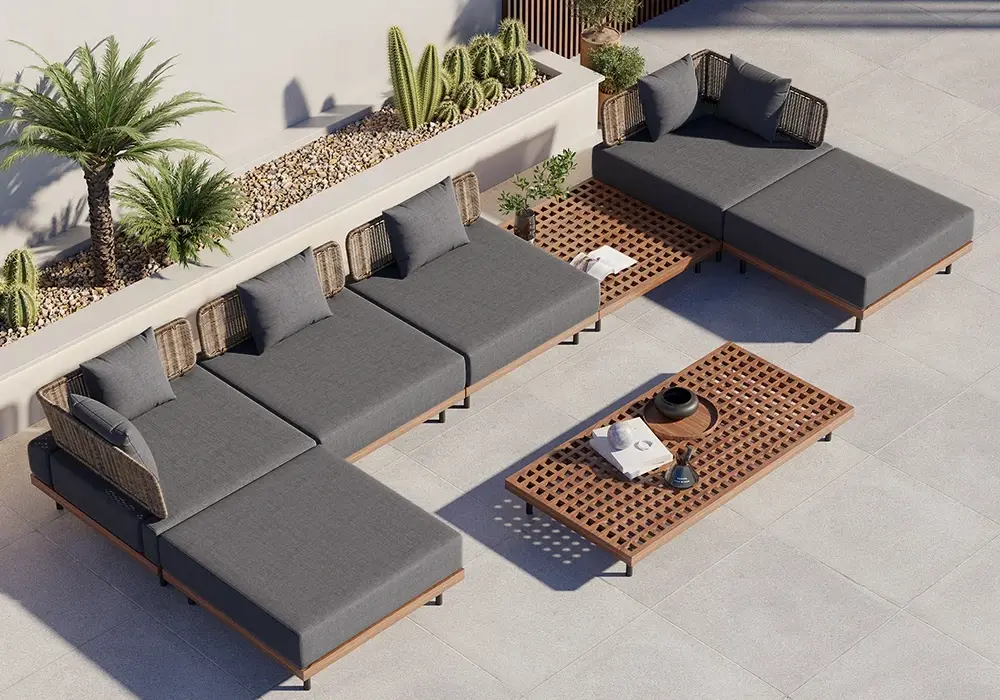
For a larger patio or spacious outdoor entertaining area, a modular sectional can provide plenty of seating while allowing you to adjust the layout to suit different occasions. For example, the 8 PiecesTeak & Aluminum & Rattan Outdoor Sectional Sofa Set with Coffee Table offers multiple seating pieces that can be arranged in different configurations, making it a practical option for creating a flexible lounge area for family gatherings or guests.
The goal is not to fit as much furniture as possible. Instead, create enough seating for your typical use while preserving a clear traffic path.
Choose Patio Furniture Materials for Your Climate
Once you know what will fit, choose materials based on your local weather. “Weather-resistant” does not mean every material performs equally well in every climate.
Consider four major environmental factors: sun exposure, rainfall and humidity, salt or chlorine exposure, and freezing temperatures.
Compare Outdoor Furniture Frame and Surface Materials
Material | Best suited to | Main advantages | Watch-outs |
Powder-coated aluminum | Sun, humidity, general outdoor use | Lightweight, corrosion-resistant, easy to move | Coating can chip or scratch |
Stainless steel | Humid or modern outdoor settings | Strong and corrosion-resistant | Salt exposure can require extra care |
Teak | Wet climates and premium patios | Naturally durable, attractive aging | Expensive; benefits from regular care if preserving its color |
HDPE outdoor lumber | Wet, sunny environments | Low maintenance, moisture-resistant | Heavy and usually more expensive |
Resin/woven resin | Humid climates and casual patios | Easy cleaning, lightweight options | Quality varies significantly |
Wrought iron | Traditional patios, windy areas | Heavy, sturdy, classic appearance | Can rust if protective coating fails |
Powder-coated aluminum is one of the most versatile choices because the frame is lightweight and does not rust like untreated steel. It works particularly well when furniture needs to be moved or stored regularly.
For coastal homes, however, don't assume that every corrosion-resistant metal is equally suitable. Salt-laden air can accelerate corrosion, especially around scratches, fasteners, joints, and exposed hardware. Stainless steel and properly finished aluminum can be good choices, but regular rinsing can still help remove salt deposits.
Teak is another strong option for outdoor use. Its natural oils help it tolerate moisture, while its appearance can gradually change from golden brown to a silvery gray if left unfinished.
Consider a Mixed-Material Patio Furniture Set
You don't have to choose one material for everything. A mixed-material design can provide better performance and aesthetics.
For example, an aluminum frame with teak armrests combines a corrosion-resistant structural material with the warmth of real wood. An HDPE tabletop paired with a coated metal base can provide a wood-like appearance without requiring the same level of wood maintenance.
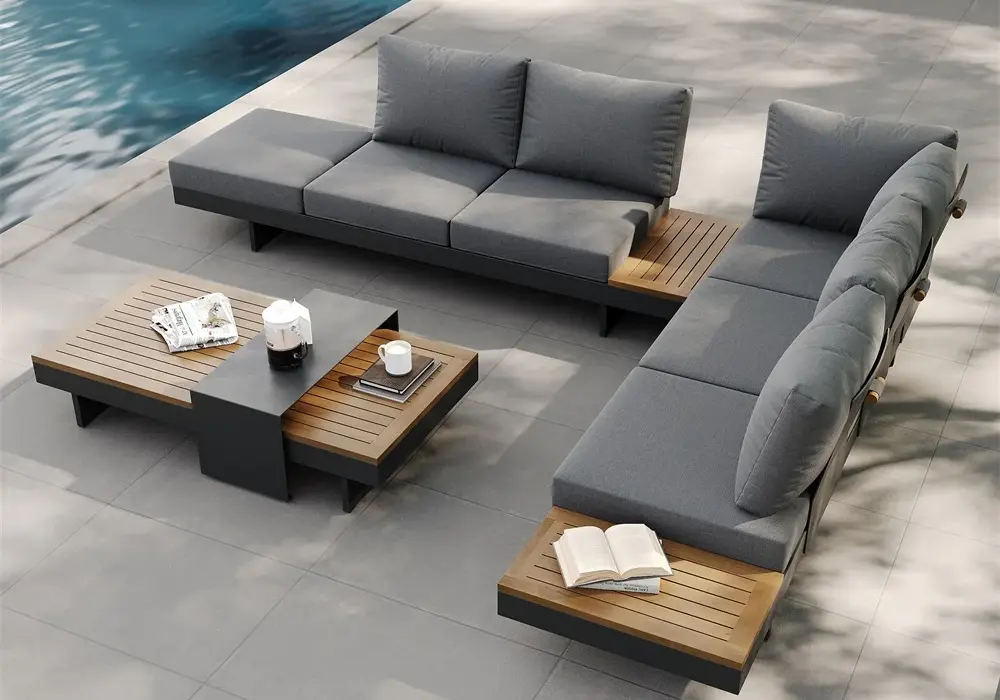
For shoppers who want to combine teak's natural appearance with a metal frame, the Tevara 4-Piece Outdoor Teak & Aluminum Modular Sofa Set with Coffee Table for 6 in Gray is an example of this mixed-material approach. It pairs teak with an aluminum frame and uses a modular configuration that can work as two sofas or an L-shaped arrangement.
In regions with intense sun, pay attention to the surface finish and UV resistance, not just the underlying material. In freeze-thaw climates, choose construction that can tolerate seasonal temperature changes and avoid trapping water in vulnerable joints.
Select Comfortable Cushions, Fabrics, and Ergonomic Designs
Outdoor furniture can be durable and still be uncomfortable. Before buying, evaluate the complete seating system—including the frame, cushion, fabric, and body support.
Check Seat Height, Depth, and Back Support
For dining furniture, a seat height around the typical dining-chair range works best with a standard-height table. Lounge furniture generally uses a lower, deeper seat.
Pay attention to:
- Seat height: Affects how easily you sit down and stand up.
- Seat depth: Deeper seats can be relaxing but may be uncomfortable for shorter users.
- Backrest angle: A more reclined angle is better for lounging than formal dining.
- Armrest height: Should allow your arms to rest naturally without raising your shoulders.
- Lumbar support: Important if you expect to sit for long conversations.
- Cushion thickness and density: Influences both initial softness and long-term support.
Don't judge a cushion simply by pressing it with your hand. If possible, sit on the furniture for several minutes and change positions. A very soft cushion may feel comfortable initially but provide insufficient support during a long meal.
Choose Outdoor Cushion Foam and Fabrics Carefully
Outdoor cushions are exposed to moisture and ultraviolet radiation, so their internal foam and exterior fabric both matter.
Quick-dry foam can allow water to move through the cushion more easily, which is useful in rainy or humid climates. High-resilience foam can provide better long-term support, while removable covers make cleaning and replacement easier.
For fabric, look for materials designed specifically for outdoor use.
Outdoor fabric | Strengths | Considerations |
Solution-dyed acrylic | Excellent color retention and UV resistance | Often costs more |
Olefin | Good moisture and mildew resistance | Performance varies by construction |
Polyester | Affordable and widely available | May fade faster without strong UV protection |
Solution-dyed acrylic is often a strong choice for patios exposed to intense sunlight because the color is incorporated into the fibers rather than applied only to the surface.
No outdoor fabric is completely immune to fading. If cushions receive direct afternoon sun every day, use removable covers, shade, or storage whenever practical.
Compare Budget, Style, Assembly, and Warranty Before You Buy
Price should not be the only factor when choosing patio furniture. A cheaper set may cost more over time if the frame fails, cushions cannot be replaced, or assembly hardware deteriorates quickly.
Build Your Patio Furniture Budget by Component
Prices vary widely by retailer, material, size, construction, and region, but a useful approach is to divide your budget into furniture categories rather than shopping for a single “set.”
Budget level | Typical purchase | What to prioritize |
Entry level | Basic chairs or compact bistro set | Functional design and frame quality |
Mid-range | Four- to six-seat dining set or sofa | Better frames, cushions, finishes |
Premium | Large sectional or six- to eight-seat dining set | Construction, materials, replaceable components |
As a general planning guide, a basic aluminum patio chair may cost roughly $50–$150, while a complete six-person outdoor dining set can range from several hundred dollars to well over $2,000, depending heavily on materials and construction.
If your budget is limited, spend more on the components that are difficult or expensive to replace: frames, joints, hardware, hinges, and cushions with replaceable covers. You can save money on decorative pillows, small side tables, and accessories.
Match the Style to Your Home
Outdoor furniture should look intentional alongside your home's exterior. Consider the color of the siding or brick, existing railings, deck boards, patio tiles, doors, and landscaping.
If the exterior already has several strong colors or patterns, neutral furniture can create balance. If the architecture is simple, furniture with textured wood, woven details, or accent cushions can add visual interest.
Check Assembly Requirements and Warranty Coverage
Large patio sets can take significantly longer to assemble than individual chairs. Before buying, check:
- Number of pieces requiring assembly
- Estimated assembly time
- Whether special tools are needed
- Replacement hardware availability
- Frame warranty length
- Finish or coating coverage
- Cushion and fabric warranty
- Fade or color-retention coverage
- Whether the warranty covers commercial or coastal use
A long warranty is useful only if you understand what it covers. A “10-year warranty” on the frame does not necessarily mean cushions, fabric, finish, or hardware are protected for 10 years.
Plan Patio Furniture Maintenance, Storage, and Severe Weather Protection
Maintenance should be part of the buying decision, not an afterthought. Before purchasing, decide how you will handle rain, strong winds, snow, and prolonged periods of non-use.
Match Cleaning to the Material
A simple maintenance routine is usually enough for most outdoor furniture.
Material | Basic maintenance |
Aluminum | Wipe regularly with mild soap and water; inspect coating for chips |
Stainless steel | Clean periodically and rinse away salt deposits |
Teak | Brush or wash as needed; use teak products if you want to preserve its original color |
HDPE | Wash with mild soap and water |
Resin | Clean regularly to prevent dirt buildup |
Wrought iron | Inspect for rust and repair damaged protective coatings |
Avoid aggressive cleaners unless the manufacturer specifically recommends them. Harsh chemicals can damage finishes, fabrics, and protective coatings.
Decide Whether to Cover, Secure, or Store Furniture
Think of severe-weather protection as three levels:
Cover it: Use breathable, properly fitted covers for furniture that stays outdoors. Avoid covers that trap moisture against cushions and frames.
Secure it: Lightweight chairs and tables may need furniture straps, anchoring hardware, weighted bases, or other wind-resistant solutions. Never assume a heavy-looking chair cannot become airborne during strong winds.
Store it: Cushions, umbrellas, lightweight furniture, and other removable pieces are often better kept in a garage, shed, storage room, or other protected location.
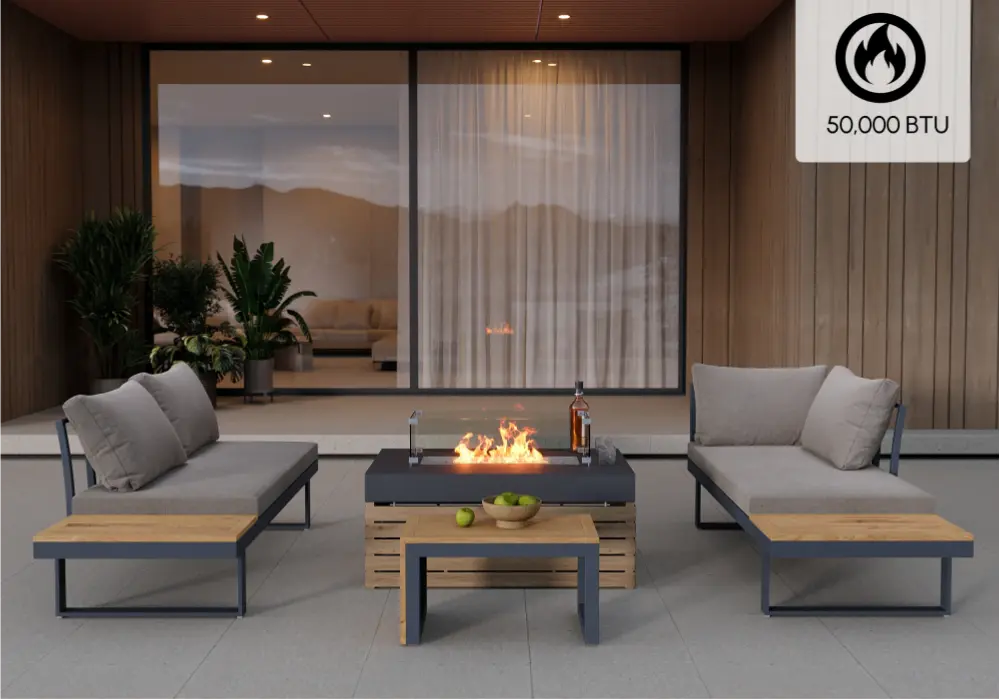
If you're considering a fire-pit sectional, weather and safety planning become even more important. The 4-Pieces Modular L-Shaped Teak Sectional Outdoor Sofa Set with Fire Pit in Gray uses a propane fire pit and includes a glass cover, but the manufacturer specifies that the propane tank should remain upright and that flammable materials should be kept at least 25 feet away. Always follow the product's safety instructions and local fire regulations when installing and using this type of furniture.
For windy patios, lightweight aluminum furniture can be convenient but may need extra securing. For winter climates, storing cushions indoors is especially important. Let them dry completely before storage, and avoid sealing damp cushions in airtight containers where trapped moisture can encourage mildew.
If snow and freezing temperatures are common, follow the manufacturer's winter-storage instructions. Some outdoor furniture can remain outside, while other products should be stored under cover to prevent moisture, ice, and freeze-thaw damage.
Final Thoughts: Choose Patio Furniture for the Way You Actually Live
The best patio furniture is not necessarily the most expensive or fashionable option. It is the furniture that fits your available space, supports the way you use your outdoor area, and matches the weather conditions it will face.
Start by measuring your patio and planning traffic flow. Next, narrow your choices by climate and material. Then evaluate comfort, fabric performance, construction quality, budget, warranty, assembly, and storage. This process may take a little longer than choosing a set based on appearance alone, but it can prevent expensive mistakes later.
For an even easier purchase, create a simple patio furniture measurement card with your usable dimensions, door clearance, desired seat count, preferred table height, climate concerns, and maximum budget. Keep it with you while shopping so every option can be compared against the same requirements.
If you're still unsure, note your patio dimensions, climate, number of people you need to seat, and typical weather conditions. Those details make it much easier to narrow down the right frame, surface, cushion, and furniture configuration for your space.
Frequently Asked Questions About Choosing Patio Furniture
What is the most weather-resistant material for outdoor patio furniture in full sun and rain?
There is no single best material for every climate. Powder-coated aluminum, quality teak, HDPE outdoor lumber, and well-made synthetic resin furniture can all perform well outdoors. In full sun, prioritize UV-resistant finishes and fabrics. In rainy climates, prioritize moisture-resistant construction and cushions that can dry quickly.
How do I measure my patio or balcony before buying patio furniture?
Measure the usable length and width, then subtract areas occupied by doors, stairs, grills, planters, and other permanent objects. Mark the door swing and preserve approximately 90–100 cm of walking clearance where possible. Also compare the furniture's individual dimensions with the access route to your patio, including gates, stairs, and doorways.
How can I keep outdoor cushions from fading or getting moldy?
Choose outdoor fabrics with strong UV resistance, such as solution-dyed acrylic, and use breathable covers when furniture is not in use. Allow cushions to dry thoroughly after rain and store them in a dry, ventilated location during prolonged wet weather. Removable, washable covers make regular maintenance much easier.
Which patio furniture frame materials won't rust in humid or coastal climates?
Aluminum does not rust like iron or untreated steel and is a popular choice for humid environments. Stainless steel can also perform well, although coastal salt exposure still requires cleaning and maintenance. Teak and quality synthetic materials are alternatives when you want to minimize metal corrosion concerns.
Can I leave outdoor patio furniture outside during winter?
It depends on the furniture, climate, and manufacturer's instructions. Some durable furniture can remain outdoors with suitable covers, while cushions and lightweight pieces are usually better stored indoors. In areas with snow and freezing temperatures, storing or sheltering furniture can reduce the risk of moisture, ice, and freeze-thaw damage.
How much should I budget for good-quality outdoor patio furniture?
A basic aluminum chair may cost around $50–$150, while a complete six-person dining set can range from several hundred dollars to more than $2,000. Premium teak, HDPE, performance fabrics, and large sectionals can cost substantially more. Rather than focusing only on the initial price, compare frame construction, replaceable cushions, hardware, finish quality, and warranty coverage.
How do I stop lightweight patio furniture from blowing over on a windy patio?
Use furniture anchors, straps, weighted bases, or other manufacturer-approved securing methods. Stack or store lightweight chairs when severe weather is expected, and bring cushions and umbrellas indoors. Avoid relying solely on furniture covers because poorly secured covers can catch wind and make the problem worse.