

To choose outdoor furniture, define the main activity, measure the usable space, identify weather exposure, and compare the complete materials and care requirements. When browsing outdoor sofa sets, begin with a layout that supports your household’s normal use. Then narrow the options by comfort, maintenance, included pieces, and total purchase cost rather than selecting a set from its photograph alone.
A useful patio does not need the largest possible furniture arrangement. It needs enough comfortable seating, convenient surfaces, and clear routes. Those practical choices create a space you can use on an ordinary afternoon as well as when guests arrive.
Table of Contents
Step 1: Choose One Main Activity
Decide whether the area is primarily for conversation, lounging, dining, or gathering around a fire feature. A space can support more than one activity, but knowing the main one helps resolve compromises in seat depth, table height, and layout.
For conversation, consider how people face each other and where drinks will go. For lounging, prioritize the seating posture you enjoy and any approved adjustments. For dining, start with an appropriate eating surface and upright seating rather than assuming a low coffee-table set can handle regular meals.
Count the regular users separately from occasional guests. A four-person household may benefit more from four excellent everyday places and flexible extra seating than from a large permanent arrangement that crowds the patio throughout the week.
Write a brief use scenario: two people having morning coffee, four sharing weekend drinks, or six gathering in the evening. Compare each product with that scene. A concrete scenario is easier to evaluate than a vague wish for more outdoor living.
Step 2: Measure the Entire Usable Area
Draw the patio and mark doors, steps, planters, grills, fixed walls, and drainage areas. Include the routes people already use between the house and garden. The open floor area on a property plan may be larger than the area that can actually hold furniture.
Measure each proposed piece using the technical dimensions. Overall width includes arms and framing, while a sectional’s return can project into a route. Check both dimensions of an L-shaped set instead of considering only its longest side.
Mark the outline with removable tape or paper templates. Walk through the layout, open the door, and carry a tray along the intended route. Test the occupied arrangement rather than only the empty furniture footprint.
Use about 36 inches as an initial target for a clear main route where practical, allowing more for passing or accessibility needs. The appropriate dimensions depend on the site and users; relevant local requirements take priority over a general planning target.
Step 3: Match the Layout to the Space
A sofa with separate chairs can create a flexible conversation area. A sectional offers continuous seating and can help define an outdoor room. Neither format is inherently more space-efficient in every patio; the actual dimensions and approach paths determine the result.
Furniture format | Useful when | Check before buying |
Sofa with separate chairs | You want conversation and flexible orientation | Space between pieces and access to each seat |
L-shaped sectional | You have a suitable corner or a defined lounge zone | Return depth and the main circulation route |
Modular set | You expect to use more than one approved arrangement | Connectors, dimensions, and cover fit in each layout |
Dining arrangement | Full meals are the priority | Seat-to-table relationship and occupied chair space |
Fire-pit set | Evening gatherings are central | Exact appliance instructions and clearances |
Leave room for the smaller functions as well. A place to set a cup and an unobstructed way to reach the house can be more valuable than one extra seat. Do not fill every open corner simply because the set includes another piece.
Step 4: Assess Weather Exposure Honestly
Observe the location during different parts of the day. Note direct sunlight, shade, roof runoff, irrigation, and wind exposure. A sofa under a deep roof may need a different protection routine from one on an open deck.
Consider how you will manage bad weather when you are away. If moving cushions into storage is unrealistic, ask more detailed questions about the complete cushion construction and approved protection. Do not assume a performance label eliminates the need for care.
For exposed or windy locations, get guidance on appropriate furniture placement and storm preparation. Heavier furniture is not automatically a complete solution. Loose cushions, covers, and accessories also need to be handled according to their instructions.
If the site has special conditions such as salt deposits or frequent pool splashes, describe them to the seller. Request relevant material and cleaning information instead of treating generic weather resistance as proof of suitability for every exposure.
Step 5: Compare Materials and Care Together
Break each set into the frame, weave, fabric, filling, tabletop, and hardware. Ask what each component is made from and how it should be maintained. This avoids assuming that one attractive material description applies to the entire product.
Teak provides natural wood character, while metal and woven details can create lighter-looking forms. Appearance should be considered alongside the finish, connections, and cleaning access. Confirm the exact material rather than inferring composition from a photograph.
For upholstery, ask about the current textile, removable covers, approved cleaning method, and replacement options. A removable cover may still require hand cleaning. A water-resistant surface does not necessarily keep the filling dry during prolonged rain.
Read the care routine before committing. Count the cushions and decide where they will dry or be stored. A set that needs more maintenance than you can provide is a poor fit even if its appearance and price are appealing.
Step 6: Test Comfort With Your Normal Posture
Check the occupied seat height, usable depth, back support, and arm position. Sit as you would at home: upright for conversation, relaxed for reading, or reclined only where the design permits. A single styled pose does not reveal everyday comfort.
Shorter and taller users may prefer different seat depths. A deep cushion can be enjoyable for lounging while making upright sitting less convenient. Consider the people who will use the furniture regularly rather than assuming one generous dimension suits everyone.
Evaluate the table as part of the seating experience. Can each person reach a drink without stretching? Can guests enter and leave easily? If dining is important, verify a dining-appropriate table instead of relying on a coffee table.
Step 7: Compare Three Homary Directions
The three-piece coffee-color rattan outdoor sofa set is a useful starting point for a smaller coordinated arrangement. Check its individual dimensions and confirm the current woven-material specification. A compact-looking photograph is not a substitute for measuring the usable seating and table footprint.
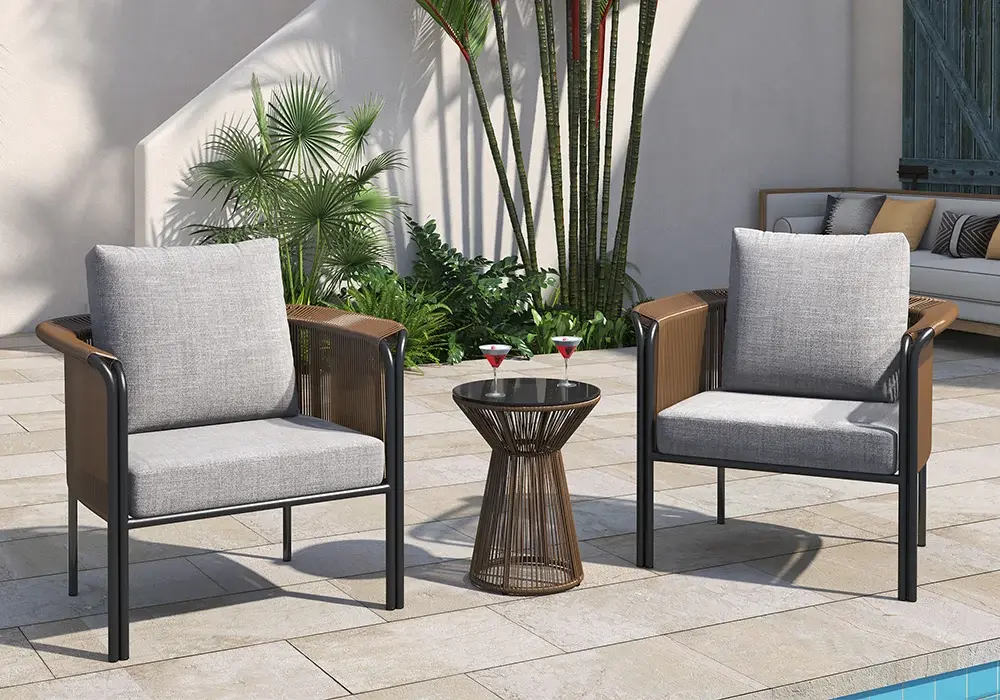
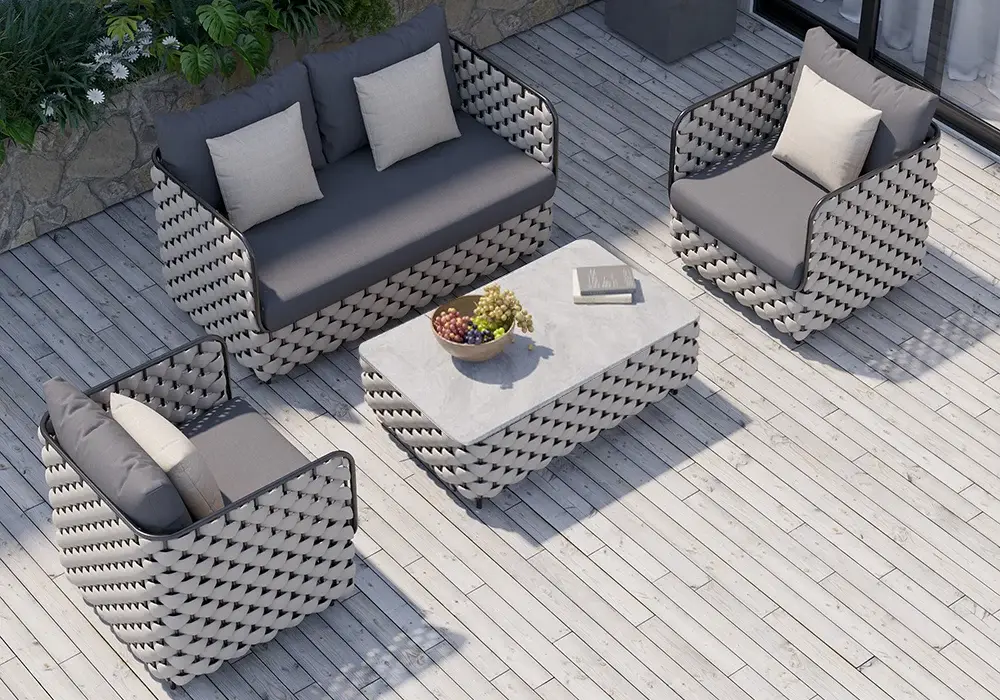
The Martic four-piece outdoor sofa set with rope detailing offers another conversation format with a matching table. Compare the separate pieces with your desired seating orientation and access routes. Check the selected materials and cushion care before assuming it suits an uncovered location.
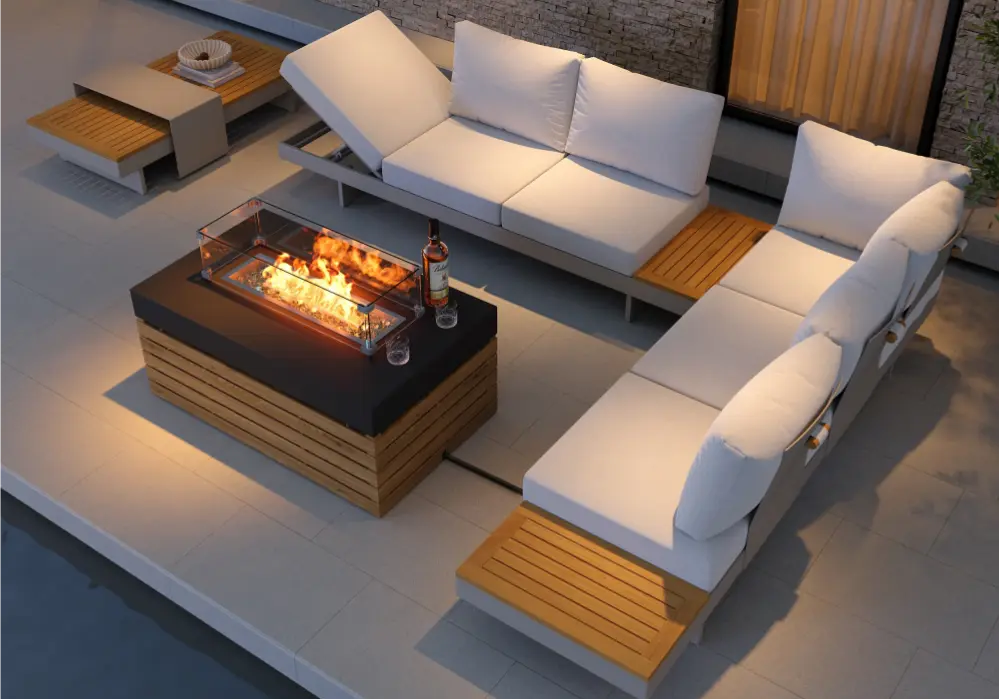
The Tevara five-piece outdoor teak modular sofa set with fire pit addresses a different use scenario: a lounge gathering around a fire feature. Assess the appliance requirements and approved furniture arrangement first. It should be chosen for that documented function rather than treated as an interchangeable dining set.
These examples serve different layouts. Compare each with the main activity you identified rather than ranking them by piece count alone.
Step 8: Check the Complete Order and Ownership Cost
Record the exact selected configuration, color, included cushions, tables, covers, and other components. Product names can remain similar across variants, so make sure the order matches the version you evaluated.
Check the delivery route and carton dimensions. A patio accessible only through a house, narrow gate, or stairs needs a handling plan. Confirm assembly requirements and current services before placing the order.
Add any needed covers, storage, additional seating, or assembly to your budget. Avoid assuming that the set price represents a fully finished patio. Compare complete arrangements with the same intended function.
Review replacement support and warranty details. Ask how to obtain cushion covers, hardware, or mechanism service where relevant. Keep the care and assembly information with your purchase record so future maintenance is easier.
Check the Space at the Time You Will Use It
Visit the proposed seating position during your usual outdoor hours. Notice glare, access to shade, nearby activity, and whether the preferred view is comfortable from the seat direction you planned. Moving the arrangement slightly can improve use without adding more furniture.
Keep lighting and accessories in proportion to the main layout. Make sure they do not occupy the table space or walking route you have preserved. Complete the seating arrangement first, then add only the items that support the way you will actually use the patio.
Frequently Asked Questions
What should I choose first: style or material?
Start with activity, space, and exposure. Those requirements narrow the suitable layouts and materials. Then choose a style you enjoy within that shortlist. This makes the final furniture more likely to work in ordinary use.
Is a sectional better than separate chairs?
It depends on the patio. A sectional can define a lounge zone, while separate chairs allow more flexible orientation. Compare the actual occupied layouts and entry paths rather than assuming either format always saves space.
Can outdoor cushions stay outside all the time?
Follow the product’s instructions. Outdoor upholstery still needs appropriate drying, cleaning, and protection. Check the complete cushion construction and seasonal guidance before planning to leave everything exposed throughout extended wet weather.
How do I avoid buying too much furniture?
Mark the full arrangement on the floor and rehearse everyday use. Keep the main route clear and provide convenient surfaces for the regular users. Add flexible guest seating only after the essential layout works comfortably.
Is a fire-pit set a good first purchase?
It can be if evening gatherings are your main goal and the site meets the appliance’s requirements. Read the manual and verify clearances before ordering. Choose the complete arrangement because it supports your intended use, then confirm the materials, care, and delivery details.