

Let’s be honest for a second - we’ve all done it. You spend hours scrolling through Instagram or Facebook, you fall madly in love with a well-designed, architectural dining chair, and you hit "add to cart" without a second thought.
Then delivery day arrives. You are so excited to assemble the chairs, slide them under your dining table, sit down, and… thwack. Your thighs are wedged so tightly against the bottom of the table that you feel like you’re locked in a theme park ride. Or worse, you host a dinner party, and by the time dessert rolls around, your guests are visibly squirming because the chairs are about as comfortable as a wooden church pew.
This shows that choosing the right dining chairs isn't just about aesthetics. It is, quite literally, a game of math, anatomy, and structural compatibility.
As someone who has navigated the endless maze of furniture procurement, I can tell you that buying dining chairs requires a smart and strategic approach. You need to look past the pretty upholstery and ask the hard questions: Will this fit under my table’s apron? Will the fabric survive my child’s spaghetti night? Will my back hurt after sitting and keeping a two-hour conversation?
With these questions in mind, let’s get straight to the point and dive directly into the exact rules on choosing, with dining chair dimensions, and materials you need to know, before making a choice that you might regret.
Table of Content
Why Do Some Chairs Hurt Your Back? (And How to Fix It)
Ever experienced the "20-minute ache"? You sit down, everything feels fine, but soon you're shifting around because your lower back feels stiff. That’s bad ergonomics.
To fix this, check the backrest recline angle. A strict 90-degree backrest looks stunning but is a nightmare for your spine. For lingering dinners or working from home, you need a slight backward pitch—ideally a 100 to 110-degree angle.
Then, factor in Cushion Sinkage. This is the trap everyone falls into. If you buy a softly upholstered 457 mm tall chair, a 68 kg adult will compress that foam by at least 25 mm. Suddenly, you're sitting at 419 mm, and your chin is uncomfortably close to your plate. Always account for sinkage when calculating your ideal height!
Will Your Chairs Actually Fit Under the Table?
This is where design dreams go to die. Measuring your table's length isn't enough. You have to check the base.
- First, look for an Apron—the wooden panel dropping down under the tabletop. If your table has a 76 mm apron, your vertical legroom just shrank by 76 mm. You cannot use high armchairs here; they’ll crash into the wood and stick out into your room.
(Note: If you want to double-check standard dining room clearances, the experts at The Spruce have an excellent guide on dining room layout standards that perfectly backs up these spatial rules).
- Next, beware of Pedestal and Trestle tables. A single center pedestal takes up floor space. If your chairs have deep seats or splayed legs, they’ll hit that center base before fully tucking in. Always measure the clearance between the table legs at floor level, not just the top.
Tight on Space? Smart Layouts for Small Dining Rooms
Space is a luxury. If your dining area is tight, your chairs need to work harder.
Armless chairs are your best bet here. Armrests require more physical space and visually clutter a room. A sleek, low-profile chair creates an unbroken line of sight, making your room feel much larger.
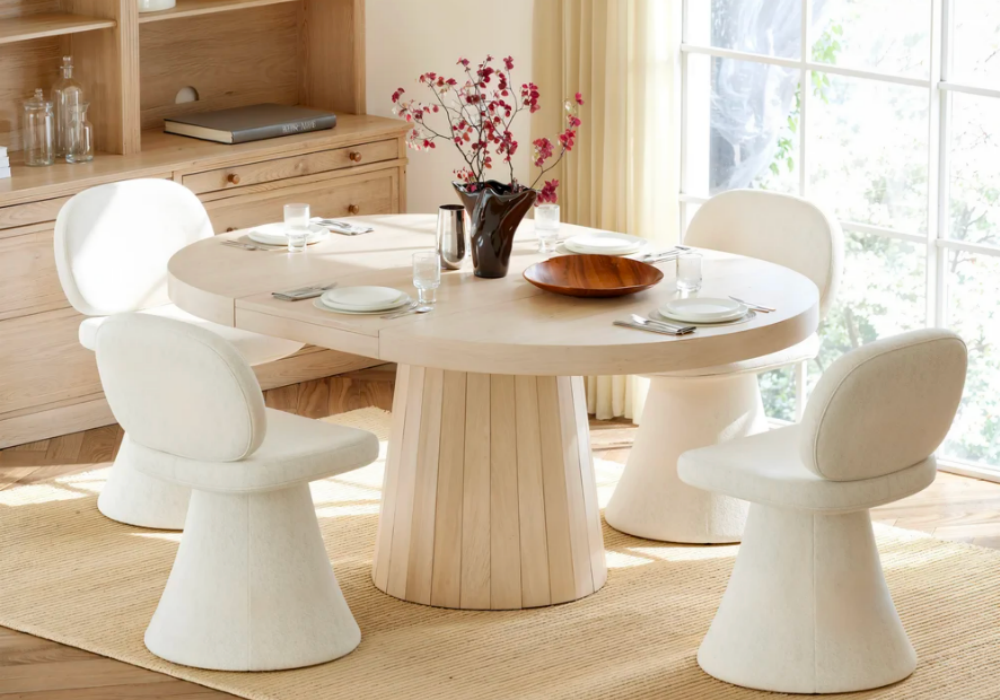
Also, consider the Swivel Dining Chair. In modern open-concept homes, the dining table is for eating, working, and hanging out. Swivel chairs let you eat, then effortlessly rotate to watch TV or chat with someone in the kitchen.
If you’re trying to maximize a compact layout, this can save up to 20% of your walkways while keeping a high-end designer look.
Which Materials Survive Kids, Pets, and Daily Use?
A white linen chair is beautiful—if you live alone and never drink red wine. For real life, durability is non-negotiable. Here’s the reality check on materials:
- Got Cats? Avoid tweeds or bouclé. They are basically $600 scratching posts. Instead, pick velvet or commercial-grade microfiber. They have no loose loops for claws to catch.
- Kids and Spills? Genuine top-grain leather is incredible and lasts decades, but it's pricey. High-grade faux leather (PU) gives you the same wipe-clean ease on a budget. Just ensure it has a high rub count so it doesn't peel after two years.
- Zero Anxiety? Solid wood or metal. No stains, no fuss. Just add a good tie-on cushion if you want to avoid that 20-minute ache.
Bonus Tip: Check the weight capacity. Look for solid frames rated for at least 136 kg. It’s a strong indicator of overall build quality and longevity.
Want the "Mismatched" Look? Here’s How to Pull It Off
We see it all over Instagram: that perfectly imperfect dining room where none of the chairs match, yet the whole space looks effortlessly chic. It’s called the eclectic look, and when done right, it screams high-end design. When done wrong? It looks like you raided a local garage sale.
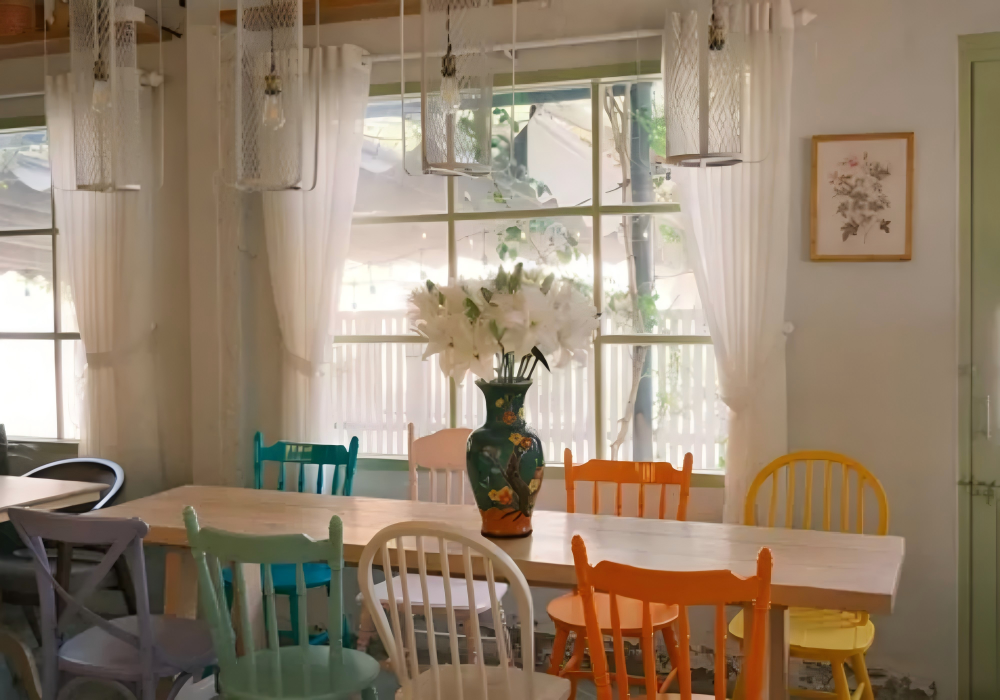
Source: Pexel
If you want to break free from the boring "matching furniture set" trap, you need to follow a few strict visual rules:
The easiest trick in the book is the "Host Chair Anchor" method. Keep the side chairs along the length of your table identical, but swap out the two chairs at the head and foot of the table (the host chairs). You can go wild here. If your side chairs are simple black wood, make your host chairs fully upholstered in a rich, olive-green velvet. It creates instant drama and anchors the room.
Want to mix all the chairs? You need a unifying thread.
- Same color, different shapes: Buy four completely different chair designs (a Wishbone chair, a Windsor chair, a modern metal chair, etc.), but paint them all matte black. The uniform color pulls the chaotic shapes together.
- Same shape, different colors: Buy the exact same chair model, but mix the finishes. Two in natural oak, two in black, and two in a pop of color like navy blue.
Golden Rule for Mixing: I mentioned this briefly before, but it’s worth repeating—never mix seat heights. If your vintage wooden chair has a 406 mm seat and your modern upholstered chair has a 483 mm seat, your guests will literally be talking up and down to each other. Keep seat heights within a 13 mm of each other across all your mixed chairs.
Should You Actually Buy Chairs with Arms?
There is an ongoing debate in the interior design world about armchairs at the dining table. Let’s break down the reality of living with them.
Chairs with arms (often called carvers or captain's chairs) offer superior comfort. If you are someone who loves to host three-hour dinner parties where the wine keeps flowing long after the plates are cleared, armrests give your guests a place to physically relax. They take the tension off the shoulders.
But they are space hogs.
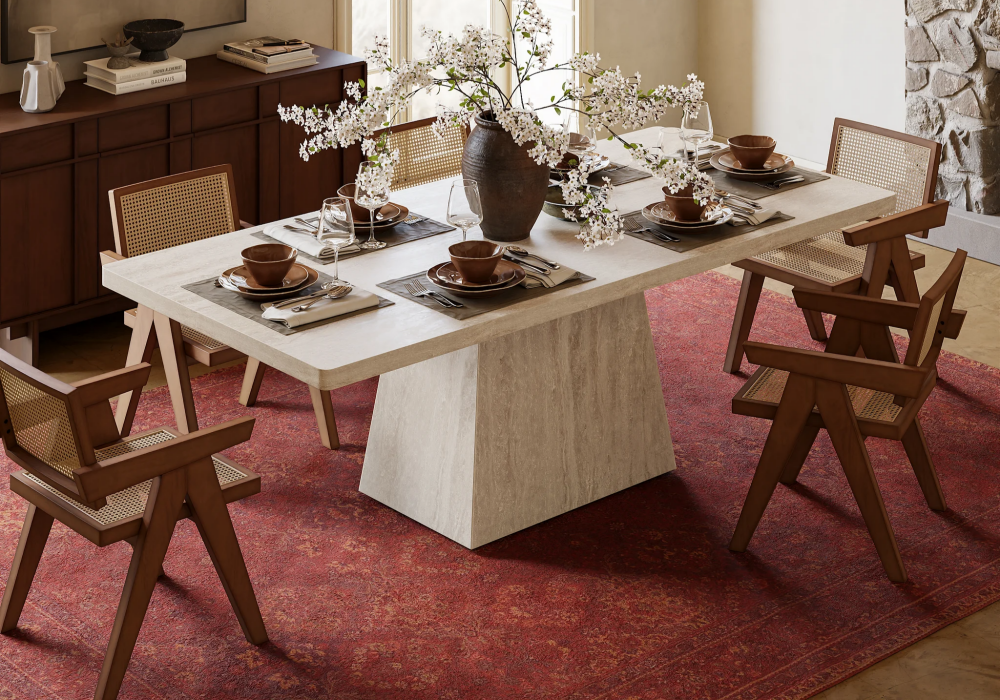
If you are eyeing a gorgeous set of mid-century modern armchairs, you need to do the "Tuck Test" before you buy. Measure the height of the armrest from the floor to its highest point. Now, measure the clearance under your table (remembering the apron!). If the armrest is 660 mm high, and your table clearance is 648 mm, those chairs will never tuck in.
They will stick out into your walkway permanently. If you have a narrow dining room, this will drive you absolutely crazy within a week. If you desperately want arms but are tight on space, look for "slope arm" chairs where the armrest dips dramatically in the front, allowing at least half the chair to slide under the table.
How Do You Stop Chairs from Ruining Your Floors?
This is the silent nightmare of buying new dining chairs. You spend good money on beautiful hardwood or luxury vinyl plank (LVP) floors, and one week with a metal-legged dining chair leaves permanent scratch marks everywhere.
The immediate reaction is to buy a pack of cheap, stick-on felt pads from the hardware store. Let me save you the trouble: those stick-on pads are useless. Within a month, they will slide off, leave a sticky adhesive residue on your floor, and collect massive amounts of pet hair and dust.
If you want to protect your floors properly, you have three real options:
- Nail-in or Screw-in Nylon Glides: If you buy solid wood chairs, immediately install nail-in nylon or Teflon glides on the bottom of the feet. They are permanent, they glide silently, and they won't scratch.
- Clear Silicone Caps: If you are buying metal-legged chairs (which you obviously can’t nail into), look for clear silicone leg caps that stretch over the bottom of the foot. They aren't the most glamorous, but they stay put and completely protect the floor.
- The Rug Route: The ultimate protection is placing a rug under the dining table. But here is the fatal mistake people make: they buy a rug that is too small. When a guest pushes their chair back to stand up, the back legs drop off the edge of the rug, getting caught on the lip when they try to scoot back in. Your rug must extend at least 610 mm to 914 mm beyond the edges of your table on all sides. Anything smaller is a tripping hazard.
Does Your Table Shape Change Which Chairs You Can Buy?
Yes, drastically.
If you have a rectangular table, you have the most freedom. You can easily line up square, linear chairs right next to each other.
But if you have a round table, the geometry completely changes. Round tables create pie-shaped wedges of space for each person. As the chairs push in toward the center, they get closer together. If you buy chairs with widely splayed legs (like many retro mid-century styles), those legs will start tangling and crashing into each other under a round table. For round tables, you generally want chairs with a narrower footprint and straight legs.
Similarly, pay attention to the chair's backrest shape. A curved or rounded backrest visually hugs the curvature of a round table, making the whole setup look custom and cohesive, whereas a harsh, boxy square chair can look aggressively out of place against a circular table.
The Ultimate Cheat Sheet: Dining Chair Dimensions
Don't buy a chair without checking these metrics. Screenshot this table:
Your Concern | What to Measure | The Golden Rule | The Hidden Trap |
Thighs getting stuck | Legroom Clearance | 254 mm - 305 mm from seat to table bottom | Forgetting to deduct the thickness of the table's apron. |
Chairs won't tuck in | Width Between Legs | Chair width + 51 mm to 76 mm gap per side | Measuring the tabletop, but ignoring inward-tapering table legs. |
Backaches | Recline Angle | 100° - 110° (slight tilt) | Buying 90° perfectly vertical chairs. |
Bumping walls | Push-Back Space | At least 914 mm behind the table edge | Forgetting someone needs room to actually stand up. |
Expert Tips: 3 Checks Before You Buy Dining Chairs
Run your final choices through these three checks to save yourself a massive headache (and return shipping fees).
The "Apron Deduct" Method:
Never measure legroom from the floor to the top of the table. If a 762 mm table has a 102 mm apron, your functional clearance starts at 660 mm. Subtract a 457 mm chair seat, and you only have 203 mm of legroom. (You need 254 mm!).
Match Heights, Not Styles:
Mixing a metal chair with a vintage wooden one looks great. But keep their seat heights identical. If your guests are sitting at different elevations, conversation feels incredibly awkward.
Buy Commercial-Grade:
If your home is busy, skip flimsy decorative pieces. For peace of mind during heavy daily use, look for steel-reinforced frames or high-density foam options like those in Homary’s premium dining chairs lineup.
FAQs: Your Top Questions About Dining Chair Answered
Q: What is the standard dining chair height?
For a standard 762 mm table, aim for a seat height of 457 mm to 483 mm. This leaves the perfect 279 mm to 305 mm of legroom.
Q: Can I use office or accent chairs at my dining table?
Usually, no. They sit too low (around 381-406 mm) and lean too far back. You’ll feel like a kid peeking over the edge of the table.
Q: How much space do I need between chairs?
Leave at least 51 mm to 76 mm of empty space between each chair (allocating about 610 mm of total width per person) so guests don't bump elbows while eating.
Q: What's the easiest fabric to clean with kids around?
Treated performance fabrics (like Crypton), genuine leather, or high-grade faux leather. They resist liquids, letting you wipe up spills instantly before they stain. Avoid untreated linen or cotton.