

A TV stand can cost less than $100 or more than $2,000, so a single "average" doesn't tell you much. What matters is what each price level actually buys you. This guide breaks down typical costs by budget, TV size, materials, shopping channel, and the extras that never show up on the price tag.
Table of Contents
How Much Does a TV Stand Cost on Average?
Most TV stands cost between $100 and $500, and that is where the majority of shoppers end up. Compact flat-pack units can dip below $100, while solid wood, designer pieces, and oversized entertainment centers climb past $2,000. Here is how the tiers break down:
Tier | Typical price | Best for |
Entry | Under $100 | Rentals, small apartments, temporary setups |
Mainstream | $100–$500 | First homes, everyday living rooms |
Mid-to-high | $500–$800 | Living room upgrades, durability and design |
Premium | $800–$2,000+ | Solid wood, designer styles, home theaters |
Custom | Varies | Built-in media walls (see the Extra Costs section) |
Your tier depends less on taste than on your situation. Renters and first-time buyers rarely need more than the entry or mainstream tier. A living room upgrade or dedicated home theater usually justifies paying more for sturdier construction and extra storage.
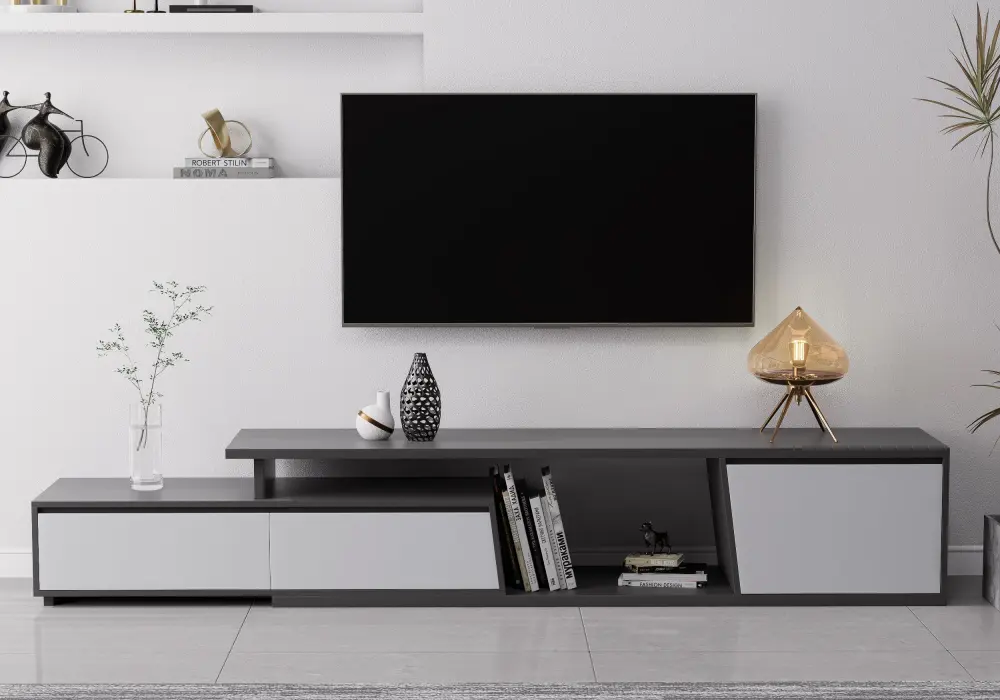
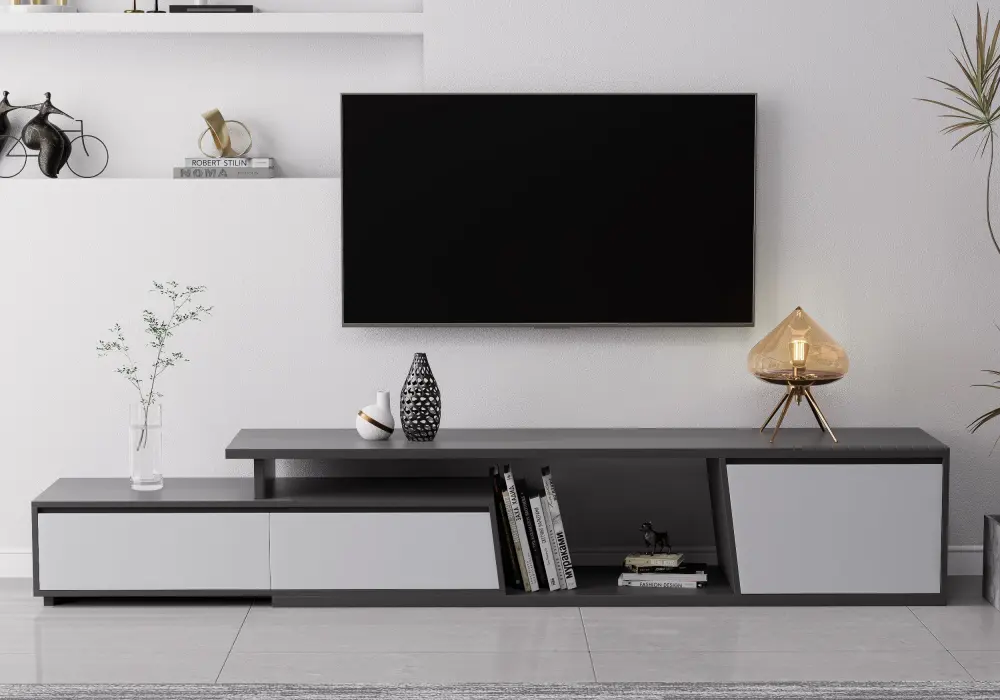
To see what the mid-to-high tier looks like in practice, take the black Extendable Floor TV Stand with 3 Drawers, listed at $569.99. Its price reflects an adjustable-length design that suits wider walls and larger TVs, plus three drawers for media storage. You're paying for flexibility and storage, which is what typically separates this bracket from basic stands. The sections below explain what moves a stand from one tier to the next.
TV Stand Prices by TV Size
Screen size sets your minimum budget, because a stand should be a few inches wider than the TV and strong enough to carry its weight. Approximate ranges:
- 32–43 inches: $50–$200. Small, light stands are the cheapest category.
- 50–55 inches: $100–$350. The most competitive range, with the widest choice.
- 65 inches: $180–$700. Wider tops and sturdier frames start to push prices up.
- 75 inches and larger: $300–$1,000+. Extra width and weight capacity cost more, and oversized entertainment centers can go higher still.
Measure the TV's width, not its diagonal, then add a few inches on each side. Buying a stand that is already too narrow is the most common and most expensive sizing mistake.
Bigger TVs don't always mean a bigger bill, though. Extendable stands cover a wide range of screen sizes with one frame. The Homary Fero 71"–110" Extendable TV Stand with 3 Drawers is listed at $469.99 even though it fits TVs up to 110 inches. Part of the reason is its engineered wood build, which costs far less than solid wood. You still get three deep drawers on soft-close runners, so the price reflects a deliberate trade-off: smart structure over premium materials.
Material, Style, and Feature Upgrades That Change the Price
Two stands can look similar in photos and differ by hundreds of dollars. The gap almost always comes from materials and features.
Materials, from least to most expensive:
- Particleboard and MDF: the budget standard, light and easy to ship, but less durable under heavy loads.
- Metal frames and glass: mid-range, popular for modern looks, though glass needs careful handling.
- Solid wood: costs more but lasts longer and holds heavy TVs better.
- Stone and premium veneers: the top of the market, valued for appearance and weight.
Features that add to the price:
- Drawers and closed storage
- Built-in cable management
- Soft-close hardware
- Integrated lighting
- Electric fireplace models
- Adjustable shelves
Each feature adds a modest amount on its own, but they stack quickly.
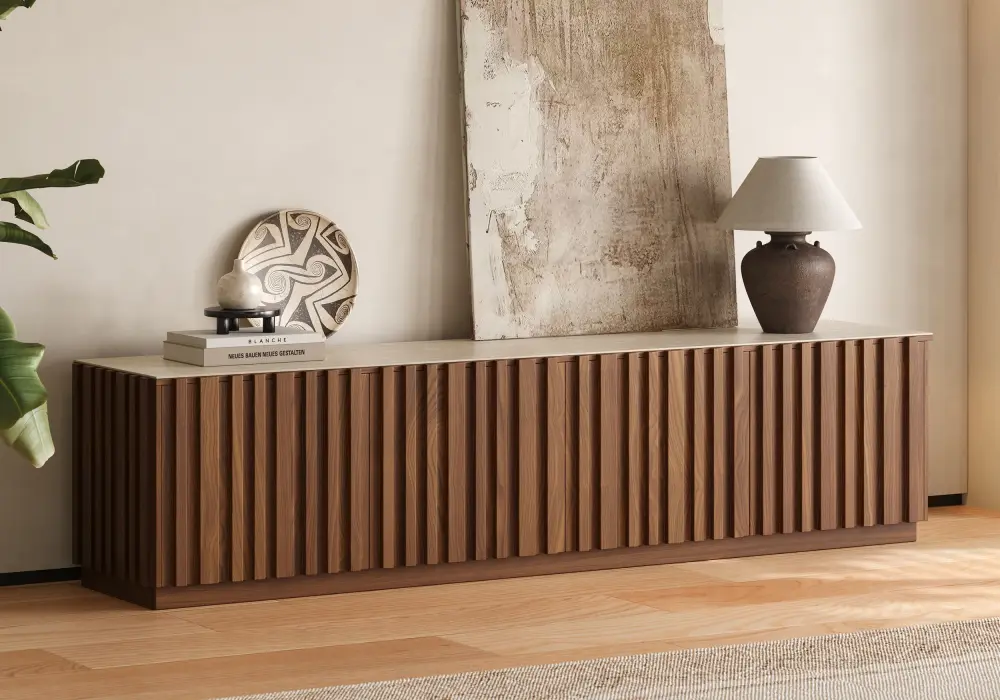
The Aura 83" Fluted Ash Solid Wood Slatted Walnut TV Stand with Sintered Stone Top shows how far this can go. It is listed at $1,059.99. You are paying for three things: solid ash wood instead of engineered wood, fluted detailing, and a travertine-look stone veneer over a sintered stone top. Those are exactly the upgrades that push a stand past the $800 mark, and they make sense for buyers who want the console to double as a design piece.
Price Differences Across Retail Channels
Where you buy matters almost as much as what you buy. Rather than comparing individual brands, it helps to think in channel types:
- Large general retailers and online marketplaces: the widest selection and the most budget options, which makes them the best place to compare prices on mainstream stands.
- Flat-pack furniture stores: clean, simple designs and modular combinations at steady prices.
- Warehouse and membership retailers: occasional bundles or member pricing, but a limited selection.
- Mid-to-high-end furniture brands and local shops: better materials, finishing, and service, and higher prices to match.
For a basic stand under $200, large retailers and marketplaces usually win on price. For a solid wood or statement piece, specialty and local furniture sellers are worth comparing, since finish quality is easier to judge in person. Timing helps too. The best discounts tend to appear during major shopping festivals, seasonal sales, and year-end clearances, so if your purchase isn't urgent, waiting for one of those windows can trim a meaningful amount off the price.
Extra Costs: Delivery, Assembly, Used Options, and Custom Builds
The sticker price is only part of the story. Before you commit, add up the following.
Delivery. Flat-pack stands often ship free or cheaply, but large or heavy furniture can carry a delivery fee. Room-of-choice or white-glove delivery, stair fees, and return shipping can all add to the total. Always check the shipping terms before checkout, and confirm who pays if you need to send the stand back.
Assembly. Most stands arrive flat-packed. Putting one together yourself is free, while hiring a store installer or a local handyperson usually adds somewhere in the range of $50–$150 depending on size and complexity. Get a quote first, since larger stands take longer.
Used options. Secondhand stands from online classifieds, thrift shops, or local resale stores often sell for 20%–60% of the new price. The savings are real, but inspect carefully for weight capacity, odors, damage, and exact dimensions before you buy.
Custom builds. Built-in media walls and custom cabinetry run from several hundred dollars to several thousand, depending on carpentry, wall finishing, power and wiring, and storage design. If your main reason for going custom is a wall that is wider than standard stands, consider an extendable model first. It adjusts to your space at a fraction of what custom work typically costs.
So, How Much Should You Spend?
Use these guidelines as a starting point:
- Under $500: choose engineered wood with smart features, like the Fero extendable stand.
- $500–$800: pay for size flexibility and a better finish, like the black extendable stand.
- $1,000 and up: you are paying for solid wood, stone, and craftsmanship, like the Aura console.
Before you buy, measure your TV's width, your wall space, and your storage needs. Then compare the total price after delivery, assembly, and return terms, not just the number on the product page. Ready to narrow it down? Start by browsing stands filtered by your TV size, then compare two or three options in the tier that fits your budget.
FAQ
What is a reasonable price to pay for a TV stand?
For most homes, $100–$500 is reasonable. Go higher only if you need solid wood, heavy-duty support, or a design-focused piece.
How much should a TV stand cost for a 65-inch TV?
Expect roughly $180–$700. Entry-level options exist, but sturdier frames and extra storage push you toward the upper half.
Are solid wood TV stands worth the higher price?
Often yes, if you want longevity and heavy-load support. If you only need basic storage on a tight budget, a well-built engineered wood stand does the job for much less.
How much do delivery and assembly usually add to the cost?
Delivery is often free for flat-pack stands but can add a fee for large pieces. Professional assembly commonly adds about $50–$150. Quotes vary, so confirm before you order.
Is it cheaper to buy a used TV stand instead of a new one?
Usually, yes. Used stands commonly sell for 20%–60% of the new price, but check weight capacity, damage, odors, and dimensions first.
When is the best time to buy a TV stand on sale?
Look during major shopping festivals, seasonal sales, and year-end clearances, when furniture discounts tend to be deepest.