

The cost to add a kitchen island depends first on whether you are buying furniture or commissioning a built-in remodeling project. Among the selected kitchen islands checked for this guide, product prices were approximately $990–$1,500 before project-specific extras. A complete installed budget can be higher once assembly, delivery services, electrical work, flooring, plumbing, or a separate countertop enters the scope.
That product-price range is a snapshot of three examples, not a national average or a quote for your kitchen. The useful way to answer “how much to add a kitchen island” is to define the work first, price the furniture or cabinetry, and then add the services the room actually requires.
Table of Contents
Decide Whether This Is Furniture or a Remodel
A ready-made storage island can be a relatively contained purchase when it fits the room and does not require changes to utilities or finishes. You still need to plan access, assembly, placement, and any required installation steps, but the scope can be much narrower than a custom project.
A built-in island assembled from cabinetry and a separate top creates additional decisions. End panels, exposed backs, supports, countertop fabrication, and site installation may be priced separately. A cabinet quote is therefore not necessarily a complete island quote.
Adding a sink, dishwasher, cooktop, or new electrical connections expands the work further. The price depends on existing services and how they can be reached. Two kitchens with the same island dimensions can have very different installation costs.
Define your primary need in one sentence: extra prep space, organized storage, seating, or an appliance station. That sentence helps prevent an affordable storage purchase from becoming an open-ended renovation without a clear benefit.
Separate the Purchase Price From the Project Total
Create a budget with individual lines rather than one guessed allowance. Mark each item as included, excluded, quoted, or not needed. This makes it easier to compare offers and identify missing work before ordering.
Budget item | What to establish |
Island or cabinetry | Exact variant, finish, top, and included components |
Delivery services | Destination-specific terms and access arrangements |
Assembly and installation | Who performs the work and what it includes |
Countertop | Whether supplied, fabricated separately, or modified |
Electrical or lighting | Connection method and any professional work required |
Plumbing or appliances | New services, connections, ventilation, and installation |
Flooring and finishing | Repairs, matching materials, trim, and touch-ups |
Seating | Stool quantity, height, and final occupied footprint |
Project reserve | An explicitly chosen allowance for unresolved items |
Keep sales tax and any address-dependent charges visible in your final calculation. Do not assume that an advertised furniture price includes every service you might need inside the home.
Three Current Product-Price Examples
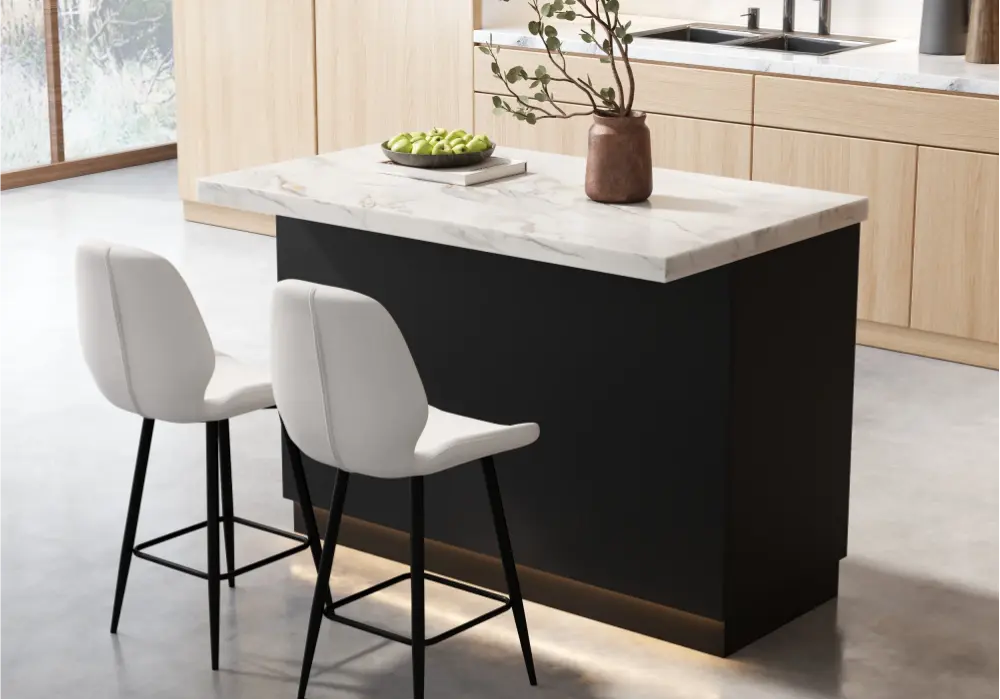
The 50-inch black-and-white LED-lit Japandi kitchen island was listed at $999.99 when checked on November 17, 2026. This is the item price for the selected product, not a quotation for electrical work or installation. Confirm its lighting instructions and assembly requirements before setting the complete budget.
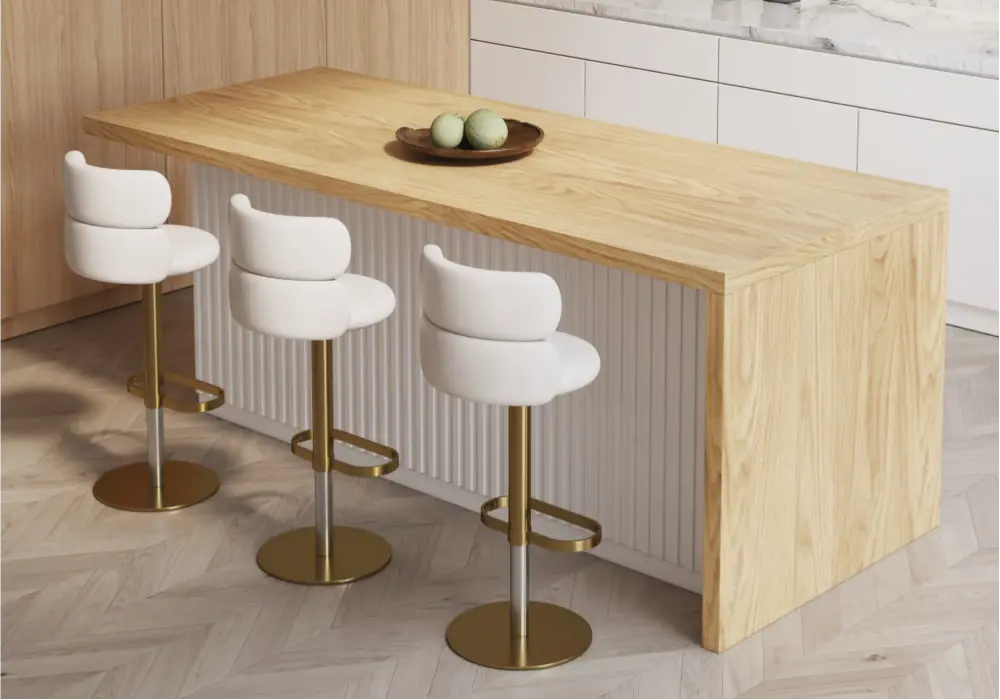
The 72-inch white-and-natural wood kitchen island was listed at $1,499.99 on the same date. Its larger footprint should be justified by usable storage and work area, with circulation checked before purchase. A wider island is not better value if it makes the kitchen harder to use.
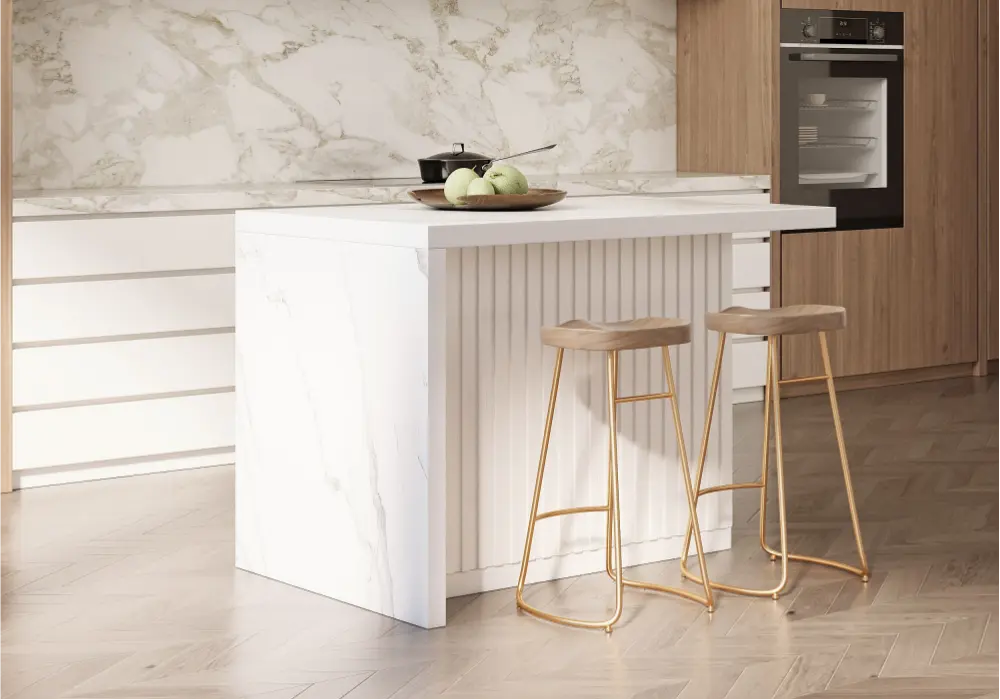
The 50-inch white wood kitchen island was listed at $989.99. Compare its selected configuration and included top with the other examples rather than treating width as the only difference. Verify the current price and order details before committing, because offers and availability can change.
These examples provide concrete starting points for a ready-made purchase. They should not be used to estimate a custom island with new plumbing, appliances, or major site work.
Build a Simple Budget With Clear Assumptions
Suppose you choose an island priced at $1,000 for planning purposes. You then receive an assembly quote of $200 and decide to spend $300 on two stools. Before tax or any additional services, your planned total is $1,500. These are illustrative inputs, not typical labor or seating prices.
The point is the method: add real quoted costs to the actual selected product price. If assembly is already included, remove that line. If you do not need stools, remove them as well. The resulting budget should reflect your intended use rather than a generic package.
Keep unresolved items separate. For example, write “electrical work: quote pending” instead of entering zero because the cost is unknown. A zero should mean no cost is expected, not that the question has not been answered.
For a larger project, ask the installer to distinguish fixed-price work from allowances. Confirm what triggers additional charges and how changes are approved. This is more useful than relying on a single online cost estimate with an unclear scope.
Understand the Main Installation Cost Drivers
Utility access is one of the first issues to investigate. A new connection near existing services may involve different work from routing services through a finished floor. The condition of the room and the construction below it affect what is practical.
Countertop requirements also change the project. A supplied furniture top avoids some fabrication decisions, while a custom slab may require measuring, cutting, supports, transport, and installation. Confirm the proposed material and edge details in the quote.
Flooring can create hidden scope. Removing an old island may reveal an unfinished area or a floor pattern that is difficult to match. If the new island has a smaller footprint, that difference becomes visible. Inspect before assuming replacement is a simple swap.
Finally, account for access. Heavy or large components must pass through doors, corridors, stairs, and elevators. Check carton sizes and handling requirements as well as the assembled dimensions. An island that fits the kitchen still needs a practical route into it.
Avoid Paying for Size the Room Cannot Use
Before comparing prices, mark the proposed island footprint on the floor. Include the countertop projection and any extended positions. Then open the refrigerator, dishwasher, and nearby cabinets to see how the space works in use.
As a starting point, kitchen work aisles are commonly planned around 42 inches for one cook and 48 inches for multiple cooks. Seating and passing routes need their own evaluation. Applicable local requirements and accessibility needs should be checked for the project.
A smaller island can offer better practical value if it keeps the room usable. You may gain enough storage from a well-organized 50-inch unit without needing a longer one. Compare the objects you need to store with the interior layout rather than shopping by width alone.
For seating, budget both money and floor space. A pair of stools adds an occupied zone behind the counter. If the kitchen cannot accommodate that zone comfortably, spending on stools does not add useful dining capacity.
Save by Simplifying the Scope
The clearest way to control cost is to remove work you do not need. If extra storage and prep space solve the problem, compare a ready-made island before introducing plumbing or a cooktop. Each additional function creates installation and maintenance decisions.
Choose included finishes you are happy to keep. Buying an inexpensive island and immediately replacing its top, changing its height, or modifying its storage can undermine the original saving. Confirm permitted modifications before planning them.
Compare service inclusions carefully. A lower quote may exclude finishing, removal, or connection work included elsewhere. Ask each supplier to price the same scope and keep the written assumptions together.
Also consider timing. Order after the dimensions, access route, and installation responsibilities are settled. A sale price provides little benefit if the product is unsuitable and creates avoidable return or handling work.
Get a Quote You Can Actually Compare
Give each installer the same room measurements, product information, photographs, and intended use. Identify the exact utilities and finishing work requested. Ask for a breakdown that separates materials, labor, allowances, and exclusions.
Confirm whether the proposed island is treated as movable furniture or a fixed installation for your project. Electrical and other requirements depend on the adopted local rules and the work performed. Resolve those questions before purchase instead of assuming that every island follows one universal rule.
Your final budget should show a defined product, a defined installation scope, and explicit unresolved items. That provides a much stronger basis for a purchase than an attractive headline price alone.
Frequently Asked Questions
Is a freestanding island cheaper than a built-in island?
It can be, particularly when it needs no utility changes and includes its own top. However, compare complete scopes. Assembly, access, finishes, and installation requirements can still affect the total, while custom cabinetry introduces different costs and design options.
Does an island price include installation?
Do not assume so. Check the current product and service terms for your address. Delivery, room placement, assembly, and professional installation are different services. Ask which are included and obtain a quote for any required work that is excluded.
How much extra does adding a sink cost?
There is no reliable single figure without inspecting the kitchen and defining the work. Plumbing access, drainage, fixtures, countertop changes, and local labor all matter. Request a site-specific quote rather than applying a furniture-only budget to a plumbed island.
Should I include stools in the budget?
Yes, if seating is part of the intended use and the room has sufficient space. Confirm the island’s height and usable knee room first. Stools that do not fit either the surface or the floor plan are an avoidable expense.
What should I measure before asking for a quote?
Measure the available floor area, counter-to-counter aisles, doors, appliance openings, and delivery route. Include the island’s maximum footprint and any seating. Start with a product that fits, then price the exact services needed to make it useful in your kitchen.