

Decorate a dining table by making room for the meal first, then adding one low centerpiece and a small number of pieces that repeat a color or material in the room. Long dining tables can carry decoration down their center, while a round or oval top often looks good with one compact grouping. Use objects that leave space for plates, allow people to see across the table, and are easy to move when you need the surface for dinner.
Table of Contents
Lay out the place settings first
Start with the actual plates, glasses, and serving pieces you expect to use. Lay them on the table and sit down to see where your hands land. Trace a central zone that is outside the place settings. If the setting feels tight already, put the serving dishes on a sideboard or choose one small object for the center. You can add larger decoration on days when the table is empty.
Look across the table at someone seated opposite you. A low bowl, a few short stems, or small vessels often leave a clear line for conversation. Asymmetry can work if the area with more height sits off the central sight line. Take a photo from chair level after you set the table. It shows what the arrangement looks like to a guest more accurately than a standing photograph.
Keep the decoration easy to move. A low tray can hold a cluster of small objects that you lift together when you need room for a platter. Check how heavy it feels with everything on it. A large bowl may look right on the table but be hard to set out of the way. Choose a nearby landing place for the centerpiece before the meal starts.
Choose a centerpiece shape that suits the tabletop
On a rectangular table, use the long axis. Try one low central bowl and shorter elements along the centerline, or a narrow runner with a single grouping in the middle. Leave open tabletop between groups. A long table is often balanced by a pattern with gaps because the spaces keep diners from feeling as though they are looking through a continuous wall of objects.
On an oval, follow the curve with a low tray or an arrangement with widely spaced ends. Center the decoration inside the rounded profile rather than using the entire length. The narrower ends often serve as head settings or places where people walk around the table. Give those areas enough space for a plate and a glass before deciding whether to set anything near them.
On a round table, gather a few items in the middle and turn the piece so it looks good from every chair. A low footed bowl can carry seasonal produce or flowers. If you use multiple vessels, keep their base area compact and stagger their heights slightly. Rooms with a pendant often already have a strong point overhead, so check how the tabletop grouping feels from the doorway before adding another tall feature.
Use fabric where it supports the setting
A runner can define the center on a long table, especially if you want some of the finish to show. For a more informal meal, try placemats with the tabletop visible between settings. Check that the material lies flat under glasses. A thick woven edge can make a glass wobble if its base sits partly on and partly off the mat.
A tablecloth can change the mood for a gathering without requiring a new collection of objects. Measure the drop with people sitting and moving their chairs. Compare the cloth in the closed and open positions if the tabletop extends. Take care that the fabric stays clear of the table's moving sections during conversion.
Pick one surface detail to repeat. On a whitewashed top, warm linen or a matte ceramic bowl lets the finish show through. On a darker top, pale plates or glass can bring contrast around each place setting. Try the arrangement at the time of day you usually use the room. A highly reflective bowl can catch a pendant from one chair, and colors may read differently after sunset.
Style for everyday meals, dinner parties, and the seasons
For every day, put something useful or easy to clear in the middle. A shallow bowl of fruit or a small vase can make the table feel used without turning it into a display. Avoid making extra work for yourself each morning. If the table doubles as a workspace, choose a centerpiece you can lift with one hand or put at the far end while you work.
For dinner with guests, bring in the intended serving pieces early. If dishes will be passed, repeat a low element down the center and preserve several clear landing spots. For plated meals, you can devote a little more center area to decoration. Put items such as water glasses within easy reach and avoid strongly scented additions that could compete with the food. Battery-operated candles are an option when you want gentle lighting around fabric or loose greenery.
For seasonal changes, keep your basic settings and exchange one element. A few branches can echo colors visible outside. Produce in a bowl can make a summer setting feel different from a winter table with a textured runner. Check for loose leaves or stems falling into the place settings. Wash and dry vessels before putting them on a sensitive finish, and follow the maker's care instructions for the top.
Try the approach on three table designs
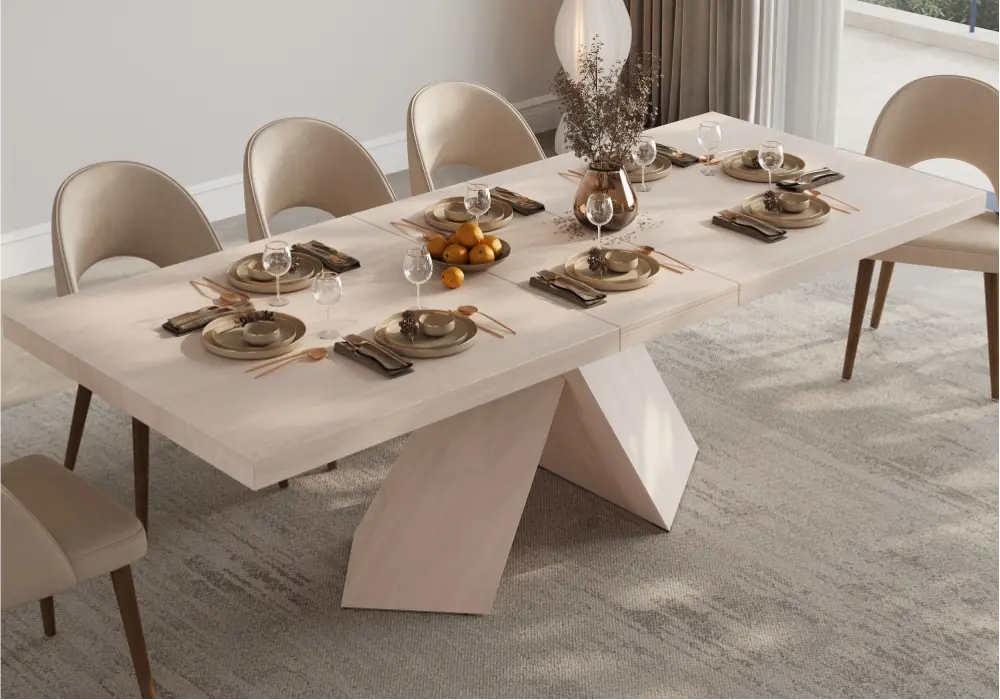
The 79-to-94-inch whitewash farmhouse extendable dining table gives you a rectangular centerline to work with. Use one grouping in the closed position. When the table is extended, spread the groupings apart so people at both ends can reach what they need. Reset the decoration after opening the leaf, and choose a separate serving surface if the settings take up the freed space.
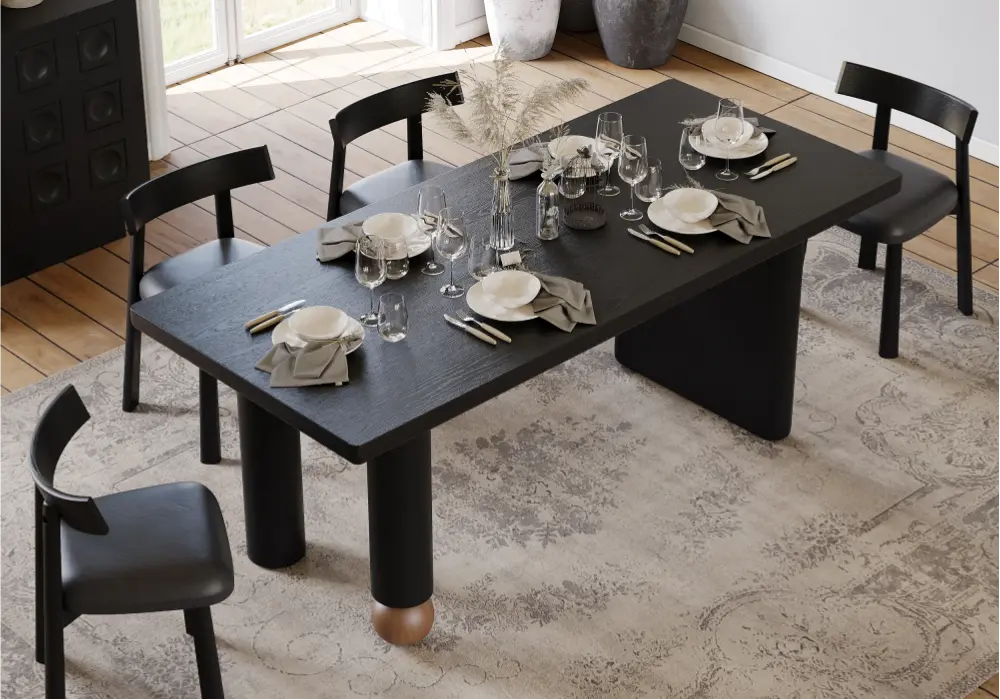
The 71-inch rectangular rubberwood dining table has sculptural supports that can carry the visual interest when the top is simple. Try a restrained runner or one low ceramic piece. Repeat a detail from the base in the place settings if you want a coordinated feel without covering the tabletop.
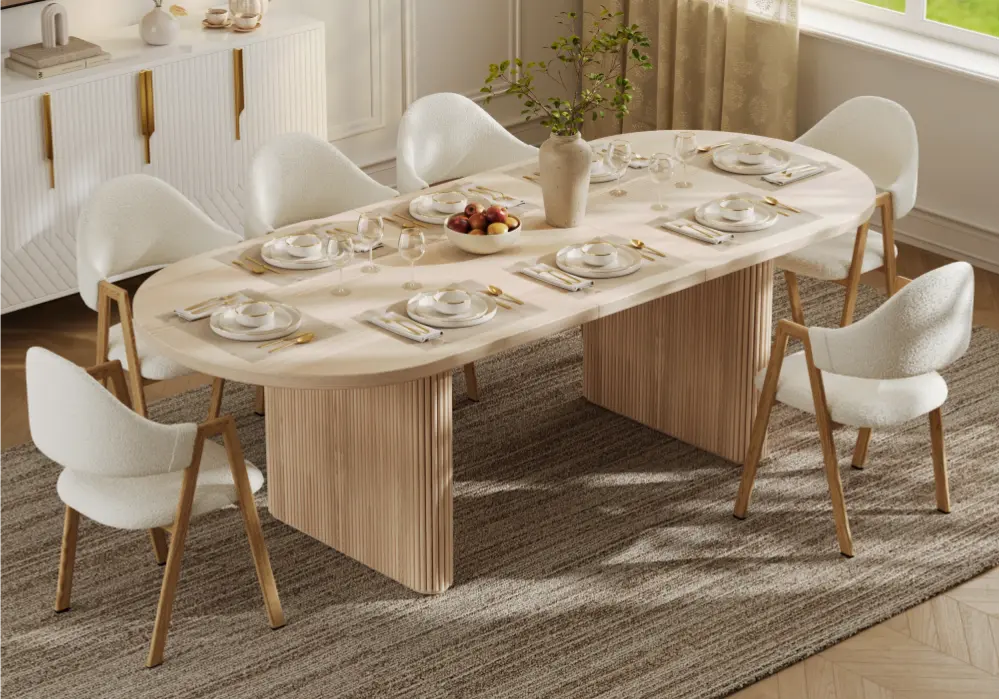
The Fluve oval extendable whitewash dining table uses rounded ends and a butterfly leaf. Try a soft grouping of low vessels in the center and keep the two ends open. In the longer configuration, move one vessel toward each side of the middle and see it from both head seats. Read the instructions before expanding the table so the cloth and decoration stay clear of the mechanism.
Make the arrangement work from all four sides
Once the table is set, step back to the entry and then sit at the two places you use most. Check for anything that hides someone across the table or creates a reach across a glass. Adjust the arrangement at the point where a guest passes a dish or a person walks behind a chair. It should look intentional from the entry and work comfortably from the seats.
Match the underside of your objects to the surface. Use suitable pads or a tray beneath abrasive bases, and address condensation beneath any vase or pitcher. Keep beverage coasters where guests can find them. If you leave a runner in the same position for a long time, periodically clean under it according to the table instructions. Maintenance is easier when the setting uses pieces you can pick up and set back in a minute.
Keep one spare arrangement ready for a crowded table
If the room doubles as a workspace or you host a variety of meals, keep one small tray or shallow bowl available that can take the place of your usual arrangement. Set it up using pieces already in the dining room, such as a single folded napkin and a small ceramic vessel. When larger dishes need the center, move the tray to the sideboard and leave the table clear. For a meal served away from the table, bring the tray back and set it where the group can see it without reaching across it.
Frequently Asked Questions
What can I put in the middle of a dining table every day?
Try a low vase, a shallow bowl, or a tray that holds a few pieces together. The best size is the one that leaves room for your everyday plates. Choose an item you can move quickly when you use the whole tabletop.
How tall should a dining table centerpiece be?
Check it from a seat. Keep the arrangement below the sight line between people or place a taller element where it does not interrupt a conversation. Try the position with a person sitting opposite you before the meal.
Can you use placemats and a table runner together?
Yes. Keep the edges flat where they meet and watch how much surface remains for serving. A narrow runner can connect a rectangular table's settings without overlapping the mats. Try the smallest tabletop setup first if the table extends.
How do you decorate a table when the dining room is small?
Use a small group close to the center or one low piece you can lift away. Leave the edges clear for glasses and hands. A finish or runner that repeats a nearby color can connect the table with the room without needing several objects.
How do you style an extendable table in both positions?
Design the closed arrangement first. When the table opens, add a second small group or spread out the existing pieces. Move all fabric and objects before operating the extension, then place the biggest serving dishes before you reset the decor.