

Smart toilets have become a major talking point in home renovations over the past few years. Whether upgrading the main bathroom or building an en-suite, it is a piece of sanitary hardware that plays an integral role in the room’s aesthetic and function. One of the big questions on most homeowners’ lips, however, is simply: do Smart toilets need electricity?
On average, a bathroom renovation costs US homeowners around $16,500. A Smart toilet would be a noticeable investment, but is likely to account for significantly less than 10% of that budget. Still, it’s important to know what to expect from the sanitary hardware before potentially making a purchase.
The following guide will flush away any ambiguity.
Contents
Do Smart Toilets Need Electricity?
Standard toilets have been used inside some homes since the late 1800s and have been commonplace since the middle of the 20th century. Throughout the decades, their functions and features have largely remained unchanged. When you press the flush, water from a tank is released into the bowl, forcing water and waste to push over a curved pipe and be taken away through plumbing lines. The water tank then refills the cistern ready for the next flush.
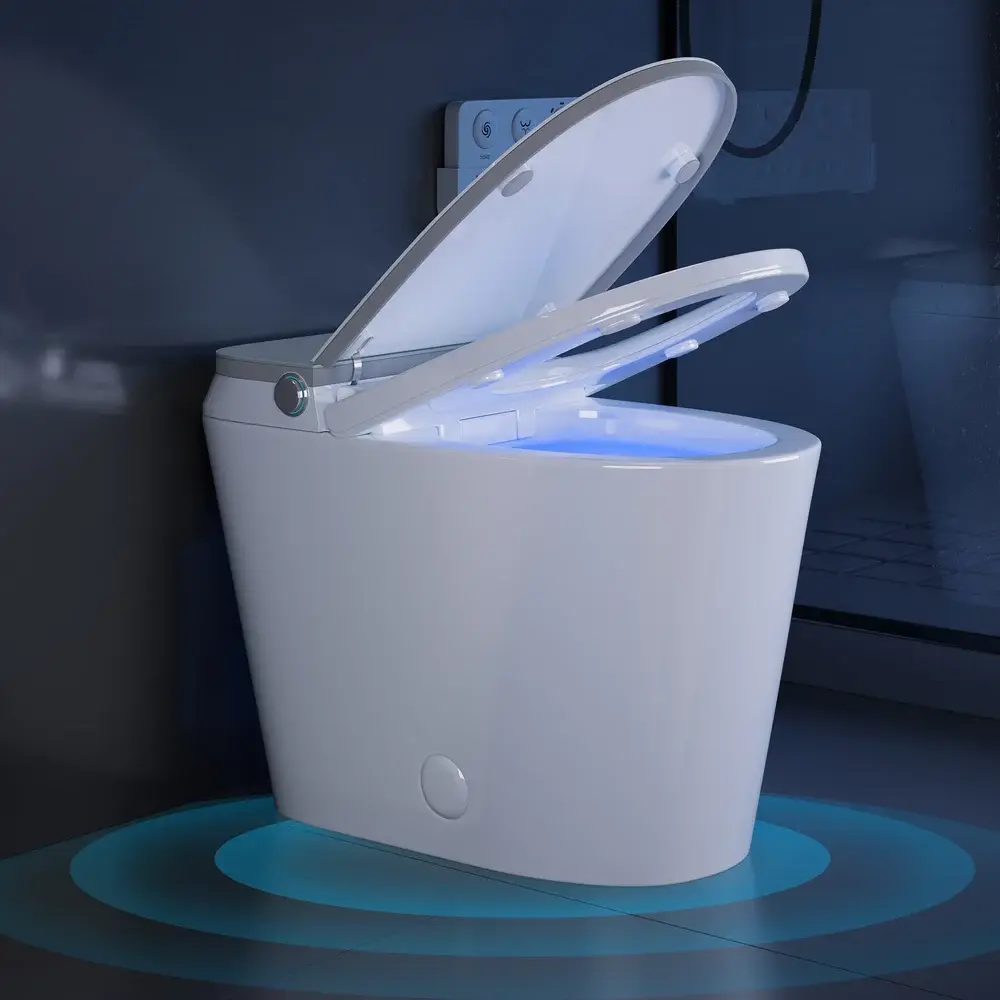
However, home tech has evolved at a rapid pace in recent years. Smart technologies have emerged in virtually every room, and Smart toilets are one of the best to hit the bathroom. The plumbing elements are essentially the same as a standard toilet, but they additionally feature advanced features and automated functions that do require electricity.
Smart toilets in the US will be powered by a standard 120-volt AC power supply, which runs at 60 Hz and a 15-amp or 20-amp circuit. They should be connected to the main power supply via a standard socket and never utilize extension cords due to safety issues.
The electricity features must use a Ground Fault Circuit Interrupter (GFCI) outlet to prevent electric shocks. The power outlet should also be at least 152-305 mm from the floor and within 1219 mm of the toilet basin. If the home has stored solar energy through its roof panels, this can be used to power the toilet. Typically, Smart toilets found within residential environments use an estimated 0.5 to 1.5 kWh of electricity per day.
It should be noted that there are some very basic Smart toilet models that do not require electricity. However, their features are limited to bidet-style washing and pressure-assisted flushing.
The Key Features Of Smart Toilets
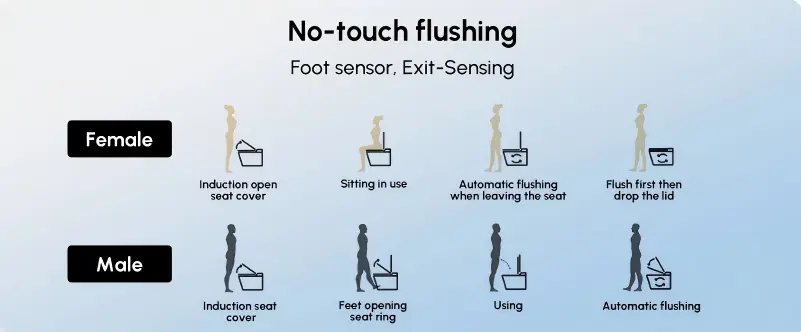
In truth, most Smart toilets on the market (at least models from the top manufacturers) share many of the same advanced features. Nevertheless, familiarizing yourself with the best technologies at work will make life a lot easier when comparing models.
The following table details the most significant elements requiring electricity:
Feature | Purpose |
Bidet cleansing | To boost hygiene with rear and front washing. Users can customize pressure and temperature to suit their needs. |
Automated flush | To add convenience and hygiene by creating a touchless solution for flushing your toilet. |
Lid automation | Add further convenience and hygiene with a touchless solution for opening and closing the lid. |
Heated seats | For added comfort during use and to help drying after using bidet cleansing, thus removing the need for paper waste. |
Sensor lighting | To provide ambient lighting at nighttime, saving users from harsh room lighting. |
Self-cleaning | To aid hygiene and reduce maintenance with built-in deodorizers and UV sanitization. |
Power-outage flush | A backup battery power solution to support users when the home experiences temporary power loss. |
You might not require a Smart toilet that boasts all of those features. But it is likely that you’ll want most of them.
Smart Toilet Dimensions & Installation Checklist
Understanding how the Smart toilet will look within your bathroom design is an important factor. While there is some variance between models, the dimensions typically fall into the ranges detailed below:
Feature | Dimensions |
Length | 610-813 mm |
Width | 381-457 mm |
Height | 457-711 mm |
Clearance (Front) | 610 mm or more |
Clearance (Side) | 381 mm or more |
Rough-In Distance | 305 mm (most common) |
While the Smart toilet installation will be completed by an expert, you also need to understand the process. You must complete the following preparations;
Measure the available bathroom floorspace to confirm that the toilet will fit without causing movement restrictions.
Measure the rough-in to verify that the distance from the finished wall to the waste pipe aligns with the toilet specs.
Check that the water supply line is compatible and accessible for the intended installation of a Smart toilet.
Check that it is possible to add a GFCI-protected electrical outlet and, where applicable, connect to Wi-Fi.
Confirm that the floor is level and stable. Otherwise, it may not be able to support the toilet fixture.
Confirm that all doors and fixtures can function as usual without coming into contact with the toilet unit.
Our step-by-step guide will take you through the process of Smart toilet installations, covering the hardware itself as well as plumbing and electrical components. Nonetheless, calling a registered professional is the best option if you desire an aesthetically-pleasing, safe, and functional finish.
Additional Smart Bathroom Features
A standalone Smart toilet installation will elevate the sense of bathroom luxury, and you certainly complete a budget-friendly upgrade without touching other features. To see the most dramatic transformation, though, it makes sense to integrate your Smart toilet with other Smart bathroom hardware.
For a truly modern approach to bathroom makeovers in 2026, you may want to include the following;
- Smart Showers - water temperatures, flow rates, and duration can be managed through an App, digital panel, or voice controls. This can also help you utilize your shower heads and pressure jets with various settings.
- Smart Baths - automated filling, temperature control, and hydrotherapy functions can be managed using similar tools to Smart showers. It creates an added layer of luxury and sophistication on a daily basis.
- Smart Faucets - utilizing motion sensors, they can improve hygiene and reduce water waste. Many models also provide the capability to use precise temperature settings with instant results.
- Smart Mirrors - incorporating a screen, they can display a range of info like the time, weather, or news updates. This supports daily organization while health metrics can also be monitored.
- Smart Scales - bathroom scales powered by Smart tech go beyond the basic weight metrics to analyze body fat, BMI, and muscle mass. Data can be instantly synced to smartphone Apps too.
- Smart Lighting - adjustable lighting lets you set the brightness and color temperature to suit different bathroom activities. This can help energize you during the mornings and relax in the evening.
- Smart Ventilation - fans can detect humidity levels and automate activation as required. This helps you maintain a healthier bathroom without any extra effort, preventing mold and condensation.
Additional Smart tech may include Smart radiators, leak detectors, and voice-activated assistants or speakers.
Smart Toilet Maintenance & Long-Term Care
Smart toilets can be a great addition to your bathroom, but keeping them in great health is the true hallmark of success. A little maintenance and a conscious effort for long-term care is highly advised. The simple steps below should help you maintain control;
- Read the manufacturer guidelines before using the Smart toilet to understand the future steps that may be required.
- Choose non-abrasive cleaning products and materials to avoid damaging surfaces and electronic features.
- Protect electrical components during cleaning by never spraying water directly onto them.
- Inspect water filters frequently and complete the necessary cleaning or replacement processes.
- Check the functions of seat heating, deodorizing systems, and motion sensors frequently to confirm that the toilet operates as expected.
- Check the quality of your water as hard water quickly leads to limescale. Filtration and water treatments are available.
Of course you need to show care and responsibility when using the Smart toilet on a daily basis. However, it’s still important to book annual servicing and book inspections should you experience problems with the unit.
Are Smart Toilets Worth The Investment?
Smart toilets have become an increasingly popular choice in recent years with most homeowners now opting for them once the time for a renovation arrives. But that doesn’t mean you should necessarily follow the crowd.
It is worth weighing up the positives and negatives to reach an informed decision. The following table should help:
The Pros | The Cons |
They look very elegant and stylish, integrating with virtually all bathroom designs | Higher upfront costs due to increased unit price and labor expenses. |
They work especially well with other Smart bathroom tech features | An electrical outlet needs to be added by a registered electrician. |
Increased hygiene is achieved through bidet washers, air dryers, and UV nozzles. | Inferior installations could pose potential safety hazards. |
Smart toilets offer self-cleaning features as well as rimless designs, nano-glaze coatings. | Integrated designs are modern but can look bulky in smaller bathrooms. |
Motion sensors automate lid opening and closing for convenience and hygiene. | The electrical features mean there are more parts that could need future repairs. |
A Smart bathroom renovation fits in well with updated rooms throughout the home. | |
Increased comfort and luxury due to heated seats, adjustable water temps, and lights. | |
They are built from premium materials for long-term durability. | |
Customization options are far more advanced, bringing a tailored experience. | |
They consume less water and reduce paper waste to support your green living goals. |
A Smart toilet requires a slightly larger initial outlay and a more complicated installation process. However, the benefits of improved aesthetics, function, and environmental benefits make it worthwhile. Likewise, it’s a luxury home feature that is certain to impress any visitors to your home.
If nothing else, you’ll gain peace of mind from knowing that you have made the best choice for your home and family.
Make The Smart Decision With Homary Today
A Smart toilet is a relatively simple upgrade but it has a huge impact on your bathroom’s aesthetic, atmosphere, and function. Better still, elevating your bathroom experiences is virtually guaranteed to improve your daily lifestyle and unlock a better relationship with the home.
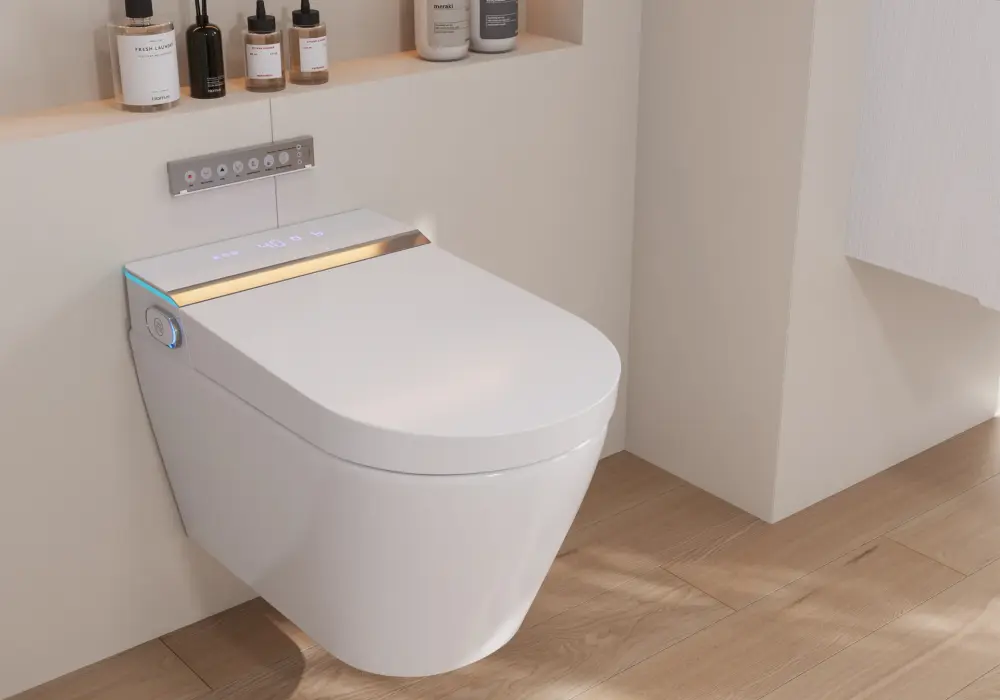
With so many Smart toilets available on the market, finding the best model for your bathroom remodel can feel daunting. At Homary, our experts make the process easier than you ever thought possible. We stock an extensive range from the likes of Hynova, Nexin, and Oluxe. Whether you have a clear idea of what’s needed or require some assistance with choosing a unit that can integrate seamlessly into your bathroom plans, we’re here to help.
Smart Toilet Electricity Needs FAQs
Will my Smart toilet stop working during a power outage?
If your home experiences a power outage, the Smart features of the toilet like heating and automated function will temporarily stop working. However, basic functions are maintained thanks to manual flush levers.
Is it dangerous to have an electric Smart toilet in the bathroom?
While concerns about electricity near water are valid, Smart toilets are very safe due to their GFCI/RCD protection and waterproof attributes. To guarantee safety, though, it is imperative that a qualified professional installs the unit.
Are Smart toilets good for the environment?
Despite using a small amount of electricity, Smart toilets are considered great for the environment. They utilize low-flow features to minimize water consumption while bidet features significantly reduce paper waste.
Will I ever need to clean my Smart toilet?
Yes, occasionally. Smart toilets are equipped with a range of features like UV sterilization, and antimicrobial bowl coatings while also using electrolyzed water. So, they do clean themselves. Still, occasional manual cleaning is still advised.
Are Smart toilets hard to install?
They pose a more complex challenge than standard toilet installations. The plumbing aspects are the same but Smart toilets require an electrical outlet connector. So, there are extra steps, which is another reason to call an expert.