

Choosing the right dining table height is about more than finding a table that looks good. The height of the table affects your posture, legroom, chair compatibility, and overall comfort during meals. While the standard dining table height is usually 28–30 inches (711–762 mm), different seating styles, body heights, room layouts, and accessibility needs may call for a different measurement. This guide explains the key dimensions to consider so you can choose a dining table that fits both your space and the people who use it.
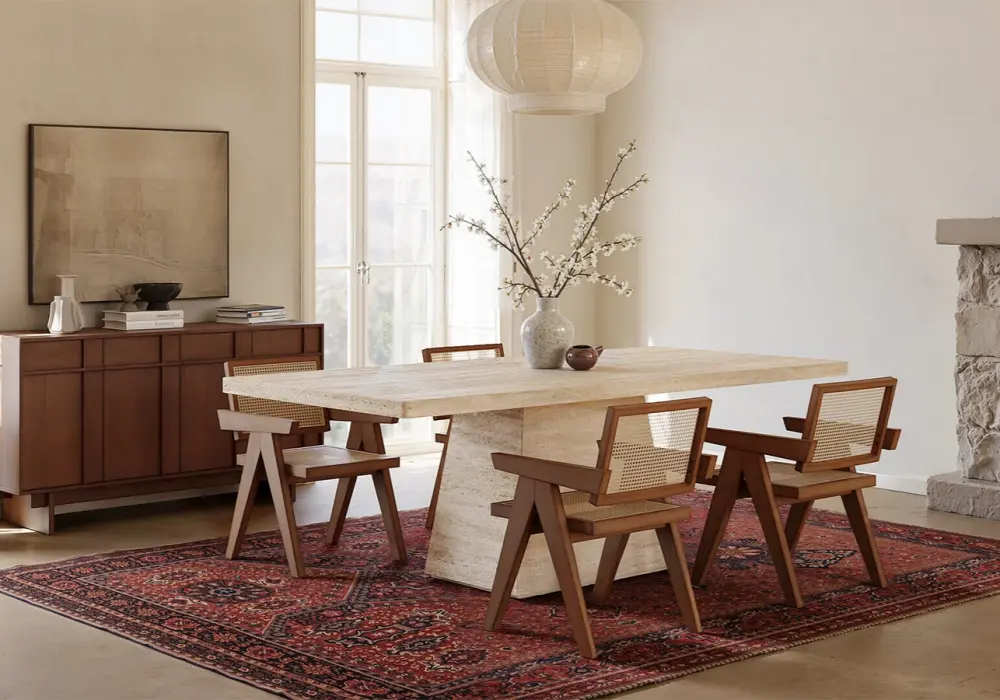
Source Homary
Table of Contents
What Is the Standard Dining Table Height?
When people talk about standard dining table height, they usually mean the vertical distance from the floor to the top surface of the table. For most ready-made dining tables, the standard range is 28 to 30 inches (711 to 762 mm), with 30 inches (762 mm) being the most common reference point.
A 30-inch (762 mm) dining table generally works well with a standard dining chair that has a seat height of approximately 17–19 inches (432–483 mm). This combination provides enough room for your legs while allowing you to sit at a comfortable height for eating, working, or socializing.
However, not every table within the 28–30-inch (711–762 mm) range feels exactly the same. The construction, tabletop thickness, and design underneath the table can all affect usable legroom.
What Is the Standard Dining Table Height in Inches?
For most traditional dining rooms, a 28–30-inch (711–762 mm) dining table is a reliable starting point. A 30-inch (762 mm) table is especially common because it provides a comfortable working and dining surface for many adults when paired with a 17–19-inch (432–483 mm) chair.
A slightly lower 28-inch (711 mm) table may work particularly well for shorter users or chairs with lower seats. If you're taller, you may prefer a slightly higher custom table, provided the seating height is adjusted as well.
How Tabletop Thickness and Aprons Affect Usable Height
The advertised height of a dining table does not tell the whole story. Two tables may both measure 30 inches (762 mm) from the floor to the top of the tabletop but provide different amounts of legroom.
A thick tabletop takes up some of the vertical space underneath the surface. The same is true of a low table apron—the horizontal frame beneath the tabletop. If the apron extends several inches downward, it can reduce knee clearance even when the overall table height is standard.
This is worth checking when comparing tables with different designs. For example, the Natural Oak Extendable Dining Table with Fluted Base combines an extendable tabletop with a sculptural fluted base, making it a practical option for households that want flexible seating without giving up a substantial dining surface.

Source Homary
Why 30 Inches Is a Popular Dining Table Height
The popularity of the 30-inch (762 mm) standard comes down to its balance between comfort and versatility. It works with a wide range of dining chairs and provides enough tabletop height for plates, glasses, serving dishes, and everyday activities.
For most shoppers, starting with 30 inches (762 mm) and then checking chair height and underside clearance is more useful than choosing a table based solely on appearance.
What Is the Best Dining Chair Height for a Standard Table?
A dining table and dining chair should always be selected as a pair. Even if the table has a standard height, an incorrectly sized chair can make the entire setup uncomfortable.
For a typical 28–30-inch (711–762 mm) dining table, a chair seat height of 17–19 inches (432–483 mm) is a good starting point.
What Is the Standard Dining Chair Seat Height?
Most standard dining chairs have a seat height between 17 and 19 inches (432 and 483 mm). This range generally leaves enough space for an adult's thighs while allowing the arms to rest naturally near the tabletop.
The ideal chair height depends on the individual, however. A taller person may benefit from a slightly higher chair, while shorter users may find a lower seat more comfortable.
How Much Space Should Be Between a Dining Chair and Table?
A practical target is approximately 9–13 inches (229–330 mm) between the top of the chair seat and the underside of the dining table.
This is more useful than simply comparing the chair's advertised height with the table's overall height. You should measure to the underside of the tabletop because that is where your thighs and knees actually need clearance.
If the table has a thick apron, use the bottom of the apron as your reference point.
How Do You Match Dining Chair Height to Table Height?
A simple starting formula is:
Dining table height − chair seat height = approximately 9–13 inches (229–330 mm)
For example:
30-inch (762 mm) table − 18-inch (457 mm) chair = 12-inch (305 mm) difference
This is generally within a comfortable range.
Remember that upholstered seats can compress when you sit down. If a chair has thick cushioning, its effective sitting height may be lower than its unloaded measurement. Whenever possible, test the chair while seated rather than relying only on the product specifications.
How Much Knee Clearance Do You Need Under a Dining Table?
Good dining ergonomics depend on more than the distance from the floor to the tabletop. Knee clearance, apron clearance, and legroom can have a major impact on how comfortable a dining table feels.
What Is the Recommended Knee Clearance for a Dining Table?
As a general guideline, aim for at least 10–12 inches (254–305 mm) of vertical space between the chair seat and the underside of the tabletop or apron.
Your thighs should be able to slide underneath the table without being compressed. You should also have enough room to move your legs slightly when changing position.
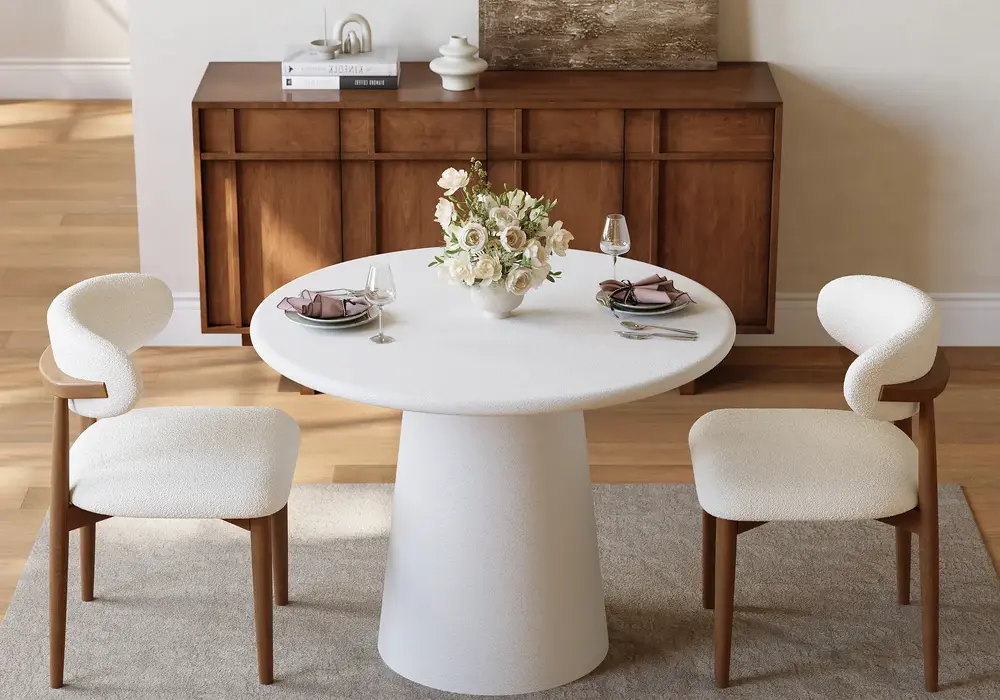
For a compact dining setup, a round table with a pedestal base can sometimes make movement around the table easier because there are fewer table legs to interfere with knees and chairs.
A good example is a Modern 32" (813 mm) Round Fiberglass Dining Table with Sculptural Pedestal Base. Its round shape and central pedestal create a visually clean setup for smaller dining areas while avoiding the corner and leg interference associated with some four-leg tables.
Source Homary
How Does a Dining Table Apron Affect Legroom?
A table apron is the structural frame located directly below the tabletop. It can improve the stability of the table, but a deep apron can reduce usable knee space.
When shopping online, don't stop at the overall table height. Look for measurements showing the distance between the floor and the underside of the apron, or between the seat and the lowest part of the table structure.
This is especially important if you have long legs, use a wheelchair, or prefer to sit close to the table.
How Can You Check Dining Table Clearance Before Buying?
If you're shopping online, compare these measurements:
- Overall table height.
- Tabletop thickness.
- Apron depth.
- Distance from the floor to the underside.
- Chair seat height.
- Distance between the chair seat and the lowest part of the table.
If you're shopping in person, simply sit down and pull the chair toward the table. Your knees should fit comfortably underneath without hitting the tabletop or apron.
What Dining Table Height Is Best for Different People?
The standard 28–30-inch (711–762 mm) height is suitable for many adults, but it should not be treated as a universal rule. Body proportions, age, mobility, and seating preferences can all change the ideal height.
What Is the Best Dining Table Height for Tall People?
Taller adults may find a table around 31–34 inches (787–864 mm) more comfortable, especially if they also use a slightly higher dining chair.
However, raising the table without raising the chair can create a different ergonomic problem. Your feet may no longer sit comfortably on the floor, and your elbows may sit too high relative to the tabletop.
The table and chair should therefore be adjusted as one system.
What Is the Best Dining Table Height for Short People?
Shorter users may prefer a table around 27–29 inches (686–737 mm), particularly when paired with a lower chair.
The priority should always be comfortable arm positioning and adequate knee clearance. A table that is technically within the standard range can still feel too high if the user's proportions are smaller.
What Is the Standard Children's Dining Table Height?
Children generally need lower furniture. A children's dining table is commonly around 20–24 inches (508–610 mm) high, depending on the child's age and size.
The child should be able to place both feet securely on the floor while reaching the tabletop without raising their shoulders. A properly sized children's table can also encourage better posture and independence during meals.
What Is an Accessible Dining Table Height?
For wheelchair users and others with mobility requirements, table height and clearance need to be considered together. A commonly referenced accessible dining surface range is approximately 28–34 inches (711–864 mm), with sufficient clear knee and foot space underneath.
The actual wheelchair, including its seat height, armrests, and footrests, should be considered before selecting a table. A table can fall within a general accessible height range but still be unsuitable if its apron or pedestal interferes with the user's positioning.
Are Adjustable Dining Tables a Good Option?
Adjustable-height dining tables can be useful in households where people of different heights share the same dining area. They can also work well when the table doubles as a workspace.
When comparing adjustable tables, look at the actual usable minimum and maximum heights, rather than focusing only on the adjustment mechanism.
How to Measure Your Dining Room for the Right Table Size
Finding the right dining table involves more than measuring height. The table must also fit comfortably within the available floor area while leaving enough room for chairs and walkways.
How Much Space Should You Leave Around a Dining Table?
As a general starting point, allow at least 36 inches (914 mm) between the edge of the table and a wall, cabinet, or other obstruction where chairs need to be pulled out.
This provides enough room for most people to sit down and stand up without feeling restricted.
If the area behind the dining chairs is also used as a walkway, additional space is recommended.
How Much Clearance Do Dining Chairs Need?
For everyday dining, 36 inches (914 mm) of clearance is a useful minimum around the table.
If people frequently walk behind seated diners, serve food, or move between the dining table and kitchen, consider 42–48 inches (1067–1219 mm) instead.
This additional clearance can make a significant difference in an open-plan kitchen or dining area.
How Do You Calculate the Maximum Dining Table Size for Your Room?
Start by measuring the usable length and width of the dining area. Then subtract the desired clearance from each side.
For example, if your dining area is 12 feet (3.7 m) wide and you want 36 inches (914 mm) of clearance on both sides:
12 ft (3.7 m) − 3 ft (0.9 m) − 3 ft (0.9 m) = 6 ft (1.8 m)
This gives you approximately 6 feet (1.8 m) of practical width for the table.
Repeat the calculation for the room's length to determine the maximum table dimensions that will still allow comfortable movement.
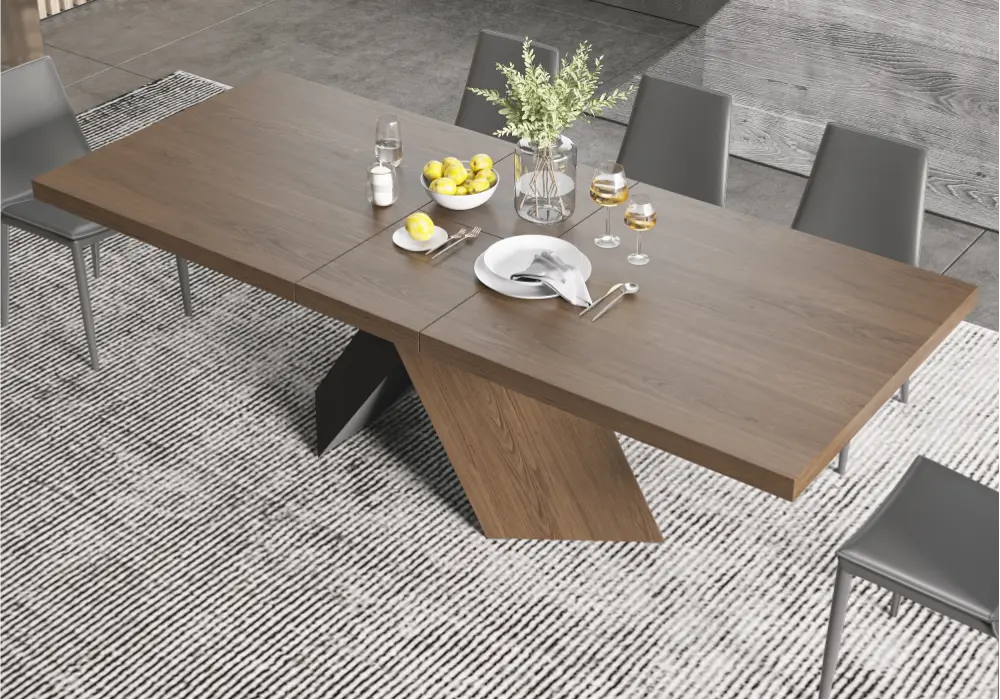
For larger dining rooms, an extendable table can provide another solution. A farmhouse-style option such as the Farmhouse Extendable Walnut Dining Table can accommodate everyday dining while offering additional capacity when more guests come over.
Source Homary
How Does Dining Table Height Affect Room Proportion?
Table height also influences how spacious a room feels.
A standard 30-inch (762 mm) table generally provides a balanced appearance in most dining rooms. In smaller rooms, an oversized high table may make the space feel visually crowded. A compact standard-height or round table can create a lighter appearance.
In a larger room with high ceilings, a substantial dining table can provide a stronger visual anchor without overwhelming the space.
Dining Table Height Chart: Standard, Counter, Bar, and Custom Heights
Use the following chart as a quick reference when comparing table and seating options.
Table Type | Typical Table Height | Recommended Seat Height | Typical Seat-to-Table Difference | Best For |
Standard dining | 28–30 in (711–762 mm) | 17–19 in (432–483 mm) | 9–13 in (229–330 mm) | Everyday and formal dining |
Counter height | 34–36 in (864–914 mm) | 24–26 in (610–660 mm) | 9–12 in (229–305 mm) | Kitchen and casual dining |
Bar height | 40–42 in (1016–1067 mm) | 28–30 in (711–762 mm) | 10–12 in (254–305 mm) | Bar-style dining |
Children's | 20–24 in (508–610 mm) | Approx. 11–14 in (279–356 mm) | Varies | Children's dining |
Tall custom | 31–34 in (787–864 mm) | Adjust to match | 9–13 in (229–330 mm) | Taller users |
Short custom | 27–29 in (686–737 mm) | Adjust to match | 9–13 in (229–330 mm) | Shorter users |
Accessible | 28–34 in (711–864 mm) | Based on user | Varies | Wheelchair users |
Adjustable | Varies | Varies | Adjustable | Multi-user households |
How to Choose the Right Dining Table Height
Once you know the standard dimensions, choosing a table becomes much easier. Instead of focusing on one measurement, evaluate the entire combination of table height, chair height, knee clearance, and room dimensions.
Measure Your Current Dining Chair Height
If you already have chairs that you find comfortable, measure from the floor to the top of the seat where you actually sit.
Then use the 9–13-inch (229–330 mm) guideline to establish a starting range for your new table.
This is often more reliable than buying chairs and a table separately based on generic size labels.
Check the Table's Underside and Apron Clearance
Look beyond the tabletop. Check whether the table has a thick top, deep apron, pedestal, or other structural components that could interfere with your knees.
For extendable tables, check the underside in both the standard and extended configurations if possible.
Test the Complete Table-and-Chair Combination
The best test is simple: sit down.
Your feet should rest comfortably on the floor, your knees should have room underneath the table, and your elbows should reach the tabletop without raising your shoulders.
If everyone in your household is a different height, choose a setup that works for the primary users rather than relying on a single industry-standard measurement.
Frequently Asked Questions About Dining Table Height
What Is the Standard Dining Table Height?
The standard dining table height is generally 28–30 inches (711–762 mm), with 30 inches (762 mm) being the most common choice for conventional dining tables.
How Much Gap Should There Be Between a Dining Chair and Table?
A gap of approximately 9–13 inches (229–330 mm) between the chair seat and the underside of the table is a useful starting point. Always check the lowest part of the table, including the apron.
What Is the Difference Between Counter Height and Bar Height?
Counter-height tables are generally 34–36 inches (864–914 mm) high, while bar-height tables are approximately 40–42 inches (1016–1067 mm) high. Counter stools typically have 24–26-inch (610–660 mm) seats, while bar stools are around 28–30 inches (711–762 mm).
How Much Knee Clearance Do You Need Under a Dining Table?
Aim for at least 10–12 inches (254–305 mm) of vertical clearance between the chair seat and the underside of the table or apron. The deeper the apron, the more important this measurement becomes.
What Dining Table Height Is Best for Tall People?
Tall users may find 31–34 inches (787–864 mm) more comfortable than the conventional 28–30-inch (711–762 mm) range. The chair should also be raised accordingly so that the feet remain supported and the posture stays natural.
What Is the Standard Accessible Dining Table Height?
An accessible dining surface is commonly around 28–34 inches (711–864 mm) high, with adequate knee and foot clearance. Individual wheelchair dimensions should always be considered when selecting the final table height.
How Much Space Should You Leave Around a Dining Table?
Allow at least 36 inches (914 mm) around the table for chair movement. If the area doubles as a walkway or serving route, 42–48 inches (1067–1219 mm) is more comfortable.
What Should I Measure Before Buying a Dining Table?
Measure your available floor space, existing chair seat height, tabletop height, tabletop thickness, apron clearance, and the distance from the chair seat to the lowest part of the table. These measurements will give you a much better indication of whether the table will actually be comfortable.