

A dining height outdoor sectional pairs upright, supportive seating with a table you can comfortably eat from. Conventional dining tables are often around 28–30 inches high, but the right match also depends on seat height, cushion compression, knee clearance, and reach. When comparing outdoor sofa sets, do not assume that a set with a table is suitable for dinner. A low coffee table or fire pit table usually serves a different purpose.
The practical test is simple: can you sit with your feet supported, keep a plate within easy reach, and eat without constantly bending forward? If the answer depends on stacking cushions or leaning over a flame enclosure, the arrangement does not suit regular dining. Use dimensions and a seated test before choosing the set.
Table of Contents
Distinguish dining seating from lounge seating
Dining seating generally supports a more upright posture and places the user closer to the table edge. Lounge seating often has a lower seat, deeper cushion, and more relaxed back. Both can be comfortable, but they support different activities.
A conventional dining chair often has a seat near 17–19 inches high, although product designs and compressed cushion heights vary. A low outdoor sofa may sit closer to 15–17 inches. Those few inches matter when you bring it to a fixed height dining table.
Seat depth matters too. On a deep sofa, a person who leans back may be too far from the table to eat easily. Moving forward can solve reach temporarily but remove back support. A proper dining arrangement should work without asking every guest to perch at the cushion edge.
Compare the relevant heights
Measurement | Why it matters | What to verify |
Tabletop height | Determines plate position | Actual dining surface, not overall accessory height |
Underside height | Determines thigh clearance | Aprons, rails, drawers, and braces |
Occupied seat height | Determines the seated relationship | Cushion compression under the user |
Seat depth | Determines upright reach | Position with back support |
Base footprint | Determines foot placement | Pedestals and low crossbars |
For ordinary chair and dining table combinations, about 10–12 inches between the seat and tabletop can be a useful starting reference. It is not a guarantee of comfort, particularly when the top has a thick apron. Measure to the underside as well and test with the people who will use the furniture.
Avoid judging the arrangement from tabletop height alone. A 29 inch top with an obstructive support can provide less useful knee room than a differently designed table of similar height. The space beneath the surface is part of the furniture's usable dimensions.
Why a fire pit table is not automatically a dining table
Fire pit tables are designed around a burner, flame enclosure, controls, and required clearances. Their overall width can look generous while leaving only narrow peripheral surfaces. That makes the footprint a poor indicator of usable dining area.
The Tevara Five Piece Outdoor Teak Modular Sofa Set with Fire Pit provides a clear example. The current listing gives a fire pit table height of approximately 16.9 inches and a seat height of about 16 inches. That is a low lounge relationship, not a conventional dining height combination.
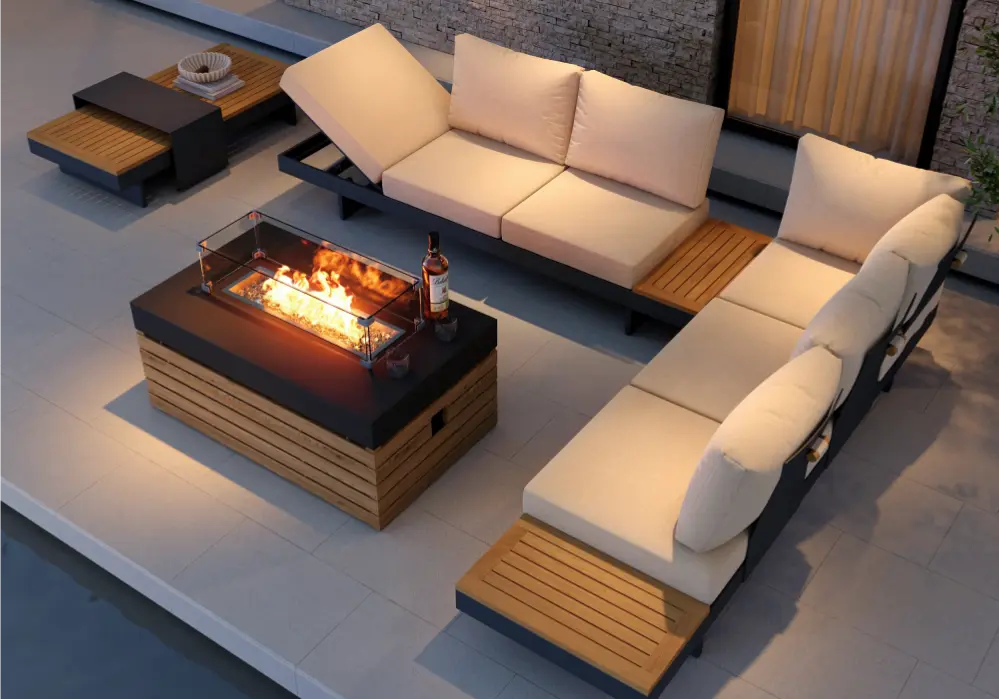
It may support conversation and permitted incidental use of its surrounding surface, but those measurements do not justify calling it a dinner table. Follow the fire appliance instructions and keep food, table linens, and objects away from areas the manufacturer prohibits.
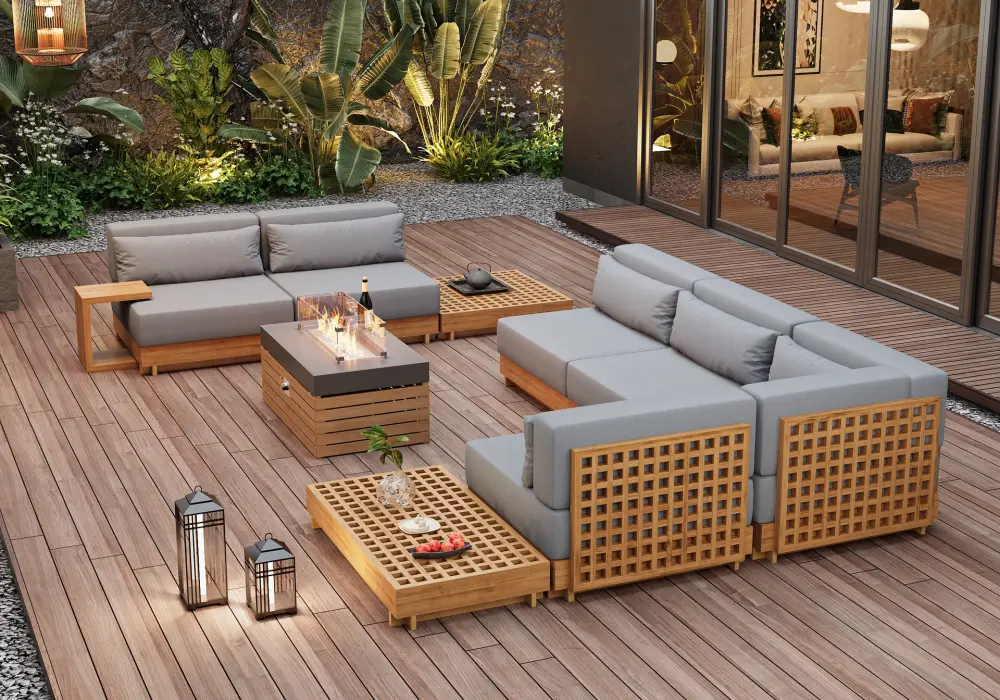
The Grida Ten Piece Outdoor Teak Modular Sofa Set with Fire Pit is another lounge and entertaining option. Its modular seating and fire feature should be evaluated for their intended use rather than presented as a ready made dining sectional. Verify the specific fire table dimensions separately from the smaller side table measurements shown in the listing.
The Tevara Four Piece Outdoor Teak Modular Sofa Set with Cover includes a coffee table listed at approximately 11 inches high, with a listed seat height around 15 inches. That makes the supplied table lower than the seat. It belongs in a lounge comparison, even if the sofa itself accommodates several people.
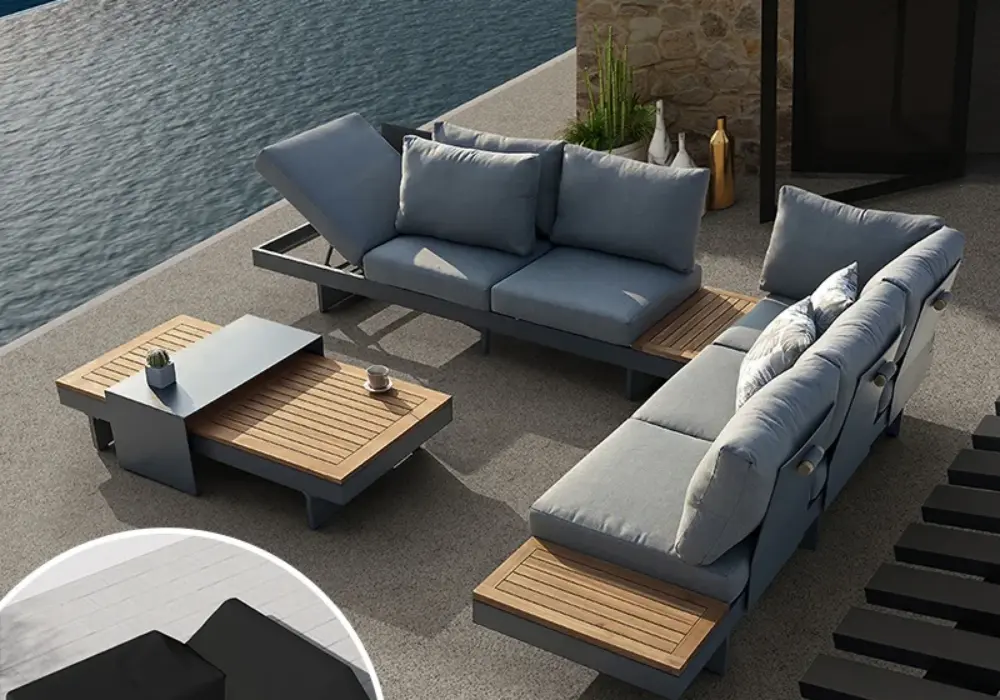
These sets can suit an outdoor relaxation brief. If your main goal is seated meals, choose a purpose designed dining arrangement or confirm a compatible dining table and seating combination. Do not modify low tables or fire pit equipment to make them taller.
Measure a sectional for eating posture
Start with the occupied seat height. If possible, sit on a comparable cushion and measure after it compresses. A thick cushion may look high in an unoccupied product photo while settling substantially under a person.
Next, measure usable seat depth from the front cushion edge to the back support. Compare that with how you sit at a dining chair. If your feet cannot rest naturally while your back is supported, the sectional may be more appropriate for lounging.
Then assess the position of the table edge relative to your knees. You need enough space to enter and sit, but not so much that the meal remains out of reach. A lounge style coffee table gap does not automatically translate into a good dining arrangement.
Finally, look at the corner seat. The corner can be the least convenient place for eating because both neighboring people and table supports affect access. Test whether someone can get out without asking the entire row to stand.
Allow space around an occupied dining arrangement
Draw the table, sectional, and any additional chairs at their exact dimensions. Add space for people to enter, sit, and walk behind occupied seats where necessary. A fixed sectional cannot slide back like a dining chair, so its entry points deserve special attention.
In an L shaped arrangement, keep at least one side open for arrival and serving. If the only route leads through a narrow gap at the corner, reconsider the table position. Rounded corners or a different base can help movement, but they do not remove the need for enough floor area.
For the dining edge, about 24 inches per person is a useful initial planning allowance, with more space for broad chairs, larger users, or generous place settings. Count usable edge, not the length hidden behind a corner or interrupted by a support.
Test the route with a tray and with all intended seats occupied. A plan that works for empty furniture may become awkward once guests and plates are in place. Leave access to doors, drains, and any equipment controls.
Choose materials for meals and exposure
For frequent dining, prioritize surfaces with clear spill cleaning instructions and cushions that can be maintained realistically. Outdoor fabric can resist some exposure without being immune to food stains or prolonged saturation. Read the specific cover care instructions before assuming machine washing is allowed.
Wood tops require care appropriate to their finish and exposure. Use the cleaning products the manufacturer recommends, and protect surfaces from hot cookware as directed. Teak, acacia, and wood look finishes should not be treated as having identical maintenance needs.
Metal frames also need routine cleaning and inspection, especially around joints and fasteners. Avoid promising permanent resistance to corrosion from a material label alone. The coating, environment, and care routine all influence performance.
If food is the primary use, think about crumb removal and access to cushion seams. An attractive deep lounge can be harder to clean after meals than an upright dining bench. Practical upkeep should be part of the choice, especially for frequent family use.
Treat fire features as a separate decision
A fire feature should fit the location, appliance instructions, and applicable building rules before it enters the furniture plan. Apartment balconies, enclosed patios, overhead structures, and nearby combustible materials can impose constraints. Do not infer permission from a retailer's outdoor lifestyle image.
Use propane equipment outdoors as directed, with the required clearances and ventilation. A glass wind guard does not eliminate heat or make the table suitable for any location. Keep the fuel supply and hose route accessible and protected according to the instructions.
If your available space cannot accommodate both dining and a fire feature correctly, prioritize the activity you use most. A comfortable dining area without a flame can be more useful than a crowded arrangement trying to serve both functions.
Build a shortlist that matches your actual goal
For regular dinners, shortlist products explicitly designed for dining and compare all relevant heights. For occasional drinks and snacks, a lounge set with a low table may be enough. For evenings centered on a fire, evaluate the appliance and lounge layout on their own terms.
Before ordering, recreate the planned table height beside a seat with similar dimensions. Sit for more than a quick photograph, then try eating, reaching, and standing. Choose the combination that supports those movements without improvised cushions or furniture modifications.
Frequently Asked Questions
How high should a dining table for an outdoor sectional be?
Many conventional dining tables are around 28–30 inches high, but the sectional must suit that height. Check occupied seat height, underside clearance, depth, and reach together before deciding.
Can I use a coffee table for outdoor dining?
It may work for casual snacks, but a low coffee table generally requires bending forward for a meal. For frequent dining, choose a surface and seat combination designed to support an upright position.
Can a fire pit table double as a dinner table?
Only use it as the manufacturer expressly permits. A burner and wind guard reduce usable surface area and introduce heat constraints. Do not treat a covered burner as proof that a low fire table becomes a dining table.
Is a lift top table always suitable for dining?
No. Confirm its raised height, stability, load limits, locking instructions, and intended use. A moving top can create useful flexibility, but the mechanism alone does not establish a comfortable dining fit.
Can I raise a sectional with extra cushions?
Loose cushions can change support and stability without solving reach or knee clearance. Choose the correct furniture dimensions instead of relying on improvised height adjustments for regular meals.
Which of the featured sets is dining height?
The verified measurements and descriptions support lounge use, rather than a confirmed dining height package. Use these options for their intended relaxation role and select a purpose designed dining solution when meals are the priority.