

An extendable dining table gives a small home two tables in one: a compact shape for everyday meals and a longer one for guests. The best choice fits comfortably when closed and opens into a generous hosting setup. Start with your everyday seating, then compare dining tables by closed length, width, extended length, base position, and leaf storage.
Extension adds a second configuration rather than extra floor space, so a good plan covers both modes: where the chairs go, where people walk, and where extra chairs wait between gatherings.
Table of Contents
Size the table for the meals you eat most often
Count the people who regularly sit down together, then lay out their plates, glasses, and serving dishes on a temporary surface or a floor outline. Include breakfast, laptop work, and homework as well as dinner. A table that handles this routine closed is one you will enjoy every day, and the extension is a bonus for special occasions.
Next, decide what hosting means for you. A few extra guests for Sunday lunch calls for a different extension than a holiday dinner for 10. Choosing the extended size that matches your real gatherings keeps the rest of the year comfortable.
List the furniture that stays put: a sideboard, kitchen island, radiator, or doorway. Pick a table whose hosting position works with the room as it stands, so opening it never means rearranging heavy pieces.
Compare both footprints
The most useful comparison is the closed size next to the open size, with width included in both. A compact everyday shape that opens into an adjoining living area is often the most flexible small-space solution.
Measurement or feature | Why it matters in a small room |
Closed length | Sets the everyday footprint |
Width | Shapes side routes and space for shared dishes |
Extended length | Sets the hosting footprint and end routes |
Base position | Affects knees, chair placement, and end seating |
Leaf storage | Decides where the extension panel lives |
Operating space | Gives the top and mechanism room to move |
Tape out both positions at full size, and include the chairs with someone seated in them. This shows exactly how much room a diner needs to sit, rise, and pass behind another person, and it makes the final decision easy.
Match the base and chairs to your table
Pedestal bases open up the tabletop perimeter and leave plenty of room for legs, and a double pedestal supports longer tops with comfortable side seating. Four-leg tables offer a classic look and corner seating. Choose the base that suits the chairs you already own or plan to buy.
Measure chair width and arm height, then check the clearance under the top and around the base. Trying the end seats in the extended position tells you how many people will sit comfortably with your own chairs.
Give extra chairs a home. Chairs stored nearby can join the table in seconds, and a table with a ready hosting setup is one you will actually use.
Three extendable tables, three kinds of rooms
Once you know your everyday footprint and how often you host, the shortlist gets much shorter. These three tables each suit a different kind of space.
For a square corner: round today, oval for guests
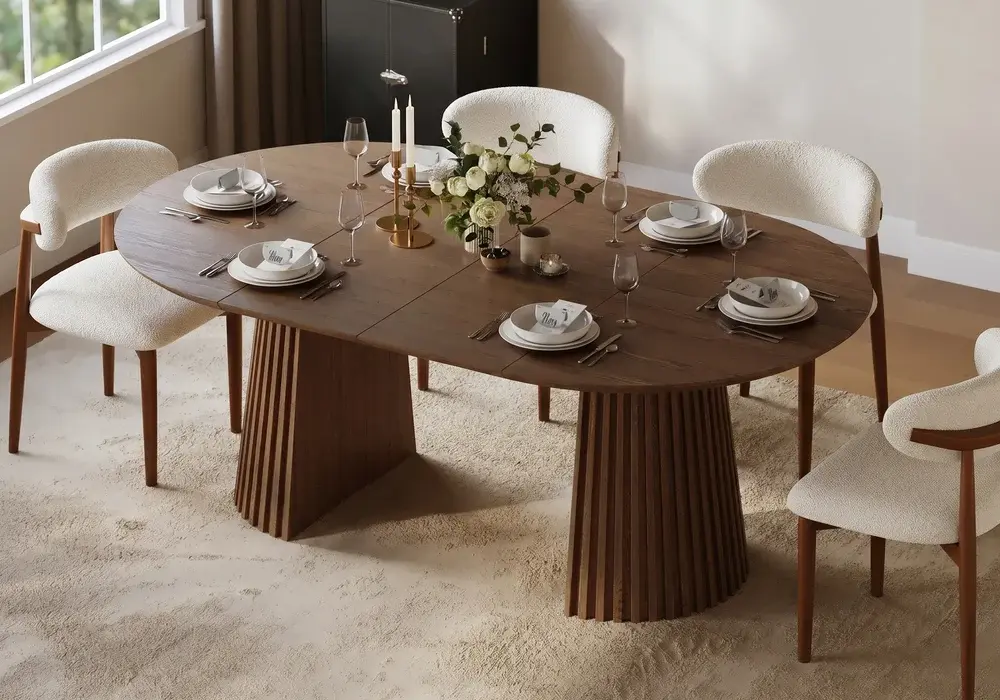
If your dining spot is a corner of the living room or a small square nook, a round table is a natural fit. The Modern 47–79-inch extendable walnut-finish dining table closes at about 1199 mm × 1199 mm, so everyday meals, laptop work and weekend breakfasts all happen around a compact circle. When friends or family come over, it opens into a long oval that seats up to 6.
It is built from solid wood with an oak veneer top, and the fluted pedestal base gives it a sculpted, modern look while keeping the legs out of the way of your chairs. For apartments and open-plan homes that need one table to do two jobs, this is the easiest place to start.
For a long, narrow room
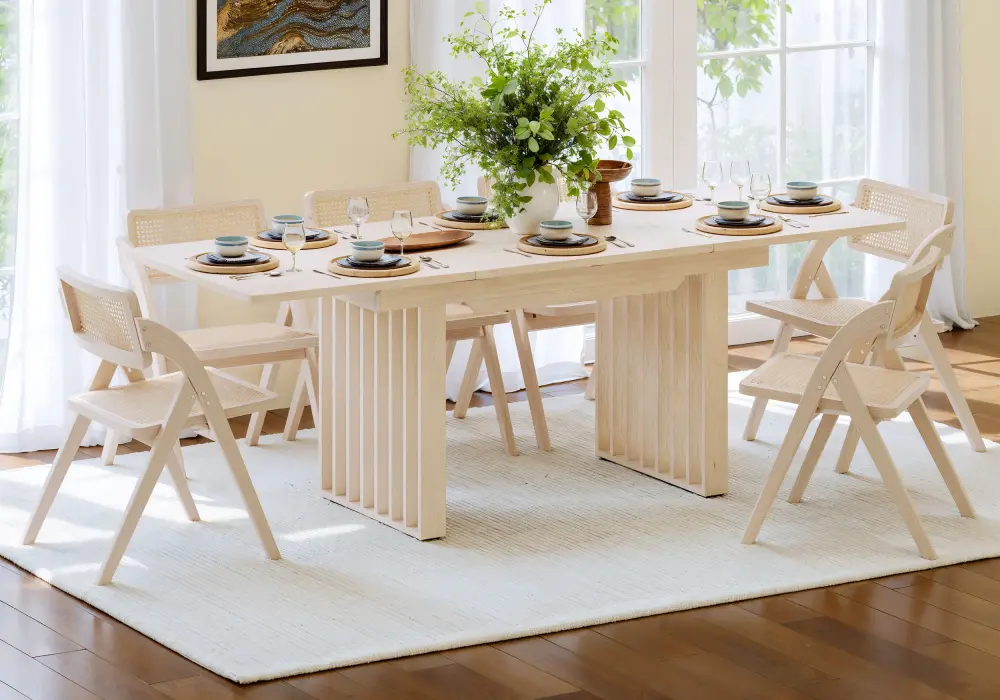
Some dining areas are more hallway than square. The Japandi 55–87-inch extendable whitewash dining table is made for exactly that. At 813 mm deep, it runs along a wall or the long side of a room and leaves walking space beside it.
The top slides out smoothly, and the leaf stores inside the table, so there is no extra panel to find a closet for. It seats 4 to 8. The double pedestal base keeps legroom open at the sides, and the whitewash finish with soft oak-veneer texture suits Japandi, Scandinavian and other light, calm interiors.
For households that host often
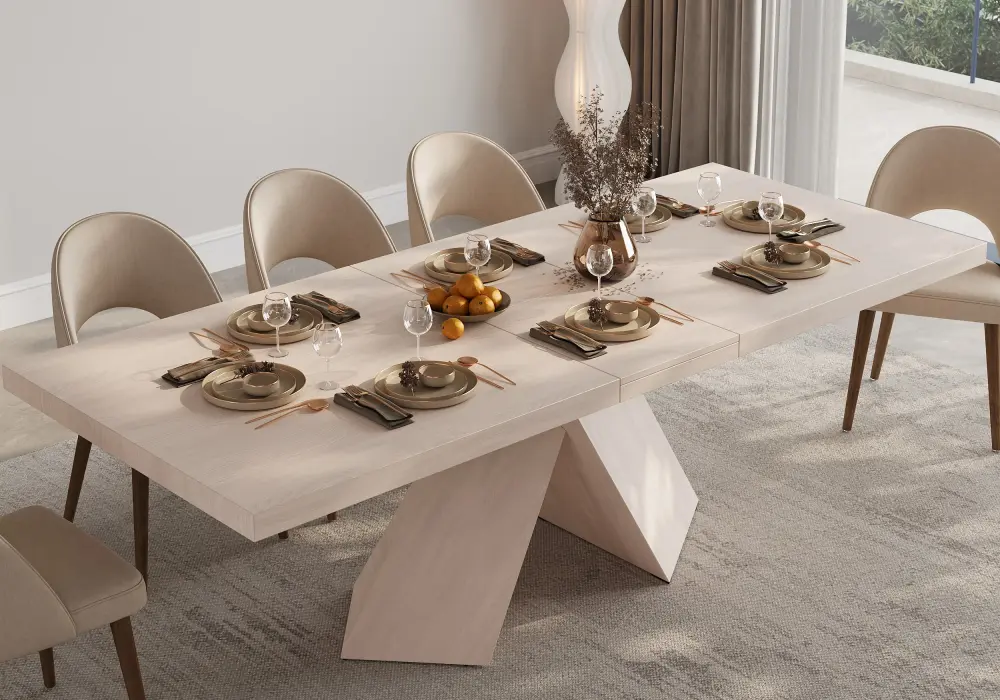
If your dining zone has room along one wall, or you regularly cook for a crowd, the Farmhouse 79–94-inch extendable whitewash dining table is the one to look at. Even closed, it gives 6 people generous elbow room across a 991 mm deep top. Open the butterfly leaf and it comfortably reaches 10 seats for holidays and birthdays.
The wood-look top brings farmhouse warmth without feeling heavy, and the metal-and-engineered-wood base keeps legroom comfortable at every seat.
Set up, care, and delivery
Read the included instructions before the first extension so you know which handles and supports to use. Clear the tabletop, open the table as directed, and it will glide into position the same way each time. If you have a self-storing leaf, keep it inside the table; with a separate leaf, store it flat with the other components.
Wipe the top regularly and protect the finish as the manufacturer recommends. A table that moves between two modes stays in its best shape with a little routine care.
Before delivery day, measure the route from the front door to the dining area, including stairs and turns, using the packaged dimensions. Arrange a helper for assembly, and your new table will be ready for its first meal the same day.
Frequently Asked Questions
Is an extendable dining table a good choice for a small space?
Yes. It lets one table cover daily meals and occasional hosting. Pick a closed size that fits your everyday routine and an extended size that suits your guest list, and the table will work hard for the room.
Is round-to-oval better than rectangular extension?
Each shape has a home. A round closed top suits a square nook or corner, while a narrower rectangle follows the line of a long room. Tape out both with chairs and choose the one that flows best with your floor plan.
What is the benefit of a self-storing leaf?
The extension panel lives inside the table, so there is no separate storage spot to organize. It makes hosting quick and keeps the room tidy between gatherings.
How do I know how many people a table will seat?
Use the listed capacity as your starting point, then picture your own chairs and place settings. Tables with a pedestal base and open sides tend to make end and side seats easy to use.
What should I measure first?
Start with the everyday dining area and the main walkways. Then draw the closed tabletop with seated chairs, add the extended outline and extra seating, and finish with door swings, nearby furniture, and the delivery path. With those numbers in hand, choosing the right size is straightforward.