

Yes—you can use a table runner on a small round dining table, and the right runner can make the table look more polished without taking away from its shape. The key is choosing a runner that is narrow enough for the tabletop, short enough to keep the ends out of the way, and light enough to avoid visually crowding a compact dining area.
Whether your table is 30, 36, 42, or 48 inches (76, 91, 107, or 122 cm) across, the same basic principles apply: measure the diameter first, choose a proportional runner length and width, then decide how you want to place it. From there, fabric choice, seasonal styling, and simple anchoring techniques can help keep the runner attractive and practical for everyday meals.
Source Pexels
Table of Contents
Runner Dimensions for Round Dining Tables by Size
Choosing the right round table runner size starts with one simple measurement: the diameter of your dining table. Once you know the diameter, you can select a runner length and width that leave enough room for dining without making the tabletop feel crowded.
How to Measure a Round Dining Table
Measure straight across the center of the tabletop from one edge to the opposite edge. This measurement is the table's diameter.
If your table has a thick edge or apron underneath the tabletop, focus on the actual usable tabletop area. The runner should be sized for the surface where plates, glasses, and serving pieces will sit.
How to Choose the Right Table Runner Length
For a small round dining table, a total additional length of about 12–18 inches (30–46 cm) is a useful starting point. This generally creates around 6–9 inches (15–23 cm) of table runner overhang on each end.
For example, a 36-inch (91 cm) round table can usually work well with a runner around 48–54 inches (122–137 cm) long.
The goal is not simply to maximize the overhang. On a compact table, a long decorative drop can interfere with diners' knees or laps and may make the tabletop look visually smaller.
Recommended Round Table Runner Sizes
Round table diameter | Recommended runner width | Recommended runner length | Approx. overhang per end |
30 in / 76 cm | 8–10 in / 20–25 cm | 42–46 in / 107–117 cm | 6–8 in / 15–20 cm |
36 in / 91 cm | 10–12 in / 25–30 cm | 48–54 in / 122–137 cm | 6–9 in / 15–23 cm |
42 in / 107 cm | 12–14 in / 30–36 cm | 54–60 in / 137–152 cm | 6–9 in / 15–23 cm |
48 in / 122 cm | 12–14 in / 30–36 cm | 60–66 in / 152–168 cm | 6–9 in / 15–23 cm |
These dimensions are practical starting points rather than strict rules. Your preferred table setting, centerpiece, and seating arrangement can justify a slightly shorter or narrower runner.
What Table Runner Width Works Best?
Table runner width is especially important on a small round table because every inch of surface area matters.
An 8–10 inch (20–25 cm) runner can work well on a 30-inch (76 cm) table. For a 36- to 42-inch (91–107 cm) table, a 10–14 inch (25–36 cm) runner generally gives you more visual presence without overwhelming the surface.
When in doubt, size down. A runner that is slightly too narrow usually looks intentional; one that is too wide can quickly crowd plates, serving dishes, and centerpiece items.
How Overhang Affects Seating Comfort
The amount of overhang affects both appearance and everyday usability. A dramatic drop may look attractive in a formal dining room, but on a small round table it can brush against seated diners or become easy to pull accidentally.
For everyday dining, around 6–9 inches (15–23 cm) of overhang per end is a practical range to consider. Shorter overhang can be particularly useful when the table is used by children or when chairs sit very close to the tabletop.
When a Runner Won't Work on a Small Table
Not every small round dining table benefits from a runner. Sometimes leaving the tabletop uncovered creates a cleaner and more functional setup.
Very Small Round Dining Tables
If your table is under about 30 inches (76 cm) in diameter, even a narrow runner can take up a significant amount of usable space. The smaller the tabletop, the more carefully you need to balance decoration with function.
Tables Used for Frequent Family Meals
A runner may not be ideal for households with young children if the fabric can be grabbed or pulled easily. A wipeable, short runner can be a practical compromise, but a completely clear tabletop may still be easier for everyday use.
Oversized Centerpieces or Full Place Settings
Large vases, decorative bowls, serving platters, or four full place settings can quickly consume the limited surface of a small table. In these situations, adding a runner may make the tabletop feel cluttered.
If any of these situations apply, a runner may not be your best fit—but the sizing and placement principles below still help if you decide to try a narrower or shorter version.
Placement Styles for Visual Balance
Once you have the correct small round dining table runner size, placement becomes the next consideration. Because a round tabletop does not have corners to guide the eye, the direction of the fabric has a strong effect on the overall look.
Centered Horizontal Runner
The simplest option is to place the runner straight across the center of the table, following one diameter.
This arrangement works especially well on 36- and 42-inch tables because it creates a clear visual line without adding unnecessary complexity. It also leaves space on either side for plates and glasses.
For the centerpiece, choose something low and compact. A shallow bowl, short vase, or small tray can sit naturally in the center without competing with the runner.
Diagonal Table Runner Placement
A diagonal runner gives a more relaxed and decorative appearance. It can work well when you want the table to feel less symmetrical and more layered.
However, diagonal placement needs extra care on tables under 36 inches (91 cm). The runner's ends can extend closer to diners, increasing the chance of fabric reaching into laps or interfering with place settings.
Before using a diagonal arrangement, check where plates, cutlery, and glasses will sit. A visually attractive runner is not successful if it takes away the space people need to eat comfortably.
Layered or Offset Runner Styling
A layered or slightly offset runner can add visual interest without requiring a large centerpiece. This style works particularly well with lightweight textiles and a simple decorative object.
For example, a narrow woven runner can sit beneath a low ceramic bowl or a small seasonal arrangement. The combination creates texture while keeping the center of the table relatively open.
On a small table, avoid layering multiple bulky textiles. The goal is to create contrast in texture or shape rather than filling every inch of the surface.
Choosing a Runner Based on Table Size
A 30-inch table generally benefits from the simplest styling approach. A centered runner with a compact centerpiece is less likely to interfere with seating.
A 36- or 42-inch table gives you more flexibility. You can experiment with centered, diagonal, or offset placement depending on the number of diners and the height of the centerpiece.
A 48-inch table provides the most styling freedom in this range and can accommodate a wider runner or a slightly more elaborate centerpiece.
Seasonal Styling Without Overcrowding
Seasonal decorating does not require completely changing the table. A lightweight runner can act as a neutral base throughout the year while small accessories provide seasonal variation.
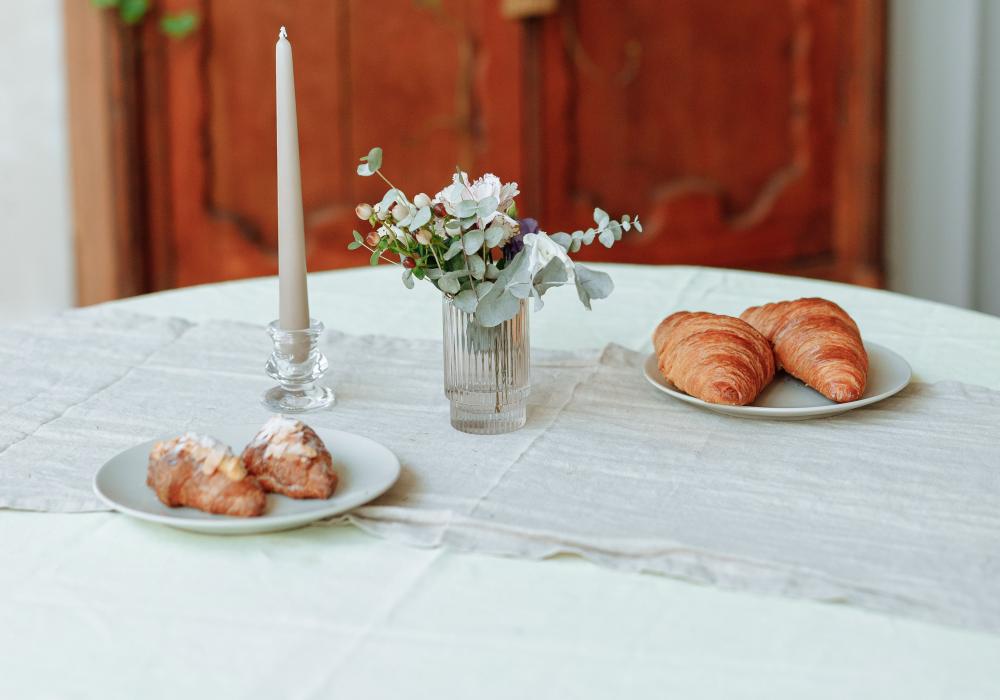
For example, a woven runner paired with greenery can create a natural everyday look. The same runner can later be styled with candles, dried foliage, or another low centerpiece for a more seasonal atmosphere.
The key is keeping the total visual volume proportional to the table.
Source Pexels
Best Fabrics for Everyday Use
The best table runner material depends on how often you use the table, how easily it needs to be cleaned, and how formal you want the dining area to look.
Cotton Table Runners
Cotton is one of the most versatile options for everyday dining. Many cotton runners are machine-washable, and the fabric is available in a wide range of colors, patterns, and weights.
For a small round table, choose a lighter weave rather than a thick or heavily padded cotton runner. Lightweight fabric will sit flatter against the tabletop and preserve more visual space.
Linen Table Runners
Linen has a naturally textured appearance and works well for relaxed or refined dining spaces. Its main consideration is wrinkling, which may be part of the appeal or something you prefer to avoid.
A simple linen runner can make a small table feel more intentionally styled without requiring many additional decorations.
Polyester Blend Runners
Polyester blends are practical for households that prioritize durability and easy maintenance. Many options are designed to resist stains and can be washed regularly.
They tend to hold their shape well and can offer a more consistently crisp appearance than some natural fabrics.
Wipeable and Oilcloth Runners
Wipeable fabrics are particularly useful for messy meals, family dining, or tables that need quick cleanup.
They are less formal in appearance than linen, but their practicality can make them a good choice for everyday use. Follow the manufacturer's cleaning instructions rather than automatically putting a coated runner in the washing machine.
Non-Slip-Backed Runners
Some runners are manufactured with a non-slip backing to reduce movement on smooth surfaces. These can be useful on polished wood, laminate, or glass tables.
However, check that the backing is suitable for your particular tabletop finish before using it regularly.
How to Care for a Table Runner
Always check the manufacturer's care label first. In general, cold or lukewarm water and a gentle wash cycle are safer choices for washable fabric than unnecessarily high temperatures.
Treat spills promptly. Blot liquid instead of rubbing it deeply into the fibers, then use a suitable stain treatment for the specific fabric.
The basic trade-off is simple: natural fabrics can provide a softer, more textured appearance, while synthetic and coated fabrics often make everyday maintenance easier.
Protecting the Tabletop and Anchoring Techniques
A good runner should stay in place without damaging the table underneath it. The best anchoring method depends on the material and finish of your tabletop.
Non-Slip Pads
A thin non-slip pad beneath the runner can provide extra stability and is particularly useful when the fabric itself is lightweight.
On wood tables, choose a pad that will not trap excessive moisture or leave marks. Cleaning underneath the runner periodically also helps prevent grit from rubbing against the finish.
Silicone Clips
Small silicone clips can help hold the runner in place without adding much visual bulk. They may be useful on smooth or glossy tabletops, especially when the table receives frequent use.
Use clips designed for temporary or furniture-safe applications, and test them in an inconspicuous area first.
Hidden Magnets and Weighted Ends
Magnetic anchoring can be useful when the table construction allows it, while weighted ends provide a decorative alternative.
However, weighted ends are not always ideal for a small round table. The extra bulk sits close to the edge where diners need comfortable leg clearance. For compact tables, a thin non-slip pad or discreet clip is often easier to manage.
Choosing an Anchoring Method by Tabletop Type
Tabletop type | Practical anchoring option | Main consideration |
Solid wood | Thin non-slip pad or furniture-safe clips | Avoid trapped moisture and abrasive particles |
Lacquered/glossy | Non-slip pad or silicone clips | Test for residue or interaction with finish |
Laminate | Non-slip mesh or lightweight clips | Smooth surfaces may allow more movement |
Glass | Thin non-slip pad or discreet clips | Prioritize stability without scratching |
How to Prevent Scratches
Keep the underside of the runner and any anchoring accessory clean. Small crumbs, grit, or debris can become trapped between the fabric and tabletop.
Also avoid dragging clips, magnets, or weights across the surface. Lift them when repositioning the runner instead of sliding them.
Because a shorter runner has less excess fabric, it generally requires fewer anchor points and is easier to keep tidy on a small round table.
DIY: Shortening a Runner to Fit
A standard runner does not have to fit perfectly straight out of the package. Shortening it can be an easy way to adapt a longer design to your round dining table runner size.
Measure the Finished Length
Measure the table diameter first, then determine your preferred overhang. Mark the finished runner length before cutting.
Hem or Fold the New Edge
Allow enough extra fabric for a neat hem. Press the edge with an iron so the fold stays in place while you finish it.
Secure the Edge
You can sew the hem with a needle and thread or use fusible hemming tape for a no-sew option. Sharp fabric scissors will help create a cleaner cut.
For unusual table dimensions or a specific design requirement, a made-to-measure runner can also provide a more precise fit.
FAQ
What runner width and overhang works best for a 36-inch (91 cm) round dining table?
A 10–12 inch (25–30 cm) wide runner is a practical starting point for a 36-inch (91 cm) round table. A runner around 48–54 inches (122–137 cm) long gives roughly 6–9 inches (15–23 cm) of overhang at each end.
Does a table runner reduce seating capacity, and how much clearance should I leave?
A runner can reduce usable tabletop space if it is too wide, too long, or paired with a large centerpiece. Keep the overhang short enough that it does not touch diners' knees or laps, and leave clear space around each place setting.
Which runner materials are stain-resistant and machine-washable for daily use?
Polyester blends are often a practical choice for stain resistance and easy care, while many cotton runners are machine-washable. Linen offers a more natural texture but may wrinkle more easily. Always follow the manufacturer's care instructions.
How do I stop a runner from sliding on a glossy or glass tabletop?
Try a thin non-slip pad, silicone clips, or another residue-free anchoring solution that is compatible with the tabletop finish. Test the accessory in a discreet area first and keep the underside of the runner clean.
Can a runner be placed diagonally on a round table without blocking place settings?
Yes, but diagonal placement requires extra attention on smaller tables. On tables under 36 inches (91 cm), the angled ends may extend farther into diners' space, so check plate positions and leg clearance before using this style.
How do I shorten a standard runner to fit a small round table?
Measure the desired finished length, mark the cut, allow extra fabric for the new hem, then trim and secure the edge with a sewn hem or fusible tape. Pressing the edge before finishing creates a cleaner result.