

Can a reclining sofa be against a wall? Yes, but it depends on the type of reclining mechanism. A traditional reclining sofa usually needs space behind it because the backrest moves backward as the seat reclines. Depending on the model, you may need around 30–60 cm (12–24 inches) of clearance. A wall-hugger, also called a zero-wall recliner, uses a different mechanism that moves the seat forward as it reclines, allowing it to sit much closer to the wall.
Before placing a reclining sofa against a wall, it is important to measure more than the sofa's closed dimensions. You also need to account for the fully reclined backrest, extended footrest, power cord, and any surrounding furniture. This guide explains how much clearance a reclining sofa needs, how wall-hugger models save space, and how to handle cords, safety, floors, and walls for a comfortable setup.

Table of Contents
How Much Clearance Does a Reclining Sofa Need?
The biggest factor when placing a recliner sofa near a wall is the amount of space required for the reclining mechanism to move. Unlike a standard sofa, a reclining sofa has moving parts that change its overall footprint when activated.
Typical Reclining Sofa Wall Clearance
Traditional reclining sofas commonly require somewhere between 30 and 60 cm (12–24 inches) of clearance behind the backrest. However, there is no single clearance measurement that applies to every sofa.
A compact two-seat recliner may need less room than a large three-seat sofa. Oversized sectionals, deep-cushion models, and sofas with large headrests can require additional space.
Sofa Type | Typical Rear Clearance | Main Consideration |
2-seat reclining sofa | 30–45 cm / 12–18 in | Compact mechanisms may need less space |
3-seat reclining sofa | 45–60 cm / 18–24 in | Larger backs may move farther |
Reclining sectional | 45–60+ cm / 18–24+ in | Every reclining section should be measured |
These figures are useful planning ranges rather than universal specifications. Always check the manufacturer's minimum wall distance before final installation.
Why the Footrest Matters as Much as the Backrest
One of the most common mistakes when measuring a reclining sofa is focusing only on the backrest.
The backrest determines how much room the sofa needs behind it, but the footrest determines how much space it occupies in front. When fully extended, a footrest can move significantly farther into the room.
This matters when your sofa is close to a:
- Coffee table
- TV stand
- Side table
- Wall-mounted furniture
- Main walkway
A sofa may have enough rear clearance but still be impractical because the extended footrest blocks traffic.
How to Measure Reclining Sofa Clearance
The most reliable approach is to measure the sofa while someone operates the reclining mechanism.
Step 1: Measure the Upright Sofa
Place the sofa in the approximate location where you plan to use it. Measure from the wall to the rear of the sofa.
Record the sofa's overall width and depth as well.
Step 2: Fully Recline the Sofa
Have a helper slowly open the recliner while you watch the rear and front clearance.
Do not force the mechanism if it contacts the wall. Stop and reposition the sofa if necessary.
Step 3: Measure the Maximum Rear Movement
With the sofa fully reclined, measure the shortest distance between the wall and the moving backrest.
This is the measurement that matters when determining reclining sofa wall clearance.
Step 4: Measure the Footrest Extension
Next, measure how far the footrest extends into the room.
A useful floor-planning trick is to place painter's tape on the floor at the maximum extension point. This creates a visible boundary showing how much space the recliner actually uses.
Wall-Hugger (Zero-Wall) Recliners: The Space-Saving Solution
When a living room is too small for a traditional reclining sofa, a wall-hugger design can solve the problem.
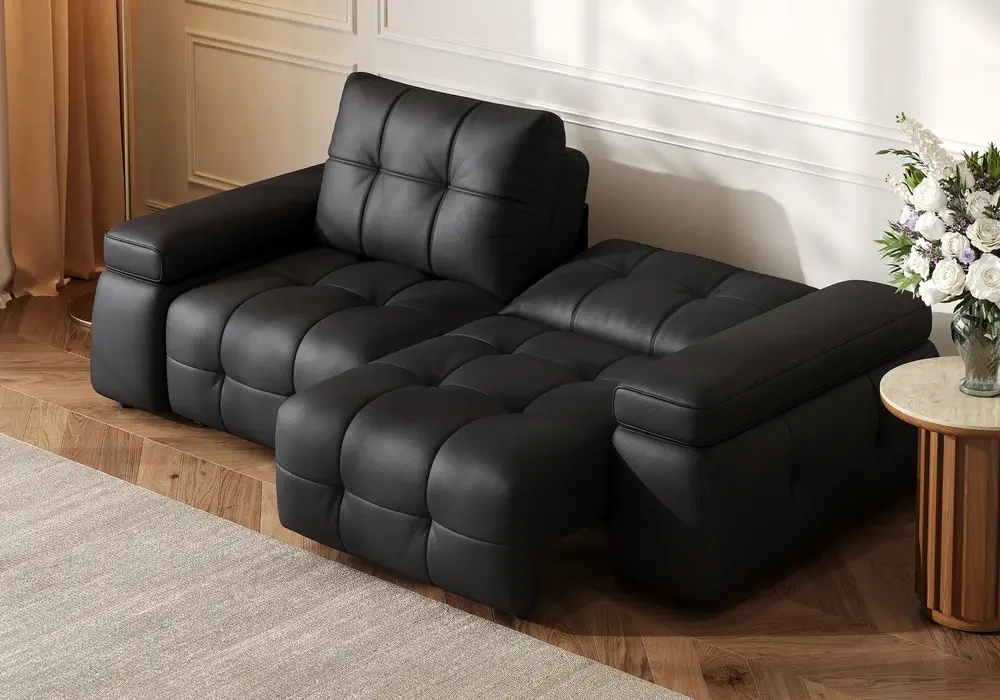
Genuine Leather Power Convertible Sleeper Sofa
What Is a Wall-Hugger Recliner?
A wall-hugger recliner is designed to reduce the amount of rear clearance needed for reclining. Instead of simply moving the backrest backward, the mechanism allows the seat to shift forward as it reclines.
This creates more room behind the sofa while preserving the reclining function.
A conventional reclining sofa may need approximately 45–60 cm (18–24 inches) of space behind it, while some wall-hugger models require only about 5–15 cm (2–6 inches).
Feature | Standard Recliner | Wall-Hugger Recliner |
Reclining movement | Primarily moves backward | Seat moves forward |
Typical wall distance | 30–60 cm / 12–24 in | 5–15 cm / 2–6 in |
Space requirement | Higher | Lower |
Suitable for compact rooms | Depends on layout | Often better suited |
How Does a Wall-Hugger Mechanism Work?
The exact mechanism varies by manufacturer, but the basic principle is straightforward: the seat travels forward while the back reclines.
This reduces the backward movement that would otherwise cause the backrest to hit the wall.
The result is particularly useful when you want a reclining sofa against a wall without giving up a large section of your living room floor.
How Close Can a Wall-Hugger Recliner Be to a Wall?
This depends on the specific model.
Some wall-hugger sofas are designed to operate with only a few inches of space. However, "zero-wall" should not automatically be interpreted as "touching the wall."
Even a small gap can be beneficial for cleaning, ventilation, cord routing, and protecting the upholstery.
Look for specifications labeled:
- Minimum wall distance
- Minimum wall clearance
- Wall-hugger clearance
- Zero-wall recline
The manufacturer's measurement should always take priority over a general guideline.
Are Manufacturer Specifications Always Enough?
Not necessarily.
A product specification may describe the minimum clearance under ideal conditions, while your room may have baseboards, uneven flooring, thick rugs, outlet covers, or other obstacles.
Whenever possible, compare the published measurement with the sofa's real movement. A few extra centimeters of practical clearance can make daily use easier and reduce the risk of repeated contact with the wall.
Who Should Consider a Wall-Hugger Reclining Sofa?
Wall-hugger designs are especially useful for:
- Small apartments
- Compact living rooms
- Studio layouts
- Narrow media rooms
- Open-plan spaces where floor space is limited
- Homes where the sofa needs to sit close to a wall
They are also useful when maintaining a clear walkway is a priority.
If your room only has a limited amount of usable floor depth, a wall-hugger sofa can make it easier to combine comfortable reclining with an efficient furniture layout.
Power Recliners Against a Wall: Cords & Outlets
Once you've pushed the sofa back toward the wall, the next issue is usually the power cord.
Plan the Outlet Before Buying
A power reclining sofa may need electricity for the reclining motor, USB charging ports, lighting, massage functions, or other integrated features.
Before purchasing, identify the nearest outlet and measure the distance from the outlet to the intended sofa position.
Then compare that measurement with the supplied power cord length.
The goal is to avoid placing tension on the cable or routing it directly underneath moving furniture.
Keep Power Cords Away From Moving Parts
A reclining mechanism creates a moving zone underneath and behind the sofa.
A loose cable can become trapped, pinched, or pulled when the mechanism operates.
Route the cord away from:
- Reclining joints
- Moving tracks
- Footrest components
- Areas where the sofa may slide
Low-profile cord covers can help route a cable neatly along the floor, while adhesive clips can secure cords along a wall without drilling.
Renter-Friendly Cord Management
For renters, adhesive cable clips and removable cord channels can provide a simple solution without making permanent changes to the wall.
Choose a cable-management product designed for the surface you are attaching it to, and avoid creating loops of excess cable directly beneath the reclining mechanism.
What About Cordless Recliners?
Battery-powered or cordless reclining sofas can reduce visible wiring and make furniture placement more flexible.
They can be especially convenient when the ideal sofa position is not close to an outlet. However, you should consider battery capacity, charging frequency, and how the charging connection will be positioned when the sofa is against the wall.
For a permanent home renovation, a qualified electrician can install an outlet in a more convenient location.
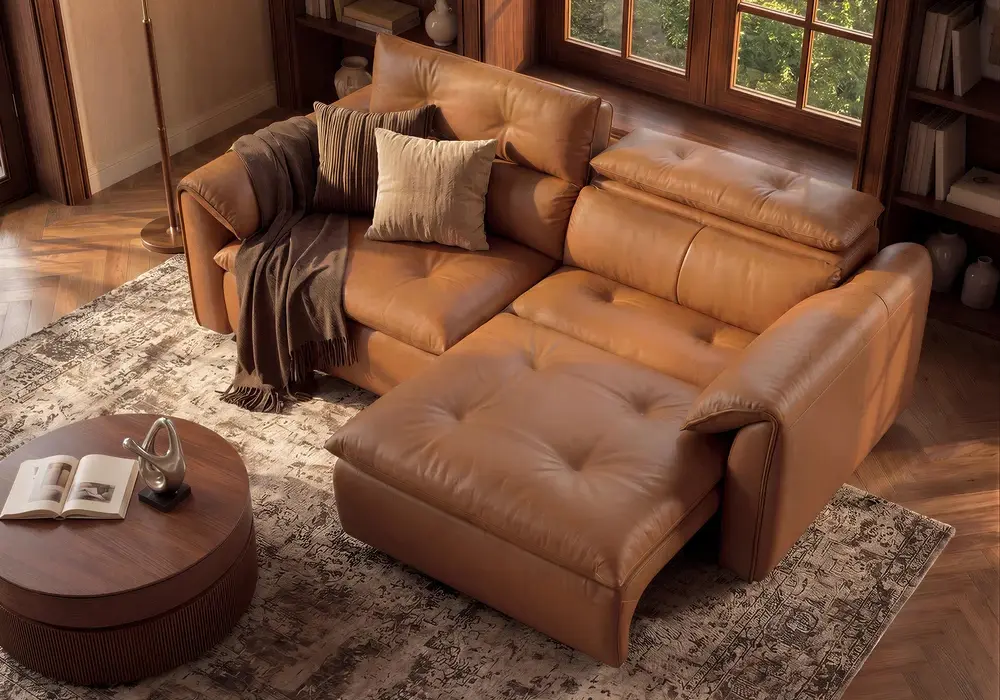
2-Seater Genuine Leather Power Convertible Sleeper Sofa
Anti-Tip Safety and Anchoring
Wall-hugger and track-based reclining systems can move differently from fixed sofas, which makes stability an important part of furniture placement.
When Should a Reclining Sofa Be Stabilized?
Additional stabilization may be worth considering when:
- Young children are present
- The sofa sits on a smooth hard floor
- The floor is uneven
- The sofa shifts during normal operation
- The manufacturer recommends anchoring
Depending on the design, options may include anti-tip straps, wall anchors, or floor stabilizers.
Anti-Tip Straps and Wall Anchors
An anti-tip strap is designed to limit unwanted movement, while a wall anchor can provide additional stability when the furniture is intended to be connected to the wall.
However, reclining sofas are not all designed for wall anchoring.
Check the installation instructions before attaching hardware. A mo
Follow the Manufacturer's Installation Instructions
When installing a stabilizer or anchor, use the attachment points recommended by the manufacturer.
Avoid randomly drilling into the sofa frame or altering the reclining mechanism. Such modifications may affect performance or warranty coverage.
It is also useful to photograph the original installation before making any changes, especially if the sofa may need to be moved later.
Protecting Walls and Floors, and Styling the Gap
Even when your reclining sofa can sit close to the wall, repeated movement can eventually lead to scuffs on painted surfaces, baseboards, flooring, or rugs.
Use Wall Protectors at Potential Contact Points
Soft felt pads or suitable wall protectors can help reduce minor friction when installed at appropriate non-moving contact points.
Make sure protective materials do not interfere with the sofa's tracks, hinges, footrest, or other moving parts.
Never place loose material directly inside the reclining mechanism.
Protect Hardwood and Other Hard Floors
Reclining sofas can shift slightly during repeated use, particularly on smooth flooring.
Furniture glides, felt pads, or low-profile floor guards can help reduce scratching and make small movements less noticeable.
For renters, a rug or mat can also provide an additional protective layer while visually defining the seating area.
Can You Put a Rug Under a Reclining Sofa?
Yes, but the rug should be selected carefully.
A low-profile rug is usually easier to use with reclining furniture because thick edges or heavy pile can interfere with the footrest or moving components.
Before choosing a rug, fully extend the recliner and check that the footrest does not catch on the material.
How to Style a Small Gap Behind a Reclining Sofa
A small gap between a sofa and wall is not necessarily something you need to hide.
In fact, leaving a little space can make cleaning easier and reduce the chance of upholstery rubbing against the wall.
For a visually larger gap, consider a slim console table where the room layout allows it. Decorative trim or a shallow shelf can also make the space look intentional.
However, avoid placing fragile decorative objects directly behind a reclining sofa. The moving backrest can reach farther than expected and knock items over.
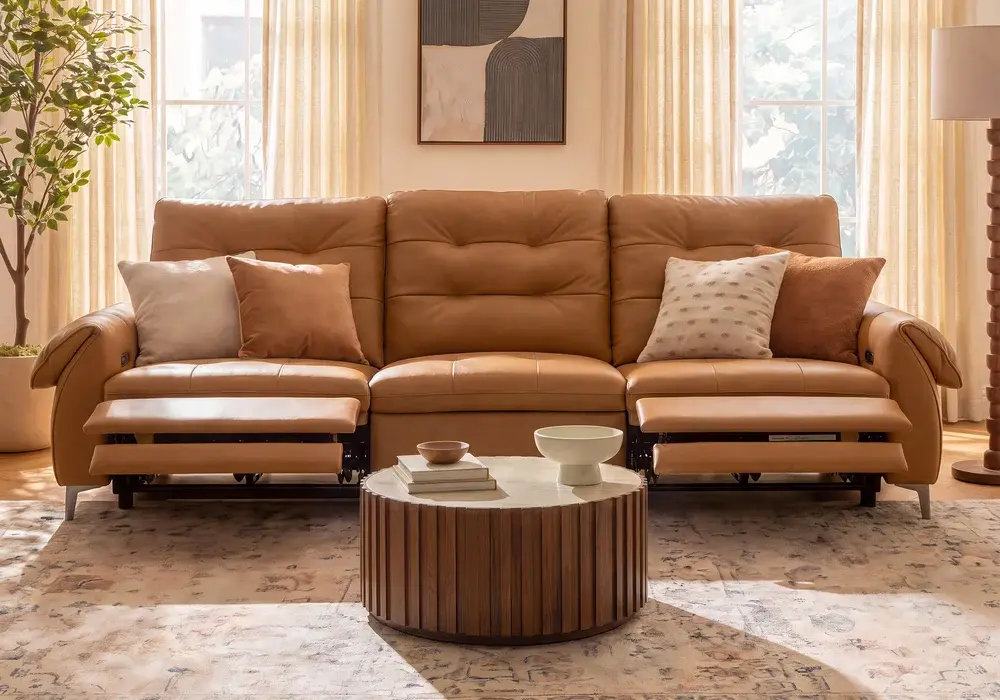
Genuine Leather Power Reclining Sofa
How to Place a Corner or Sectional Reclining Sofa Against Two Walls
Corner and sectional reclining sofas require more detailed planning because they need to work with two walls at the same time.
Measure Each Reclining Seat Separately
Do not rely solely on the sectional's total dimensions.
Identify every reclining seat and determine how its backrest and footrest move. A sectional may look compact from above but require significantly more room once multiple seats are reclined.
Check Both Wall Clearances
Measure the distance from both walls and test each reclining position.
Pay particular attention to the corner section, where the two walls can limit movement from different directions.
Also check:
- Headrest clearance
- Console depth
- Footrest extension
- Door swing
- Walkways
- Nearby tables and cabinets
Use Painter's Tape Before Delivery
One of the easiest ways to test a sectional layout is to mark its footprint on the floor with painter's tape.
Mark the upright dimensions first, then extend the tape forward to represent the fully reclined footrests.
This gives you a visual representation of the sofa's operating area before the furniture arrives.
A sectional is properly planned when every reclining seat can fully open without touching either wall or blocking essential walking paths.
Conclusion
Can a reclining sofa go against a wall? Yes, provided the sofa has enough clearance for its specific reclining mechanism. Traditional reclining sofas generally require more rear space, while wall-hugger and zero-wall models are designed to work in tighter layouts.
The safest approach is simple: measure first, choose the right mechanism for your room, then plan for power cords, stability, and surface protection.
A few extra centimeters of clearance can make a major difference in everyday comfort and furniture longevity. When in doubt, rely on the manufacturer's minimum wall distance and test the sofa in its fully reclined position before committing to the final layout.
FAQ: Reclining Sofa Against a Wall
How much clearance does a reclining sofa need from the wall?
A traditional reclining sofa commonly needs approximately 30–60 cm (12–24 inches) of rear clearance, although the exact amount depends on the mechanism and design. Larger or oversized models may need more. Always check the manufacturer's stated minimum wall distance.
What's the difference between a wall-hugger recliner and a standard recliner?
A standard recliner generally moves its backrest backward as it opens, which requires more room behind the sofa. A wall-hugger recliner uses a mechanism that allows the seat to move forward while the back reclines, reducing the required rear clearance.
Can a power recliner sit flush against a wall?
A power recliner can sit very close to a wall when it is specifically designed as a wall-hugger or zero-wall model. However, it still needs the manufacturer's minimum clearance, and the power cord must be positioned safely away from moving components.
How do I stop a reclining sofa from tipping over?
Use the stabilization method recommended by the manufacturer. Depending on the design and flooring, this may include anti-tip straps, approved wall anchors, or floor stabilizers. Never modify the reclining frame without checking the manufacturer's installation and warranty requirements.
How do I measure a corner or sectional reclining sofa for wall placement?
Measure each reclining section individually from both walls. Fully extend every reclining seat and measure the backrest movement and footrest extension. Painter's tape can be used to mark the full operating footprint on the floor before delivery.