

Florida is wonderful for outdoor living, and brutal on outdoor furniture. Between year-round humidity, afternoon downpours, relentless UV, salty coastal air and the occasional hurricane, the wrong patio set can start rusting, fading or growing mildew within a few seasons.
Choosing weather-resistant patio furniture in Florida comes down to a handful of decisions: the frame material, the fabric, how the cushions drain, and how you protect everything when a storm approaches. This guide walks through each one in order. We start with what Florida's climate actually does to furniture, then compare frame materials and outdoor fabrics, match furniture to your space, and finish with a storm-prep and care routine. Along the way, we point out a few real sets that put these principles into practice, so you know the best outdoor furniture for Florida weather when you see it.
Table of Contents
Why Florida Weather Is Hard on Patio Furniture
Five forces do most of the damage, and each one attacks a different material:
- Humidity and mildew: constant moisture feeds mold on cushions and wicker, and speeds up corrosion on unprotected metal.
- Heavy rain: water that pools in seat cushions, tabletop gaps or hollow frames leads to rot, staining and rust from the inside out.
- Strong UV: Florida sun fades fabric, dries out natural fibers and makes cheap plastics brittle and chalky.
- Salt air and pool chlorine: near the coast or a pool, salt and chlorine eat through weak finishes and cheap fasteners.
- Hurricane-season wind: lightweight chairs, umbrellas and side tables can become projectiles.
The severity varies by location. Homes right on the water face the harshest salt exposure, while inland patios deal more with humidity and mildew. Either way, the lesson is the same: in Florida, the material you choose matters more than the style, so that is where we start.
Best Materials for Florida Patio Furniture: Aluminum, HDPE, Teak, and Resin Wicker
Each frame material handles Florida differently, so match the material to your exposure and how much upkeep you want.
Powder-coated aluminum is the safest all-round choice. It cannot rust, it is light enough to rearrange easily, and a good powder coat resists salt and sun. The trade-off is that light furniture can shift in strong wind, so plan to anchor or store pieces before storms. Aluminum suits almost every Florida setting: coastal homes, pools and open patios. Expect many years of use with simple rinsing, and look for thick, even coating and clean welds.
HDPE (recycled plastic lumber) is the lowest-maintenance option. It shrugs off salt, rain and mold, never needs sealing or painting, and the color runs through the material rather than sitting on the surface. It is heavier than aluminum, which helps in wind but makes it harder to move, and styling options are somewhat more limited.
Teak is the classic premium wood. Its natural oils make it resistant to decay and insects, so it holds up well in damp climates. Left untreated, it weathers to a silvery gray, which many people like. If you prefer the original honey tone, you will need to oil it periodically. Teak costs more upfront, but with care it can last for decades.
Synthetic wicker (HDPE or PE resin) on an aluminum frame gives you the relaxed, woven look without the weakness of natural rattan. Natural rattan swells, mildews and cracks in Florida's moisture and sun. Quality synthetic weave resists UV and water, while cheap PVC wicker tends to become brittle and split within a few years.
What to avoid: plain steel, which rusts quickly in humid air, and low-cost PVC wicker.
Quick pick: If you want light and rustproof, choose aluminum. If you want a wicker look, choose aluminum with synthetic wicker. If you want a long-lasting natural material and can budget for it, choose teak. If you want the least maintenance possible, choose HDPE.
Best Outdoor Fabrics and Cushions for UV, Mold, and Mildew
In Florida, cushions and fabric often fail before the frame does. Look for solution-dyed acrylic (Sunbrella is the best-known example). The color is added before the fiber is spun, so it resists fading under strong sun far better than surface-dyed fabric, and it stands up to mildew and repeated cleaning.
Construction matters as much as fabric:
- Quick-dry foam and open-cell cores drain water instead of holding it.
- Mesh or vented bases let air circulate under the cushion.
- Removable, zippered covers make it easy to wash and dry the fabric properly.
Some sets use waterproof polyester upholstery with high-resilience foam, which can repel spills and light rain. That is a reasonable choice, but it behaves differently from solution-dyed acrylic. Waterproof coverings can trap moisture inside the cushion if it is never aired out, so check the product details for removable covers and drainage, and make sure the cushions can dry.
A few habits make a big difference:
- Stand cushions on their edges after heavy rain so water drains and air circulates.
- Do not leave cushions sitting in standing water or directly on a wet surface.
- Choose light or neutral colors, which hide fading better under Florida sun.
Be realistic: "rain-ready" does not mean "never needs drying." Even the best outdoor cushion lasts longer if you let it dry between storms.
How to Choose by Space: Coastal Homes, Pool Decks, Lanais, and Small Patios
Coastal homes
- Best pick: HDPE or powder-coated aluminum, with 316 stainless steel hardware.
- Watch out for: untreated steel fasteners, which can rust even when the frame does not. Rinse salt residue off regularly.
Pool decks
- Best pick: quick-drying, chlorine-resistant materials that are easy to rinse and do not get painfully hot underfoot.
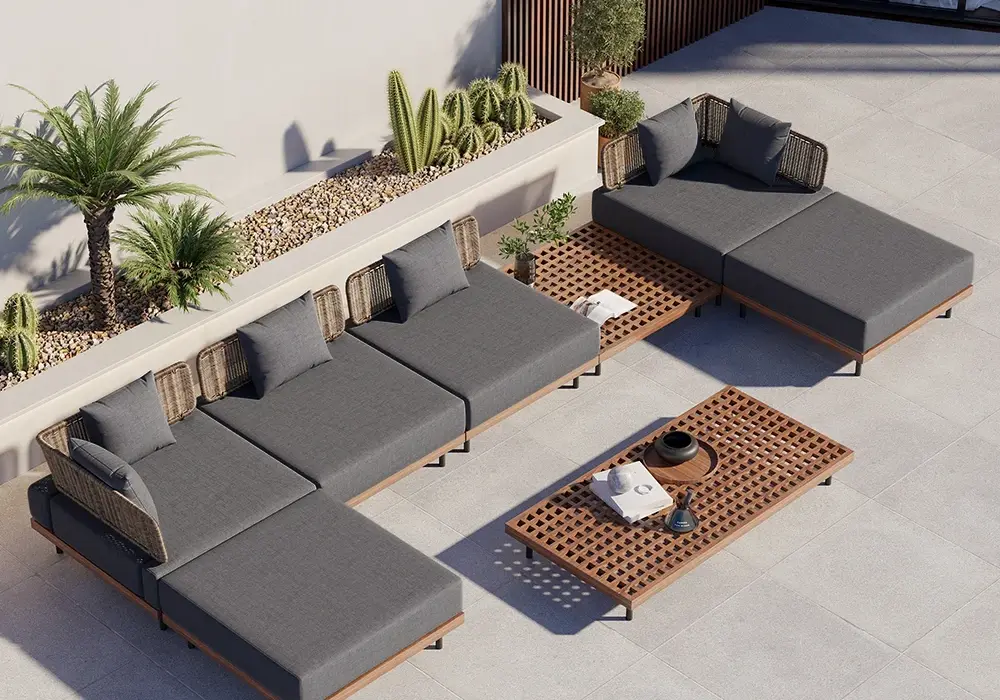
- Watch out for: dark, heat-absorbing surfaces in full sun. A set such as the 8-piece aluminum, teak and rattan sectional is positioned for poolside use, and its rustproof frame and synthetic weave suit that setting.
Covered lanais
- Best pick: comfort-first seating with quality fabric, since the roof protects against direct sun and rain.
- Watch out for: trapped humidity. Mold still grows under cover, so keep air moving and use mildew-resistant fabric.
- Fire pit note: gas fire pits are generally designed for open-air use. Do not use one under a low roof or inside a screened enclosure, and follow the manufacturer's clearance and ventilation instructions and any local rules.
Small patios and balconies
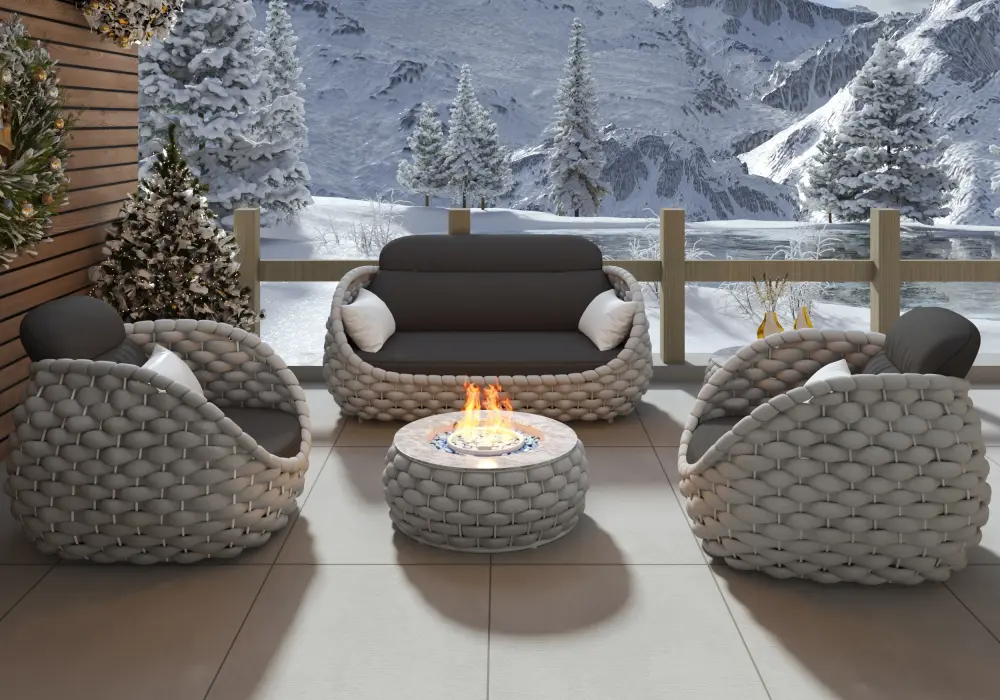
- Best pick: compact, modular or stackable pieces that are light yet can be anchored. The Cocaro 5-piece set seats four with a 2-seater sofa and two chairs, and includes a smokeless propane fire pit table rated at 50,000 BTU, which makes it a fit for a modest open patio where you want cool-evening warmth.
- Watch out for: oversized sectionals that crowd walkways.
Large open patios and entertaining areas
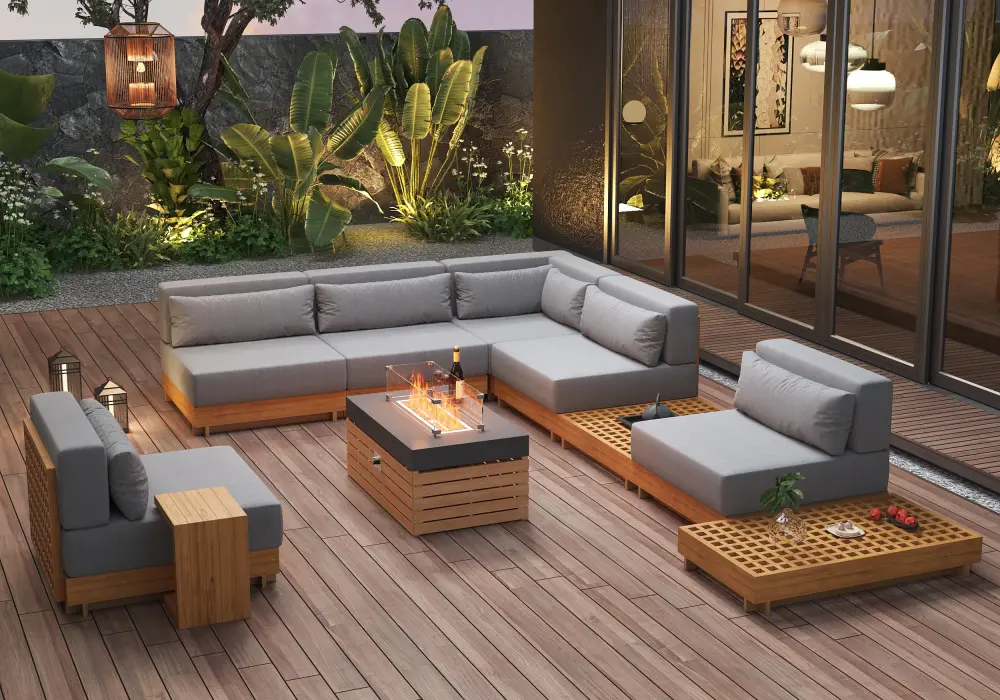
- Best pick: modular seating you can reconfigure. The Grida 10-piece teak modular L-shaped set combines a teak frame with six chairs, three coffee tables and a CSA-certified 50,000 BTU propane fire pit with a glass wind cover.
- Watch out for: the propane tank cover is not included, and the tank must be connected outside the fire pit and kept upright.
Budget guide
Prices change, so treat these as a snapshot from October 2026.
Budget | Good fit |
Lower | Basic HDPE or aluminum sets |
Mid | Aluminum plus synthetic wicker with a fire pit |
Mid to high | Teak, aluminum and rattan modular sectional |
Premium | Full teak modular set with fire pit |
Shopping tip: Whatever the budget, check weld quality, cushion thickness and warranty terms. If you can, sit-test in a showroom before you commit, and compare warranty conditions between big-box stores, specialty patio showrooms and online brands.
Hurricane Prep and Year-Round Care for Florida Patio Furniture
Before the storm
- Move light items (chairs, cushions, umbrellas, side tables, decor) into a garage, shed or indoors.
- Secure or shelter heavy pieces. Push them against a wall, away from windows, or tie them down.
- Do not rely on a standard cover alone. Use covers that are breathable, properly sized and strapped, because a poor cover traps moisture and creates mildew.
- If you have a propane fire pit, shut off and disconnect the tank, and store it according to the manufacturer's safety instructions.
Maintenance schedule
How often | What to do |
Weekly | Clear leaves and pollen |
After rain | Drain and stand cushions up to dry |
Monthly | Wash frames with mild soap and water, then rinse |
Quarterly | Check screws, welds, finishes and fabric |
Annually | Do a full inspection before hurricane season |
Lifespan expectations: Budget natural-rattan or PVC wicker may last only a few years in Florida. Quality powder-coated aluminum, HDPE and teak can last much longer with this routine. For teak, plan to clean it and decide whether you want the gray patina or periodic oiling.
Be honest about what preparation can do. Furniture can be storm-prepared, but it is never hurricane-proof, so the goal is to reduce the risk and damage, not to eliminate them.
Conclusion: Your Florida Patio Furniture Checklist
Before you buy, check six things: frame material, fabric grade, cushion drainage, hardware quality, warranty terms and where you will store everything during storm season. Get those right and your furniture will look better for longer, in a climate that tests it every day.
FAQ
What is the best outdoor furniture for Florida weather?
Powder-coated aluminum, HDPE and teak are the strongest choices, paired with solution-dyed acrylic or other quick-drying, mildew-resistant cushions. Aluminum with synthetic wicker is the best balance of looks, weight and rust resistance.
What patio furniture can be left outside in the rain?
Aluminum, HDPE, teak and synthetic wicker can all stay outside in rain. Cushions are the weak point, so stand them up to dry or store them during long wet spells.
Is aluminum or resin wicker better for Florida patios?
They are not really competitors. The best option is usually both: an aluminum frame wrapped in synthetic resin wicker, which gives you the rustproof structure and the woven look.
How can I prevent mold and mildew on outdoor cushions?
Choose mildew-resistant fabric and quick-dry foam, stand cushions up after rain, wash covers regularly, and avoid sealing damp cushions under a cover.
How should patio furniture be secured during hurricane season?
Bring light pieces and cushions indoors, move heavier furniture to a sheltered spot or tie it down, and use breathable, strapped covers rather than loose ones.